Home › Bogor › EU: Buitenzorg - Paleis (1863)

EU: Buitenzorg - Paleis (1863) through time

Bogor 1860–1917 20 photos of this spot

20 photographs taken at the same spot in Bogor, spanning 1860–1917 — 20 of them from before 1980. Line them up and watch the place change.

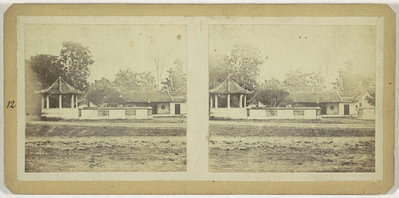
A Chinese temple in Buitenzorg, the Dutch East Indies hill town now known as Bogor, photographed in 1860. Buitenzorg served as the site of the colonial governor-general's country residence and drew a mixed community of Javanese, Chinese, and European residents.

See this spot on the map
Have an old photo of EU: Buitenzorg - Paleis (1863)? A family album, a postcard, a print from the attic. Pin it to the map and it becomes part of the record.
Add your photo
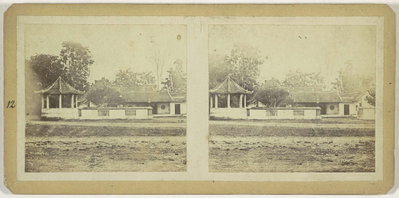
EU: Chineesche tempel te Buitenzorg (1860), Bogor, 1860
EU: Chineesche tempel te Buitenzorg (1860) 1860 A Chinese temple in Buitenzorg, the Dutch East Indies hill town now known as Bogor, photographed in 1860. Buitenzorg served as the site of the colonial governor-general's country residence and drew a mixed community of Javanese, Chinese, and European residents.
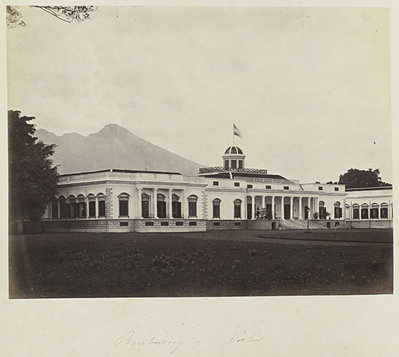
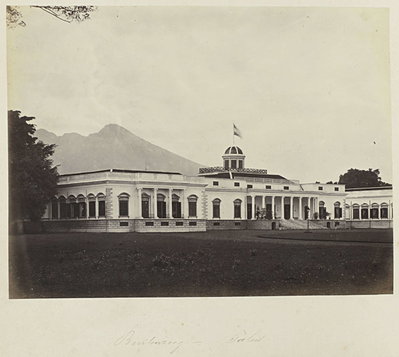
EU: Buitenzorg - Paleis (1863), Bogor, 1863
EU: Buitenzorg - Paleis (1863) 1863 The governor-general's palace at Buitenzorg, present-day Bogor, captured in an 1863 photograph. Built in the late 18th century, the palace served as the official country residence of the Dutch East Indies colonial administration amid the cooler climate of the Java highlands.
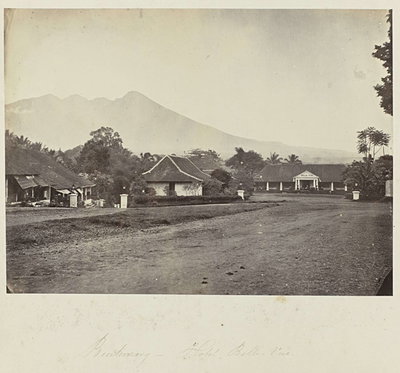
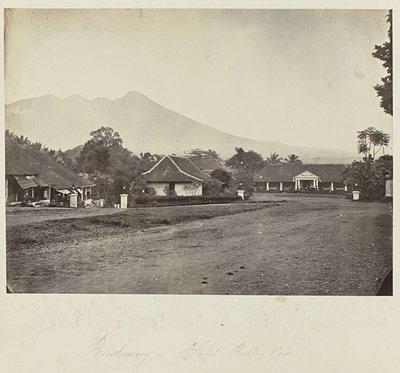
EU: Buitenzorg - Hotel Belle-Vue (1863), Bogor, 1863
EU: Buitenzorg - Hotel Belle-Vue (1863) 1863 Hotel Belle-Vue in Buitenzorg, now Bogor, in the Dutch East Indies, photographed in 1863. The hotel took its name from its outlook over the surrounding hill-country landscape near the colonial governor-general's residence.
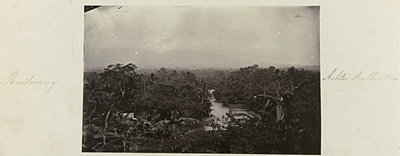
EU: Buitenzorg. Achter Belle-Vue (1863), Bogor, 1863
EU: Buitenzorg. Achter Belle-Vue (1863) 1863 A view taken from behind the Hotel Belle-Vue in Buitenzorg, Dutch East Indies, in 1863. The area, now part of the Indonesian city of Bogor, was a favored retreat for European residents of colonial Java.
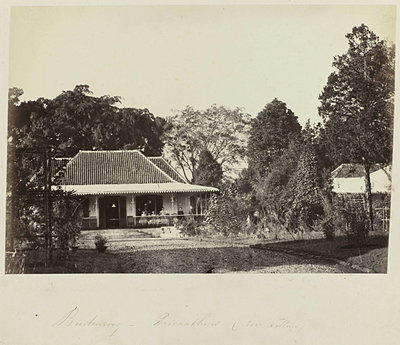
EU: Buitenzorg - Privaathuis (Mr. Tollens) (1863), Bogor, 1863
EU: Buitenzorg - Privaathuis (Mr. Tollens) (1863) 1863 The private residence of a Mr. Tollens in Buitenzorg, Dutch East Indies, photographed in 1863. Such houses accommodated European colonial officials and merchants living in the hill town now called Bogor.
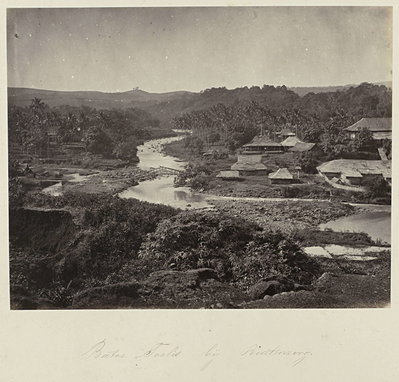
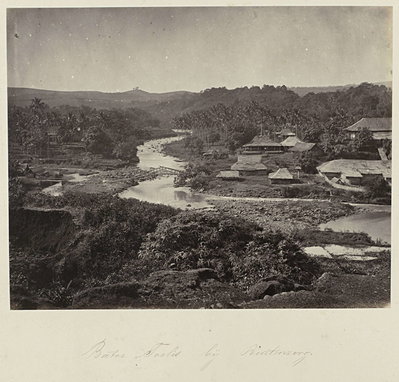
EU: Batoe Toelis bij Buitenzorg (1863), Bogor, 1863
EU: Batoe Toelis bij Buitenzorg (1863) 1863 Batu Tulis near Buitenzorg, photographed in 1863, takes its name from an inscribed stone associated with the ancient Sundanese kingdom of Pajajaran. The site lies just outside present-day Bogor, Indonesia.
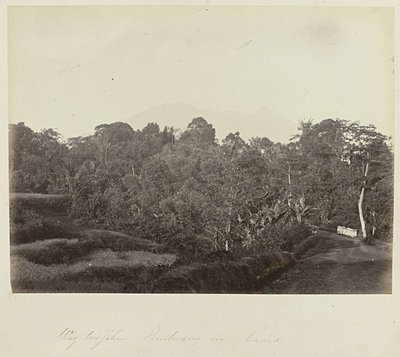
EU: Weg tusschen Buitenzorg en Gadok (1863), Bogor, 1863
EU: Weg tusschen Buitenzorg en Gadok (1863) 1863 The road connecting Buitenzorg with the nearby settlement of Gadok, photographed in 1863. This stretch of highland Java, near modern Bogor, formed part of the route linking colonial hill retreats in the Dutch East Indies.
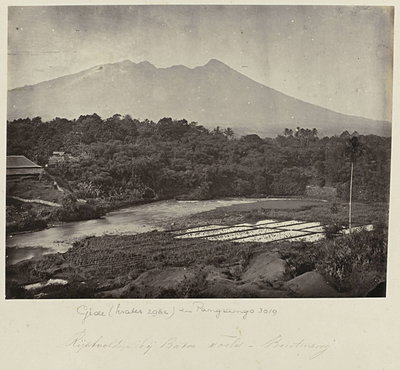
EU: Rijstvelden bij Batoe Toelis - Buitenzorg (1863), Bogor, 1863
EU: Rijstvelden bij Batoe Toelis - Buitenzorg (1863) 1863 Rice terraces near Batu Tulis, outside Buitenzorg in the Dutch East Indies, photographed in 1863. Wet-rice cultivation shaped the agricultural landscape surrounding the hill town now known as Bogor.
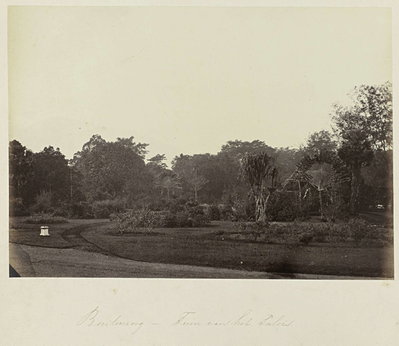
EU: Buitenzorg - Tuin van het Paleis (1863), Bogor, 1863
EU: Buitenzorg - Tuin van het Paleis (1863) 1863 The gardens of the governor-general's palace at Buitenzorg, photographed in 1863. Today part of the Bogor Botanical Gardens, the grounds were already known for their landscaped plantings during the Dutch colonial period.
EU: Buitenzorg - Paleis (1865), Bogor, 1865
EU: Buitenzorg - Paleis (1865) 1865 The Governor-General's palace at Buitenzorg, present-day Bogor, Indonesia, photographed in 1865. Built during the Dutch colonial era, the palace and its surrounding gardens served as the summer residence of the colonial administration in the Dutch East Indies.
EU: Buitenzorg - Hotel Belle-Vue (1865), Bogor, 1865
EU: Buitenzorg - Hotel Belle-Vue (1865) 1865 The Hotel Belle-Vue in Buitenzorg, present-day Bogor, Indonesia, in 1865. The hill town south of Batavia was a popular retreat for European colonists during the Dutch East Indies period, known for its cooler climate.
EU: Batoe Toelis bij Buitenzorg (1865), Bogor, 1865
EU: Batoe Toelis bij Buitenzorg (1865) 1865 Batu Tulis, an inscribed stone near Buitenzorg (Bogor), Indonesia, photographed in 1865. The stone is associated with the Sunda Kingdom and stands near the site of the former Pakuan Pajajaran capital.
EU: Chineesche tempel te Buitenzorg (1880), Bogor, 1880
EU: Chineesche tempel te Buitenzorg (1880) 1880 A Chinese temple in Buitenzorg, present-day Bogor, is shown in this 1880 photograph, reflecting the Chinese community long established in this hill town south of Batavia, known also as the site of the Dutch governor-general's summer residence.
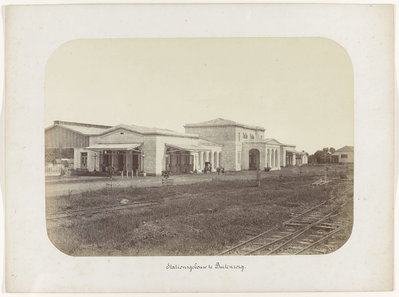
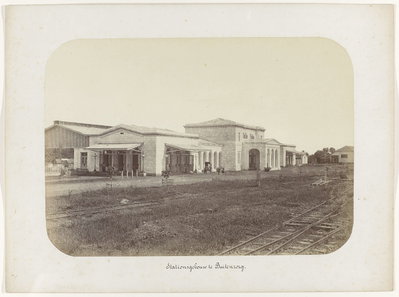
EU: Stationsgebouw te Buitenzorg (1880), Bogor, 1880
EU: Stationsgebouw te Buitenzorg (1880) 1880 The railway station building at Buitenzorg, Dutch East Indies, photographed in 1880. Rail service reached the hill town, now Bogor, as part of Java's expanding colonial railway network connecting it to Batavia.
EU: Stationsgebouw te Buitenzorg (1884), Bogor, 1884
EU: Stationsgebouw te Buitenzorg (1884) 1884 The railway station building at Buitenzorg, now Bogor, appears in this 1884 photograph, serving the line that connected the hill town to Batavia and formed part of the growing rail network of colonial Java in the late nineteenth century.
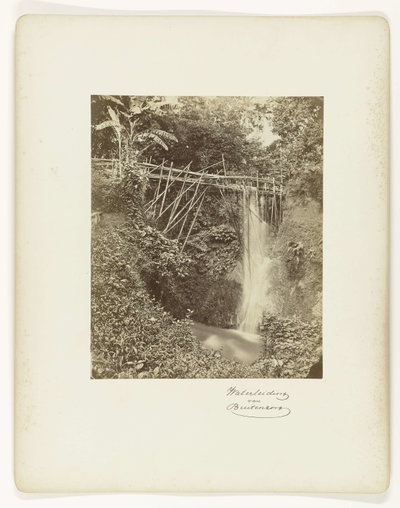
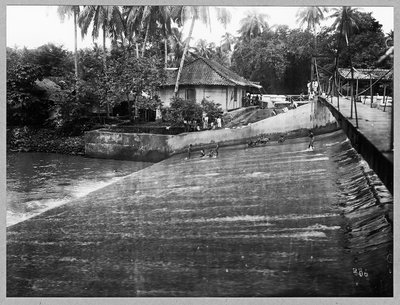
EU: Waterleiding van Buitenzorg (1895), Bogor, 1895
EU: Waterleiding van Buitenzorg (1895) 1895 The waterworks at Buitenzorg, now Bogor, in the Dutch East Indies, photographed in 1895 as part of the town's colonial-era infrastructure.
EU: Gouverneurspaleis met vijver in Buitenzorg (1900), Bogor, 1900
EU: Gouverneurspaleis met vijver in Buitenzorg (1900) 1900 The Governor-General's palace and its ornamental pond in Buitenzorg, now Bogor, are pictured in 1900; the hill-town residence lay south of Batavia and served the Dutch colonial administration.
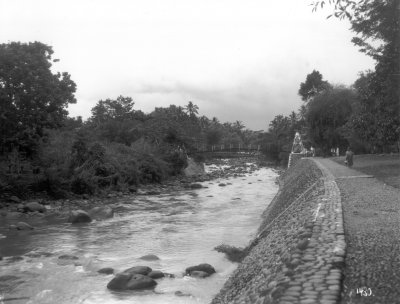
EU: Park und Promenade am Fluss Liwoeng, Buitenzorg (1912), Bogor, 1912
EU: Park und Promenade am Fluss Liwoeng, Buitenzorg (1912) 1912 A park and promenade beside the river then rendered as "Liwoeng" are shown in this 1912 photograph of Buitenzorg, present-day Bogor, the hill town that served as a retreat for the Dutch East Indies' colonial governors.
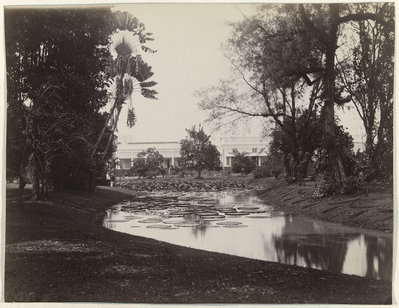
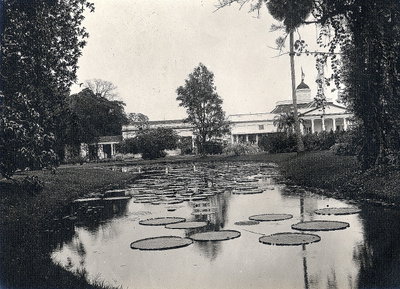
EU: Istana Bogor palace and lily pond (1913), Bogor, 1913
EU: Istana Bogor palace and lily pond (1913) 1913 Istana Bogor, the palace and its lily pond in Bogor, Java, are shown in this 1913 photograph. Originally built as a Dutch governor-general's residence, the estate is set within extensive botanical grounds south of Batavia and later became a presidential palace of Indonesia.
EU: Wohnhauser am Fluss Liwoeng, Buitenzorg (1917), Bogor, 1917
EU: Wohnhauser am Fluss Liwoeng, Buitenzorg (1917) 1917 Houses along a river at Buitenzorg, now Bogor, in the Dutch East Indies, photographed in 1917. Buitenzorg, known for its botanical gardens, served as a hill-country retreat for the colonial administration based in Batavia.