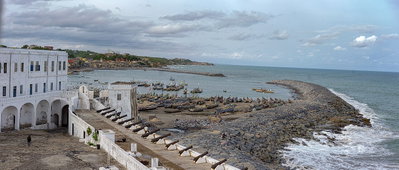
Home › Cape Coast › Cape Coast Bay

Cape Coast Bay through time

Cape Coast 1870–2025 88 photos of this spot

88 photographs taken at the same spot in Cape Coast, spanning 1870–2025 — 22 of them from before 1980. Line them up and watch the place change.

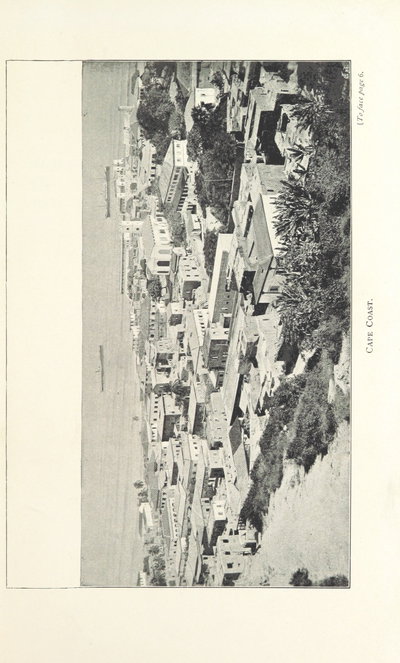
An 1870 photograph of Cape Coast, held in the Colonial Office collection at the UK National Archives, from an era when the town was a center of British administration on the Gold Coast in West Africa.

See this spot on the map
Have an old photo of Cape Coast Bay? A family album, a postcard, a print from the attic. Pin it to the map and it becomes part of the record.
Add your photo
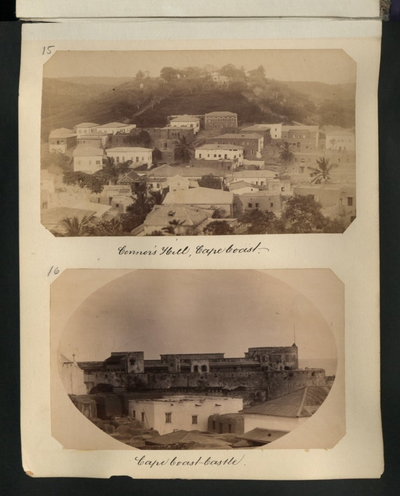
The National Archives UK - CO, Cape Coast, 1870
The National Archives UK - CO 1870 An 1870 photograph of Cape Coast, held in the Colonial Office collection at the UK National Archives, from an era when the town was a center of British administration on the Gold Coast in West Africa.
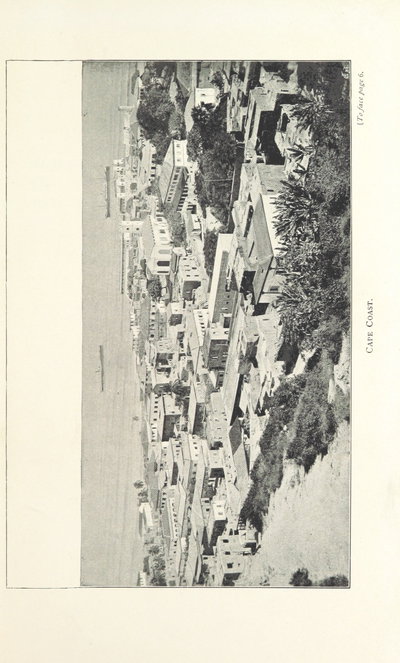
EU: southern Gold Coast city and port from "Nine Years at the Gold Coast". (1898), Cape Coast, 1898
EU: southern Gold Coast city and port from "Nine Years at the Gold Coast". (1898) 1898 An 1898 view of Cape Coast on the southern Gold Coast, showing the coastal city and its port; the image comes from the book Nine Years at the Gold Coast, an account of the British colonial territory that is now part of Ghana.
EU: southern Gold Coast city and port from "Nine Years at the Gold Coast" (1898), Cape Coast, 1898
EU: southern Gold Coast city and port from "Nine Years at the Gold Coast" (1898) 1898 Reproduced from the 1898 book "Nine Years at the Gold Coast," this image shows a city and port on the southern Gold Coast, in what is now Ghana, at Cape Coast.
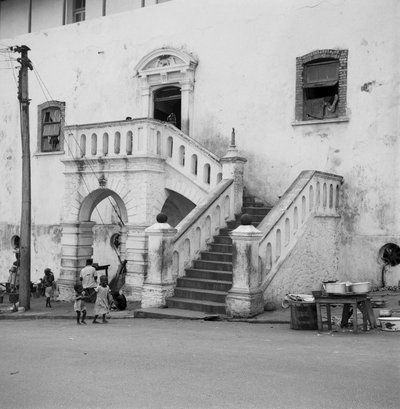
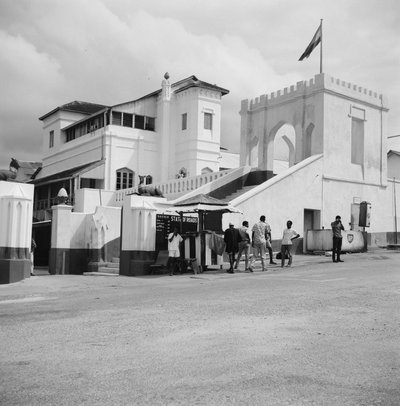
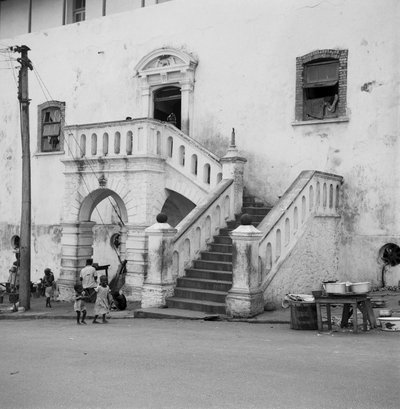
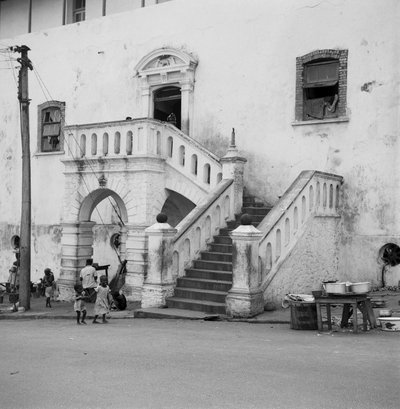
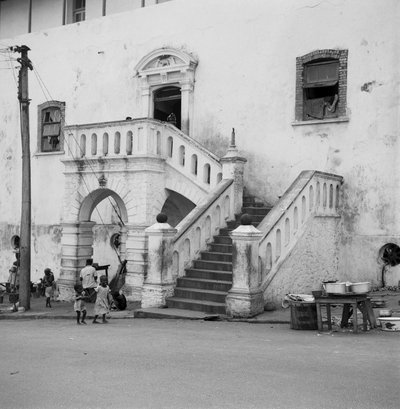
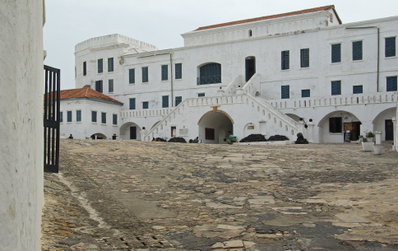
EU: Cape Coast Castle, buitentrap (1966), Cape Coast, 1966
EU: Cape Coast Castle, buitentrap (1966) 1966 The outer staircase of Cape Coast Castle, Ghana, photographed in 1966. The fort on the Gulf of Guinea was built by European traders in the 17th century and later expanded under Dutch and British control.
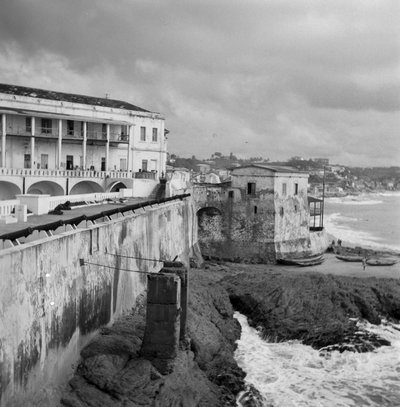
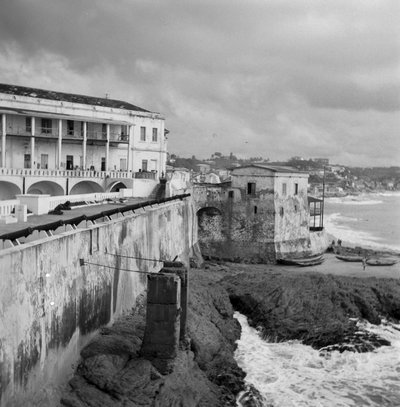
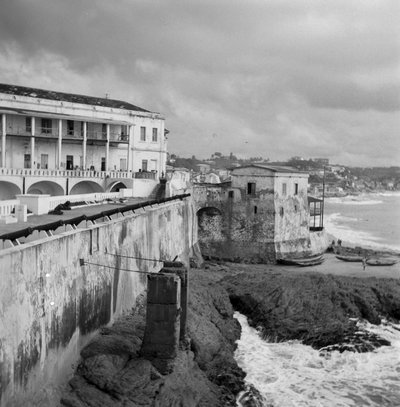
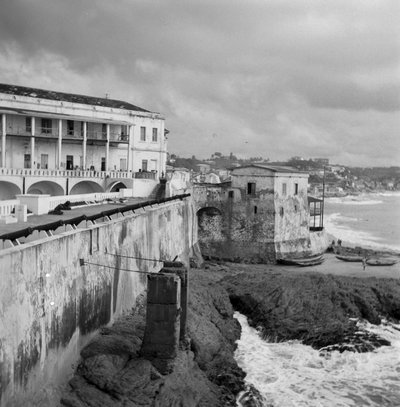
EU: Cape Coast Castle, zeezijde (1966), Cape Coast, 1966
EU: Cape Coast Castle, zeezijde (1966) 1966 The seaward side of Cape Coast Castle in Ghana, photographed in 1966, overlooking the Gulf of Guinea; the fortress served as a hub of the Atlantic slave trade before its abolition in the nineteenth century.
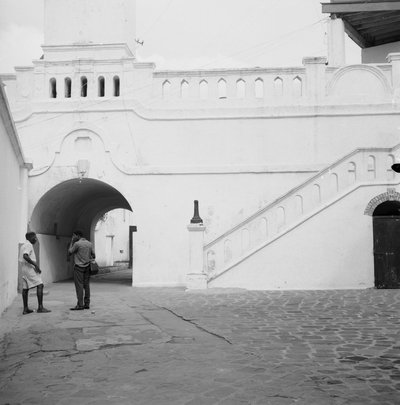
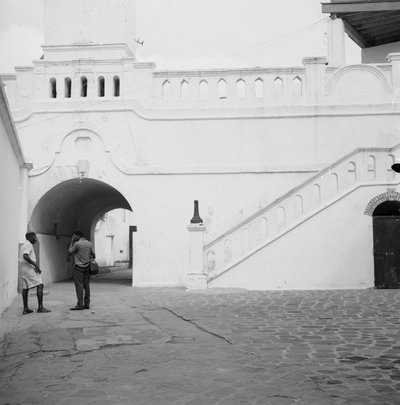
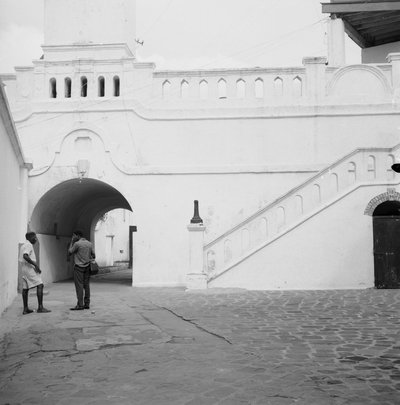
EU: Cape Coast Castle, doorgang tussen binnenplaatsen (1966), Cape Coast, 1966
EU: Cape Coast Castle, doorgang tussen binnenplaatsen (1966) 1966 A passage between the inner courtyards of Cape Coast Castle, Ghana, photographed in 1966; the castle is now a UNESCO World Heritage Site and museum.
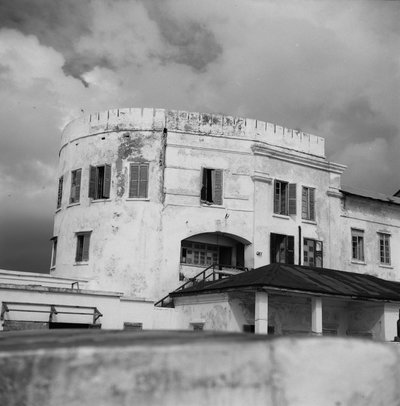
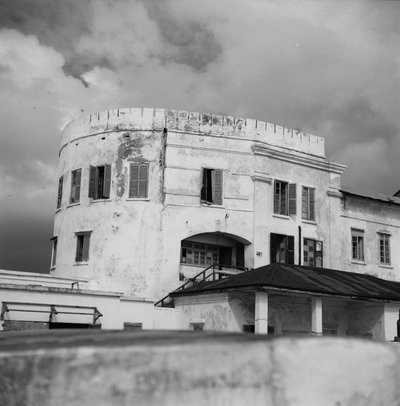
EU: Cape Coast Castle, noordvleugel en zuidtoren (1966), Cape Coast, 1966
EU: Cape Coast Castle, noordvleugel en zuidtoren (1966) 1966 The north wing and south tower of Cape Coast Castle, Ghana, seen in this 1966 photograph of the coastal fortress on the Gulf of Guinea.
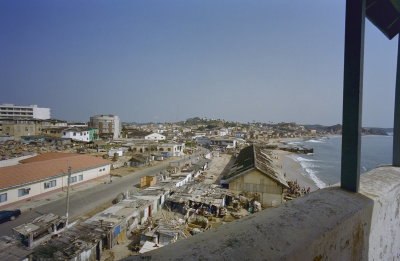
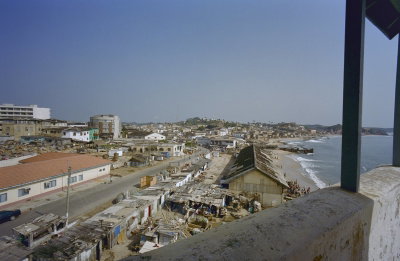
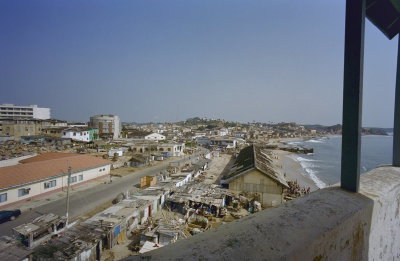
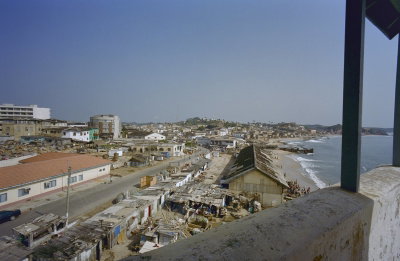
EU: Stadsgezicht vanaf Cape Coast Castle (1966), Cape Coast, 1966
EU: Stadsgezicht vanaf Cape Coast Castle (1966) 1966 A townscape of Cape Coast, Ghana, viewed from Cape Coast Castle in a 1966 photograph. The castle, built by European traders and later used in the Atlantic slave trade, overlooks the coastal town from its fortified walls.
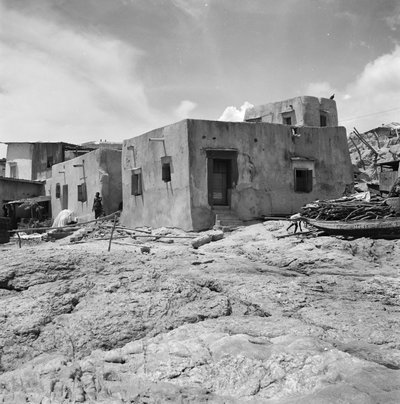
EU: Vissershuizen (1966), Cape Coast, 1966
EU: Vissershuizen (1966) 1966 Houses belonging to local fishermen in Cape Coast, Ghana, photographed in 1966. Fishing has long been central to the livelihood of communities along this stretch of the Gulf of Guinea coastline.
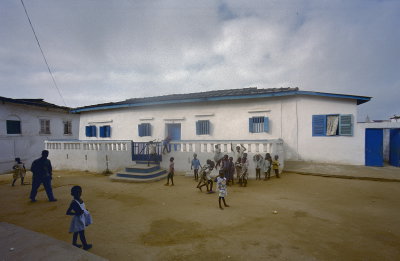
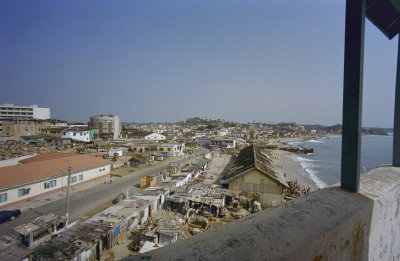
EU: Woonhuis goudsmid (1966), Cape Coast, 1966
EU: Woonhuis goudsmid (1966) 1966 The house of a goldsmith in Cape Coast, Ghana, photographed in 1966. Gold working has a long history along this coast, whose wealth in the metal gave the former Gold Coast region its name.
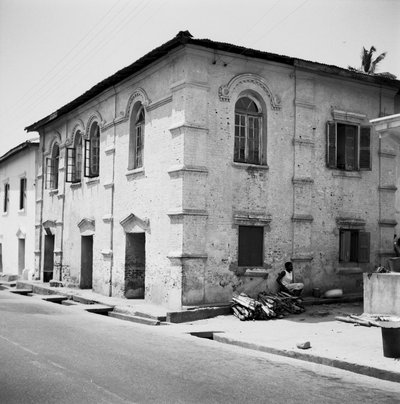
EU: Voormalig hotel (1966), Cape Coast, 1966
EU: Voormalig hotel (1966) 1966 A building that had formerly operated as a hotel in Cape Coast, Ghana, photographed in 1966, reflecting the town's role as a historic trading and administrative center on the Gold Coast.
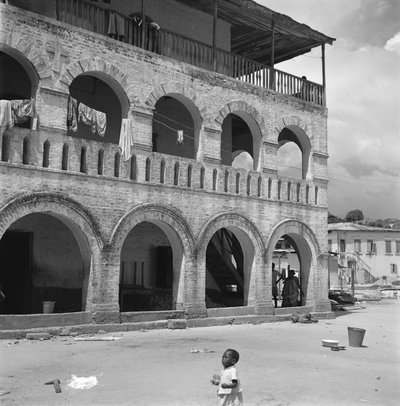
EU: Woning slavenhandelaar, circa 1790, overzicht (1966), Cape Coast, 1966
EU: Woning slavenhandelaar, circa 1790, overzicht (1966) 1966 An overview of a house in Cape Coast, Ghana, said to date from around 1790 and once belonging to a slave trader, photographed in 1966. Cape Coast was a major node in the Atlantic slave trade during the eighteenth century.
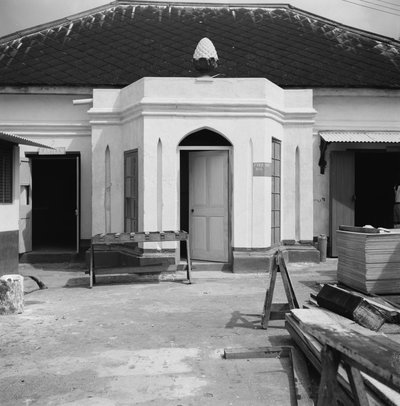
EU: Paviljoen van woning slavenhandelaar, circa 1790, voorzijde (1966), Cape Coast, 1966
EU: Paviljoen van woning slavenhandelaar, circa 1790, voorzijde (1966) 1966 The front of the pavilion attached to a Cape Coast house dating to about 1790, once owned by a slave trader, photographed in 1966. The structure reflects the town's history as a hub of the transatlantic slave trade.
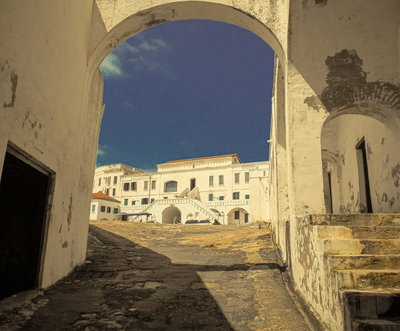
EU: Cape Coast Castle, outdoor stairs (1966), Cape Coast, 1966
EU: Cape Coast Castle, outdoor stairs (1966) 1966 Outdoor stairs within Cape Coast Castle are pictured in this 1966 photograph. Built by Swedish traders in the seventeenth century and later expanded by the British, the castle became one of West Africa's principal hubs in the trans-Atlantic slave trade.
EU: Cape Coast Castle, sea side (1966), Cape Coast, 1966
EU: Cape Coast Castle, sea side (1966) 1966 This 1966 photograph looks out from the sea-facing side of Cape Coast Castle, whose walls have withstood the Atlantic surf on Ghana's coast for more than three centuries.
EU: Cape Coast Castle, passage between courtyards (1966), Cape Coast, 1966
EU: Cape Coast Castle, passage between courtyards (1966) 1966 A passage linking two courtyards inside Cape Coast Castle is shown in this 1966 photograph. The fort's connected yards and chambers once channeled captives toward the notorious 'Door of No Return'.
EU: Cape Coast Castle, north wing and south tower (1966), Cape Coast, 1966
EU: Cape Coast Castle, north wing and south tower (1966) 1966 The north wing and south tower of Cape Coast Castle are visible in this 1966 photograph, part of a fortification that changed hands among Swedish, Danish, Dutch, and British traders before Ghanaian independence in 1957.
EU: Cape Coast Castle, buitentrap (2002), Cape Coast, 1966
EU: Cape Coast Castle, buitentrap (2002) 1966 This 1966 photograph shows an exterior staircase within Cape Coast Castle, the former slave-trade fort on Ghana's coast that later served as an administrative center under British colonial rule.
EU: Cape Coast Castle, doorgang tussen binnenplaatsen (2002), Cape Coast, 1966
EU: Cape Coast Castle, doorgang tussen binnenplaatsen (2002) 1966 Taken at Cape Coast Castle in 1966, this photograph looks through a passage connecting two of the fort's internal courtyards, part of the sprawling complex built and expanded by successive European traders on Ghana's coast.
EU: Cape Coast Castle, noordvleugel en zuidtoren (2002), Cape Coast, 1966
EU: Cape Coast Castle, noordvleugel en zuidtoren (2002) 1966 This 1966 image frames the north wing and south tower of Cape Coast Castle, part of the fortified complex built on Ghana's coast during the era of European trade and later used as a seat of British colonial administration.
EU: Cape Coast Castle, sea side view with cannons (1966), Cape Coast, 1966
EU: Cape Coast Castle, sea side view with cannons (1966) 1966 This 1966 photograph looks toward the seaward side of Cape Coast Castle, where cannons remain mounted along the fort's ramparts facing the Gulf of Guinea.
EU: Cape Coast Castle, exterior staircase (1966), Cape Coast, 1966
EU: Cape Coast Castle, exterior staircase (1966) 1966 Another 1966 view at Cape Coast Castle captures a different section of the fort's exterior staircase leading up from the courtyard toward the upper ramparts.
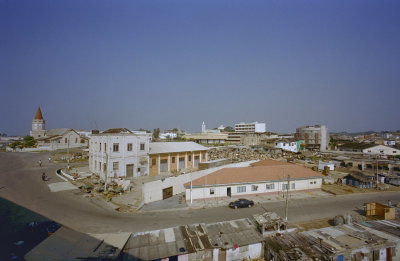
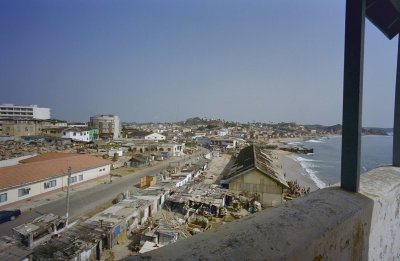
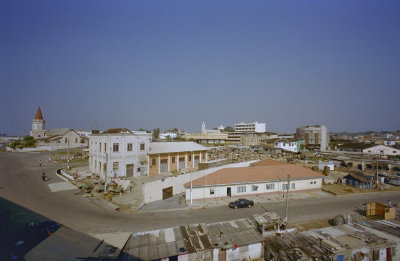
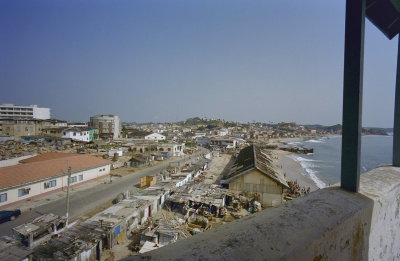
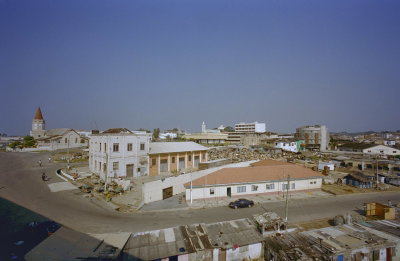
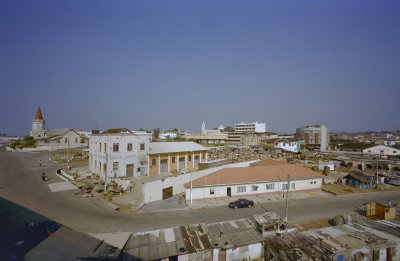
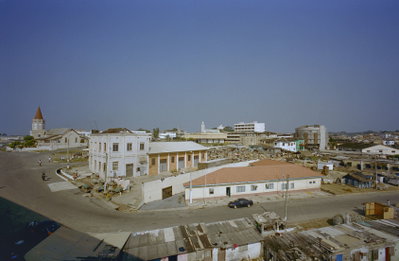
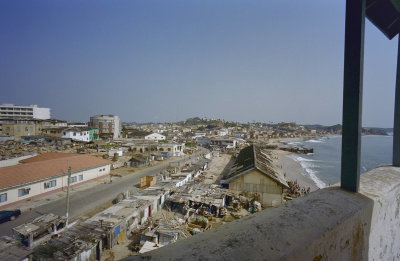
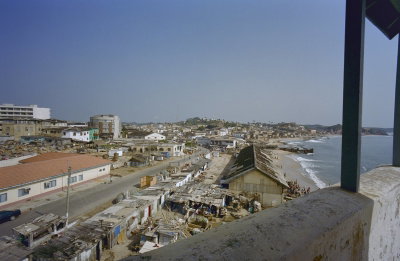
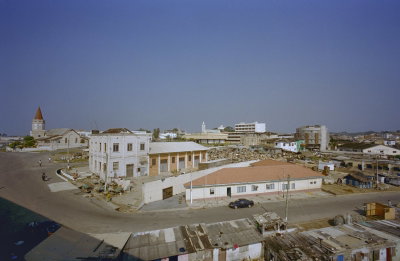
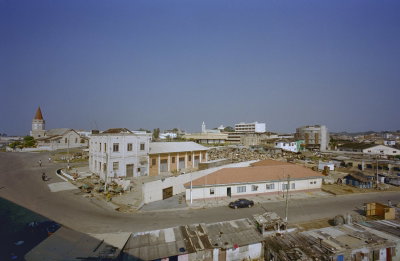
EU: Stadsgezicht vanaf Cape Coast Castle (2000), Cape Coast, 2000
EU: Stadsgezicht vanaf Cape Coast Castle (2000) 2000 The town of Cape Coast seen from the ramparts of Cape Coast Castle in 2000.
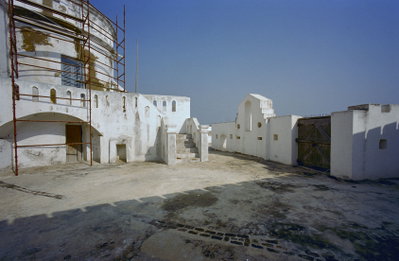
Aanzicht rond uiteinde van rechter vleugel aan de zeezijde - Cape Coast - - RCE, Cape Coast, 2000
Aanzicht rond uiteinde van rechter vleugel aan de zeezijde - Cape Coast - - RCE 2000 The seaward end of a fortification's right wing is shown in this 2000 photograph of Cape Coast, Ghana, taken as part of a survey by the Dutch Cultural Heritage Agency.
EU: Stadsgezicht vanaf Cape Coast Castle (2000) #2, Cape Coast, 2000
EU: Stadsgezicht vanaf Cape Coast Castle (2000) #2 2000 Rooftops and streets of Cape Coast, Ghana, viewed from the ramparts of Cape Coast Castle in this 2000 photograph; the fort was a major hub of the Atlantic slave trade and is now a UNESCO World Heritage Site.
EU: Stadsgezicht vanaf Cape Coast Castle (2000) - view 1, Cape Coast, 2000
EU: Stadsgezicht vanaf Cape Coast Castle (2000) - view 1 2000 The town of Cape Coast, Ghana, seen from the ramparts of Cape Coast Castle, a fortress once used as a holding point in the transatlantic slave trade, photographed in 2000.
EU: Stadsgezicht vanaf Cape Coast Castle (2000) - view 2, Cape Coast, 2000
EU: Stadsgezicht vanaf Cape Coast Castle (2000) - view 2 2000 Another view over Cape Coast, Ghana, taken from Cape Coast Castle in 2000, showing the coastal town that grew up around the historic fort.
EU: Stadsgezicht vanaf Cape Coast Castle 2 (2000), Cape Coast, 2000
EU: Stadsgezicht vanaf Cape Coast Castle 2 (2000) 2000 A view over Cape Coast, Ghana, taken in 2000 from the ramparts of Cape Coast Castle, a fortress that served as a hub of the trans-Atlantic slave trade before becoming a British colonial administrative center and, today, a UNESCO World Heritage site.
EU: Stadsgezicht vanaf Cape Coast Castle (2000) 1, Cape Coast, 2000
EU: Stadsgezicht vanaf Cape Coast Castle (2000) 1 2000 A view of Cape Coast, Ghana, taken from Cape Coast Castle in 2000. The castle, begun by Swedish traders in the 17th century and later held by the Dutch and British, was a major departure point in the Atlantic slave trade and is now a UNESCO World Heritage Site.
EU: Stadsgezicht vanaf Cape Coast Castle (2000) 2, Cape Coast, 2000
EU: Stadsgezicht vanaf Cape Coast Castle (2000) 2 2000 Another 2000 view over the town of Cape Coast, Ghana, seen from the ramparts of Cape Coast Castle.
EU: Stadsgezicht vanaf Cape Coast Castle (view 1) (2000), Cape Coast, 2000
EU: Stadsgezicht vanaf Cape Coast Castle (view 1) (2000) 2000 The town of Cape Coast seen from the ramparts of Cape Coast Castle in 2000, one of the coastal forts built along Ghana's shoreline during the era of European trade and, later, the transatlantic slave trade.
EU: Stadsgezicht vanaf Cape Coast Castle (view 2) (2000), Cape Coast, 2000
EU: Stadsgezicht vanaf Cape Coast Castle (view 2) (2000) 2000 A second 2000 view from Cape Coast Castle looking out over the surrounding town, on the stretch of coast once central to Britain's Gold Coast colony and its coastal trading network.
EU: Stadsgezicht vanaf Cape Coast Castle (2000) A, Cape Coast, 2000
EU: Stadsgezicht vanaf Cape Coast Castle (2000) A 2000 A view of the town of Cape Coast, Ghana, seen from Cape Coast Castle in a 2000 photograph. The castle was originally built for the Atlantic trade and later used as a holding site during the transatlantic slave trade.
EU: Stadsgezicht vanaf Cape Coast Castle (2000) B, Cape Coast, 2000
EU: Stadsgezicht vanaf Cape Coast Castle (2000) B 2000 A second view of Cape Coast, Ghana, taken from Cape Coast Castle in 2000, looking out over the coastal town from the fortified walls of the historic castle.
EU: Stadsgezicht vanaf Cape Coast Castle - Ghana reis Loek Tangel (2000), Cape Coast, 2000
EU: Stadsgezicht vanaf Cape Coast Castle - Ghana reis Loek Tangel (2000) 2000 A view over Cape Coast from the ramparts of Cape Coast Castle, Ghana, photographed in 2000. Built by Swedish traders and later held by the Dutch and British, the castle was a major hub of the Atlantic slave trade before Ghana's independence in 1957.
Stadsgezicht vanaf Cape Coast Castle - Cape Coast - - RCE, Cape Coast, 2000
Stadsgezicht vanaf Cape Coast Castle - Cape Coast - - RCE 2000 This year-2000 photograph, part of a documentation series by the Rijksdienst voor het Cultureel Erfgoed (RCE), the Dutch Cultural Heritage Agency, shows the townscape of Cape Coast as seen from the ramparts of Cape Coast Castle, the fort central to the town's history.
EU: Overzicht met buitenmuren fort, Ghana reis Loek Tangel (2000), Cape Coast, 2000
EU: Overzicht met buitenmuren fort, Ghana reis Loek Tangel (2000) 2000 From a 2000 Ghana travel series by Loek Tangel, this photograph shows the outer walls of the coastal fort at Cape Coast, one of the fortified trading posts European powers built along the Gold Coast.
EU: Overzicht voorgevel, Ghana reis Loek Tangel (2000), Cape Coast, 2000
EU: Overzicht voorgevel, Ghana reis Loek Tangel (2000) 2000 Also from Loek Tangel's 2000 trip to Ghana, this image records the facade of a building at Cape Coast, the coastal town long associated with its seventeenth-century castle.
EU: Stadsgezicht vanaf Cape Coast Castle, Ghana reis Loek Tangel (2000), Cape Coast, 2000
EU: Stadsgezicht vanaf Cape Coast Castle, Ghana reis Loek Tangel (2000) 2000 Taken during Loek Tangel's 2000 journey through Ghana, this photograph looks out over the town of Cape Coast from the walls of Cape Coast Castle, the fort that gave the town its name.
EU: Cityscape from Cape Coast Castle (2000), Cape Coast, 2000
EU: Cityscape from Cape Coast Castle (2000) 2000 This 2000 photograph looks out over the town of Cape Coast from the ramparts of its castle, the fortress whose commanding position once served the transatlantic slave trade and now overlooks a busy fishing community.
EU: Cityscape from Cape Coast Castle, town square view (2000), Cape Coast, 2000
EU: Cityscape from Cape Coast Castle, town square view (2000) 2000 A view toward the town square below Cape Coast Castle was captured in this 2000 photograph, showing the settlement that grew up around the fort on Ghana's central coast over the centuries since its founding.
EU: Stadsgezicht vanaf Cape Coast Castle (2002), Cape Coast, 2000
EU: Stadsgezicht vanaf Cape Coast Castle (2002) 2000 A view of Cape Coast, Ghana, photographed from within Cape Coast Castle around 2000, looking out over the surrounding town toward the Gulf of Guinea.
EU: Cape Coast Castle, zeezijde (2002), Cape Coast, 2000
EU: Cape Coast Castle, zeezijde (2002) 2000 This photograph, taken around 2000, shows the seaward side of Cape Coast Castle on Ghana's coast, with the fort's walls facing the Atlantic surf.
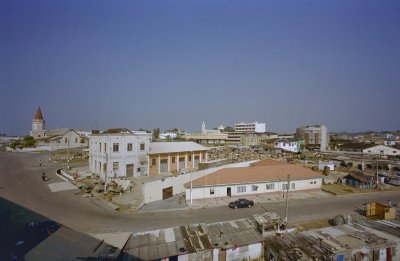
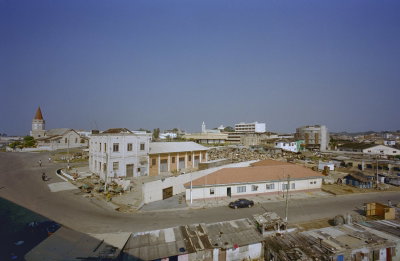
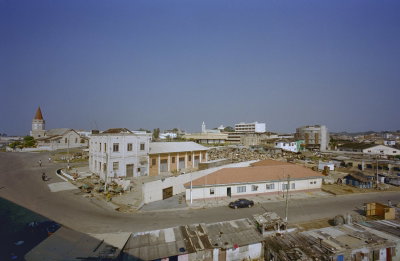
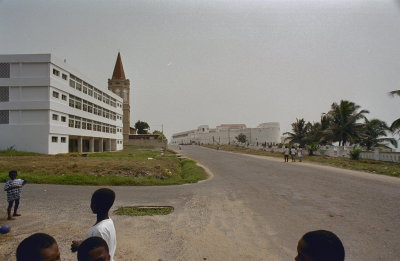
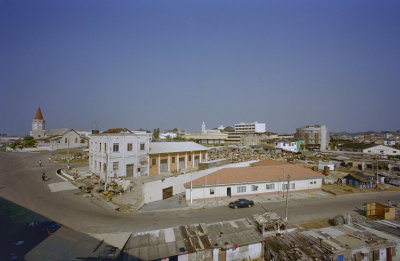
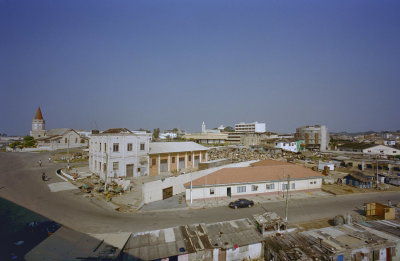
EU: Cape Coast town view from the castle, church tower and street (2000), Cape Coast, 2000
EU: Cape Coast town view from the castle, church tower and street (2000) 2000 Taken from Cape Coast Castle around 2000, this photograph looks over the town of Cape Coast, Ghana, taking in a church tower and street below amid the town's mix of old and newer buildings.
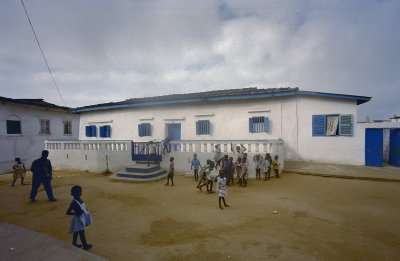
EU: Cape Coast, colonial-era building facade with courtyard (2000), Cape Coast, 2000
EU: Cape Coast, colonial-era building facade with courtyard (2000) 2000 Around 2000, this photograph shows the facade and courtyard of a colonial-era building in Cape Coast, Ghana, part of the town's surviving older architecture near the coast.
EU: Stadsgezicht vanaf Cape Coast Castle (2) (2000), Cape Coast, 2000
EU: Stadsgezicht vanaf Cape Coast Castle (2) (2000) 2000 A second view of Cape Coast, Ghana, photographed from Cape Coast Castle around 2000, taken from a different vantage point along the fort looking over the rooftops of the town.
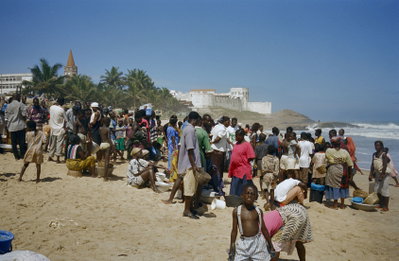
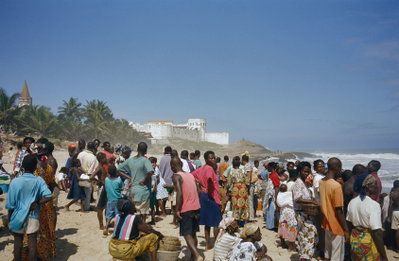
Bedrijvigheid op het strand met fort op de achtergrond - Cape Coast - - RCE, Cape Coast, 2002
Bedrijvigheid op het strand met fort op de achtergrond - Cape Coast - - RCE 2002 Beach activity unfolds with a fort in the background in this 2002 photograph of Cape Coast, Ghana, home to Cape Coast Castle, a former trading post later used in the transatlantic slave trade.
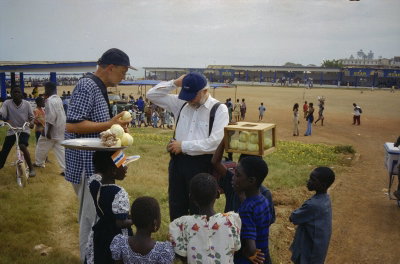
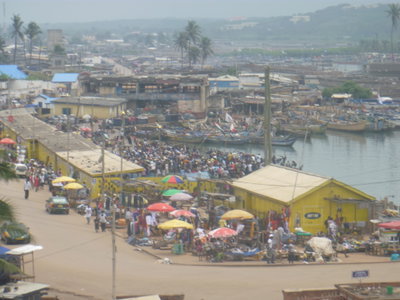
EU: Jaarmarkt (2002), Cape Coast, 2002
EU: Jaarmarkt (2002) 2002 A market gathering in Cape Coast, Ghana, photographed in 2002 near the historic castle that overlooks the town.
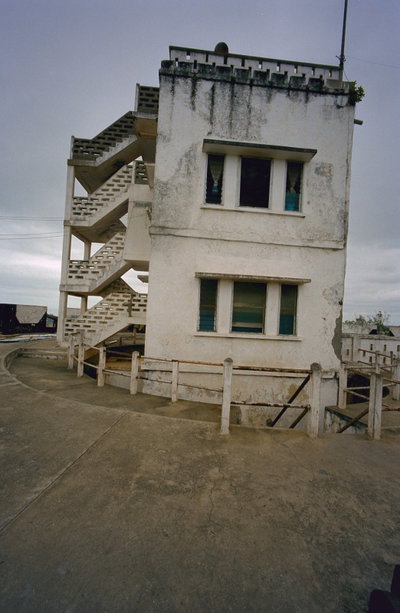
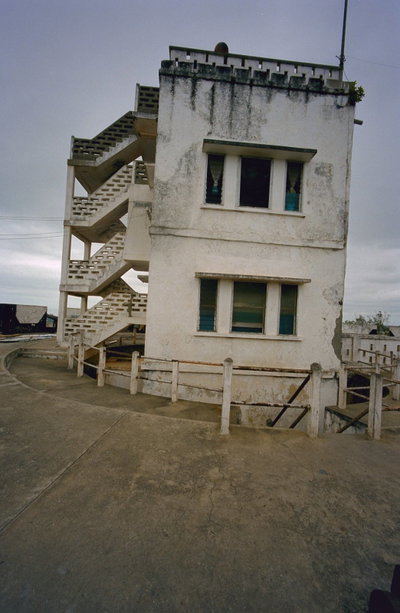
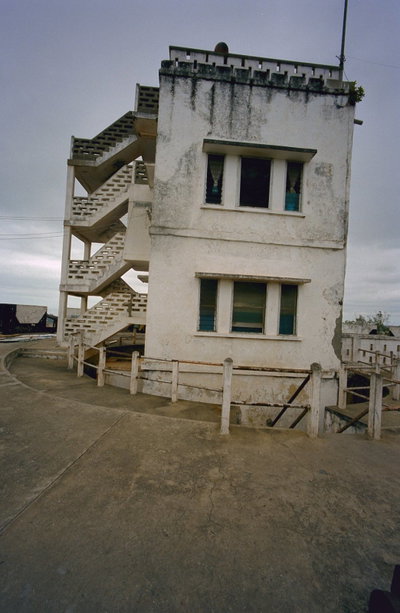
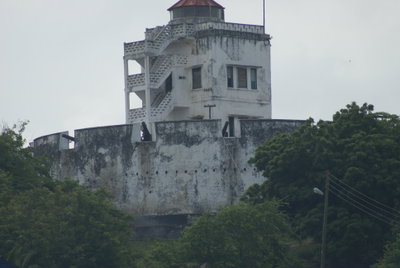
EU: Overzicht uitkijktoren (2002), Cape Coast, 2002
EU: Overzicht uitkijktoren (2002) 2002 The lookout tower of Cape Coast Castle, Ghana, photographed in 2002.
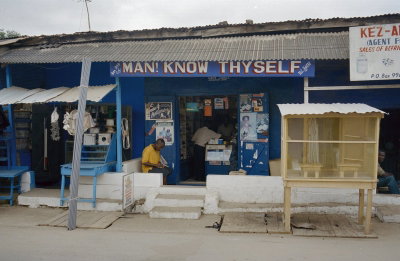
EU: Aanzicht winkeltje (2002), Cape Coast, 2002
EU: Aanzicht winkeltje (2002) 2002 This 2002 photograph shows a small shopfront in Cape Coast, Ghana, a coastal town on the Gulf of Guinea with a long history tied to the Atlantic trade. The town grew around its fort and harbor, which once served as a hub for regional and transatlantic commerce.
EU: Overzicht trappartij (2002), Cape Coast, 2002
EU: Overzicht trappartij (2002) 2002 Taken in 2002, this image shows a stairway in Cape Coast, Ghana, a town whose historic core includes buildings from the colonial era along the coast. Cape Coast Castle, one of the town's landmarks, overlooks the same stretch of shoreline.
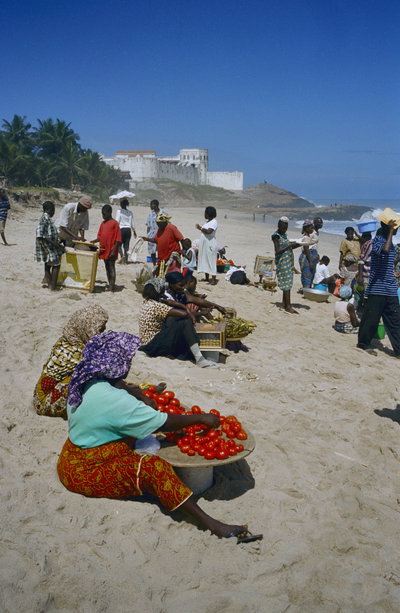
Bedrijvigheid op het strand met fort op de achtergrond - Cape Coast - - RCE, Cape Coast, 2002
Bedrijvigheid op het strand met fort op de achtergrond - Cape Coast - - RCE 2002 Fishermen and beachgoers at Cape Coast in 2002, with the walls of Cape Coast Castle rising in the background over a beach still central to the town's daily fishing economy.
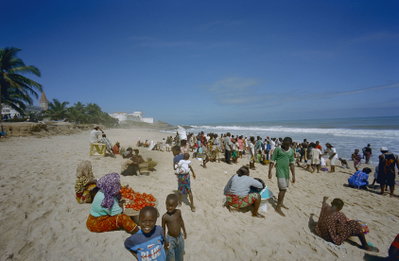
Bedrijvigheid op het strand met fort op de achtergrond - Cape Coast - - RCE, Cape Coast, 2002
Bedrijvigheid op het strand met fort op de achtergrond - Cape Coast - - RCE 2002 A second 2002 photograph of the busy beach at Cape Coast, taken with the old fort visible behind the shoreline activity that has continued there for generations.
Bedrijvigheid op het strand met fort op de achtergrond - Cape Coast - - RCE, Cape Coast, 2002
Bedrijvigheid op het strand met fort op de achtergrond - Cape Coast - - RCE 2002 A third view of beach life at Cape Coast in 2002, framed by the castle that has watched over this stretch of coast since Swedish traders first built there in the seventeenth century.
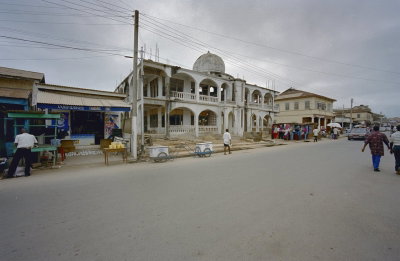
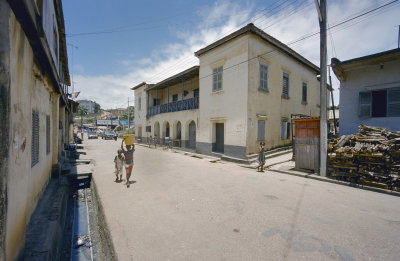
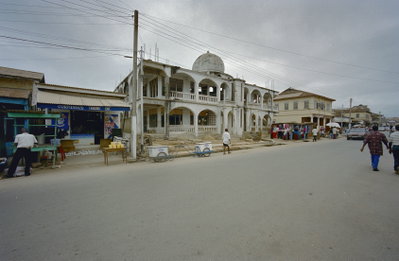
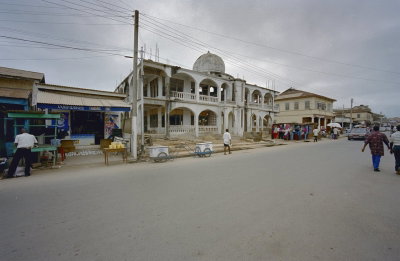
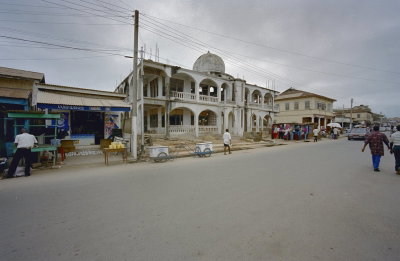
EU: Overzicht - domed building street, Cape Coast (2002), Cape Coast, 2002
EU: Overzicht - domed building street, Cape Coast (2002) 2002 A street in Cape Coast, Ghana, lined with older buildings, one topped by a dome, photographed in 2002. Cape Coast served as capital of the British Gold Coast colony before Accra and still holds a dense core of older architecture.
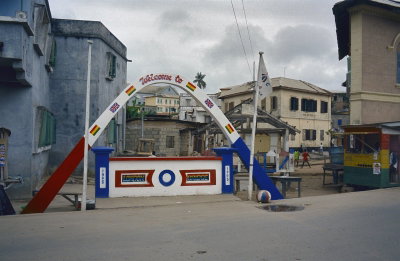
EU: Overzicht - London Bridge arch, Cape Coast (2002), Cape Coast, 2002
EU: Overzicht - London Bridge arch, Cape Coast (2002) 2002 An arch known locally as London Bridge spans a street in Cape Coast, Ghana, in this 2002 photograph. The town grew up around its coastal fortifications and was for decades the administrative center of the Gold Coast.
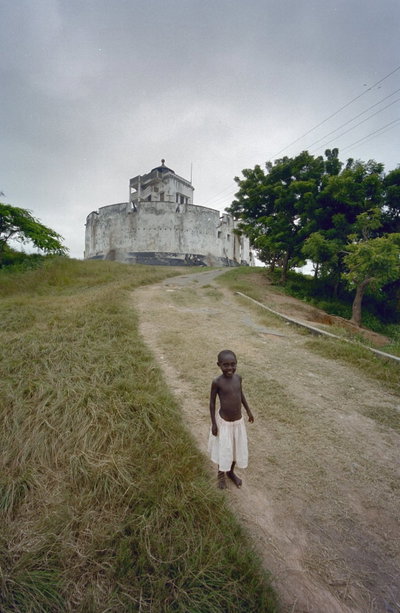
EU: Overzicht - hilltop fort, Cape Coast (2002), Cape Coast, 2002
EU: Overzicht - hilltop fort, Cape Coast (2002) 2002 A fort overlooks the town of Cape Coast, Ghana, from a nearby hilltop in this 2002 image. Fortified positions along this stretch of coast date back to the era of European trading posts on the Gold Coast.
EU: Overzicht - City Photographic Studio street, Cape Coast (2002), Cape Coast, 2002
EU: Overzicht - City Photographic Studio street, Cape Coast (2002) 2002 A street in Cape Coast, Ghana, photographed in 2002, with a sign for the City Photographic Studio among its storefronts. Cape Coast was the capital of the Gold Coast colony until the seat of government moved to Accra in 1877.
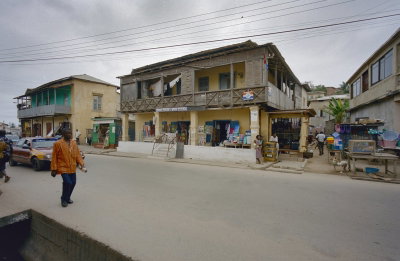
EU: Overzicht - colonial building street, Cape Coast (2002), Cape Coast, 2002
EU: Overzicht - colonial building street, Cape Coast (2002) 2002 Older buildings line a street in Cape Coast, Ghana, in this 2002 photograph. Many structures from the town's decades as a colonial administrative and trading center still stand in its historic core.
EU: Overzicht - yellow colonial corner building, Cape Coast (2002), Cape Coast, 2002
EU: Overzicht - yellow colonial corner building, Cape Coast (2002) 2002 A yellow building stands on a street corner in Cape Coast, Ghana, in this 2002 image. Cape Coast's town center preserves a mix of older buildings dating from its time as a Gold Coast port and administrative hub.
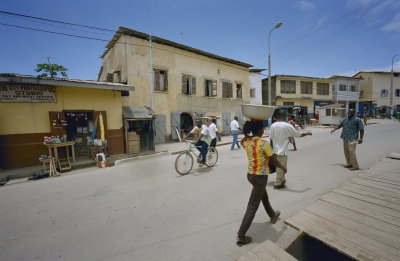
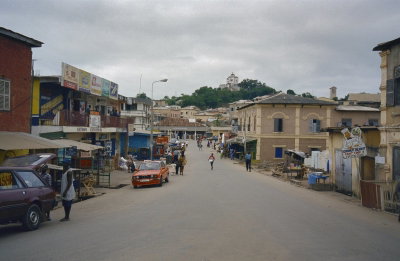
EU: Overzicht - main street with hilltop fort view, Cape Coast (2002), Cape Coast, 2002
EU: Overzicht - main street with hilltop fort view, Cape Coast (2002) 2002 Cape Coast's main street is seen here in 2002, with a fort visible on a hilltop in the background. The town developed around its coastal fortifications during the era of Atlantic trade along the Gold Coast.
Overzicht - Cape Coast - - RCE, Cape Coast, 2002
Overzicht - Cape Coast - - RCE 2002 RCE image 20373112 provides a general view of Cape Coast, Ghana, recorded in 2002 as part of the agency's ongoing survey of former European colonial sites on the Gold Coast.
Overzicht - Cape Coast - - RCE, Cape Coast, 2002
Overzicht - Cape Coast - - RCE 2002 A companion frame, RCE image 20373113, offers a further 2002 overview of Cape Coast, the Ghanaian town whose castle once served as the seat of British colonial administration before it moved to Accra.
EU: Overzicht uitkijktoren, Ghana reis Loek Tangel (2002), Cape Coast, 2002
EU: Overzicht uitkijktoren, Ghana reis Loek Tangel (2002) 2002 From Loek Tangel's 2002 Ghana trip, this photograph shows a watchtower forming part of the historic fortifications at Cape Coast Castle, overlooking the town and the Gulf of Guinea.
EU: Overzicht, Ghana reis Loek Tangel (2002), Cape Coast, 2002
EU: Overzicht, Ghana reis Loek Tangel (2002) 2002 This untitled frame from the same 2002 travel series documents a further scene at Cape Coast, Ghana, near the town's historic castle.
EU: Aanzicht winkeltje, Ghana reis Loek Tangel (2002), Cape Coast, 2002
EU: Aanzicht winkeltje, Ghana reis Loek Tangel (2002) 2002 Taken during Loek Tangel's 2002 Ghana trip, this photograph captures a small shop at Cape Coast, a town that grew up around its seventeenth-century coastal fort.
EU: Overzicht trappartij, Ghana reis Loek Tangel (2002), Cape Coast, 2002
EU: Overzicht trappartij, Ghana reis Loek Tangel (2002) 2002 A stairway within the Cape Coast fortifications is the subject of this 2002 image, part of the same travel series documenting the town's historic castle.
EU: Cape Coast street with domed colonial building (2002), Cape Coast, 2002
EU: Cape Coast street with domed colonial building (2002) 2002 Around 2002, this photograph shows a street in Cape Coast, Ghana, lined by a colonial-era building topped with a dome, part of the town's varied older architecture.
EU: Cape Coast Castle watchtower building (2002), Cape Coast, 2002
EU: Cape Coast Castle watchtower building (2002) 2002 This photograph, taken around 2002, shows a watchtower building within Cape Coast Castle, Ghana, one of several structures that made up the fort's defensive layout.
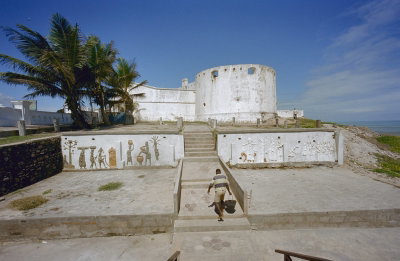
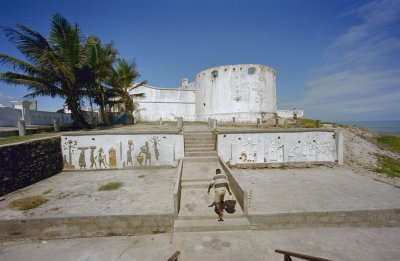
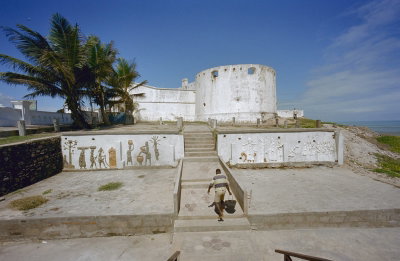
EU: Fort William, Cape Coast, staircase with commemorative reliefs (2002), Cape Coast, 2002
EU: Fort William, Cape Coast, staircase with commemorative reliefs (2002) 2002 Around 2002, this image shows a staircase at Fort William in Cape Coast, Ghana, decorated with commemorative reliefs marking events in the fort's history.
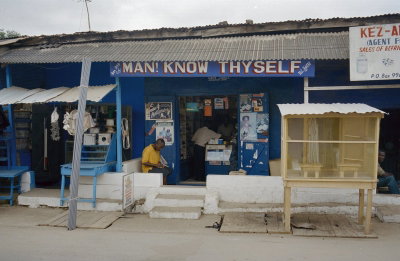
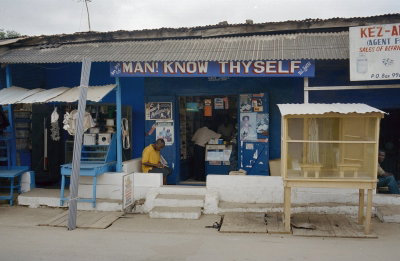
EU: Cape Coast street shop front, Man Know Thyself store (2002), Cape Coast, 2002
EU: Cape Coast street shop front, Man Know Thyself store (2002) 2002 This photograph, taken around 2002, shows a shopfront in Cape Coast, Ghana, for a store called Man Know Thyself, a small detail of the town's everyday street life.
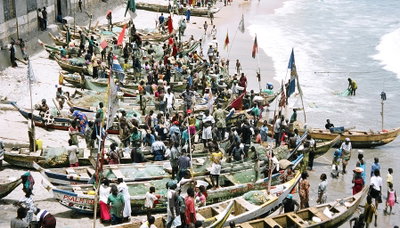
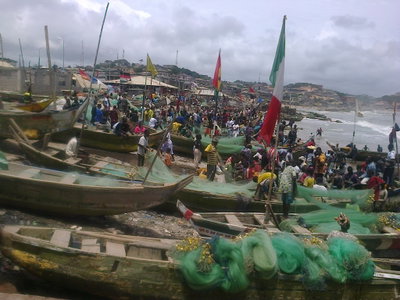
Fishing boats Cape Coast Ghana, Cape Coast, 2005
Fishing boats Cape Coast Ghana 2005 Fishing boats along the shore at Cape Coast, Ghana, photographed in 2005. The town's economy has long depended on artisanal fishing off Ghana's Atlantic coastline.
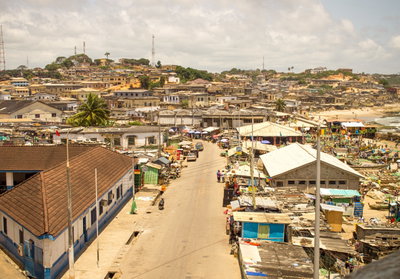
Cape Coast road, Cape Coast, 2006
Cape Coast road 2006 A road through the coastal town of Cape Coast, Ghana, in 2006.
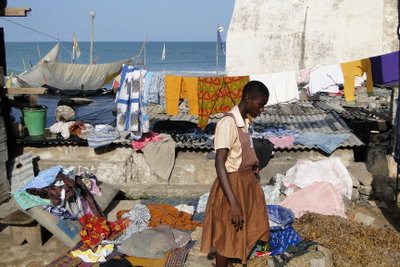
Laundry Hangs in Fishing Village - Outside Cape Coast Castle - Cape Coast - Ghana, Cape Coast, 2010
Laundry Hangs in Fishing Village - Outside Cape Coast Castle - Cape Coast - Ghana 2010 Laundry hung to dry in a fishing village near Cape Coast Castle, Ghana, in 2010. The castle, a former European trading fort, overlooks the coastal community and its fishing activity.
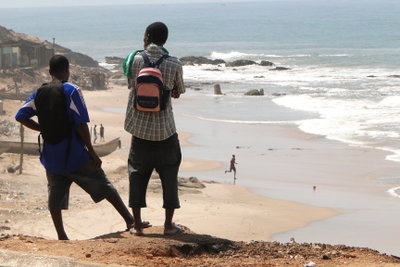
Young Men Look Out on Beach - Cape Coast - Ghana, Cape Coast, 2010
Young Men Look Out on Beach - Cape Coast - Ghana 2010 Young men look out over the beach at Cape Coast, Ghana, in a 2010 photograph. Cape Coast's shoreline has long supported a fishing economy alongside the town's historic fortifications.
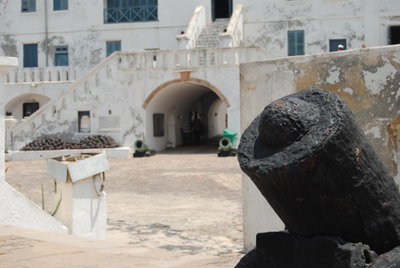
Mortar in Cape Coast, Cape Coast, 2010
Mortar in Cape Coast 2010 This 2010 photograph shows a mortar, likely among the artillery pieces preserved at Cape Coast Castle, one of Ghana's historic coastal forts built during the era of Atlantic trade.
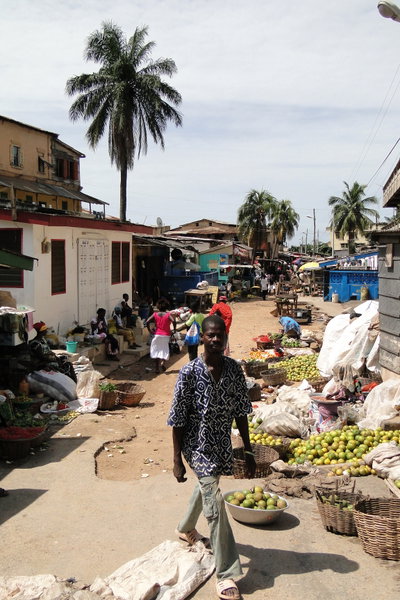
Street Scene - Cape Coast - Ghana, Cape Coast, 2010
Street Scene - Cape Coast - Ghana 2010 A 2010 street scene from Cape Coast, Ghana, a coastal town that served as the capital of British-controlled Gold Coast before Accra.
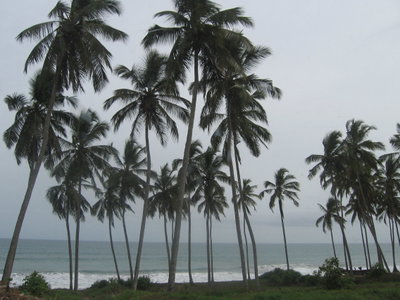
Cape Coast, Ghana, Cape Coast, 2011
Cape Coast, Ghana 2011 A view of Cape Coast, Ghana, a coastal town best known for the fortified castle that served as a hub of the Atlantic slave trade under successive European powers.
Cape Coast 2, Cape Coast, 2011
Cape Coast 2 2011 Cape Coast, Ghana, home to Cape Coast Castle, one of dozens of fortified trading posts built along the Gold Coast from the 17th century onward and later a hub of the Atlantic slave trade.
Cape Coast Ghana, Cape Coast, 2011
Cape Coast Ghana 2011 The town of Cape Coast in Ghana, once the capital of the British Gold Coast colony before the seat of government moved to Accra in 1877, still centered on its historic fortified castle.
5010 Cape Coast Castle, Cape Coast, 2012
5010 Cape Coast Castle 2012 Cape Coast Castle, one of the largest of the former trading posts on Ghana's coast, is shown here in 2012. Built and expanded by successive European traders, the castle is now preserved as a UNESCO World Heritage Site and a memorial to the transatlantic slave trade.
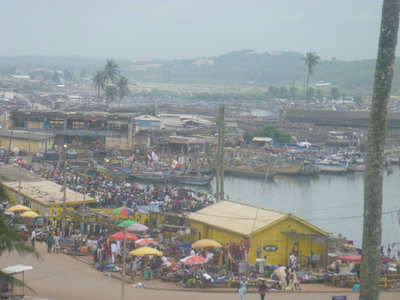
Fishing Harbor Capecoast, Cape Coast, 2012
Fishing Harbor Capecoast 2012 The fishing harbor at Cape Coast, Ghana, photographed in 2012. Cape Coast has been a fishing community for centuries and lies near Cape Coast Castle, a former center of the transatlantic slave trade.
Cape Coast Fort William Lighthouse, Cape Coast, 2013
Cape Coast Fort William Lighthouse 2013 Fort William, now home to a lighthouse, stands near Cape Coast Castle on Ghana's coast, part of a chain of forts built along the former Gold Coast during the era of European trading presence.
Cape Coast Ghana Castle 4, Cape Coast, 2014
Cape Coast Ghana Castle 4 2014 A view of Cape Coast Castle, photographed in 2014. Built and expanded by successive European traders on Ghana's Gold Coast, the fort was one of dozens along this stretch of coastline used in the Atlantic trade.
Cape Coast Ghana 1, Cape Coast, 2014
Cape Coast Ghana 1 2014 Cape Coast, Ghana, photographed in 2014. The coastal town is home to Cape Coast Castle, a former slave-trading post now preserved as a UNESCO World Heritage Site, and once served as the capital of the Gold Coast colony.
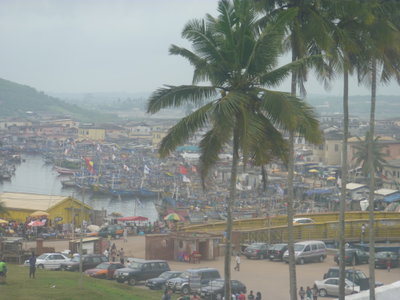
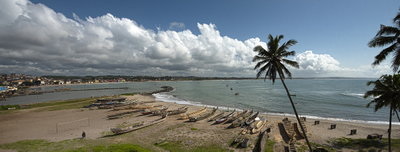
Cape Coast Bay, Cape Coast, 2018
Cape Coast Bay 2018 Fishing canoes line the sandy bay at Cape Coast, Ghana, with a single palm tree framing the shoreline. The town, home to the former slave-trading post of Cape Coast Castle, has long depended on fishing as a mainstay of its coastal economy.
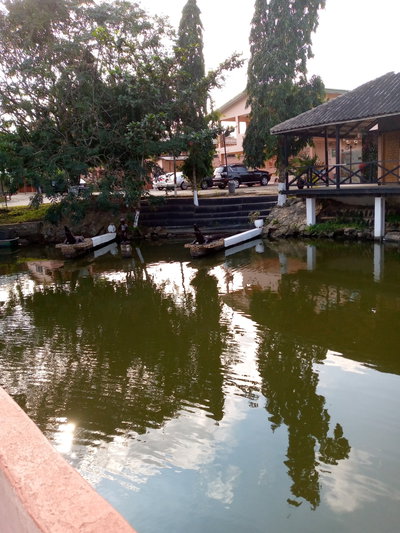
Hans Cottage; Cape Coast, Ghana, Cape Coast, 2020
Hans Cottage; Cape Coast, Ghana 2020 Hans Cottage, near Cape Coast in Ghana's Central Region, pictured in 2020. The lakeside guesthouse is locally known for the pond beside its restaurant, where crocodiles bask within view of visiting travelers.
Cape Coast Castle 09, Cape Coast, 2025
Cape Coast Castle 09 2025 Cannons line the seaward wall of Cape Coast Castle in Ghana, a fortress built by European traders and later used in the transatlantic slave trade, now preserved as a UNESCO World Heritage Site. Fishing canoes rest on the beach below. Photographed in 2025.