Home › Cape Coast › Castle docks

Castle docks through time

Cape Coast 1870–2025 23 photos of this spot

23 photographs taken at the same spot in Cape Coast, spanning 1870–2025 — 2 of them from before 1980. Line them up and watch the place change.

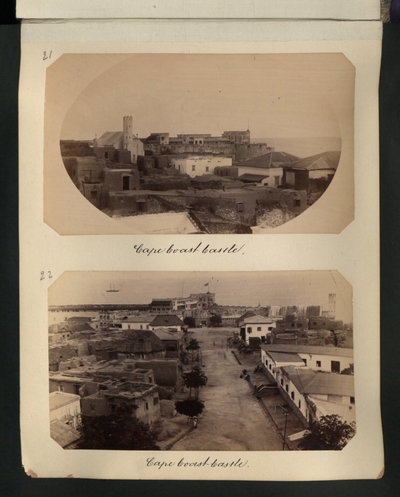
A photograph from the CO 1069 series held by the UK National Archives, showing Cape Coast, Ghana, around 1870. Cape Coast was a major British colonial administrative center on the Gold Coast during this period.

See this spot on the map
Have an old photo of Castle docks? A family album, a postcard, a print from the attic. Pin it to the map and it becomes part of the record.
Add your photo
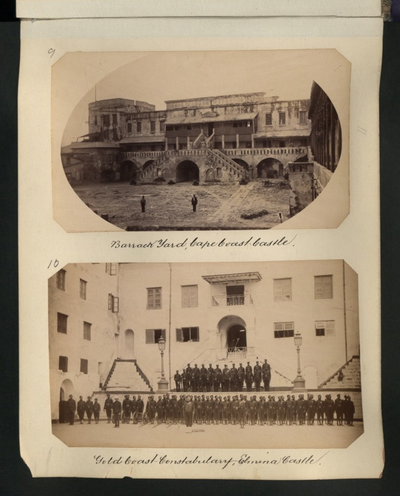
The National Archives UK - CO, Cape Coast, 1870
The National Archives UK - CO 1870 A photograph from the CO 1069 series held by the UK National Archives, showing Cape Coast, Ghana, around 1870. Cape Coast was a major British colonial administrative center on the Gold Coast during this period.
The National Archives UK - CO, Cape Coast, 1870
The National Archives UK - CO 1870 Another image from the CO 1069 series at the UK National Archives, depicting Cape Coast, Ghana, around 1870, when the town served as a hub of British colonial administration on the Gold Coast.
Cape Coast Burg, Cape Coast, 2010
Cape Coast Burg 2010 A fortified structure along the shoreline at Cape Coast, Ghana, part of the coastal chain of forts and castles built by European traders from the 15th century onward.
Cape Coast castle, Cape Coast, 2012
Cape Coast castle 2012 This 2012 photograph shows Cape Coast Castle in Ghana, a fortress built by European traders in the 17th century that later served as a major hub in the transatlantic slave trade and is now a UNESCO World Heritage Site.
Looking Over the Bight, Cape Coast, 2012
Looking Over the Bight 2012 Looking out over the bight at Cape Coast, Ghana, where the rocky shoreline and Atlantic surf meet the town and its historic coastal fortifications, a view that has changed little since the area's colonial trading era. Photographed in 2012.
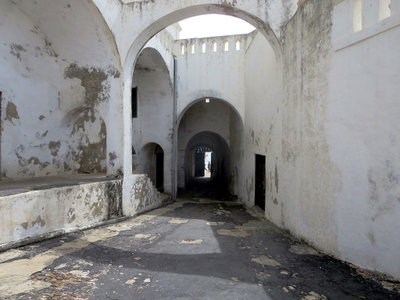
Door of No Return, Cape Coast, 2015
Door of No Return 2015 The 'Door of No Return' at Cape Coast Castle, Ghana, was the passage through which captives were marched onto ships during the trans-Atlantic slave trade. Photographed in 2015.
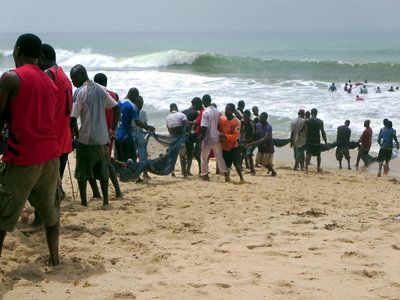
Fishermen Hauling in a Net, Cape Coast, 2015
Fishermen Hauling in a Net 2015 Fishermen haul in a net along the shore at Cape Coast, Ghana, in this 2015 photograph.
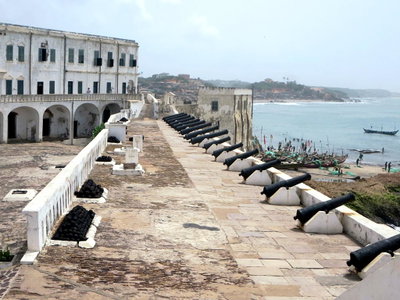
Southeast Battery of Cape Coast Castle, Cape Coast, 2015
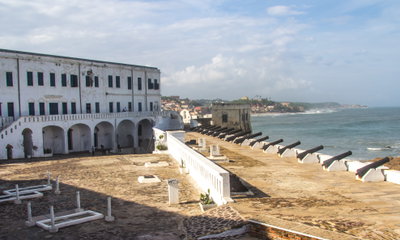
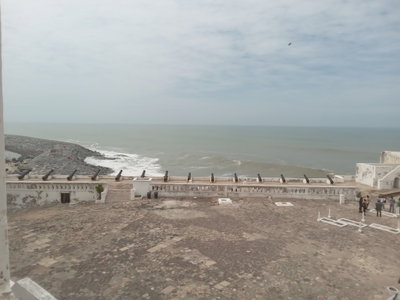
Southeast Battery of Cape Coast Castle 2015 The southeast battery of Cape Coast Castle, a coastal fortification on Ghana's Gulf of Guinea shoreline later used in the trans-Atlantic slave trade. Image from 2015.
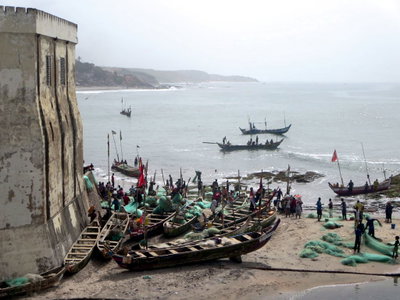
Beach at Cape Coast, Cape Coast, 2015
Beach at Cape Coast 2015 The beach at Cape Coast, Ghana, along the Gulf of Guinea. Photographed in 2015.
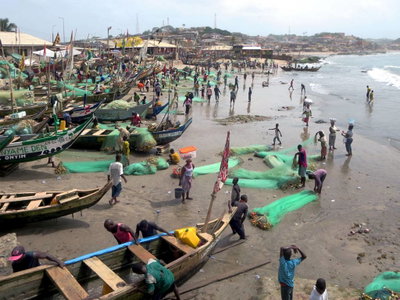
Gulf of Guinea Fishing Boats, Cape Coast, 2015
Gulf of Guinea Fishing Boats 2015 Fishing boats on the Gulf of Guinea at Cape Coast, Ghana, in a 2015 photograph.
Cape Coast Castle , Central Ghana, Cape Coast, 2016
Cape Coast Castle , Central Ghana 2016 Cape Coast Castle on the coast of central Ghana, a fortress used during the trans-Atlantic slave trade and now a UNESCO World Heritage Site. Photographed in 2016.
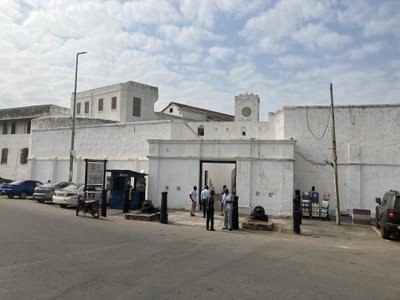
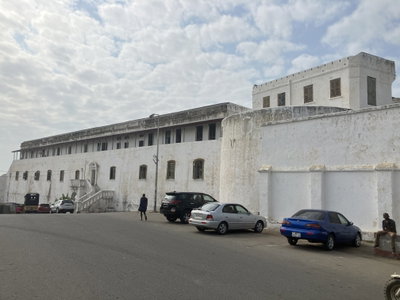
Castle docks, Cape Coast, 2021
Castle docks 2021 The docks beside Cape Coast Castle in Ghana. Built by European traders and later used as a holding site during the transatlantic slave trade, the castle and its waterfront are now preserved as a UNESCO World Heritage site.
A cross section of the castle, Cape Coast, 2022
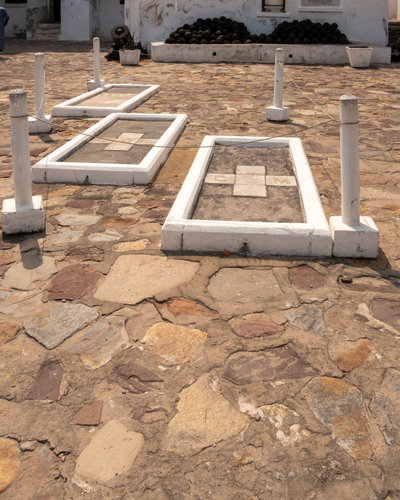
A cross section of the castle 2022 A section of Cape Coast Castle in Ghana, photographed in 2022. The fortress, built by European traders in the 17th century, was later used in the transatlantic slave trade and is now a UNESCO World Heritage Site.
A cross section of the castle 2, Cape Coast, 2022
A cross section of the castle 2 2022 Cape Coast Castle, a former slave-trading fortification on Ghana's Atlantic coast and now a UNESCO World Heritage Site, is shown here in a 2022 photograph of a cross section of its structure.
Cape Coast Castle in Central Region 02, Cape Coast, 2023
Cape Coast Castle in Central Region 02 2023 Cape Coast Castle in Ghana was a major hub of the transatlantic slave trade and is now preserved as a UNESCO World Heritage Site; this photograph was taken in 2023.
Castle, Cape Coast (P1100222), Cape Coast, 2023
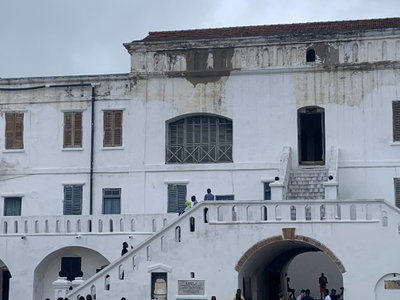
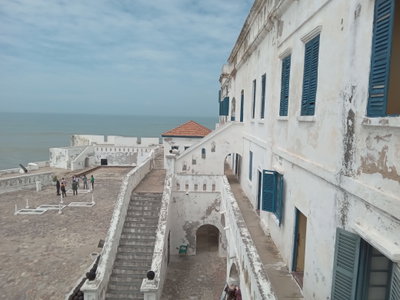
Castle, Cape Coast (P1100222) 2023 Cape Coast Castle, the fortified compound on Ghana's coast that changed hands among Swedish, Dutch, and British traders and was later used as a hub of the transatlantic slave trade before Ghana's independence in 1957.
Cape Coast Castle in Central Region 03, Cape Coast, 2023
Cape Coast Castle in Central Region 03 2023 Cape Coast Castle in Ghana's Central Region, photographed in 2023. Built by European traders in the 17th century, the fortress was later used as a hub in the transatlantic slave trade and is now a UNESCO World Heritage site.
Castle, Cape Coast (P1100216), Cape Coast, 2023
Castle, Cape Coast (P1100216) 2023 Cape Coast Castle on Ghana's coast, photographed in 2023. Originally built by European traders in the seventeenth century and later expanded by the British, the fortress was used in the Atlantic slave trade and is now a UNESCO World Heritage Site.
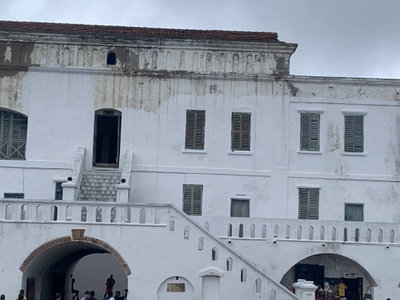
Castle, Cape Coast (P1100223), Cape Coast, 2023
Castle, Cape Coast (P1100223) 2023 Another 2023 view of Cape Coast Castle, Ghana. Like nearby Elmina Castle, it was built by European traders along the Gold Coast and later played a central role in the Atlantic slave trade before becoming a heritage museum.
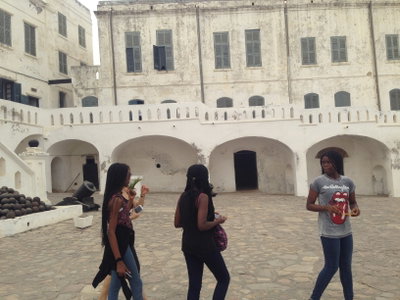
Cannonball at Cape Coast Castle, Cape Coast, 2023
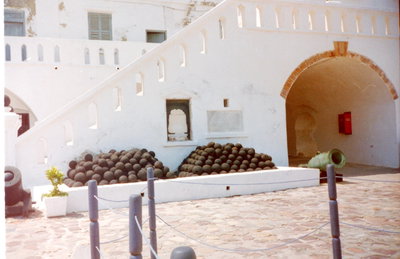
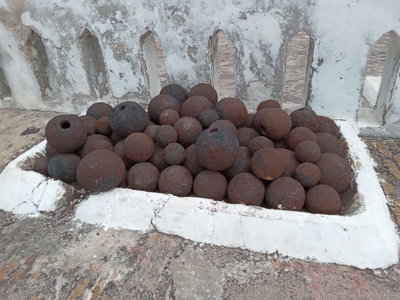
Cannonball at Cape Coast Castle 2023 A cannonball preserved at Cape Coast Castle, a relic of the fort's role in the coastal defense and trade networks of the Gold Coast.
Castle, Cape Coast (P1100224), Cape Coast, 2023
Castle, Cape Coast (P1100224) 2023 This 2023 photograph shows Cape Coast Castle on the Gulf of Guinea. Like Elmina Castle further along the coast, it served as a departure point in the trans-Atlantic slave trade and is today a UNESCO World Heritage Site.
Entrance of Cape Coast Castle, Cape Coast, 2025
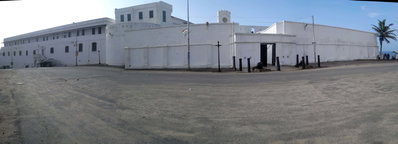
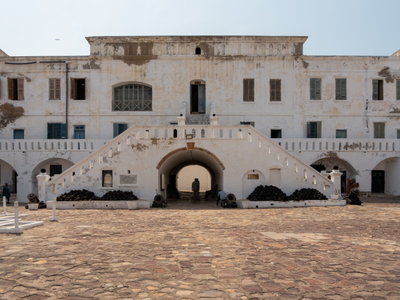
Entrance of Cape Coast Castle 2025 Cape Coast Castle on Ghana's Gulf of Guinea coast was a fortified trading post used by successive European powers and later became a major departure point in the transatlantic slave trade; its entrance remains one of the most visited historic sites in the country.
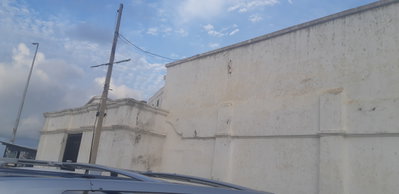
Blick auf Cape Coast Castle, Cape Coast, 2025
Blick auf Cape Coast Castle 2025 Cape Coast Castle's whitewashed ramparts rise above a street lined with parked cars, one of several former European trading forts along Ghana's coast later used as a holding site during the Atlantic slave trade.