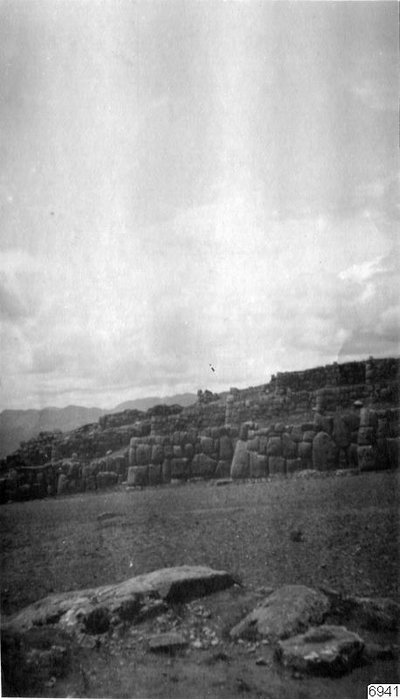
EU: inkafästning, befästning, stenmur, ruin, fotografi, photograph (1980)
1929
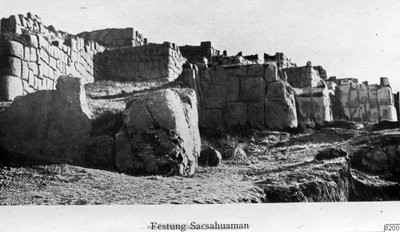
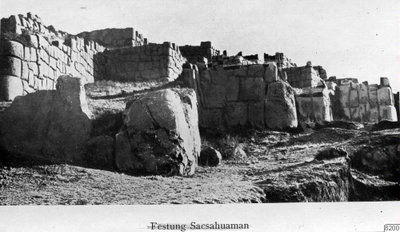
An Inca-era fortification wall in Cusco, Peru, recorded in 1929; ruins of this kind are typical of the massive stone construction associated with the former Inca capital.
![EU: befästning, detalj, fästning, inkafästning, fotografi, photograph [1976763] (1930), Cusco, 1930](https://cdn.placewas.com/placewas/a3907dfa6526432fbb201fa493c13c39.jpg?width=400)
EU: befästning, detalj, fästning, inkafästning, fotografi, photograph [1976763] (1930)
1930
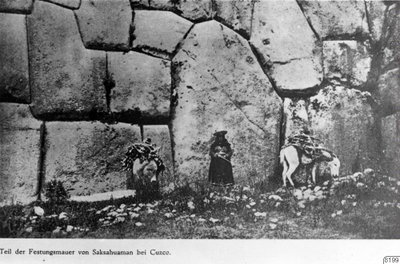
Detail of an Inca fortress wall near Cusco, photographed in 1930, showing the precisely fitted stonework characteristic of Inca military and ceremonial architecture in the region.
![EU: befästning, del, inkafästning, fästningsmur, fotografi, photograph [1976762] (1930), Cusco, 1930](https://cdn.placewas.com/placewas/7e517114e79f486d91bb273c322b0ac6.jpg?width=400)
EU: befästning, del, inkafästning, fästningsmur, fotografi, photograph [1976762] (1930)
1930
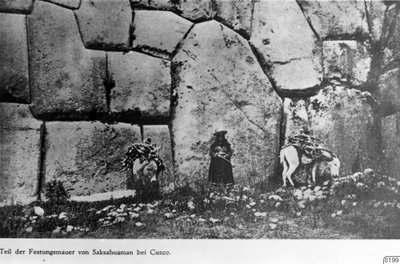
A section of Inca fortress wall near Cusco, photographed in 1930. The massive interlocking stones, laid without mortar, are typical of Inca construction found throughout the sites surrounding the former imperial capital.
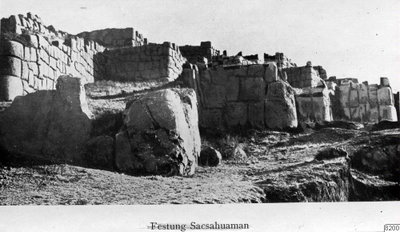
EU: befästning, detalj, fästning, inkafästning, fotografi, photograph (SMVK_VKM_fotografi_1976763) (1930)
1930
A detail of an Inca-era fortification wall near Cusco, photographed in 1930 as part of a Swedish ethnographic survey. The close view highlights the precise stone-fitting technique characteristic of Inca masonry, built without mortar.
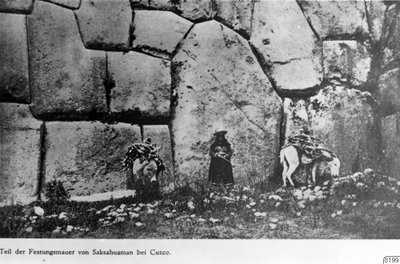
EU: befästning, del, inkafästning, fästningsmur, fotografi, photograph (SMVK_VKM_fotografi_1976762) (1930)
1930
This 1930 image, part of a Swedish museum archive, records a section of an Inca fortress wall near Cusco. The photograph focuses on the tightly interlocked stonework typical of pre-Columbian Andean construction.
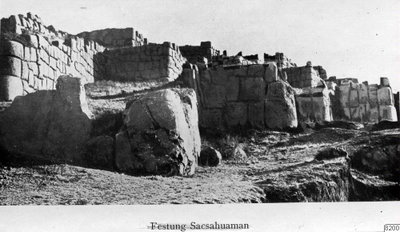
EU: befästning, detalj, fästning, inkafästning, fotografi, photograph
1930
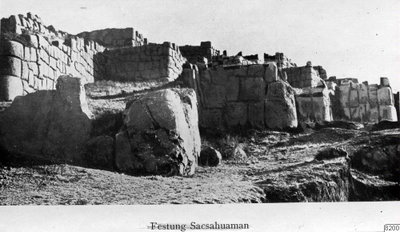
This 1930 image shows a detail of the massive stonework at Sacsayhuaman, the Inca fortress complex above Cusco, Peru, once the capital of the Inca Empire.
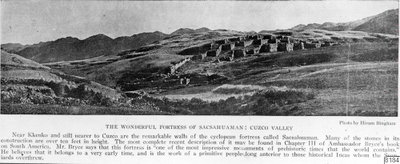
EU: konstruktion, utsikt, befästning, fästning, stenblock, fotografi, photograph
1930
Large interlocking stone blocks of the Sacsayhuaman fortress walls above Cusco are visible in this 1930 photograph, showing the precision Inca builders achieved without mortar.
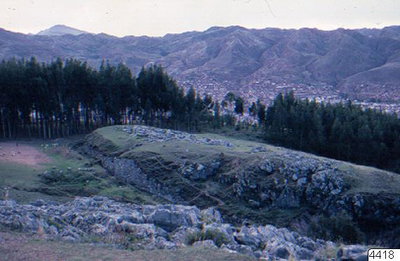
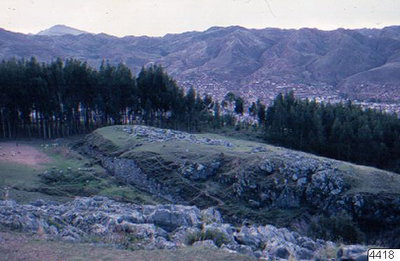
EU: ruin, fästning, fotografi, photograph (SMVK_VKM_fotografi_116050) (1980)
1980
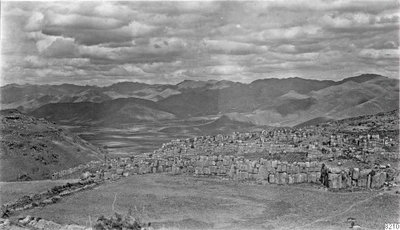
A ruined Inca-era fortification near Cusco, Peru, photographed in 1980. The Cusco valley preserves numerous stone structures built during the height of the Inca Empire, before the Spanish conquest of the 1530s.
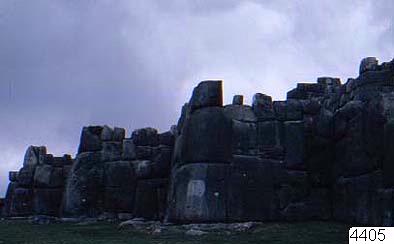
EU: fästning, ruin, fotografi, photograph (SMVK_VKM_fotografi_116037) (1980)
1980
Stone ruins of a fortification in the Cusco region of Peru, captured in 1980. Cusco, the Inca capital until the Spanish conquest, is ringed by military and ceremonial architecture from that era.
EU: ruin, fästning, fotografi, photograph — Sacsayhuamán, Cusco (1980)
1980
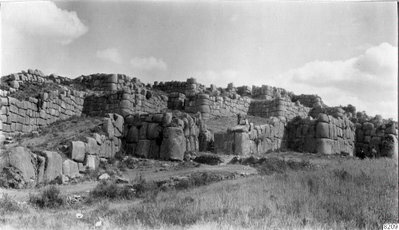
Taken in 1980, this photograph shows the massive stone walls of Sacsayhuamán, the Inca fortress complex overlooking Cusco, Peru, built from enormous interlocking blocks of stone. Some of these blocks weigh many tons yet were fitted together without mortar.
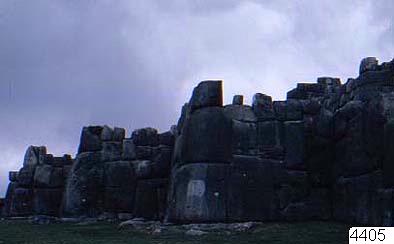
EU: fästning, ruin, fotografi, photograph — Sacsayhuamán, Cusco (1980)
1980
This 1980 image captures another view of the Sacsayhuamán ruins above Cusco, Peru, showing the zigzagging defensive walls constructed by Inca builders. The site is thought to have served ceremonial as well as military purposes for the Inca state.
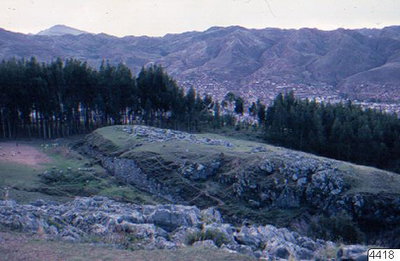
EU: ruin, fästning, fotografi, photograph
1980
This 1980 photograph shows the ruins of an Inca-era fortress near Cusco, Peru, with stone walls fitted together by the region's ancient masons. Several such fortified sites ring the former Inca capital, reflecting the empire's extensive network of defensive works.
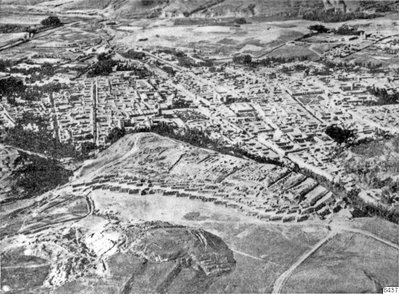
EU: fästning, flygbild, vallar, fotografi, photograph
1980
An aerial photograph from 1980 showing the ramparts of an Inca fortress near Cusco, Peru, illustrating the scale of the ancient defensive structure from above. Aerial views like this one were often used to document the layout of Inca stonework before restoration efforts.
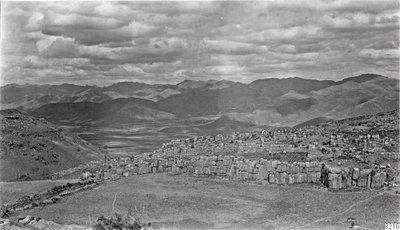
EU: inkafästning, fästning, vy, fotografi, photograph
1980
This 1980 view shows the stone walls of an Inca fortress near Cusco, Peru, part of the network of defensive and ceremonial structures built around the former Inca capital. The precision stone-cutting seen here is characteristic of Inca imperial architecture.

![EU: ruin, fästning, fotografi, photograph [116050] (1980), Cusco, 1980](https://cdn.placewas.com/placewas/146786519117452c827bc86f066e63bc.jpg?width=400)
![EU: fästning, ruin, fotografi, photograph [116037] (1980), Cusco, 1980](https://cdn.placewas.com/placewas/1e1f5e9bb6df40458c8ebb68ef2309fa.jpg?width=400)