Home › Elmina › Portuguese Church

Portuguese Church through time

Elmina 1875–2025 42 photos of this spot

42 photographs taken at the same spot in Elmina, spanning 1875–2025 — 1 of them from before 1980. Line them up and watch the place change.

Another Colonial Office photograph of Elmina, taken in 1875 and preserved in the UK National Archives, showing the historic Gold Coast trading town on Ghana's coast, long known for its coastal fortifications.

See this spot on the map
Have an old photo of Portuguese Church? A family album, a postcard, a print from the attic. Pin it to the map and it becomes part of the record.
Add your photo
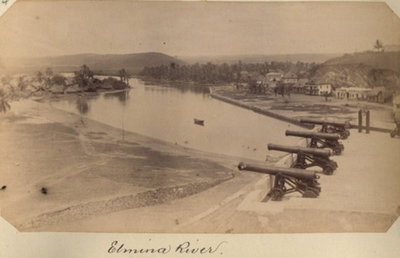
The National Archives UK - CO 2, Elmina, 1875
The National Archives UK - CO 2 1875 Another Colonial Office photograph of Elmina, taken in 1875 and preserved in the UK National Archives, showing the historic Gold Coast trading town on Ghana's coast, long known for its coastal fortifications.
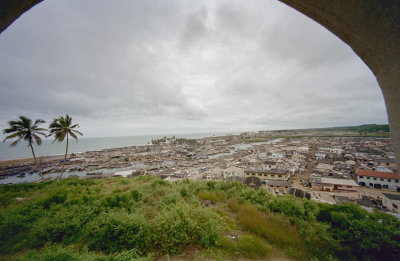
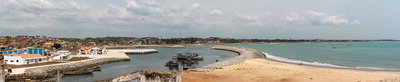
EU: Stadsgezicht met haven vanaf Elmina Castle (2002) - view 1, Elmina, 2002
EU: Stadsgezicht met haven vanaf Elmina Castle (2002) - view 1 2002 The harbor at Elmina, Ghana, viewed from Elmina Castle, a fort built by Portuguese traders in 1482 and later controlled by the Dutch, photographed in 2002. It is considered the oldest European-built structure in sub-Saharan Africa.
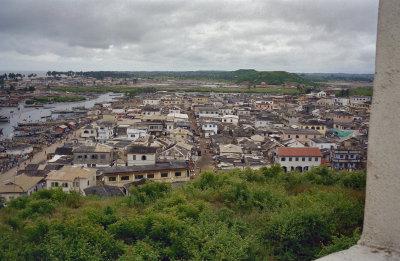
EU: Stadsgezicht met haven vanaf Elmina Castle (2002) - view 2, Elmina, 2002
EU: Stadsgezicht met haven vanaf Elmina Castle (2002) - view 2 2002 A further view of Elmina's harbor from the walls of Elmina Castle, photographed in 2002, overlooking the fishing town below.
St Georges 9, Elmina, 2005
St Georges 9 2005 A 2005 view of St. George's Castle, the Portuguese-built fort at Elmina, Ghana, that later became a center of the Atlantic slave trade.
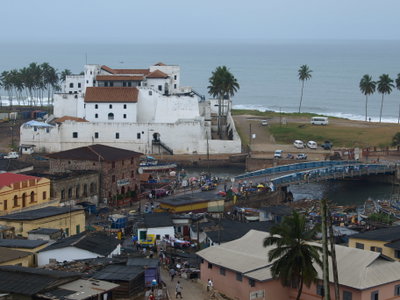
Elmina Castle, from Fort St. Jago 01, Elmina, 2007
Elmina Castle, from Fort St. Jago 01 2007 Elmina Castle viewed from the hilltop Fort St. Jago across the bay, photographed in 2007.
Staircase at Elmina, Elmina, 2007
Staircase at Elmina 2007 A staircase at Elmina, Ghana, photographed in 2007, near the coastal town's fort built by Portuguese traders beginning in 1482, one of the oldest European structures in sub-Saharan Africa.
Portuguese Church, Elmina, 2015
Portuguese Church 2015 A church building in Elmina, Ghana, dating from the era of early European settlement along this stretch of coast. Photographed in 2015.
Gun Over Benya Lagoon, Elmina, 2015
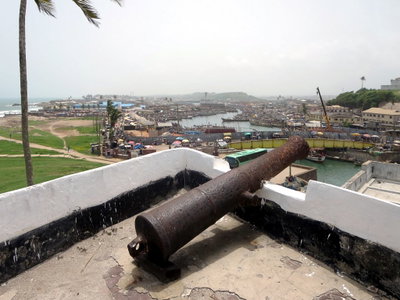
Gun Over Benya Lagoon 2015 A cannon overlooking the Benya Lagoon at Elmina, Ghana, near the historic Elmina Castle. Photographed in 2015.
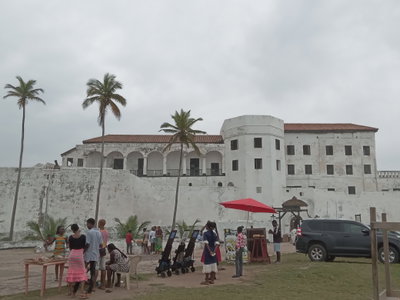
Castle at Elmina Ghana, Elmina, 2015
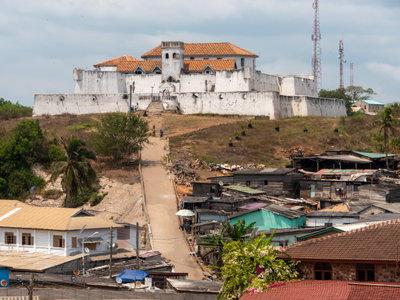
Castle at Elmina Ghana 2015 Elmina Castle in Elmina, Ghana, built by the Portuguese in 1482 and later held by the Dutch and then the British. Photographed in 2015.
Fort Conraadsburg, Elmina (P1100210), Elmina, 2023
Fort Conraadsburg, Elmina (P1100210) 2023 Fort Conraadsburg overlooks Elmina Castle from a nearby hill in Ghana's Central Region, built by Dutch colonial forces to help defend the harbor; photographed in 2023.
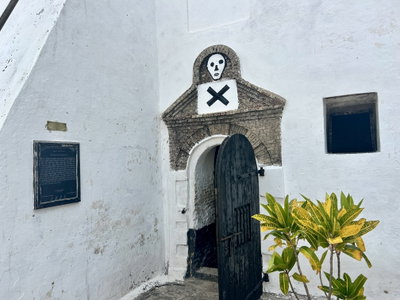
Street, Elmina (P1100211), Elmina, 2023
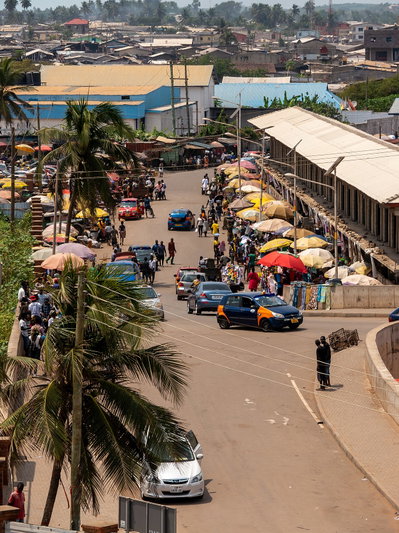
Street, Elmina (P1100211) 2023 A street in Elmina, the Ghanaian coastal town that grew up around the Portuguese-built fort of the same name.
Castle, Elmina (P1100201), Elmina, 2023
Castle, Elmina (P1100201) 2023 Elmina Castle, built by Portuguese traders in 1482 and regarded as the oldest European-built structure in sub-Saharan Africa, later held by the Dutch and British and used in the transatlantic slave trade.
Castle, Elmina (P1100200), Elmina, 2023
Castle, Elmina (P1100200) 2023 Another 2023 view of Elmina Castle, the fortress on Ghana's coast built by the Portuguese in 1482 and later held by the Dutch. The castle is now preserved as a UNESCO World Heritage Site and popular museum.
Castle, Elmina (P1100185), Elmina, 2023
Castle, Elmina (P1100185) 2023 Elmina Castle, Ghana, photographed from a different vantage point in 2023. First built by Portuguese traders in the fifteenth century, the fortress later changed hands and became a center of the Atlantic slave trade.
Elmina Castle Castle in Cape Coast 05, Elmina, 2023
Elmina Castle Castle in Cape Coast 05 2023 Elmina Castle, seen here in 2023, was built by the Portuguese in 1482 as Sao Jorge da Mina, making it one of the oldest European buildings still standing in sub-Saharan Africa. It stands on Ghana's coast in the town of Elmina.
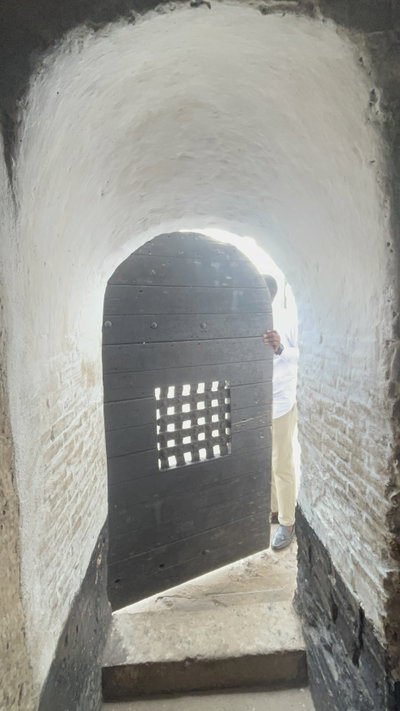
Elmina Castle Castle in Cape Coast 06, Elmina, 2023
Elmina Castle Castle in Cape Coast 06 2023 This 2023 photograph shows Elmina Castle on Ghana's coast. The Dutch captured the fort from Portugal in 1637 and held it until Britain took over the Dutch Gold Coast possessions in 1872, after nearly two and a half centuries of Dutch control.
Elmina Castle Castle in Cape Coast 07, Elmina, 2023
Elmina Castle Castle in Cape Coast 07 2023 Elmina Castle is a UNESCO World Heritage Site, listed in 1979 alongside other forts and castles along Ghana's coastline. This photograph was taken there in 2023, at the fortress overlooking the town of Elmina.
Castle, Elmina (P1100209), Elmina, 2023
Castle, Elmina (P1100209) 2023 Photographed in 2023, Elmina Castle stands on a rocky point where the Benya lagoon meets the Atlantic Ocean, overlooking the fishing town of Elmina in Ghana's Central Region.
Castle, Elmina (P1100186), Elmina, 2023
Castle, Elmina (P1100186) 2023 In the seventeenth to nineteenth centuries Elmina Castle served as a departure point in the trans-Atlantic slave trade, with captives held in dungeons before being shipped across the ocean. This photograph of the fortress is from 2023.
Castle, Elmina (P1100187), Elmina, 2023
Castle, Elmina (P1100187) 2023 The whitewashed walls and courtyards of Elmina Castle, captured in this 2023 photograph, reflect centuries of Portuguese and later Dutch colonial construction on Ghana's coast, beginning with the original fort built in 1482.
Castle, Elmina (P1100189), Elmina, 2023
Castle, Elmina (P1100189) 2023 Elmina takes its name from the Portuguese phrase 'a mina', or 'the mine', referring to the gold trade that first drew European traders to this stretch of coast in the fifteenth century. This photograph was taken in 2023.
Castle, Elmina (P1100188), Elmina, 2023
Castle, Elmina (P1100188) 2023 This 2023 view shows part of Elmina Castle, whose cannons once faced the Atlantic to defend the fort and the harbour town below, in a coastal defense system built up over nearly four centuries of European presence.
Castle, Elmina (P1100199), Elmina, 2023
Castle, Elmina (P1100199) 2023 A 2023 photograph of Elmina Castle, built originally to secure Portuguese access to West African gold before later becoming a major hub of the trans-Atlantic slave trade under Dutch control.
Castle, Elmina (P1100202), Elmina, 2023
Castle, Elmina (P1100202) 2023 Elmina Castle's courtyard and ramparts, shown in this 2023 photograph, have been preserved as part of a group of coastal fortifications in Ghana that UNESCO added to its World Heritage list in 1979.
Castle, Elmina (P1100208), Elmina, 2023
Castle, Elmina (P1100208) 2023 This 2023 photograph captures Elmina Castle, which changed hands between Portuguese, Dutch, and British colonial powers over nearly four centuries, from its founding in 1482 to Ghanaian independence in 1957.
Castle, Elmina (P1100190), Elmina, 2023
Castle, Elmina (P1100190) 2023 Elmina Castle overlooks the town of Elmina in Ghana's Central Region, photographed here in 2023. Built in 1482, it is counted among the earliest European-built structures still standing in sub-Saharan Africa.
Castle, Elmina (P1100203-Pano), Elmina, 2023
Castle, Elmina (P1100203-Pano) 2023 A panoramic view of Elmina Castle on Ghana's coast, the fortress founded by the Portuguese in the late 15th century that later passed to Dutch and British control.
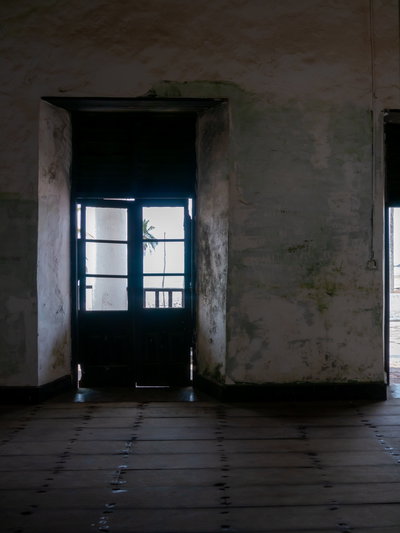
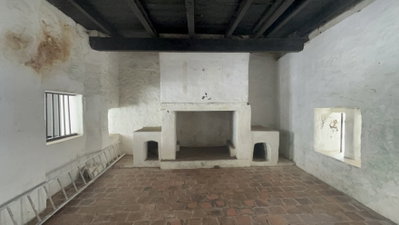
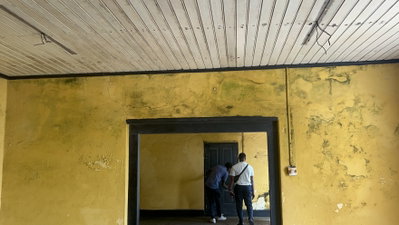
Governor’s kitchen at Elmina Castle, Elmina, 2025
Governor’s kitchen at Elmina Castle 2025 This room within Elmina Castle served as the governor's kitchen during the fort's long use as a colonial administrative seat, part of the complex the Dutch controlled after taking it from the Portuguese in 1637.
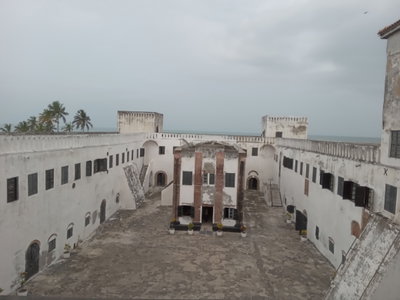
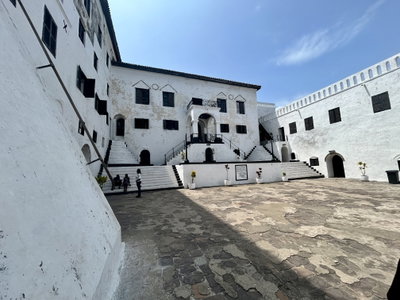
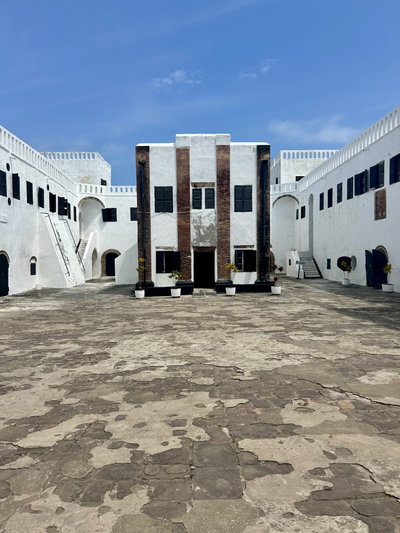
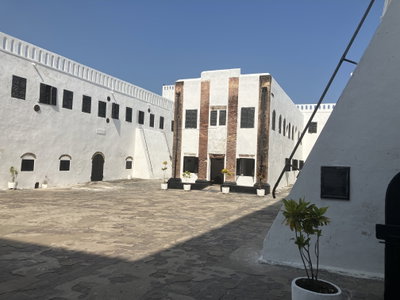
Inner courtyard of Elmina castle, Elmina, 2025
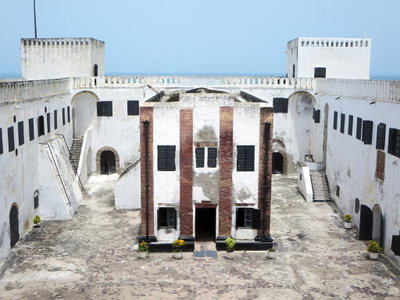
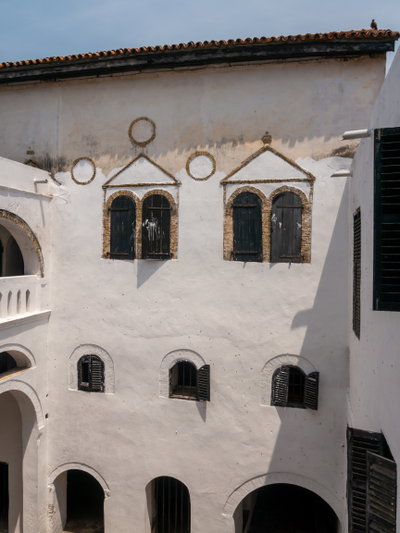
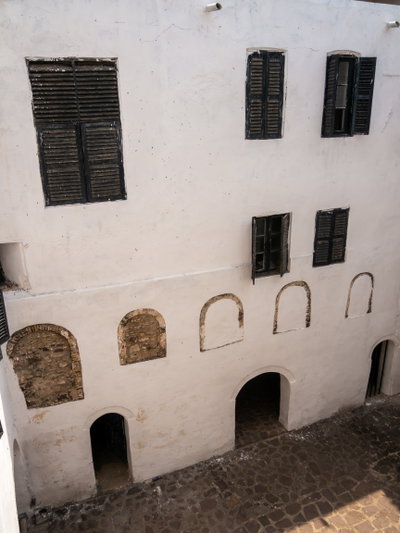
Inner courtyard of Elmina castle 2025 The inner courtyard of Elmina Castle sits at the heart of the fortress, enclosed by the thick stone walls and upper galleries that once housed soldiers, traders, and colonial officials over the site's centuries of use.
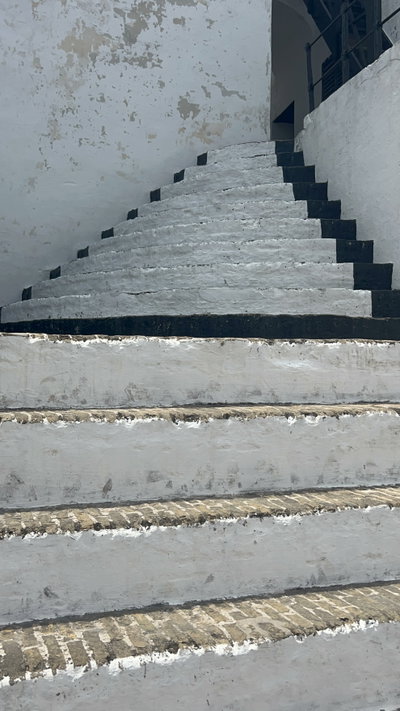
Old staircase at Elmina castle, Elmina, 2025
Old staircase at Elmina castle 2025 A worn stone staircase inside Elmina Castle connects the fortress's lower levels to its upper galleries, a physical reminder of the centuries the building spent under Portuguese, Dutch, and British control.
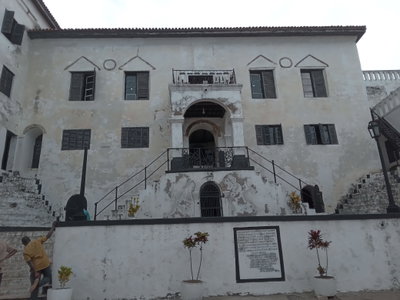
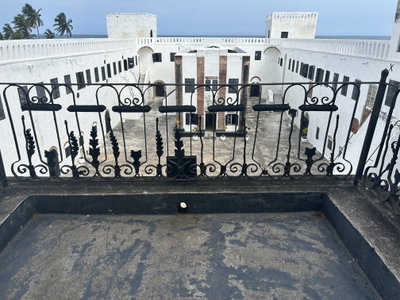
Elmina Castle 001, Elmina, 2025
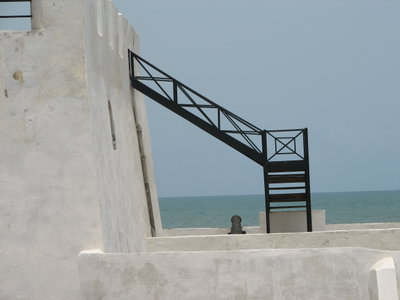
Elmina Castle 001 2025 An ornate iron railing frames a view into the whitewashed inner courtyard of Elmina Castle, built by the Portuguese in 1482 and later held by the Dutch, making it the oldest European-built structure still standing in sub-Saharan Africa.
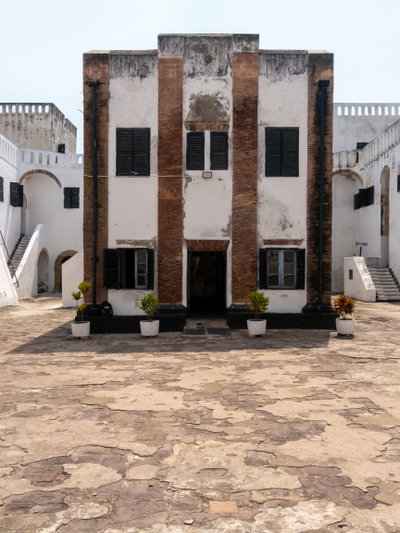
Courtyard of Elmina Castle, Elmina, 2025
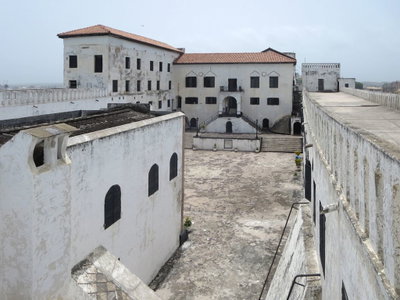
Courtyard of Elmina Castle 2025 The courtyard of Elmina Castle on Ghana's coast, a UNESCO World Heritage site built by Portuguese traders in the 15th century, photographed in 2025.
Inner court of Elmina castes, Elmina, 2025
Inner court of Elmina castes 2025 The inner courtyard of Elmina Castle in Ghana, one of the oldest European-built structures in sub-Saharan Africa, pictured in 2025.
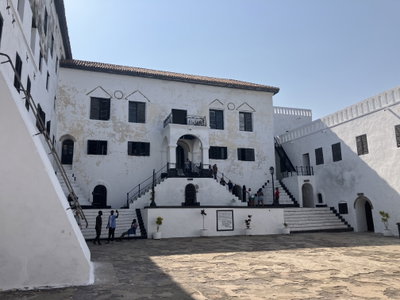
Portuguese Church inside Elmina Castle, Elmina, 2025
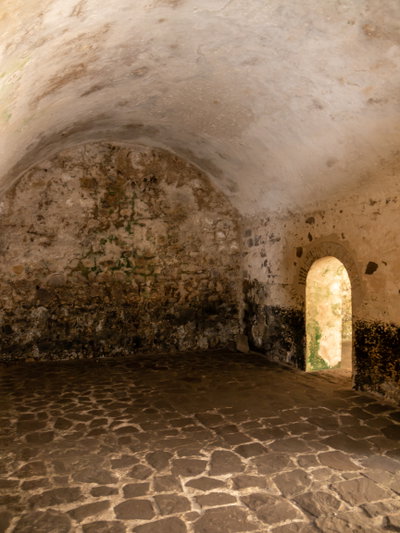
Portuguese Church inside Elmina Castle 2025 The chapel built by the Portuguese within Elmina Castle was later repurposed following the Dutch capture of the fort in 1637, reflecting the shifting colonial powers that occupied the site over the centuries.
Govern’s bedroom at Elmina Castle, Elmina, 2025
Govern’s bedroom at Elmina Castle 2025 The governor's bedroom at Elmina Castle in Ghana, a fortress built by the Portuguese in 1482 as a trading post and later used by European powers as a holding site during the transatlantic slave trade. Photographed in 2025.
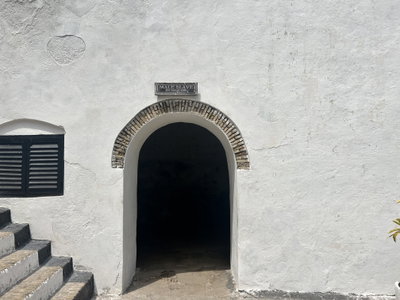
Entrance of the Male dungeon at Elmina, Elmina, 2025
Entrance of the Male dungeon at Elmina 2025 The entrance to the male dungeon at Elmina Castle, Ghana, part of a fortress with a documented history in the transatlantic slave trade, now preserved as a UNESCO World Heritage Site. Photographed in 2025.
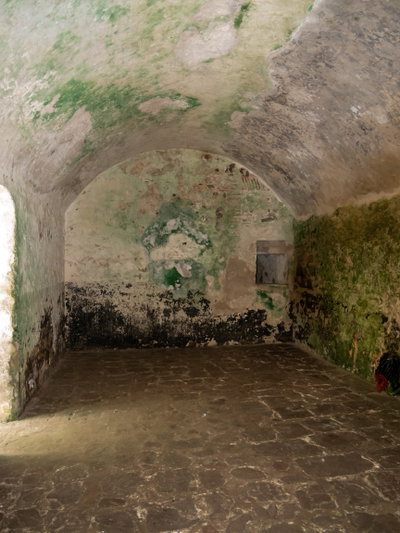
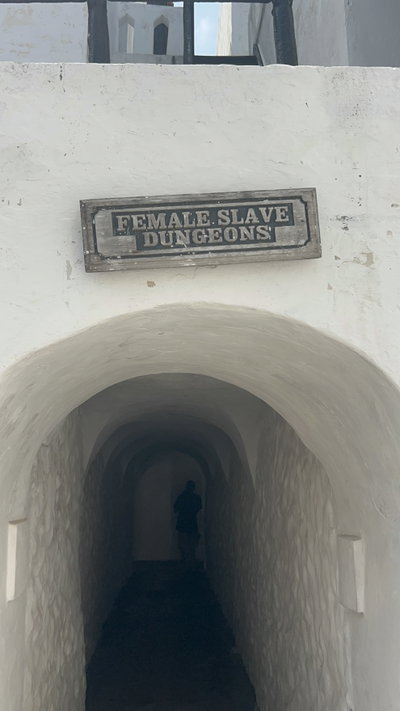
Female slaves dungeon, Elmina, 2025
Female slaves dungeon 2025 A dungeon at Elmina, Ghana, used to hold enslaved women, photographed in 2025 at the fortified site the Portuguese built on this stretch of coast in the late 15th century.
Entrance of the male slaves cell entrance, Elmina, 2025
Entrance of the male slaves cell entrance 2025 The entrance to a cell that held enslaved men at Elmina, Ghana, photographed in 2025; the fort was a major holding point in the trans-Atlantic slave trade for centuries.
European’s slave cell, Elmina, 2025
European’s slave cell 2025 A cell at Elmina Castle, Ghana, photographed in 2025; the fortress, first built by Portuguese traders in 1482, later became one of the largest slave-trading posts on the West African coast.
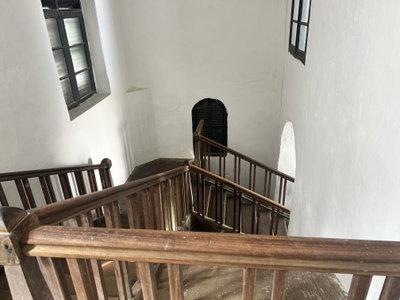
Staircase to the Governor's bedroom at Elmina, Elmina, 2025
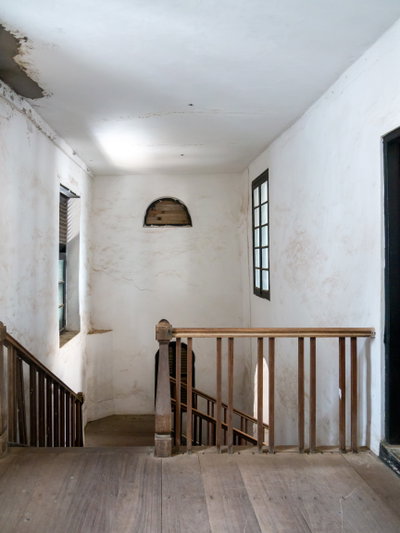
Staircase to the Governor's bedroom at Elmina 2025 A staircase leading to the governor's quarters at Elmina Castle, Ghana, photographed in 2025; the fort served in turn as a Portuguese and then a Dutch colonial administrative seat.
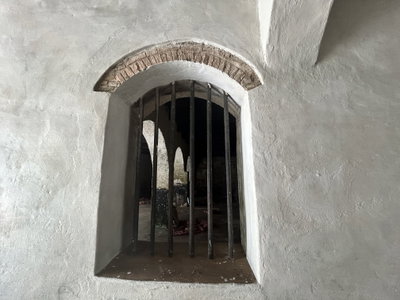
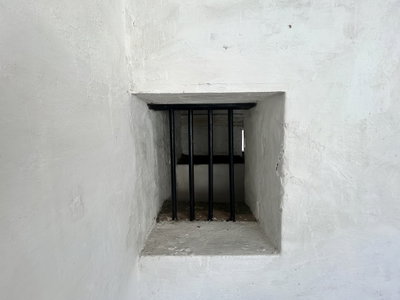
Window at the male dungeon, Elmina, 2025
Window at the male dungeon 2025 A window in the dungeon that held enslaved men at Elmina Castle, Ghana, photographed in 2025; the fort, first built by the Portuguese in 1482, later became a major holding point in the Atlantic slave trade.
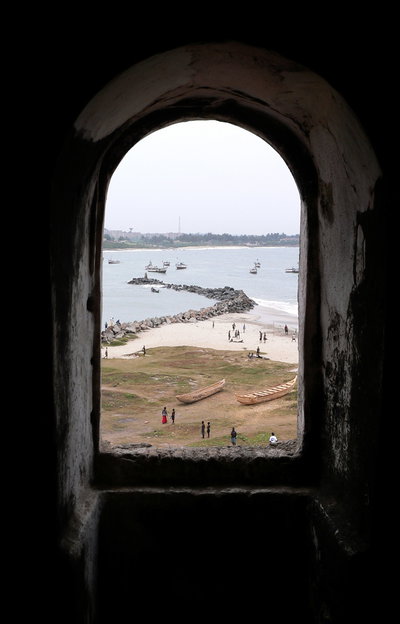
Window at Elmina Castle, Elmina, 2025
Window at Elmina Castle 2025 A window opening is pictured at Elmina Castle in Ghana, a fortress built by Portuguese traders in 1482 that later became a major hub in the transatlantic slave trade under Dutch and then British control.