Home › Kraków › Rynek Glowny

Rynek Glowny through time

Kraków 1933–2025 62 photos of this spot

62 photographs taken at the same spot in Kraków, spanning 1933–2025 — 34 of them from before 1980. Line them up and watch the place change.

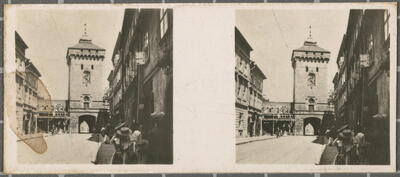
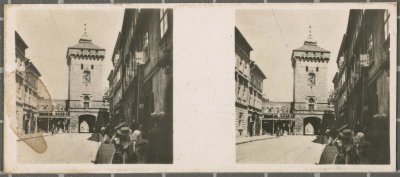
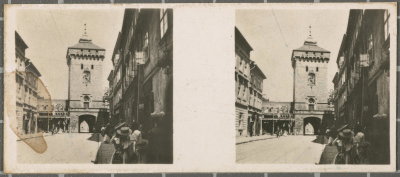
St. Florian's Gate, one of the few surviving fragments of Kraków's medieval city walls, is shown in this 1933 photograph. Much of the surrounding fortification system was demolished in the 19th century.

See this spot on the map
Have an old photo of Rynek Glowny? A family album, a postcard, a print from the attic. Pin it to the map and it becomes part of the record.
Add your photo
EU: San Florián Puerta, Krakow (1933), Kraków, 1933
EU: San Florián Puerta, Krakow (1933) 1933 St. Florian's Gate, one of the few surviving fragments of Kraków's medieval city walls, is shown in this 1933 photograph. Much of the surrounding fortification system was demolished in the 19th century.
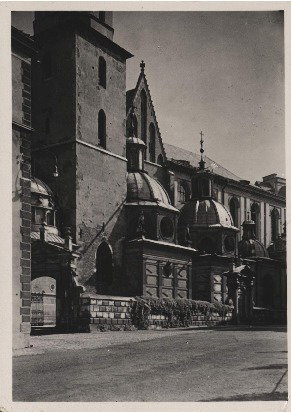
EU: Catedral, Krakow (1933), Kraków, 1933
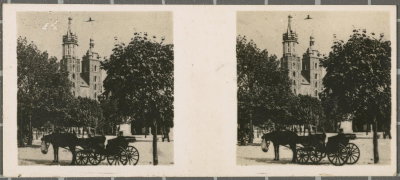
EU: Catedral, Krakow (1933) 1933 Kraków's cathedral on Wawel Hill, for centuries the coronation and burial site of Polish monarchs, appears in this 1933 photograph captioned simply 'Catedral' in Spanish.
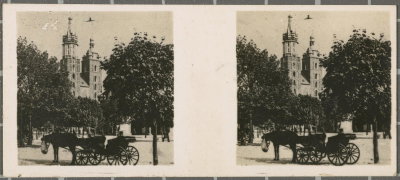
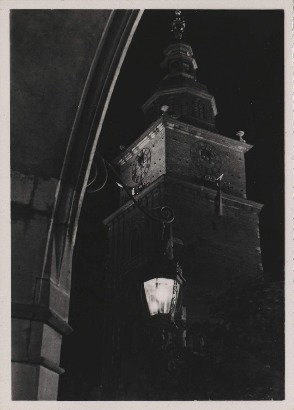
EU: Casa Consistorial, Krakow (1933), Kraków, 1933
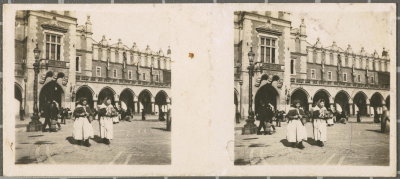
EU: Casa Consistorial, Krakow (1933) 1933 Captioned 'Casa Consistorial' in Spanish, this 1933 photograph most likely shows Kraków's Town Hall Tower, the sole surviving remnant of the city's medieval town hall on the Main Market Square.
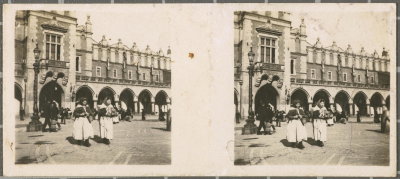
EU: N.º 215. Krakow (Cracovia). - Catedral. (1933), Kraków, 1933
EU: N.º 215. Krakow (Cracovia). - Catedral. (1933) 1933 Numbered 215 in a postcard series, this 1933 photograph shows Kraków's cathedral on Wawel Hill, historically the coronation church of Polish kings.
EU: N.º 216. Krakow (Cracovia) - Casa Consistorial. (1933), Kraków, 1933
EU: N.º 216. Krakow (Cracovia) - Casa Consistorial. (1933) 1933 Numbered 216 in the same series, this 1933 photograph documents Kraków's Town Hall Tower, captioned 'Casa Consistorial,' the last standing piece of the city's medieval town hall.
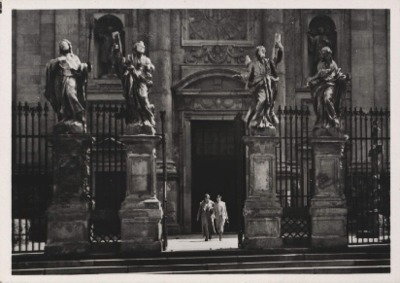
EU: No. 214. Krakow (Krakow). San Florián Puerta. (1933), Kraków, 1933
EU: No. 214. Krakow (Krakow). San Florián Puerta. (1933) 1933 Numbered 214 in a postcard series, this 1933 photograph shows St. Florian's Gate in Kraków, part of a fortification system built up over the 13th to 15th centuries.
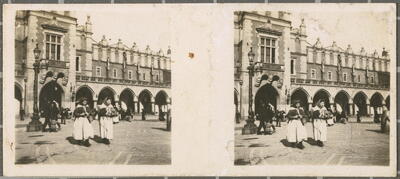
EU: N.º 215. Krakow (Cracovia). - Catedral. (-1933), Kraków, 1933
EU: N.º 215. Krakow (Cracovia). - Catedral. (-1933) 1933 This 1933 photograph, numbered 215 in its original series, again shows Kraków's cathedral on Wawel Hill, captioned in Spanish as 'Catedral.'
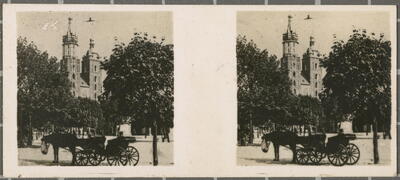
EU: N.º 216. Krakow (Cracovia) - Casa Consistorial. (-1933), Kraków, 1933
EU: N.º 216. Krakow (Cracovia) - Casa Consistorial. (-1933) 1933 Numbered 216, this 1933 photograph is another copy of the view of Kraków's Town Hall Tower, labelled 'Casa Consistorial.'
EU: No. 214. Krakow (Krakow). San Florián Puerta. (-1933), Kraków, 1933
EU: No. 214. Krakow (Krakow). San Florián Puerta. (-1933) 1933 Numbered 214, this 1933 photograph duplicates the series view of St. Florian's Gate in Kraków, one of the last remnants of the city's medieval walls.
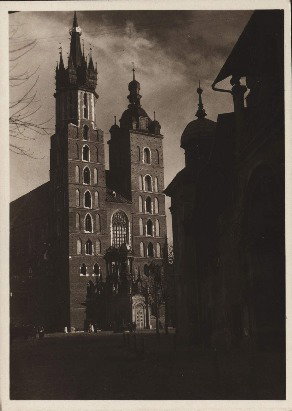
EU: Kraków. Kościół Mariacki (1938), Kraków, 1938
EU: Kraków. Kościół Mariacki (1938) 1938 St. Mary's Basilica (Kościół Mariacki) on Kraków's Main Market Square, photographed in 1938. The Gothic brick church, dating largely to the fourteenth century, is recognized for its two mismatched towers and its carved wooden altarpiece.
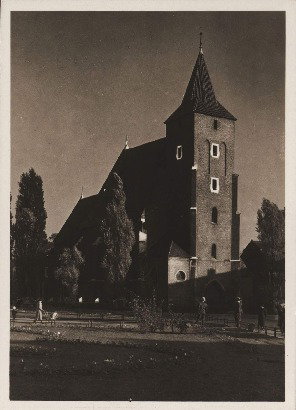
EU: Kraków. Kościół Św. Krzyża (1938), Kraków, 1938
EU: Kraków. Kościół Św. Krzyża (1938) 1938 The Church of the Holy Cross (Kościół Św. Krzyża) in Kraków, photographed in 1938. The Gothic church, with origins in the fourteenth century, stands near the city's Planty park and Main Market Square.
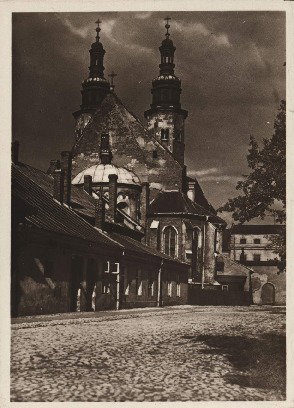
EU: Kraków. Kościół Św. Andrzeja od dziedzińca (1938), Kraków, 1938
EU: Kraków. Kościół Św. Andrzeja od dziedzińca (1938) 1938 St. Andrew's Church (Kościół Św. Andrzeja) in Kraków, seen from its courtyard in this 1938 photograph. Built around the turn of the twelfth century, it is one of the oldest surviving Romanesque buildings in the city.
EU: Krakow. Planty (1939), Kraków, 1939
EU: Krakow. Planty (1939) 1939 The Planty, a park ring encircling Kraków's Old Town, photographed in 1939. The park was laid out in the nineteenth century on the site of the city's former medieval defensive walls, which were demolished to make way for it.
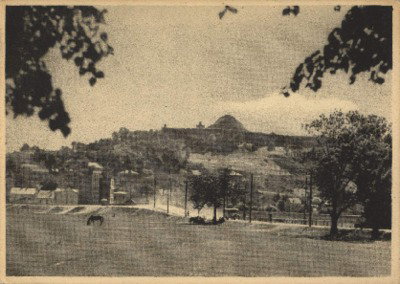
EU: Krakow. Wawel Castle (1939), Kraków, 1939
EU: Krakow. Wawel Castle (1939) 1939 Wawel Castle in Kraków, photographed in 1939. The royal castle complex atop Wawel Hill served as the residence of Polish monarchs for centuries and remains one of the country's most significant historical sites.
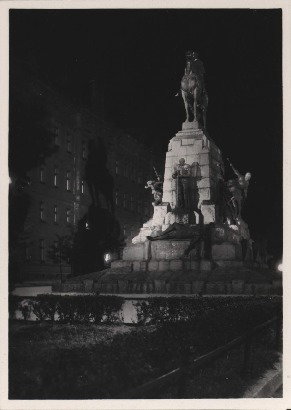
EU: Kraków. Pomnik Grunwaldzki (1939), Kraków, 1939
EU: Kraków. Pomnik Grunwaldzki (1939) 1939 The Grunwald Monument in Kraków, photographed in 1939. Unveiled in 1910, it commemorates the five-hundredth anniversary of the Battle of Grunwald, in which Polish-Lithuanian forces defeated the Teutonic Knights.
EU: Kraków. Kopiec Kościuszki (1939), Kraków, 1939
EU: Kraków. Kopiec Kościuszki (1939) 1939 The Kościuszko Mound on the outskirts of Kraków, photographed in 1939. The earthen mound was built in the early nineteenth century to honor Polish military leader Tadeusz Kościuszko, using soil brought from various battlefields.
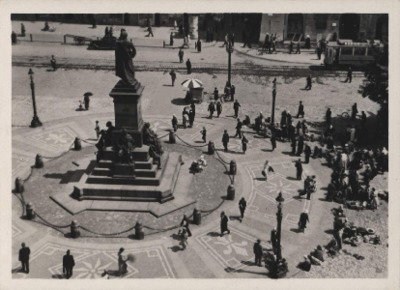
EU: Krakow. Mickiewicz Monument (1939), Kraków, 1939
EU: Krakow. Mickiewicz Monument (1939) 1939 The monument to poet Adam Mickiewicz in Kraków's Main Market Square, photographed in 1939. Mickiewicz, a leading figure of Polish Romanticism, is commemorated by this statue at the heart of the historic square.
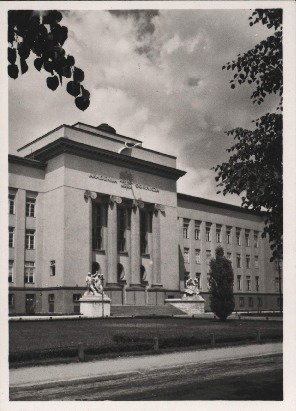
EU: Kraków. Akademia Górnicza (1939), Kraków, 1939
EU: Kraków. Akademia Górnicza (1939) 1939 The Akademia Górnicza, or Mining Academy, building in Kraków, photographed in 1939. Founded in 1919, the institution became one of Poland's leading technical universities, specializing in mining and metallurgy studies.
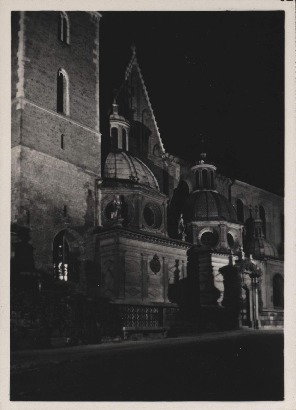
EU: Kraków. Wawel, Katedra (1939), Kraków, 1939
EU: Kraków. Wawel, Katedra (1939) 1939 Wawel Cathedral in Kraków, photographed in 1939. The cathedral, standing atop Wawel Hill beside the royal castle, served for centuries as the coronation and burial site of Polish kings and other national figures.
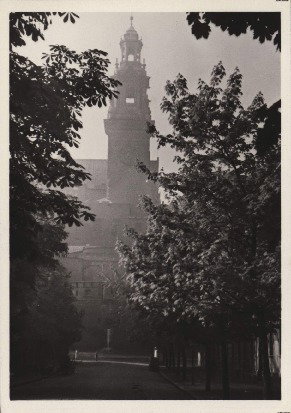
EU: Krakow. Tower of the Cathedral (1939), Kraków, 1939
EU: Krakow. Tower of the Cathedral (1939) 1939 A tower of Wawel Cathedral in Kraków, photographed in 1939. The cathedral complex atop Wawel Hill includes several towers built and rebuilt over the centuries as the church evolved through different architectural periods.
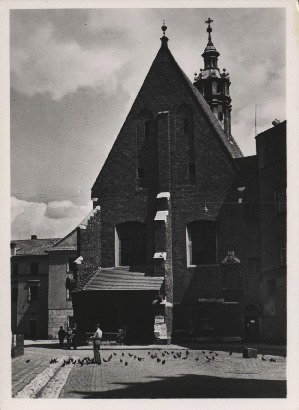
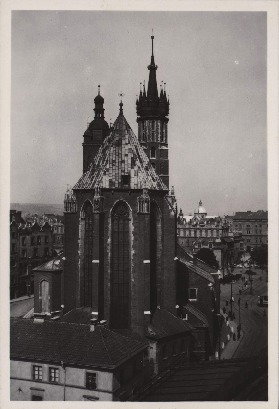
EU: Krakow. Church of Saint. Barbara (1939), Kraków, 1939
EU: Krakow. Church of Saint. Barbara (1939) 1939 St. Barbara's Church, adjacent to Kraków's Main Market Square, photographed in 1939. The small Gothic church stands beside St. Mary's Basilica in the heart of the historic city center, among Kraków's oldest surviving buildings.
EU: Krakow. Town hall tower, fragment. (1939), Kraków, 1939
EU: Krakow. Town hall tower, fragment. (1939) 1939 A fragment of the Town Hall Tower on Kraków's Main Market Square, photographed in 1939. The tower is the sole surviving remnant of the city's medieval town hall, the rest of which was demolished in the early nineteenth century.
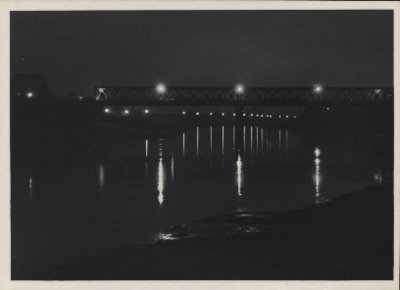
EU: Kraków. Most na Wiśle (1939), Kraków, 1939
EU: Kraków. Most na Wiśle (1939) 1939 A bridge over the Vistula River in Kraków, photographed in 1939. The river flows past Wawel Hill through the historic city center, which has depended on crossings over the Vistula since the Middle Ages.
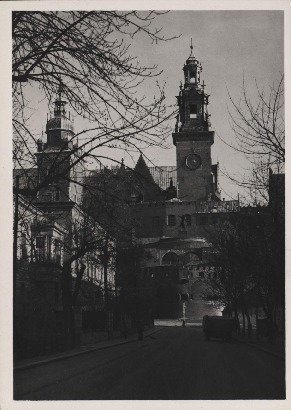
EU: Krakow. Wawel Castle from Straszewski Street. (1939), Kraków, 1939
EU: Krakow. Wawel Castle from Straszewski Street. (1939) 1939 Wawel Castle viewed from Straszewski Street in Kraków, photographed in 1939. The street runs along the edge of the Planty park toward the royal castle complex on Wawel Hill, near the Vistula riverbank.
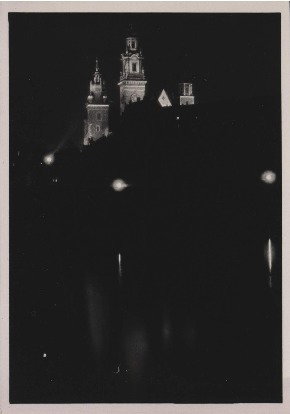
EU: Kraków. Wawel z nad Wisły (1939), Kraków, 1939
EU: Kraków. Wawel z nad Wisły (1939) 1939 Wawel Hill and its castle seen from along the Vistula riverbank in Kraków, photographed in 1939. The royal residence has overlooked the river from this position since the Middle Ages, dominating the city's skyline.
EU: Kraków. Przed Kościołem Św. Piotra (1939), Kraków, 1939
EU: Kraków. Przed Kościołem Św. Piotra (1939) 1939 The area in front of St. Peter's Church in Kraków, photographed in 1939. The historic city center around the Main Market Square is home to several notable Gothic and Baroque churches dating from the medieval and early modern periods.
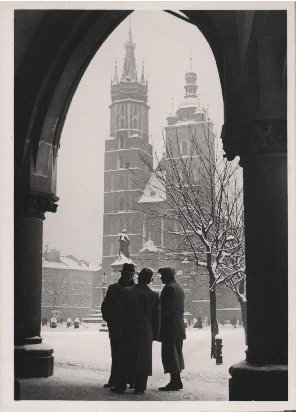
EU: Kraków. Kościół Mariacki w zimie (1939), Kraków, 1939
EU: Kraków. Kościół Mariacki w zimie (1939) 1939 St. Mary's Basilica in Kraków pictured in winter, 1939, shortly before the German invasion of Poland that September. The Gothic church's mismatched towers have long marked the skyline of the city's Main Market Square.
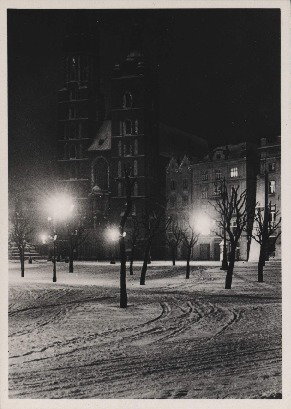
EU: Krakow. St. Mary’s Church at Night. (1939), Kraków, 1939
EU: Krakow. St. Mary’s Church at Night. (1939) 1939 St. Mary's Basilica rises above Kraków's Main Market Square in this 1939 night view, its two mismatched Gothic towers among the most recognizable landmarks of the old city.
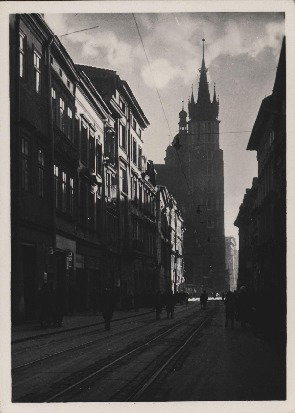
EU: Kraków. Kościół Mariacki z ul. Floriańskiej (1939), Kraków, 1939
EU: Kraków. Kościół Mariacki z ul. Floriańskiej (1939) 1939 A 1939 street-level view of St. Mary's Basilica in Kraków as seen from Floriańska Street, one of the historic routes leading into the Main Market Square.
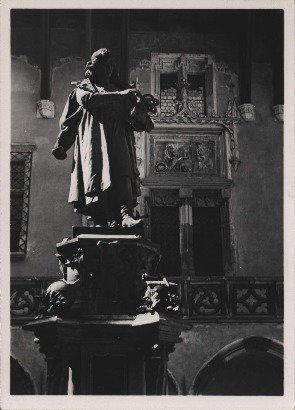
EU: Kraków. Pomnik Kopernika w Bibliotece Jagiell. (1939), Kraków, 1939
EU: Kraków. Pomnik Kopernika w Bibliotece Jagiell. (1939) 1939 The monument to astronomer Nicolaus Copernicus stands in the courtyard of the Jagiellonian Library in Kraków, photographed in 1939; Copernicus had studied at the university in the late fifteenth century.
EU: Kraków. Prezbiterium Kościoła N. M. P. (1939), Kraków, 1939
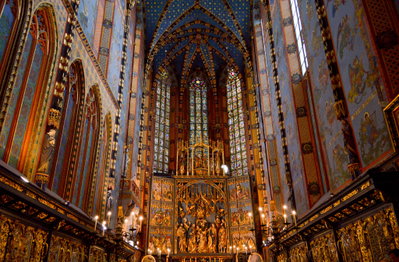
EU: Kraków. Prezbiterium Kościoła N. M. P. (1939) 1939 The presbytery of St. Mary's Basilica in Kraków, photographed in 1939, houses the church's Gothic high altar carved by Veit Stoss in the late fifteenth century.
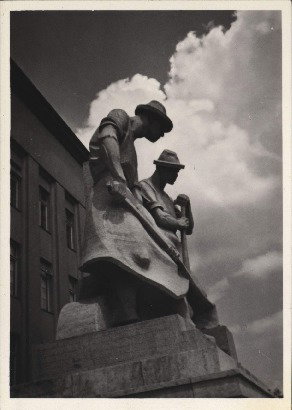
EU: Kraków. Akademia Górnicza, postacie przy wejściu (1939), Kraków, 1939
EU: Kraków. Akademia Górnicza, postacie przy wejściu (1939) 1939 Figures stand at the entrance to the AGH University of Science and Technology in Kraków in this 1939 photograph, taken shortly before the outbreak of the Second World War.
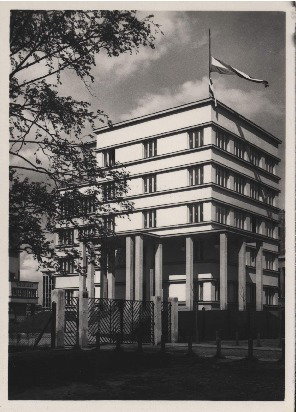
EU: Krakow. House Józef Piłsudski in Oleandry (1939), Kraków, 1939
EU: Krakow. House Józef Piłsudski in Oleandry (1939) 1939 The house in Kraków's Oleandry district associated with Józef Piłsudski, photographed in 1939; the site served as the assembly point for the Polish Legions in August 1914.
EU: Krakow. Kościuszko Monument in the background of the Cathedral (1939), Kraków, 1939
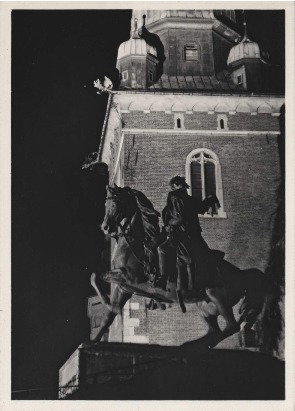
EU: Krakow. Kościuszko Monument in the background of the Cathedral (1939) 1939 A monument to Tadeusz Kościuszko photographed in 1939 with Kraków's Wawel Cathedral in the background, on the hill long associated with the burial of Polish kings and national heroes.
Warszawskie, Kraków, Poland, Kraków, 2005
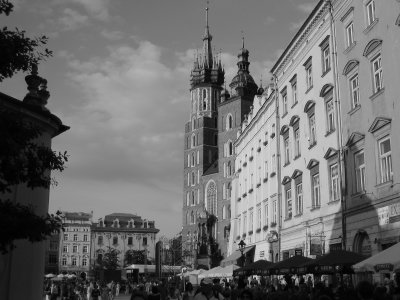
Warszawskie, Kraków, Poland 2005 A view in Kraków, Poland, photographed in 2005. The former royal capital's historic center, built around a medieval market square, is one of Europe's largest preserved old towns and was among the first sites named to the UNESCO World Heritage List.
Smok wawelski Kraków, Kraków, 2009
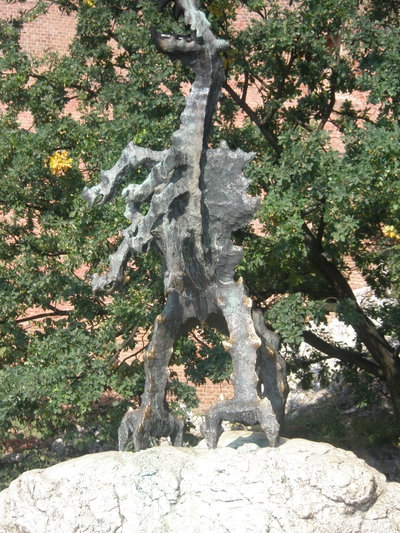
Smok wawelski Kraków 2009 The Wawel Dragon statue at the foot of Wawel Hill in Krakow, Poland, photographed in 2009. The fire-breathing bronze sculpture, installed in 1972, refers to a legendary dragon said to have lived in a cave beneath the castle.
Krakow - Kosciol Mariacki, Kraków, 2010
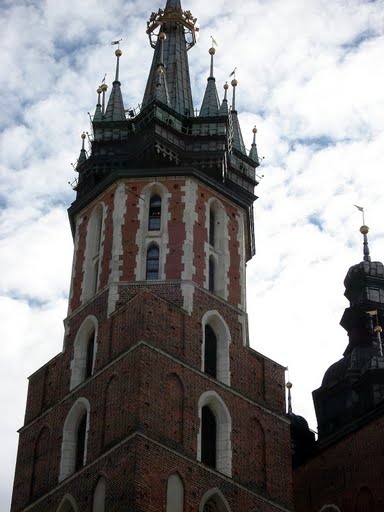
Krakow - Kosciol Mariacki 2010 St. Mary's Basilica on Kraków's Main Market Square, photographed in 2010. The Gothic church is known for its two mismatched towers and a bugle call sounded hourly from the taller one, traditionally cut short in memory of a medieval trumpeter.
Krakow - Okno Papieskie, Kraków, 2010
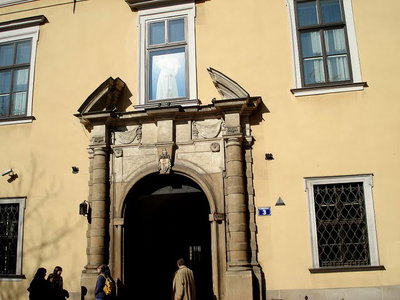
Krakow - Okno Papieskie 2010 The Papal Window of the Bishop's Palace in Kraków, photographed in 2010. Karol Wojtyła addressed crowds from this window both as the city's archbishop and, after 1978, as Pope John Paul II during his visits home.
Krakow - Restaurant Wierzynek, Kraków, 2010
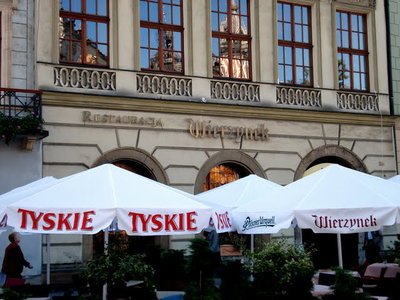
Krakow - Restaurant Wierzynek 2010 Restauracja Wierzynek on Kraków's Main Market Square, photographed in 2010. According to local tradition, the restaurant's founding traces to a 14th-century banquet said to have hosted several European monarchs.
Krakow - Stary Rynek, Kraków, 2010
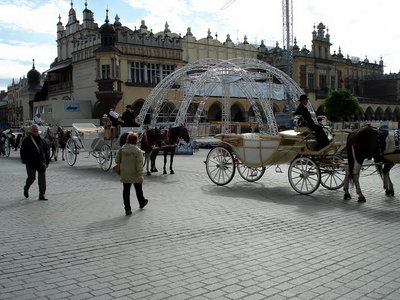
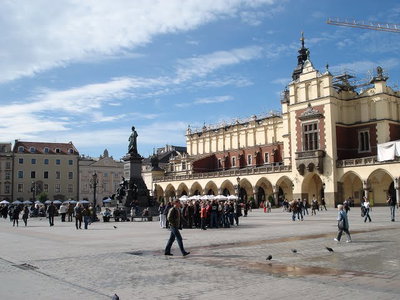
Krakow - Stary Rynek 2010 Kraków's Main Market Square, or Rynek Główny, photographed in 2010. Laid out in the 13th century after the Mongol invasions, it remains one of the largest medieval town squares in Europe, ringed by historic townhouses and churches.
Krakow - Sukiennice, Kraków, 2010
Krakow - Sukiennice 2010 The Cloth Hall, or Sukiennice, stands at the center of Kraków's Main Market Square in this 2010 photograph. The Renaissance-era trading hall, rebuilt after a 16th-century fire, has been used for commerce since the medieval period.
Krakow - Teatr im. J. Slowackiego, Kraków, 2010
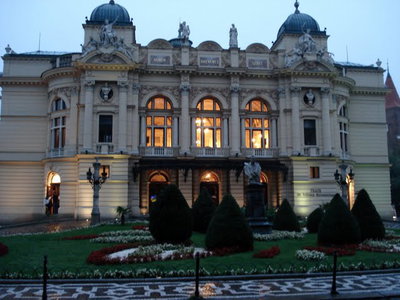
Krakow - Teatr im. J. Slowackiego 2010 The Juliusz Słowacki Theatre in Kraków, photographed in 2010. The ornate late 19th-century building was designed partly in emulation of the Paris Opera and completed in 1893.
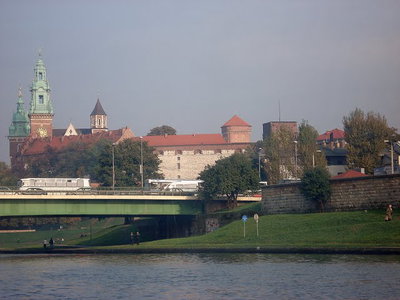
Krakow - Wawel, Kraków, 2010
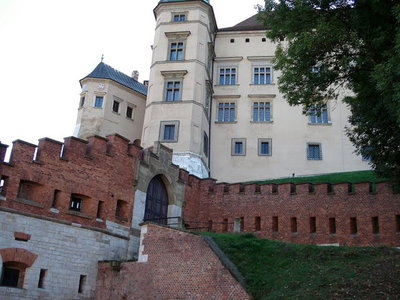
Krakow - Wawel 2010 Wawel Hill in Kraków, photographed in 2010, home to the royal castle and cathedral where Polish monarchs were once crowned and, in many cases, buried; the hill has long served as a symbol of Polish statehood.
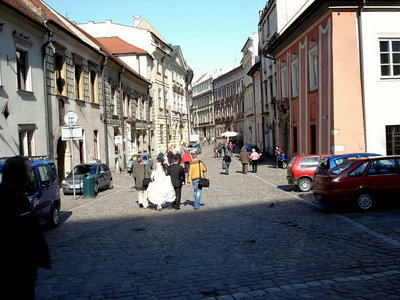
Krakow, Kraków, 2010
Krakow 2010 A 2010 street scene in Kraków, Poland's former royal capital, whose historic center was among the first twelve sites inscribed on UNESCO's World Heritage list, in 1978.
Krakow, Kraków, 2010
Krakow 2010 Another 2010 view of Kraków, Poland, a city whose old town survived the Second World War largely intact and retains much of its medieval street plan.
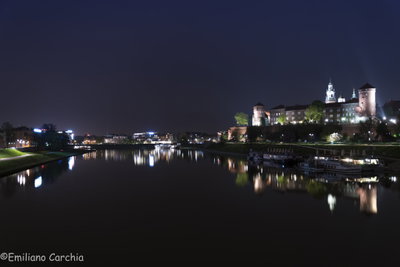
Wawel Castle At Night, Kraków, 2016
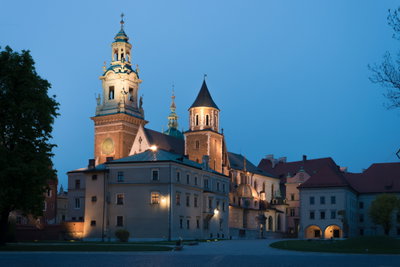
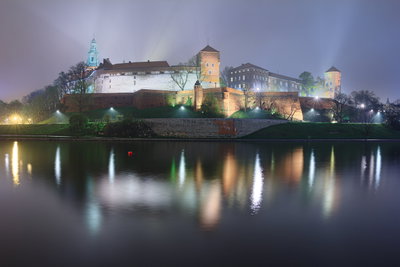
Wawel Castle At Night 2016 Wawel Castle in Kraków, Poland, illuminated at night. The fortified residence on Wawel Hill served as the seat of Polish monarchs for centuries and remains one of the country's most visited landmarks.
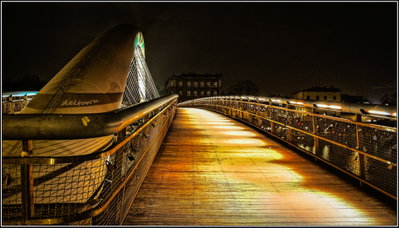
Kładka Bernatka Kraków, Kraków, 2016
Kładka Bernatka Kraków 2016 Bernatek Footbridge over the Vistula River in Kraków, Poland, which links the historic Jewish quarter of Kazimierz with the Podgórze district on the opposite bank. Opened in 2010, the bridge is known for the padlocks visitors attach to its cables.
A Close Look At Wawel Castle, Kraków, 2016
A Close Look At Wawel Castle 2016 Wawel Hill in Kraków, Poland, seen up close. The hilltop complex combines a royal castle and cathedral where Polish kings were once crowned and buried.
Wawel W Krakowie, Kraków, 2016
Wawel W Krakowie 2016 Wawel Castle overlooking the Vistula River in Kraków, Poland. The Renaissance courtyard and cathedral on the hill formed the political and spiritual center of the Polish state for much of its history.
St Florian S Gate, Kraków, 2017
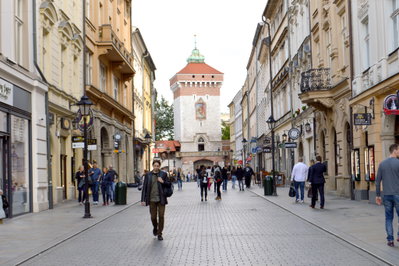
St Florian S Gate 2017 St Florian's Gate, the Gothic tower guarding the northern entrance to Krakow's Old Town, appears in this 2017 photograph. It is one of the few surviving fragments of the medieval walls that once encircled the city.
Bazylika Mariacka, Kraków, 2017
Bazylika Mariacka 2017 The brick towers of St Mary's Basilica rise above Krakow's Main Market Square in this 2017 photograph. The taller of the two towers has long sounded an hourly trumpet call, a tradition associated with the church for centuries.
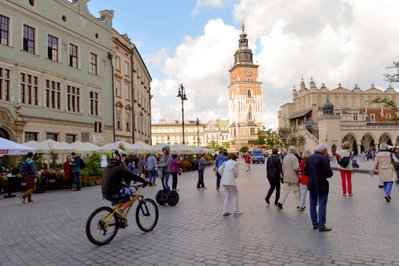
Rynek Glowny, Kraków, 2017
Rynek Glowny 2017 This 2017 photograph shows a corner of Rynek Glowny, Krakow's Main Market Square and one of the largest medieval town squares in Europe, at the historic heart of the city.
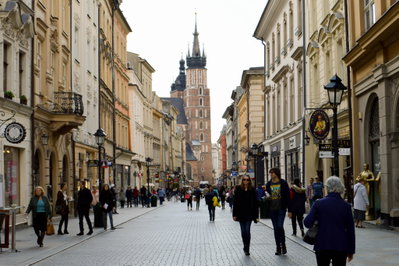
Central Krakow, Kraków, 2017
Central Krakow 2017 Looking down Florianska Street toward St Mary's Basilica, this 2017 photograph captures one of the main routes leading into Krakow's Main Market Square, lined with historic townhouses.
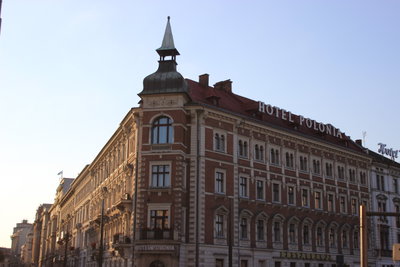
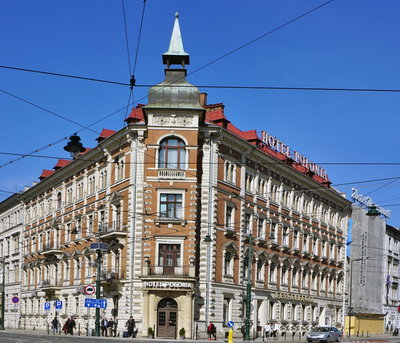
Hotel Polonia w Krakowie, Kraków, 2017
Hotel Polonia w Krakowie 2017 Evening light catches the red-brick facade of Hotel Polonia in this 2017 photograph, its corner turret and rooftop signage rising above a street in central Krakow near the main railway station.
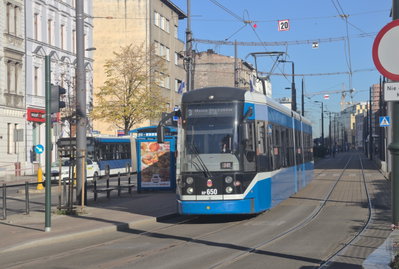
PL Kraków I Stare Miasto, Pawia @ Basztowa, linia, Kraków, 2018
PL Kraków I Stare Miasto, Pawia @ Basztowa, linia 2018 A tram at the junction of Pawia and Basztowa streets in Kraków's Stare Miasto district, near the edge of the historic old town, photographed on 31 October 2018.
Krakow in snow, Kraków, 2019
Krakow in snow 2019 Krakow, Poland's former royal capital, is shown blanketed in snow in this photograph from 2019. The city's well-preserved historic center is recognized as a UNESCO World Heritage Site and remains one of the country's most visited destinations.
Rynek Glowny in 2019, Kraków, 2019
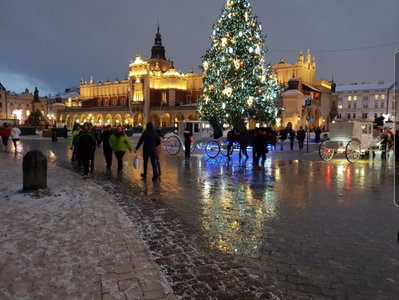
Rynek Glowny in 2019 2019 Snow covers the rooftops and cobbled streets of Kraków in this 2019 winter scene, set within the Polish city's centuries-old former royal capital, whose Old Town and Wawel Castle draw visitors year-round.
Rynek Glowny in 2019, Kraków, 2019
Rynek Glowny in 2019 2019 A wintry view of Kraków from 2019, showing the historic Polish city dusted in snow. Kraków served as Poland's royal capital for centuries before Warsaw and remains one of the country's best-preserved medieval cities.
Rynek Glowny in 2019, Kraków, 2019
Rynek Glowny in 2019 2019 Kraków's streets lie under a blanket of snow in this 2019 photograph, taken in the Polish city long recognized for its medieval core, its market square, and its status as a former seat of Polish kings.
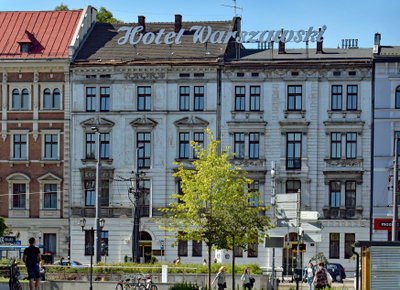
Warszawski Hotel, 1891 design. Karol Knaus, 4-6 Pawia Street, Kraków, Poland, Kraków, 2020
Warszawski Hotel, 1891 design. Karol Knaus, 4-6 Pawia Street, Kraków, Poland 2020 Designed by architect Karol Knaus and completed in 1891, the Warszawski Hotel occupies 4-6 Pawia Street near Kraków's historic center. This 2020 photograph documents the building's facade.
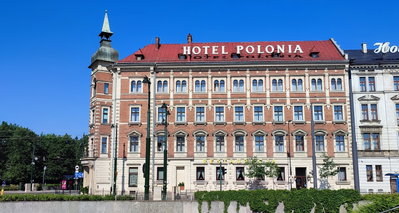
Kraków, Hotel Polonia w Krakowie, Kraków, 2022
Kraków, Hotel Polonia w Krakowie 2022 The Hotel Polonia in Kraków, Poland, photographed in 2022. The hotel stands near Kraków's main railway station, a short walk from the historic Old Town and its medieval market square.
Kraków, Hotel Polonia w Krakowie, Kraków, 2025
Kraków, Hotel Polonia w Krakowie 2025 Another 2025 photograph of the Hotel Polonia in Kraków, the early twentieth-century hotel situated close to the city's main railway station.