Home › Samarkand › Gur-e Amir

Gur-e Amir through time

Samarkand 1905–2025 16 photos of this spot

16 photographs taken at the same spot in Samarkand, spanning 1905–2025 — 9 of them from before 1980. Line them up and watch the place change.

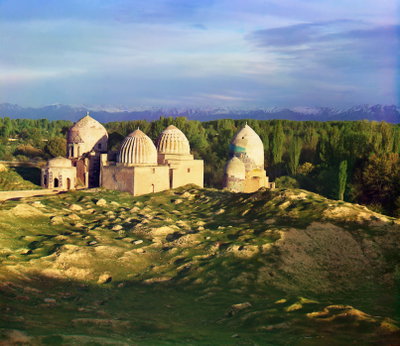
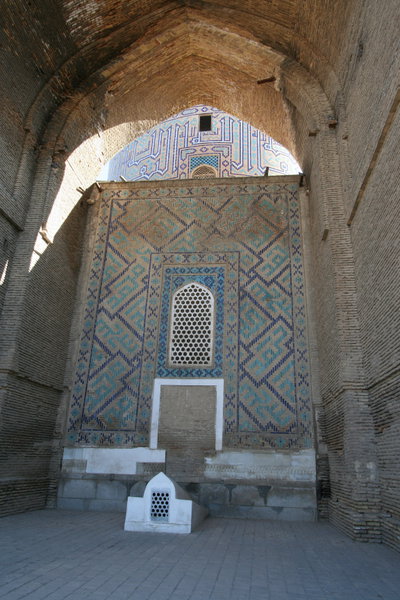
The entrance to a passage known as the 'avenue of the dead' in Samarkand, photographed in 1905. Such necropolis approaches, lined with mausoleums, were a familiar feature of the ancient Silk Road city.

See this spot on the map
Have an old photo of Gur-e Amir? A family album, a postcard, a print from the attic. Pin it to the map and it becomes part of the record.
Add your photo
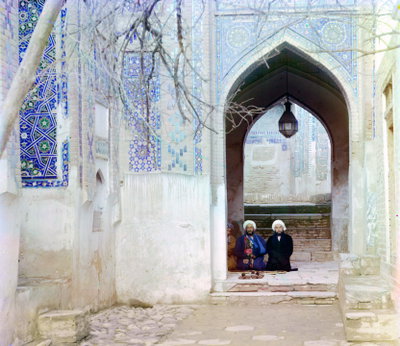
У входа в проход мертвых. Самарканд, Samarkand, 1905
У входа в проход мертвых. Самарканд 1905 The entrance to a passage known as the 'avenue of the dead' in Samarkand, photographed in 1905. Such necropolis approaches, lined with mausoleums, were a familiar feature of the ancient Silk Road city.
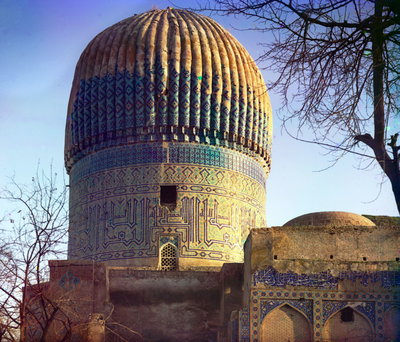
Tomb of Timur east side Prokudin Gorskii, Samarkand, 1910
Tomb of Timur east side Prokudin Gorskii 1910 The eastern side of the Gur-e-Amir, the mausoleum of Timur (Tamerlane) in Samarkand, Uzbekistan, photographed around 1910 by Sergei Prokudin-Gorskii, who documented the Russian Empire using an early three-exposure color process.
Gorskii, Samarkand, 1910
Gorskii 1910 A photograph of Samarkand, Uzbekistan, made around 1910 by the Russian photographer Sergei Prokudin-Gorskii as part of his pioneering series of color images recording the cities and peoples of the Russian Empire.
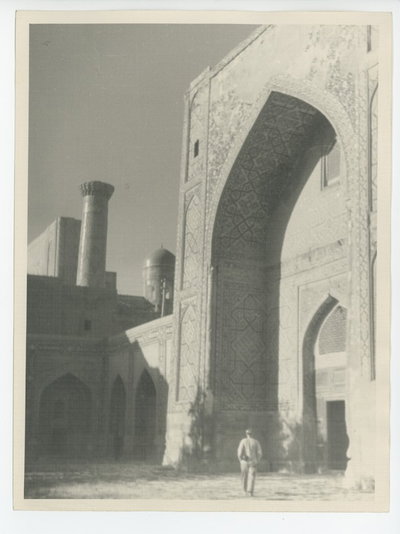
EU: Ulugbeki medresi õuel Samarkandis (1960), Samarkand, 1960
EU: Ulugbeki medresi õuel Samarkandis (1960) 1960 This 1960 photograph was taken in the courtyard of the Ulugbek Madrasa in Samarkand, the 15th-century school built on the Registan square during the reign of the astronomer-ruler Ulugh Beg.
EU: Vanad kindluse müürid Samarkandis (1960), Samarkand, 1960
EU: Vanad kindluse müürid Samarkandis (1960) 1960 Old fortress walls in Samarkand, Uzbekistan, photographed in 1960. Samarkand's fortifications date back centuries, reflecting the city's long history as a center of trade and power along the Silk Road.
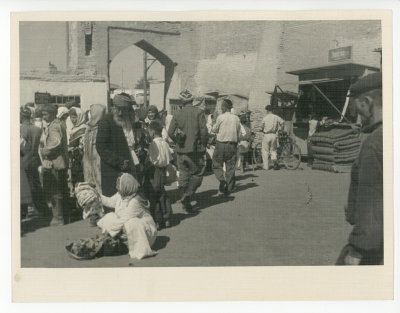
EU: Samarkand Market (1960), Samarkand, 1960
EU: Samarkand Market (1960) 1960 A market in Samarkand, Uzbekistan, photographed in 1960. Markets have operated in the city for centuries, sustained by Samarkand's position on the historic Silk Road trade routes through Central Asia.
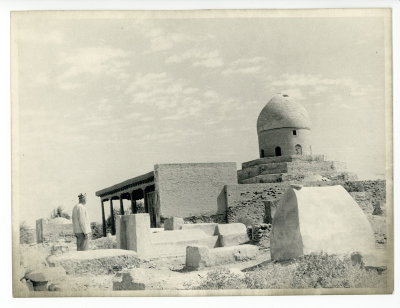
EU: Kalmistu Samarkandis (1960), Samarkand, 1960
EU: Kalmistu Samarkandis (1960) 1960 A cemetery in Samarkand, Uzbekistan, photographed in 1960, among the historic burial grounds that surround the ancient city and its many Silk Road-era monuments.
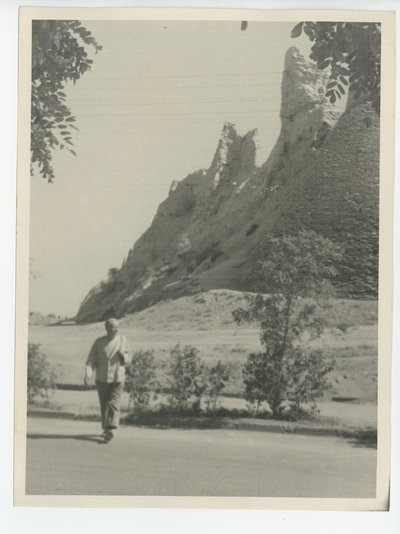
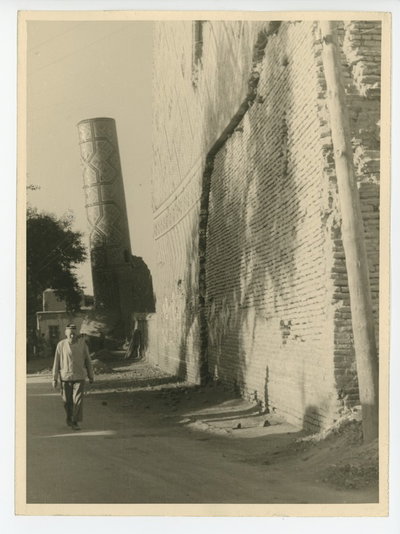
EU: Längus torn Samarkandis (1960), Samarkand, 1960
EU: Längus torn Samarkandis (1960) 1960 A leaning tower in Samarkand, Uzbekistan, photographed in 1960. Several of the city's medieval monuments, built on unstable ground, have tilted visibly over the centuries.
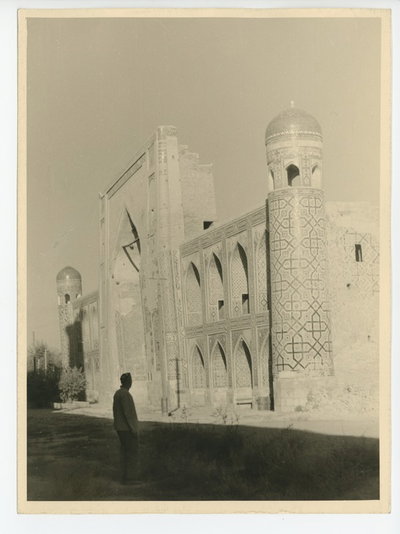
EU: Medres Samarkandis (1960), Samarkand, 1960
EU: Medres Samarkandis (1960) 1960 A madrasa in Samarkand, Uzbekistan, photographed in 1960. The city's Islamic religious schools, many dating to the Timurid period, remain among its most recognizable landmarks.
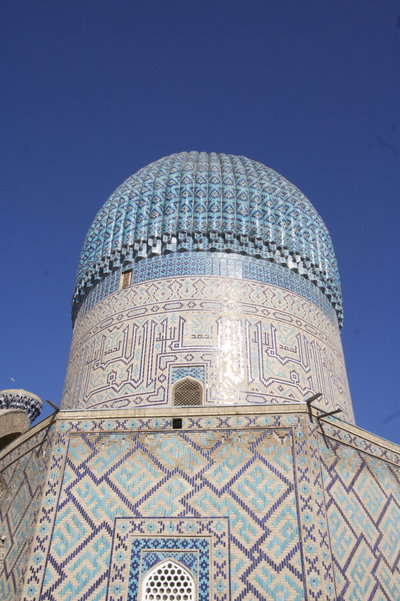
Mausoleo Gur Emir - 52, Samarkand, 2008
Mausoleo Gur Emir - 52 2008 The fluted turquoise dome of the Gur-e-Amir mausoleum in Samarkand, Uzbekistan, in 2008. Built in the early fifteenth century, it holds the tomb of the Central Asian conqueror Timur.
Mausoleo Gur Emir - 58, Samarkand, 2008
Mausoleo Gur Emir - 58 2008 Tilework on the Gur-e-Amir mausoleum in Samarkand, seen in 2008. The mausoleum became the burial site of several Timurid rulers after Timur's death in 1405.
Mausoleo Gur Emir - 59, Samarkand, 2008
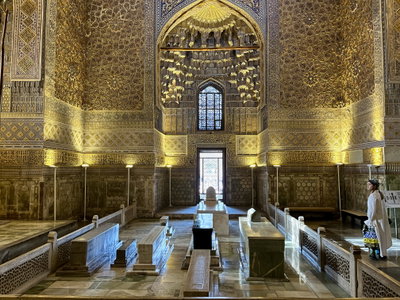
Mausoleo Gur Emir - 59 2008 Interior detail of the Gur-e-Amir mausoleum in Samarkand, photographed in 2008. Its onion dome and glazed tilework influenced later Timurid and Mughal architecture, including the Taj Mahal.
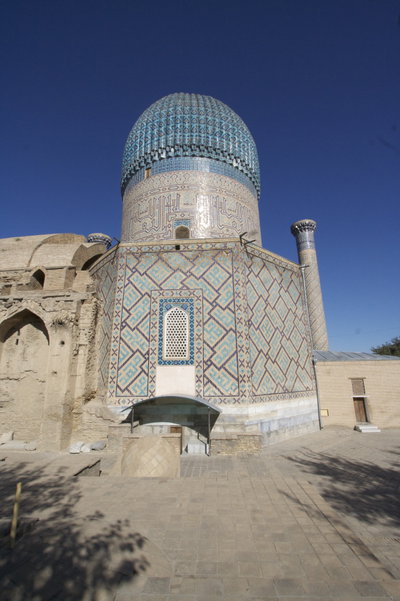
Samarkand, Guri Amir Mausoleum, Samarkand, 2008
Samarkand, Guri Amir Mausoleum 2008 The Gur-e-Amir mausoleum complex in Samarkand, Uzbekistan, in 2008. Commissioned by Timur for a grandson, it later became his own resting place as well.
Guri Amir Mousoleum(1), Samarkand, 2023
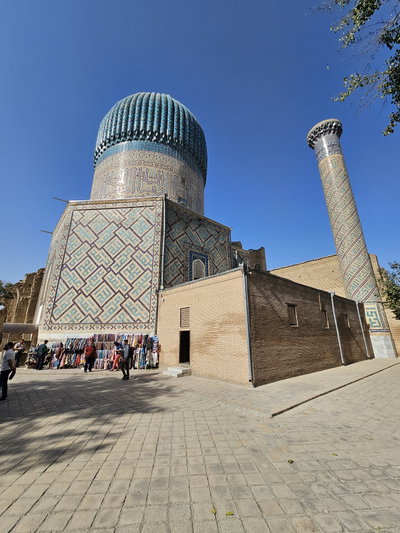
Guri Amir Mousoleum(1) 2023 The Gur-e-Amir mausoleum in Samarkand, Uzbekistan, photographed in 2023, was built in the early 15th century as the burial place of the Central Asian conqueror Timur.
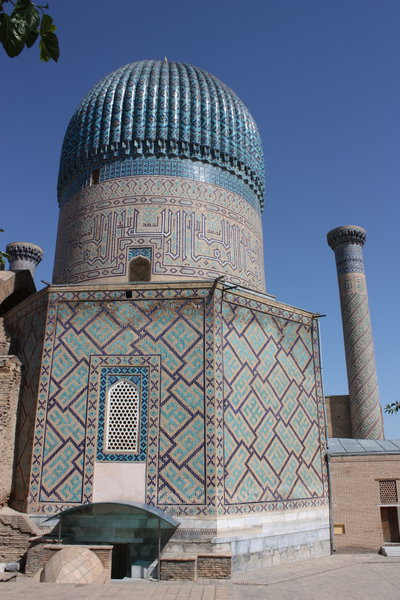
Dome of Gur-e Amir, Samarkand, 2023
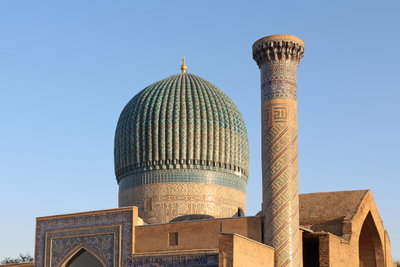
Dome of Gur-e Amir 2023 The ribbed azure dome of the Gur-e Amir mausoleum in Samarkand, Uzbekistan, photographed in 2023. Built in the early 15th century as the burial place of the conqueror Timur, it later influenced Mughal tomb architecture such as the Taj Mahal.
Gur-e Amir, Samarkand, 2025
Gur-e Amir 2025 Yet another perspective on Samarkand's Gur-e Amir, the Timurid mausoleum complex built in the early 15th century, whose turquoise dome has long served as a visual emblem of the city.