Home › Samarkand › Мавзолей Гур-Эмир

Мавзолей Гур-Эмир through time

Samarkand 2008–2025 14 photos of this spot

14 recent photographs taken at the same spot in Samarkand, spanning 2008–2025. Have an older picture of it? Add it and start this spot's timeline.

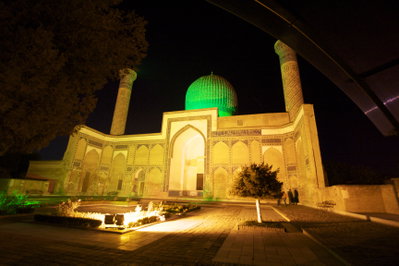
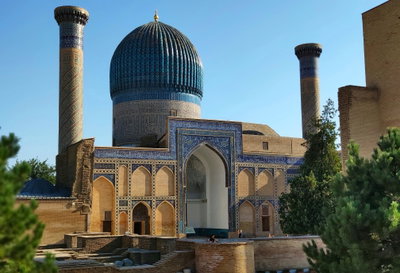
A 2008 view of the Gur-e-Amir mausoleum grounds in Samarkand, one of the key monuments of Timurid-era architecture along the Silk Road.

See this spot on the map
Have an old photo of Мавзолей Гур-Эмир? A family album, a postcard, a print from the attic. Pin it to the map and it becomes part of the record.
Add your photo
Guri Amir 01 in 2008, Samarkand, 2008
Guri Amir 01 in 2008 2008 A 2008 view of the Gur-e-Amir mausoleum grounds in Samarkand, one of the key monuments of Timurid-era architecture along the Silk Road.
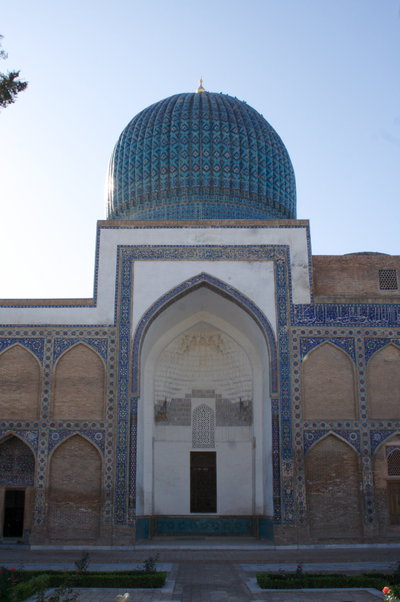
Mausoleo Gur Emir - 10, Samarkand, 2008
Mausoleo Gur Emir - 10 2008 The Gur-e-Amir mausoleum in Samarkand is pictured in this 2008 photograph. Built in the early fifteenth century, it holds the tomb of the Central Asian conqueror Timur, also known as Tamerlane.
Mausoleo Gur Emir - 21, Samarkand, 2008
Mausoleo Gur Emir - 21 2008 The Gur-e-Amir mausoleum in Samarkand, Uzbekistan, burial place of the Central Asian conqueror Timur and several of his descendants, including Ulugh Beg. Photographed in 2008.
Gur-e Amir, Samarkand, Samarkand, 2013
Gur-e Amir, Samarkand 2013 The Gur-e-Amir mausoleum in Samarkand, Uzbekistan, holds the tomb of the 14th-century conqueror Timur (Tamerlane) and set an architectural precedent later echoed in Mughal India. This photograph is from 2013.
Гур-Эмир - Amir Temur maqbarasi - Gur-e-Amir (By Khusen Rustamov), Samarkand, 2015
Гур-Эмир - Amir Temur maqbarasi - Gur-e-Amir (By Khusen Rustamov) 2015 Gur-e-Amir in Samarkand, Uzbekistan, the 15th-century mausoleum built for Timur's grandson Muhammad Sultan and later used as the resting place of Timur himself. The building's dome and tilework remain a defining image of the city.
Мавзолей Гур-Эмир, Samarkand, 2019
Мавзолей Гур-Эмир 2019 The Gur-e-Amir mausoleum in Samarkand, Uzbekistan, holds the tomb of the 14th-century conqueror Timur (Tamerlane) along with several of his descendants. This photograph of the domed structure was taken in 2019.
View of Guri Amir from a nearby street, Samarkand, 2022
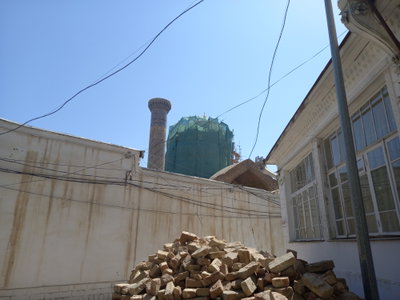
View of Guri Amir from a nearby street 2022 Gur-e-Amir is the early 15th-century mausoleum of the conqueror Timur (Tamerlane) in Samarkand, Uzbekistan, renowned for its ribbed azure dome. This 2022 photograph shows the monument as seen from a nearby street.
Guri Amir 01, Samarkand, 2022
Guri Amir 01 2022 The Gur-e-Amir mausoleum in Samarkand holds the tomb of Timur (Tamerlane), the fourteenth-century conqueror who made the city his capital, and later became a burial place for his descendant Ulugh Beg.
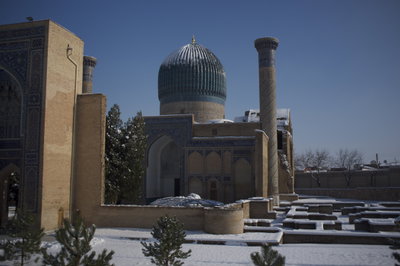
Restoration works at Guri Amir 15, Samarkand, 2022
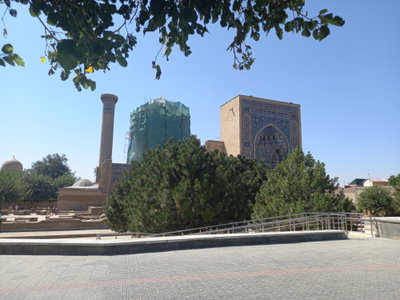
Restoration works at Guri Amir 15 2022 Restoration work underway at the Gur-e-Amir mausoleum in Samarkand, Uzbekistan, in 2022; the domed complex was built in the early 15th century as the burial place of the Central Asian conqueror Timur.
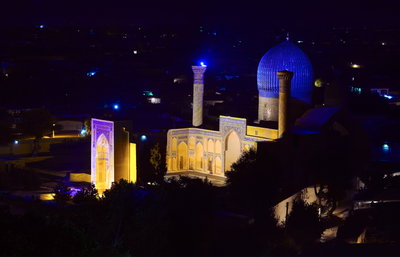
Guri Amir mausoleum, Samarkand, 2025
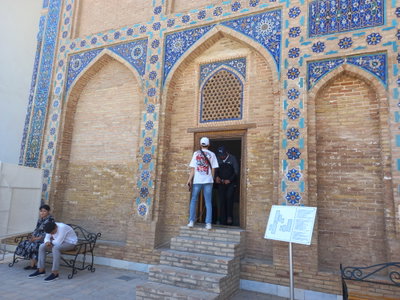
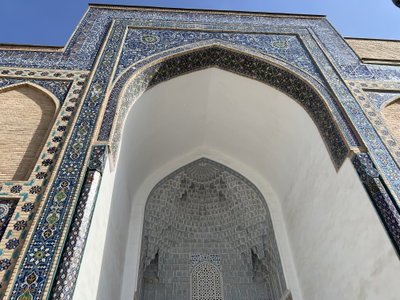
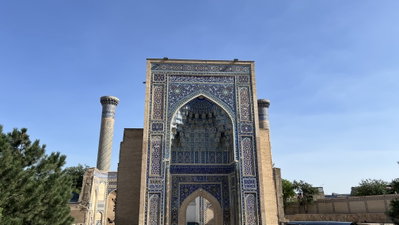
Guri Amir mausoleum 2025 The Guri Amir is the mausoleum of the 14th-century conqueror Timur (Tamerlane) and several of his descendants, located in Samarkand, Uzbekistan. This 2025 photograph shows the domed structure, one of the city's most recognized Timurid-era monuments.
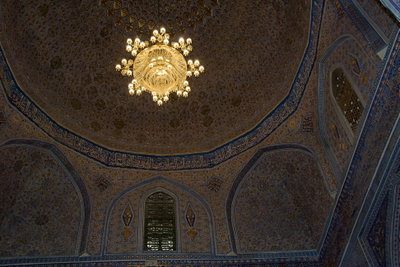
Guri Amir mausoleum 4, Samarkand, 2025
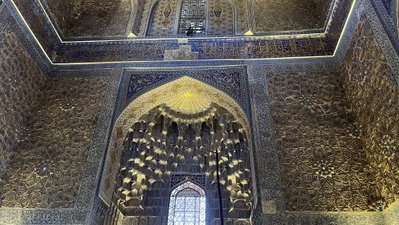
Guri Amir mausoleum 4 2025 The Guri Amir mausoleum in Samarkand holds the tomb of Amir Timur (Tamerlane) beneath its fluted azure dome, and later became the burial site of several of his descendants, including Ulugh Beg.
Guri Amir mausoleum 5, Samarkand, 2025
Guri Amir mausoleum 5 2025 A further view of Samarkand's Guri Amir mausoleum, whose ribbed dome and tilework established an architectural model later echoed in Mughal India, including at the Taj Mahal.
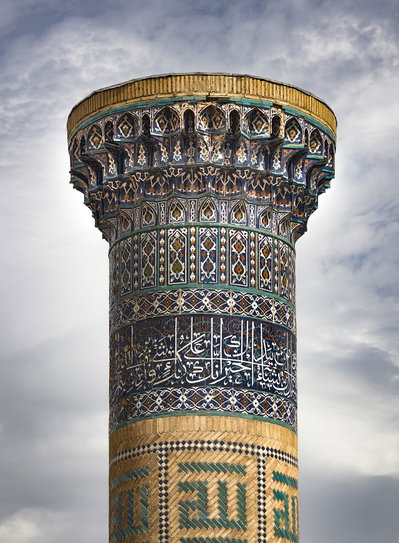
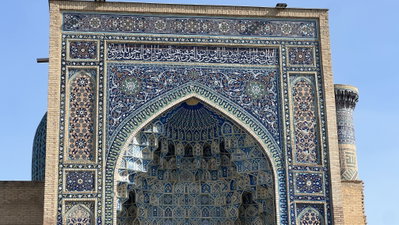
Timurid minaret Gur-e-Emir (Мавзолей Гур-Эмир, Goʻri Amir), Samarkand, Samarkand, 2025
Timurid minaret Gur-e-Emir (Мавзолей Гур-Эмир, Goʻri Amir), Samarkand 2025 The Gur-e-Amir mausoleum in Samarkand holds the tomb of the 14th-century conqueror Timur beneath its ribbed turquoise dome. Built in the early 15th century, it later influenced Central Asian and Mughal architecture, including the design of India's Taj Mahal.
Guri Amir mausoleum 6, Samarkand, 2025
Guri Amir mausoleum 6 2025 The Guri Amir mausoleum in Samarkand, built in the early 15th century as the burial place of Timur and several of his descendants, recognizable for its ribbed azure dome.