Home › Stone Town › Sansibar House of Wonders

Sansibar House of Wonders through time

Stone Town 1880–1961 43 photos of this spot

43 photographs taken at the same spot in Stone Town, spanning 1880–1961 — 43 of them from before 1980. Line them up and watch the place change.

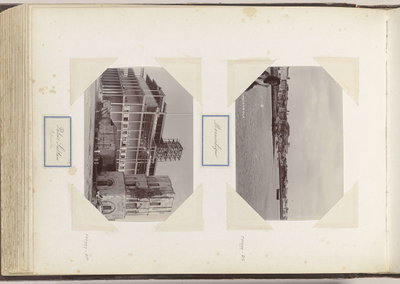
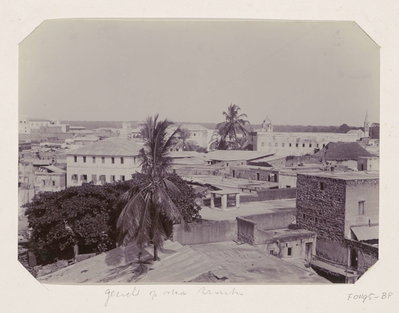
A general view over Stone Town, the historic heart of Zanzibar, captured in 1880. At the time the island was a major center of the East African trade in spices, ivory, and cloves, ruled by the Sultanate of Zanzibar from its coral-stone palaces along the waterfront.

See this spot on the map
Have an old photo of Sansibar House of Wonders? A family album, a postcard, a print from the attic. Pin it to the map and it becomes part of the record.
Add your photo
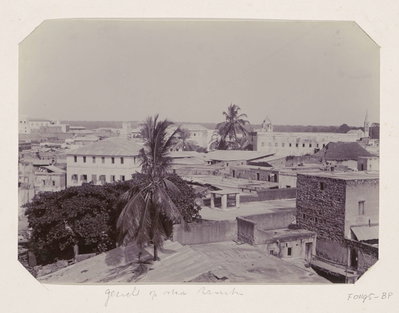
EU: Gezicht op een stad op Zanzibar (1880), Stone Town, 1880
EU: Gezicht op een stad op Zanzibar (1880) 1880 A general view over Stone Town, the historic heart of Zanzibar, captured in 1880. At the time the island was a major center of the East African trade in spices, ivory, and cloves, ruled by the Sultanate of Zanzibar from its coral-stone palaces along the waterfront.
EU: Voorbijgangers in een straat te Zanzibar - General Water Works (1880), Stone Town, 1880
EU: Voorbijgangers in een straat te Zanzibar - General Water Works (1880) 1880 Pedestrians pass along a street in Zanzibar near the General Water Works in this 1880 image, taken as the sultanate was investing in new municipal infrastructure for Stone Town, then a hub of trade on the Swahili coast.
EU: View of Zanzibar Town (1880), Stone Town, 1880
EU: View of Zanzibar Town (1880) 1880 Rooftops and waterfront buildings of Zanzibar Town appear in this 1880 view of what is now known as Stone Town, a historic trading port on the Swahili coast built largely of coral stone and coral rag.
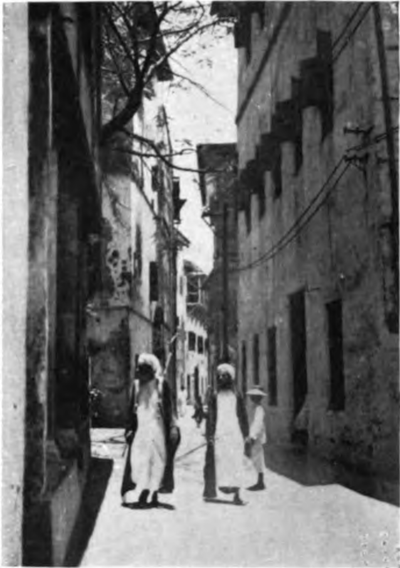
EU: Voorbijgangers in een straat te Zanzibar (1890), Stone Town, 1890
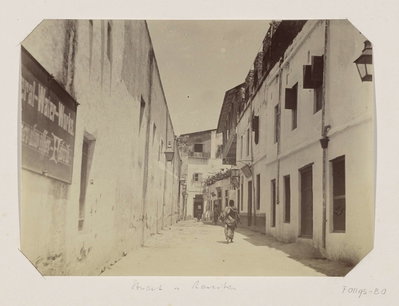
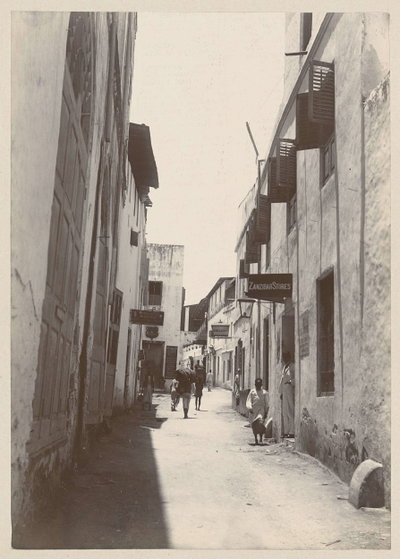
EU: Voorbijgangers in een straat te Zanzibar (1890) 1890 A street in Stone Town, Zanzibar, is pictured in this 1890 photograph, showing passersby along one of the narrow lanes of the coral-stone quarter that was then the seat of the Sultanate of Zanzibar.
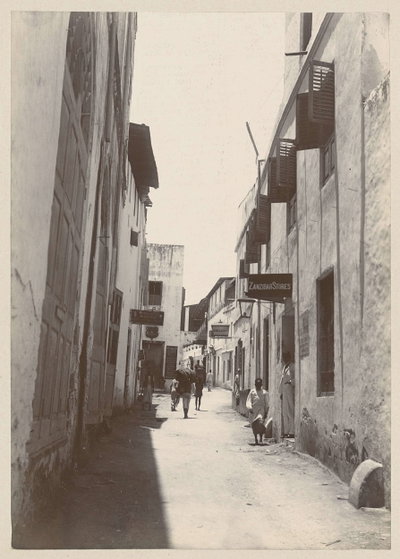
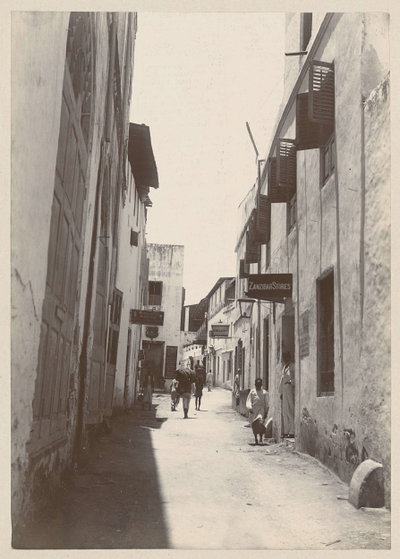
EU: Voorbijgangers in een straat te Zanzibar - Zanzibar Stores (1890), Stone Town, 1890
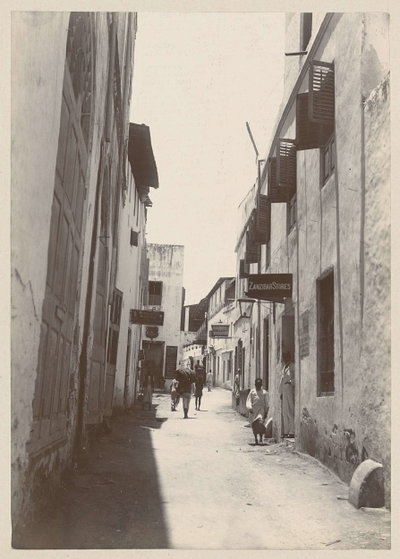
EU: Voorbijgangers in een straat te Zanzibar - Zanzibar Stores (1890) 1890 This 1890 photograph shows a street in Stone Town, Zanzibar, near the Zanzibar Stores, a commercial establishment on one of the coral-stone quarter's narrow lanes.
EU: Exterieur van het beschadigde paleis van de sultan van Zanzibar (1897), Stone Town, 1897
EU: Exterieur van het beschadigde paleis van de sultan van Zanzibar (1897) 1897 The damaged exterior of the Sultan's palace in Zanzibar's Stone Town, photographed in 1897, a year after the British bombardment that destroyed much of the building. The brief conflict of August 1896 is regarded as the shortest recorded war in history.
EU: Voorbijgangers in een straat te Zanzibar - Zanzibar Stores (1900), Stone Town, 1900
EU: Voorbijgangers in een straat te Zanzibar - Zanzibar Stores (1900) 1900 Passersby walk near the premises of the Zanzibar Stores trading company in this 1900 street scene from Zanzibar City, reflecting the commercial character of Stone Town's waterfront district.
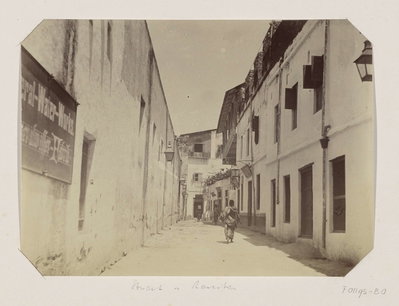
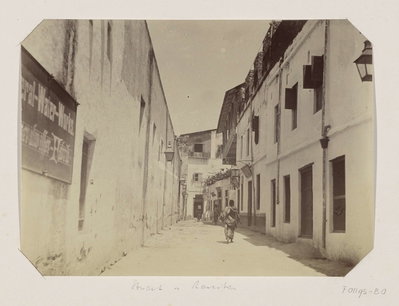
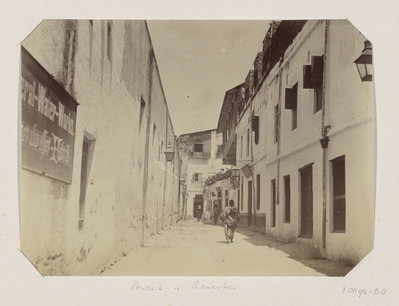
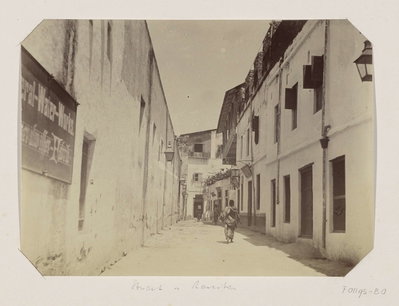
EU: Voorbijgangers in een straat te Zanzibar - Hotel dAngleterre (1900), Stone Town, 1900
EU: Voorbijgangers in een straat te Zanzibar - Hotel dAngleterre (1900) 1900 A street scene near the Hotel d'Angleterre in Zanzibar City, with passersby going about their day, dates from 1900, when the hotel served travelers passing through the island's main port.
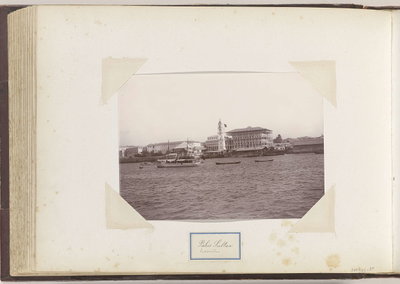
EU: Exterior of the Sultans Palace, Zanzibar (c.1900), Stone Town, 1900
EU: Exterior of the Sultans Palace, Zanzibar (c.1900) 1900 The exterior of the Sultan's Palace in Zanzibar City is documented again in this photograph from around 1900, showing the building that served as the residence of the island's ruler.
EU: Passersby in a street in Zanzibar (c.1900), Stone Town, 1900
EU: Passersby in a street in Zanzibar (c.1900) 1900 Passersby move through a Zanzibar City street in this photograph, taken around 1900, during the years of British protectorate rule over the island, when Stone Town's lanes were densely built and busy with foot traffic.
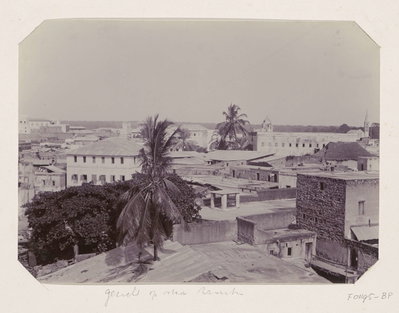
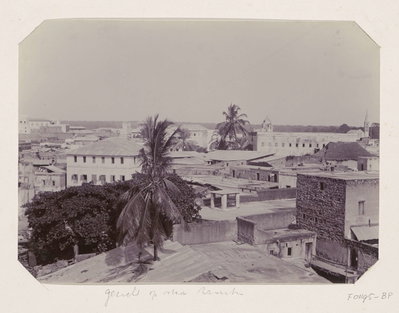
EU: Gezicht op een stad op Zanzibar (Rijksmuseum) (1900), Stone Town, 1900
EU: Gezicht op een stad op Zanzibar (Rijksmuseum) (1900) 1900 Held in the Rijksmuseum's collection, this 1900 photograph offers a general view over the rooftops of Zanzibar City, part of a broader set of images documenting the island around that time.
EU: Voorbijgangers in een straat te Zanzibar (Rijksmuseum, F01195-BO) (1900), Stone Town, 1900
EU: Voorbijgangers in een straat te Zanzibar (Rijksmuseum, F01195-BO) (1900) 1900 Another Rijksmuseum-held photograph from 1900 shows passersby along a street in Zanzibar City, one of several similar views the museum holds of the town.
EU: Voorbijgangers in een straat te Zanzibar (Rijksmuseum, RP-F-2012-96-241) (1900), Stone Town, 1900
EU: Voorbijgangers in een straat te Zanzibar (Rijksmuseum, RP-F-2012-96-241) (1900) 1900 This Rijksmuseum photograph from 1900 again captures pedestrians on a street in Zanzibar City, forming part of the museum's set of Zanzibar street scenes from the period.
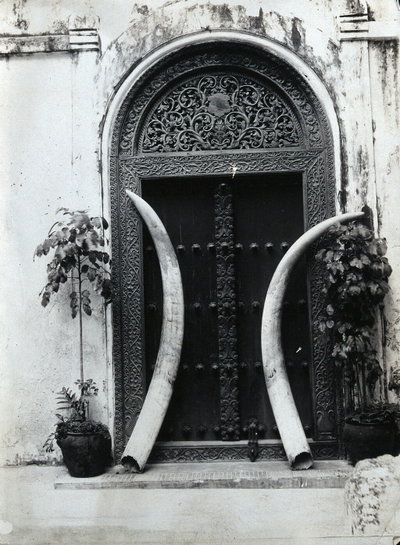
EU: An ornate carved doorway in Zanzibar, with an enormous pair of elephant's tusks leaning against it (1900), Stone Town, 1900
EU: An ornate carved doorway in Zanzibar, with an enormous pair of elephant's tusks leaning against it (1900) 1900 A carved wooden doorway in Zanzibar, flanked by a large pair of elephant tusks leaning against it, is pictured in this 1900 photograph, an unusual decorative pairing on one of Stone Town's ornate entrances.
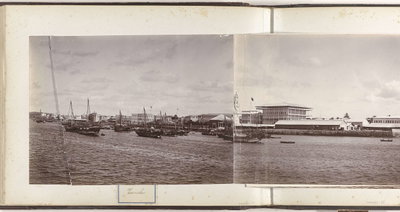
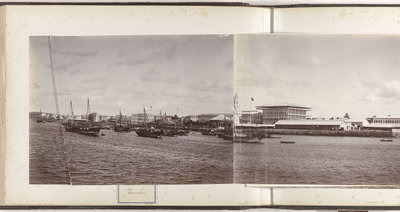
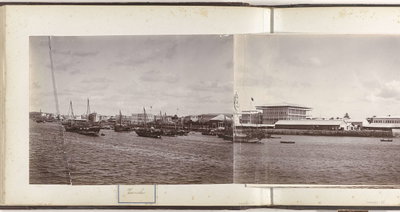
EU: Panorama of Zanzibar Harbour (1900), Stone Town, 1900
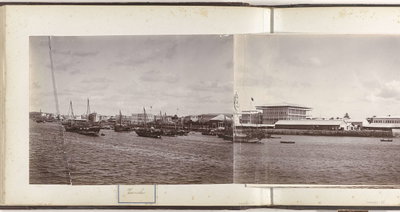
EU: Panorama of Zanzibar Harbour (1900) 1900 This 1900 panorama takes in Zanzibar's harbour front, showing the waterfront edge of Stone Town where trading vessels once loaded and unloaded their cargo.
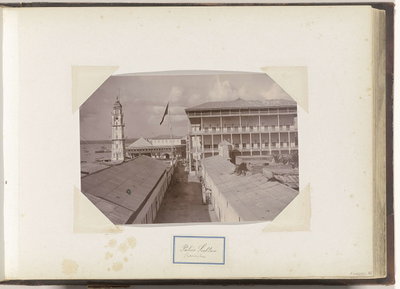
EU: Sultan's Palace, Zanzibar (1900), Stone Town, 1900
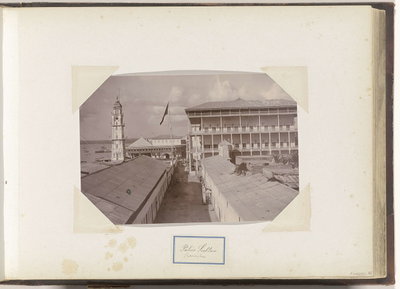
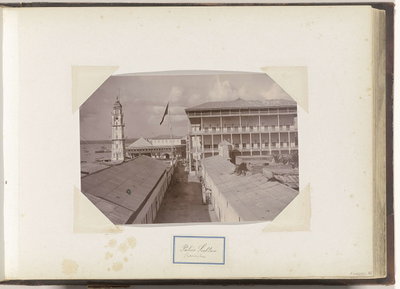
EU: Sultan's Palace, Zanzibar (1900) 1900 The Sultan's Palace, residence of Zanzibar's ruler, is shown in this 1900 photograph of the town, at a time when the sultanate operated under British protectorate oversight.
EU: Panorama of Zanzibar (1900), Stone Town, 1900
EU: Panorama of Zanzibar (1900) 1900 A wide panorama of Zanzibar City, taken in 1900, surveys the town's rooftops and layout along the coast, illustrating the density of Stone Town's historic core.
EU: Voorbijgangers in een straat te Zanzibar (2012.96.241) (1900), Stone Town, 1900
EU: Voorbijgangers in een straat te Zanzibar (2012.96.241) (1900) 1900 Another view of pedestrians on a Stone Town street in Zanzibar, photographed in 1900 and part of a series documenting everyday scenes in the historic Swahili trading port.
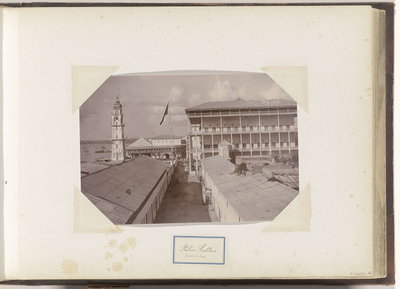
Sansibar House of Wonders, Stone Town, 1907
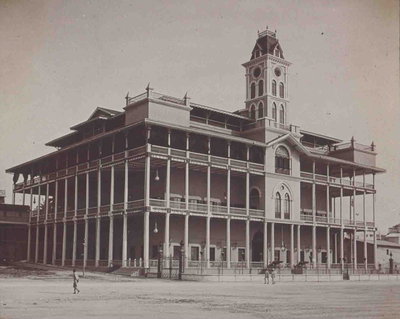
Sansibar House of Wonders 1907 The House of Wonders in Stone Town, Zanzibar, photographed in 1907. Built in the 1880s as a ceremonial palace for the Sultan of Zanzibar, it was among the first buildings in East Africa to have electric lighting.
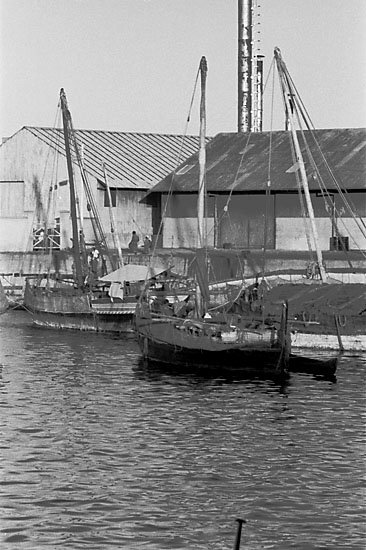
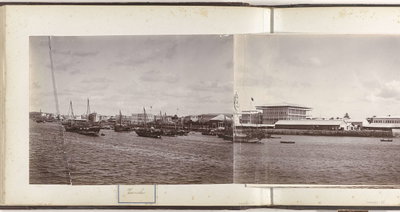
EU: Panorama van de haven van Zanzibar (1910), Stone Town, 1910
EU: Panorama van de haven van Zanzibar (1910) 1910 A panoramic view of Zanzibar's harbour, photographed in 1910.
EU: Exterieur van het paleis van de sultan van Zanzibar (1910), Stone Town, 1910
EU: Exterieur van het paleis van de sultan van Zanzibar (1910) 1910 The exterior of the Sultan of Zanzibar's palace, photographed in 1910.
EU: Panorama of Zanzibar harbour, Coutinho Brothers (c.1910), Stone Town, 1910
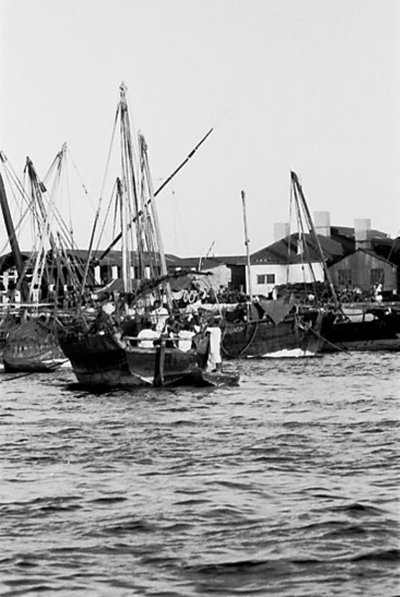
EU: Panorama of Zanzibar harbour, Coutinho Brothers (c.1910) 1910 A panorama of Zanzibar's harbour photographed around 1910 by the Coutinho Brothers photography studio.
EU: View of a town on Zanzibar (c.1910), Stone Town, 1910
EU: View of a town on Zanzibar (c.1910) 1910 A view of a town on Zanzibar, photographed around 1910.
EU: Panorama van de haven van Zanzibar (Rijksmuseum) (1910), Stone Town, 1910
EU: Panorama van de haven van Zanzibar (Rijksmuseum) (1910) 1910 A panoramic view of Zanzibar's harbour, photographed in 1910; the image is held in the collection of the Rijksmuseum in Amsterdam.
EU: Exterieur van het paleis van de sultan van Zanzibar (Rijksmuseum) (1910), Stone Town, 1910
EU: Exterieur van het paleis van de sultan van Zanzibar (Rijksmuseum) (1910) 1910 The exterior of the Sultan of Zanzibar's palace, photographed in 1910 and held in the collection of the Rijksmuseum in Amsterdam.
EU: Paleis van de sultan van Zanzibar, gezien vanaf het water (1910), Stone Town, 1910
EU: Paleis van de sultan van Zanzibar, gezien vanaf het water (1910) 1910 The Sultan of Zanzibar's palace in Stone Town, seen from the water in this 1910 photograph.
Narrow streets, Zanzibar City, Stone Town, 1920
Narrow streets, Zanzibar City 1920 The narrow, winding streets of Zanzibar City's Stone Town are captured in this 1920 photograph. The old quarter, built up over centuries of trade across the Indian Ocean, was known for its dense layout of coral-stone buildings and narrow alleys.
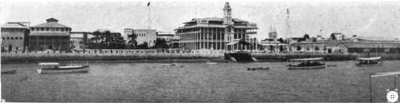
Zanzibar city from the sea, Stone Town, 1920
Zanzibar city from the sea 1920 Zanzibar City as seen from offshore, its waterfront skyline visible to approaching ships, is captured in this 1920 photograph. The port had long served as a hub of trade along the East African coast and across the Indian Ocean.
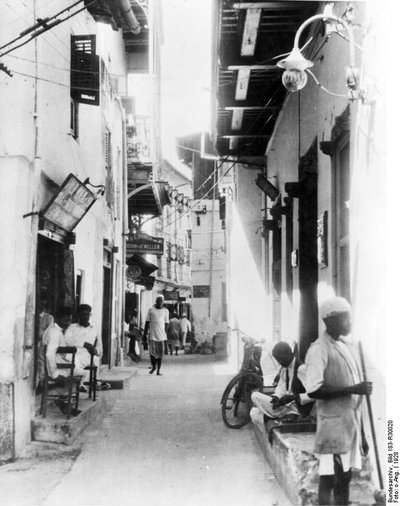
Bundesarchiv Bild 183-R30020, Sansibar, Stone Town, 1928
Bundesarchiv Bild 183-R30020, Sansibar 1928 A 1928 photograph from the German Federal Archives (Bundesarchiv) showing Stone Town, Zanzibar, the historic coastal settlement long known as a center of Indian Ocean trade.
EU: bat, hav, fotografi - Zanzibar harbour (1933), Stone Town, 1933
EU: bat, hav, fotografi - Zanzibar harbour (1933) 1933 This 1933 image of Zanzibar's Stone Town harbour carries a partly Scandinavian-language caption and shows the wooden dhows that worked the port, vessels little changed in design over centuries of Indian Ocean trade.
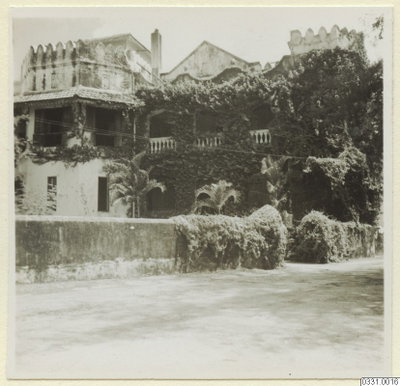
EU: fotografi - Stone Town building (1933), Stone Town, 1933
EU: fotografi - Stone Town building (1933) 1933 A building in Zanzibar's Stone Town is documented in this 1933 photograph, part of a series recording the district's distinctive Swahili coastal architecture of coral stone and carved wooden doors.
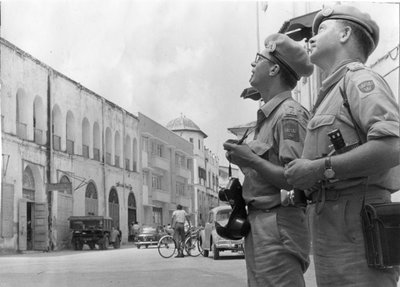
EU: Utrikestjänst, FN. På östafrikansk semester, i Zanzibar, Stone Town, 1960
EU: Utrikestjänst, FN. På östafrikansk semester, i Zanzibar 1960 A view of Stone Town, Zanzibar, taken in 1960 during a Swedish foreign service member's trip through East Africa. The old town's coral-stone buildings and narrow lanes reflect centuries of Swahili, Arab and Indian trading influence.
EU: Utrikestjänst, FN. På östafrikansk semester, i Zanzibar. (1960), Stone Town, 1960
EU: Utrikestjänst, FN. På östafrikansk semester, i Zanzibar. (1960) 1960 Another photograph from Stone Town, Zanzibar, taken in 1960 during the same East African journey by a member of the Swedish foreign service, showing the old quarter's coral-stone streetscape.
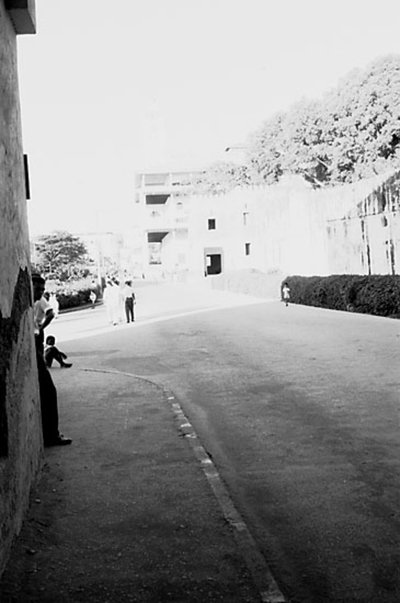
EU: Afrikaresa, Zanzibar - street near old fort wall (1961), Stone Town, 1961
EU: Afrikaresa, Zanzibar - street near old fort wall (1961) 1961 A street near the old fort wall in Stone Town, Zanzibar, photographed in 1961 during an African journey. The fort, built by Omani Arabs in the late 17th century, stands near the harbor front of the historic quarter.
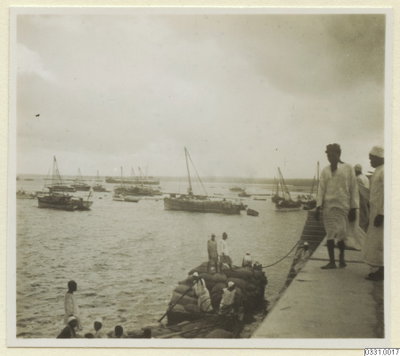
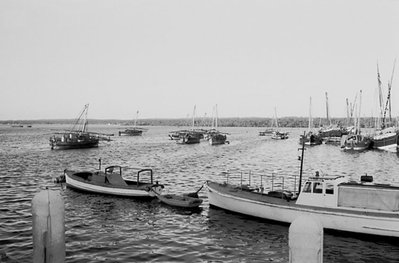
EU: Afrikaresa, Zanzibar - harbour with dhows (1961), Stone Town, 1961
EU: Afrikaresa, Zanzibar - harbour with dhows (1961) 1961 Traditional dhows fill the harbour at Zanzibar's Stone Town in this 1961 photograph, part of a travel series documenting East Africa two years before the islands gained independence.
EU: Afrikaresa, Zanzibar - dhow harbour panorama (1961), Stone Town, 1961
EU: Afrikaresa, Zanzibar - dhow harbour panorama (1961) 1961 A panoramic view of the dhow harbour at Zanzibar, photographed in 1961; these lateen-rigged sailing vessels had long carried trade along the East African coast.
EU: Afrikaresa, Zanzibar - dhows and harbour buildings (1961), Stone Town, 1961
EU: Afrikaresa, Zanzibar - dhows and harbour buildings (1961) 1961 Dhows moored before the waterfront buildings of Stone Town, Zanzibar, in this 1961 photograph taken shortly before the end of British protectorate rule.
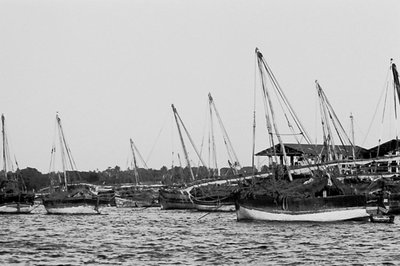
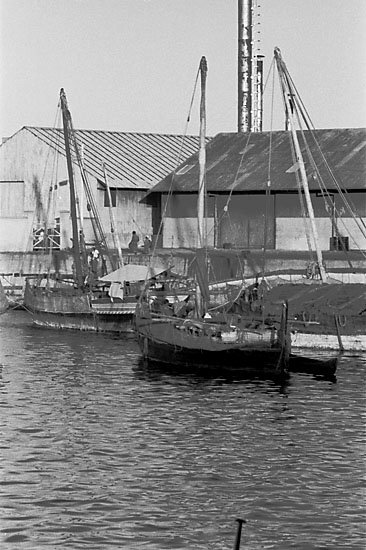
EU: Afrikaresa, Zanzibar - dhows moored by warehouses (1961), Stone Town, 1961
EU: Afrikaresa, Zanzibar - dhows moored by warehouses (1961) 1961 Traditional sailing dhows lie moored by the old harbour warehouses of Zanzibar in this 1961 photograph, evidence of the trade that once linked the island to ports across the Indian Ocean.
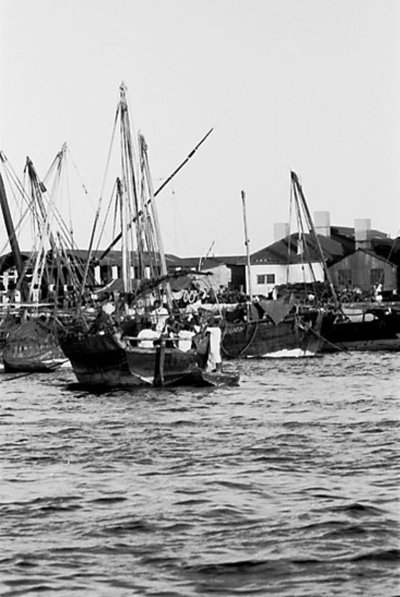
EU: Afrikaresa, Zanzibar - dhow with sailors in harbour (1961), Stone Town, 1961
EU: Afrikaresa, Zanzibar - dhow with sailors in harbour (1961) 1961 Sailors work aboard a dhow in Zanzibar's harbour in this 1961 photograph, a scene typical of the port's long-standing maritime trade, in which locally built sailing vessels carried cargo along the East African coast and across to Arabia.
EU: Afrikaresa, Zanzibar - moored dhows at wharf (1961), Stone Town, 1961
EU: Afrikaresa, Zanzibar - moored dhows at wharf (1961) 1961 Dhows lie moored at a wharf in Zanzibar in 1961, illustrating the wooden-hulled sailing craft that linked Stone Town to ports across the Indian Ocean, a trade network that shaped the island's economy for centuries.
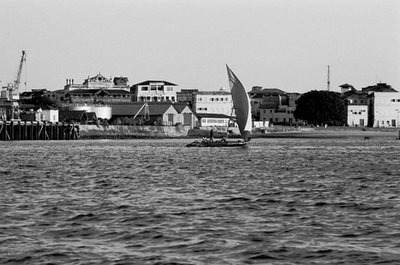
EU: Afrikaresa, Zanzibar - waterfront skyline with dhow (1961), Stone Town, 1961
EU: Afrikaresa, Zanzibar - waterfront skyline with dhow (1961) 1961 The Stone Town waterfront skyline rises behind a dhow in this 1961 image, showing Zanzibar's harbour as it appeared in the early 1960s, not long before the island's 1963 independence and its 1964 union with Tanganyika to form Tanzania.
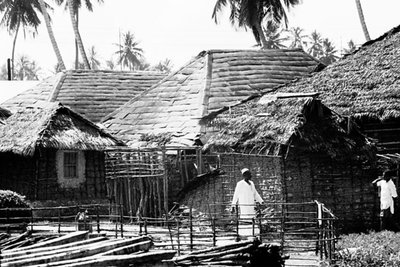
EU: Afrikaresa, Zanzibar - man in fenced garden by residential buildings (1961), Stone Town, 1961
EU: Afrikaresa, Zanzibar - man in fenced garden by residential buildings (1961) 1961 This 1961 photograph shows a man standing in a fenced garden beside residential buildings in Stone Town, Zanzibar, a quieter corner of the historic quarter away from the main harbour and market streets.
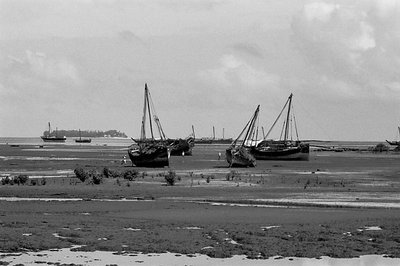
EU: Afrikaresa, Zanzibar - dhows on the beach (1961), Stone Town, 1961
EU: Afrikaresa, Zanzibar - dhows on the beach (1961) 1961 Dhows rest on the beach at Stone Town in this 1961 photograph, likely drawn up out of the water between voyages, a common sight along Zanzibar's shoreline where boats were beached for loading, repair, or shelter.