Home › Zagreb › St Mark S

St Mark S through time

Zagreb 1898–2025 33 photos of this spot

33 photographs taken at the same spot in Zagreb, spanning 1898–2025 — 16 of them from before 1980. Line them up and watch the place change.

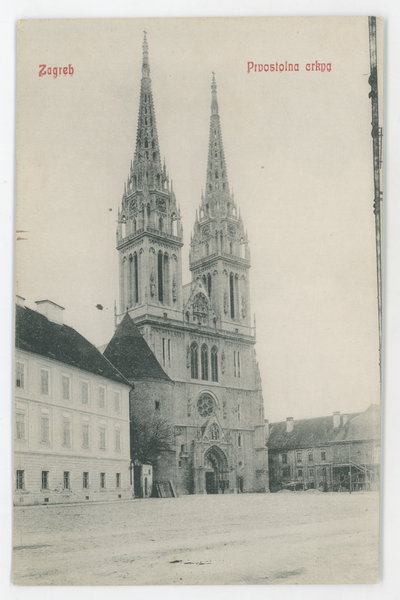
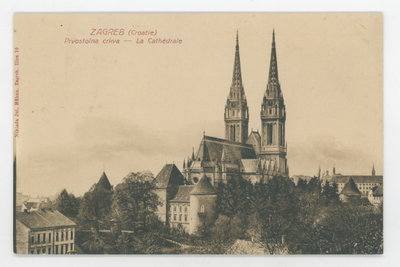
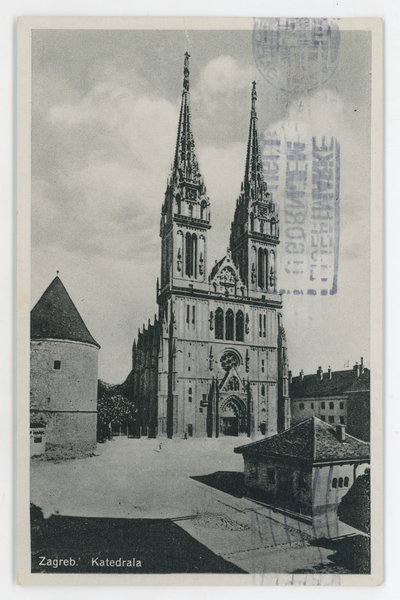
Zagreb Cathedral, photographed in 1898, during the years its neo-Gothic reconstruction was underway under architect Hermann Bollé. The cathedral, whose origins trace to the eleventh century, had been badly damaged by the 1880 Zagreb earthquake and was rebuilt with the twin spires that now define the city's skyline.

See this spot on the map
Have an old photo of St Mark S? A family album, a postcard, a print from the attic. Pin it to the map and it becomes part of the record.
Add your photo
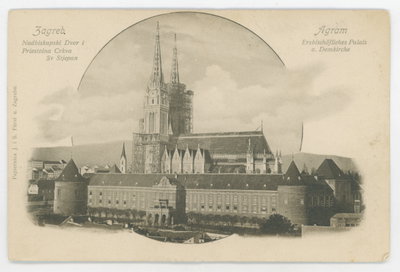
EU: Zagreb - Katedrala (1898), Zagreb, 1898
EU: Zagreb - Katedrala (1898) 1898 Zagreb Cathedral, photographed in 1898, during the years its neo-Gothic reconstruction was underway under architect Hermann Bollé. The cathedral, whose origins trace to the eleventh century, had been badly damaged by the 1880 Zagreb earthquake and was rebuilt with the twin spires that now define the city's skyline.
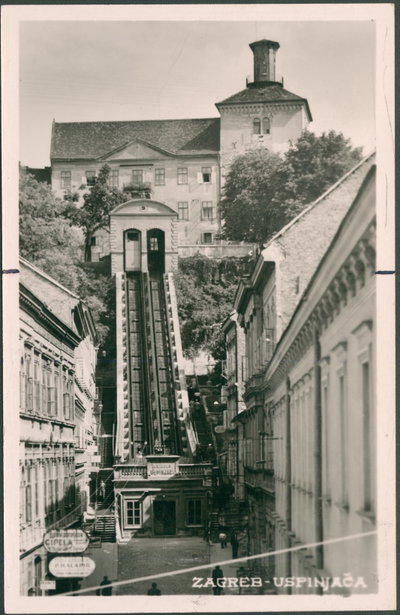
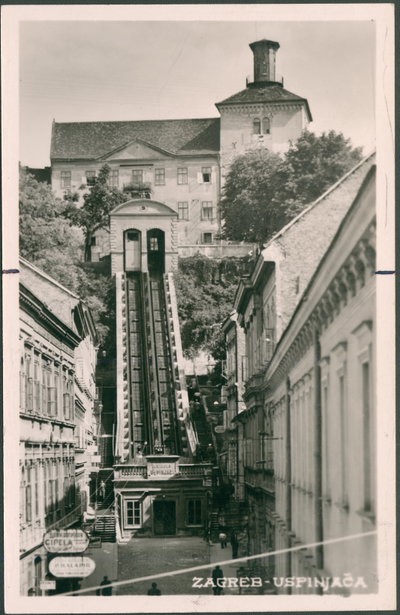
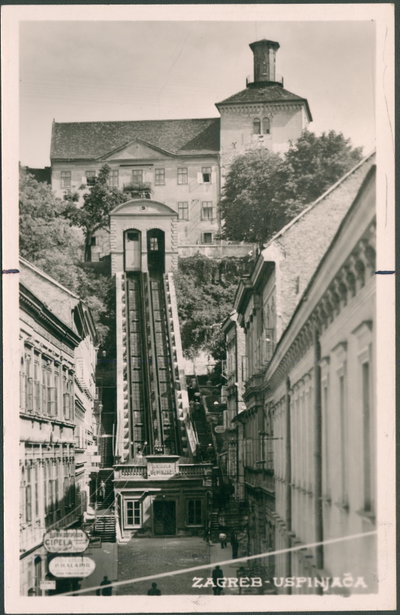
EU: Zagreb - Funicular (1900), Zagreb, 1900
EU: Zagreb - Funicular (1900) 1900 The Zagreb funicular, connecting the city's Lower and Upper Town since its opening in 1890, is captured here in a photograph from 1900, only a decade into its operation.
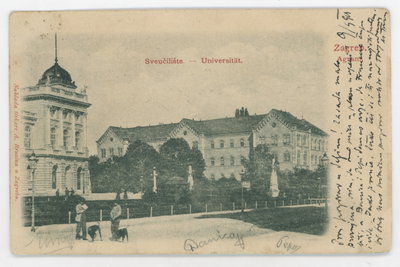
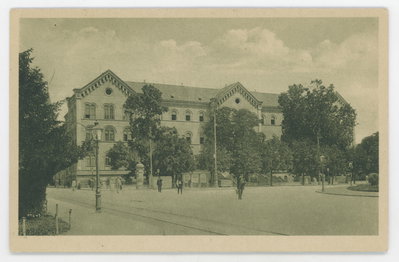
EU: Zagreb - Zagreb University building (1901), Zagreb, 1901
EU: Zagreb - Zagreb University building (1901) 1901 The main building of the University of Zagreb, photographed in 1901; the university's origins trace back to a Jesuit academy founded in 1669, making it one of the oldest universities in this part of Europe.
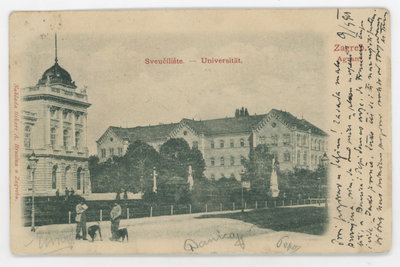
EU: Zagreb University building (1901), Zagreb, 1901
EU: Zagreb University building (1901) 1901 Another 1901 photograph of the University of Zagreb's main building, home to Croatia's oldest and largest university, whose roots reach back to a Jesuit academy established in the seventeenth century.
EU: Zagreb - Cathedral (1905), Zagreb, 1905
EU: Zagreb - Cathedral (1905) 1905 Zagreb Cathedral, whose twin Gothic Revival spires were rebuilt following the 1880 earthquake, photographed in 1905.
EU: Zagreb - University (1910), Zagreb, 1910
EU: Zagreb - University (1910) 1910 The University of Zagreb, Croatia's oldest and largest university, photographed in 1910.
EU: Zagreb - Cathedral (1912), Zagreb, 1912
EU: Zagreb - Cathedral (1912) 1912 Zagreb Cathedral, seen here in 1912, is topped by twin neo-Gothic spires rebuilt after 19th-century earthquake damage and remains one of the tallest structures in Croatia.
EU: Zagreb - Cathedral (1920), Zagreb, 1920
EU: Zagreb - Cathedral (1920) 1920 Zagreb Cathedral, with its twin neo-Gothic spires rising over the Croatian capital, is shown in this 1920 photograph. The cathedral was rebuilt in the neo-Gothic style after a major earthquake damaged the earlier structure in 1880.
EU: Zagreb - Funicular (1925), Zagreb, 1925
EU: Zagreb - Funicular (1925) 1925 This 1925 photograph shows the funicular railway in Zagreb, Croatia, which links the city's Upper and Lower Town.
EU: Zagreb - Funicular (1930), Zagreb, 1930
EU: Zagreb - Funicular (1930) 1930 The Zagreb funicular, connecting the city's Upper and Lower Town since it opened in 1890, photographed in 1930. It remains one of the shortest public funiculars in the world.
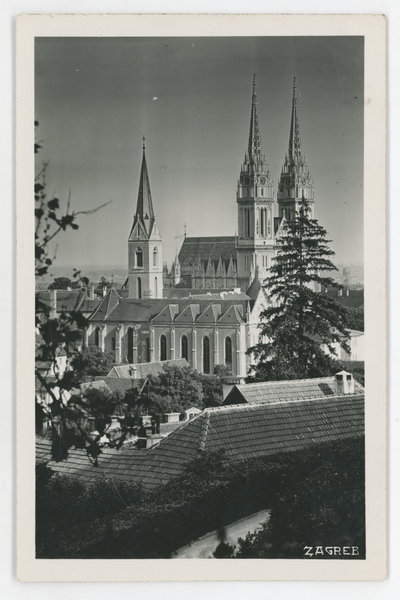
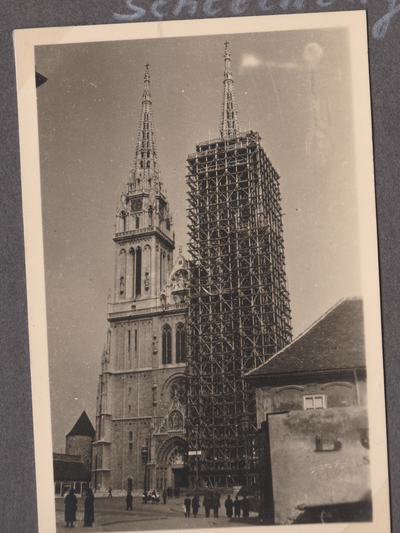
EU: Zagreb - Cathedral (1931), Zagreb, 1931
EU: Zagreb - Cathedral (1931) 1931 Zagreb Cathedral, the twin-spired Gothic landmark dedicated to the Assumption of Mary, is pictured here in 1931 rising above the city's historic Kaptol district, a site of worship on the location since the 11th century.
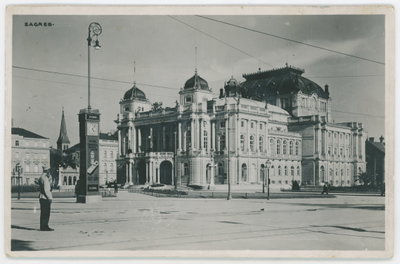
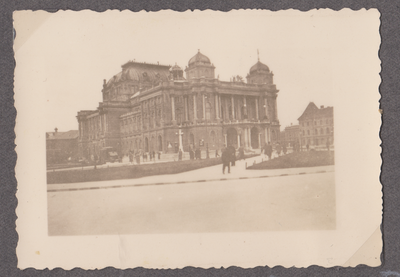
EU: Zagreb - HNK (1932), Zagreb, 1932
EU: Zagreb - HNK (1932) 1932 The Croatian National Theatre (Hrvatsko narodno kazalište) in Zagreb, seat of the country's national opera, ballet and drama companies since the 19th century, appears here in a 1932 photograph.
Agram (Zagreb). Helmuth Linder Russlandalbum, Zagreb, 1941
Agram (Zagreb). Helmuth Linder Russlandalbum 1941 A 1941 photograph of Zagreb, referred to here by its historic German name Agram, from a German soldier's personal photo album compiled during the wartime campaign toward the Eastern Front.
Agram (Zagreb). Helmuth Linder Russlandalbum, Zagreb, 1941
Agram (Zagreb). Helmuth Linder Russlandalbum 1941 Another view of Zagreb, called Agram in the album's German captions, from the same 1941 soldier's photo collection documenting a stop on the journey east during the war.
Agram (Zagreb). Helmuth Linder Russlandalbum, Zagreb, 1941
Agram (Zagreb). Helmuth Linder Russlandalbum 1941 A further photograph of wartime Zagreb, taken in 1941 and preserved in a German soldier's private travel album from the Eastern Front campaign.
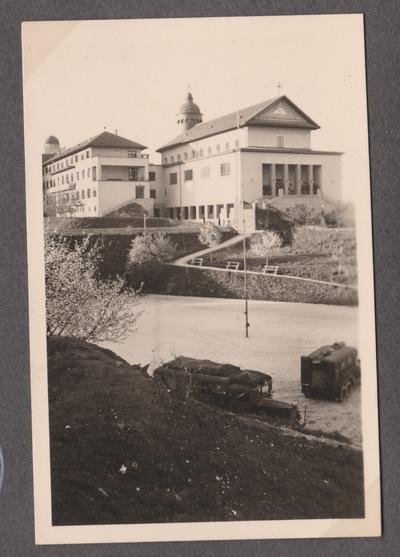
Unser Quartier. Agram (Zagreb). Helmuth Linder Russlandalbum, Zagreb, 1941
Unser Quartier. Agram (Zagreb). Helmuth Linder Russlandalbum 1941 Captioned 'Unser Quartier' (our quarters) in the original album, this 1941 photograph shows where a German soldier was billeted in Zagreb, then referred to by its German name Agram.
Zagabria - Fronte Cattedrale, Zagreb, 2009
Zagabria - Fronte Cattedrale 2009 Zagreb Cathedral, with its twin neo-Gothic spires rebuilt after an 1880 earthquake, faces the square captured in this 2009 photograph of the Croatian capital's historic Kaptol district.
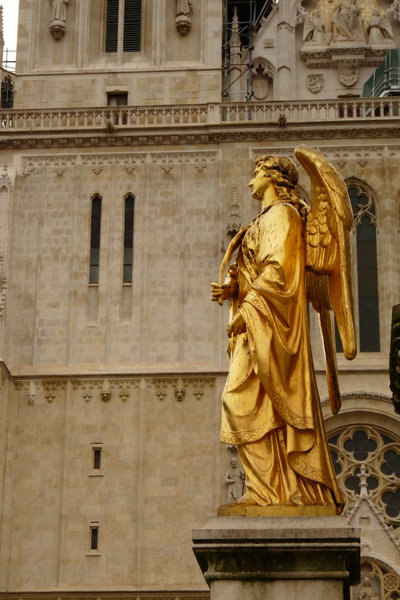
Zagreb, Zagreb, 2011
Zagreb 2011 A gilded angel statue decorates the neo-Gothic facade of Zagreb Cathedral, its wings and flowing robes catching the sunlight against the pale stone towers behind. The close-up view highlights the ornate sculptural detail on the twin-spired landmark at the heart of Croatia's capital.
The Zagreb Cathedral, Zagreb, 2012
The Zagreb Cathedral 2012 Zagreb Cathedral pictured in 2012. Dedicated to the Assumption of Mary and Saints Stephen and Ladislaus, its twin spires have marked the city's skyline since their reconstruction in the late 19th century.
Zagreb Cathedral, Zagreb, 2012
Zagreb Cathedral 2012 A 2012 view of Zagreb Cathedral's twin neo-Gothic spires, among the tallest landmarks in the Croatian capital and a defining feature of its skyline.
Zagreb Cathedral, Zagreb, 2012
Zagreb Cathedral 2012 Zagreb Cathedral seen in 2012, its twin spires a defining feature of the Croatian capital's skyline since they were rebuilt following the earthquake of 1880.
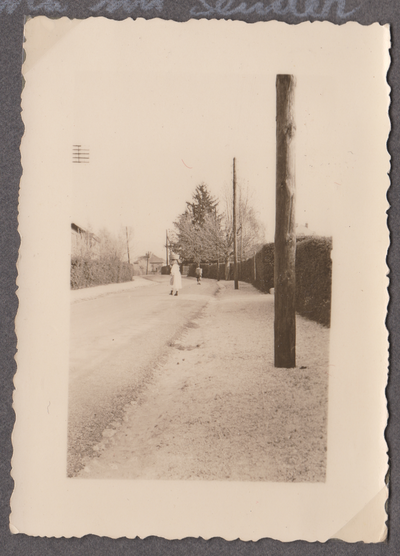
Zagreb - Ulica Nikole Jurišića, Zagreb, 2013
Zagreb - Ulica Nikole Jurišića 2013 Ulica Nikole Jurišića in Zagreb, Croatia, photographed in 2013, named for the 16th-century military commander who defended Kőszeg against Ottoman forces.
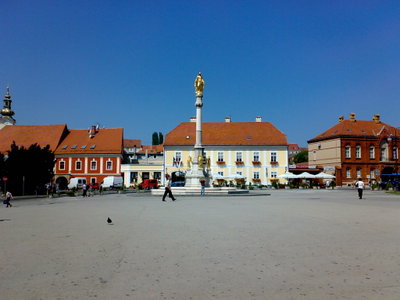
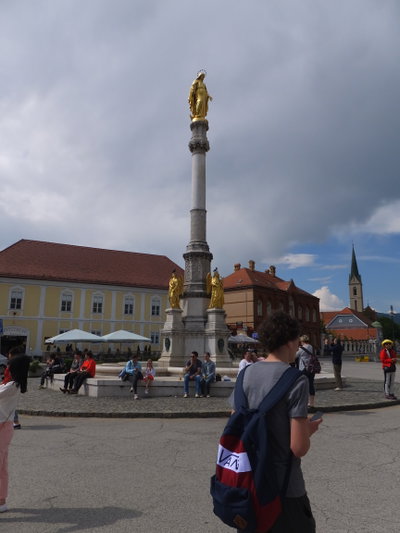
Fountain Madonna and Angels, Zagreb, 2016
Fountain Madonna and Angels 2016 The Fountain of the Madonna and Angels in Zagreb's Kaptol Square, its gilded statue of the Virgin Mary rising above the cathedral forecourt. The monument was erected in the early 20th century and remains a gathering point in front of the twin-spired cathedral.
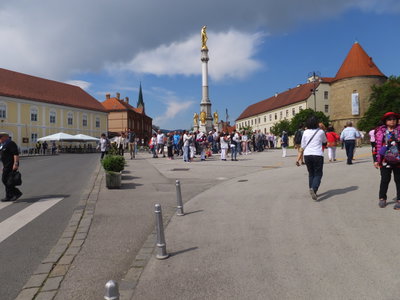
Kaptol Square, Zagreb, 2016
Kaptol Square 2016 Kaptol Square in Zagreb, the plaza in front of the cathedral that has served as the city's religious center for nearly a thousand years. The square takes its name from the cathedral chapter, or kaptol, that has governed the site since the 11th century.
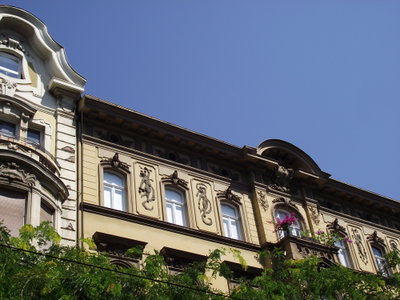
Off Trg Europe, Zagreb, 2017
Off Trg Europe 2017 Photographed near a city square in Zagreb, Croatia in 2017, this image shows part of the Croatian capital's urban center, an area shaped by the mix of Austro-Hungarian era architecture and later twentieth-century development typical of the city.
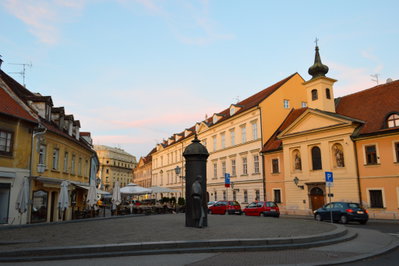
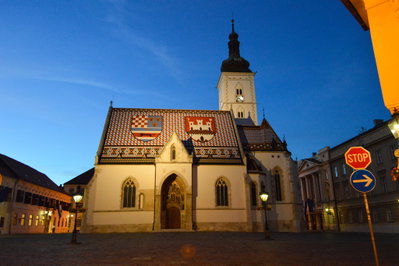
St Mark S, Zagreb, 2017
St Mark S 2017 St. Mark's Church, with its distinctive tiled roof depicting the coats of arms of Croatia, Dalmatia, Slavonia and the city of Zagreb, stands in Zagreb's Upper Town. This photograph from 2017 shows the church, a landmark of the Croatian capital.
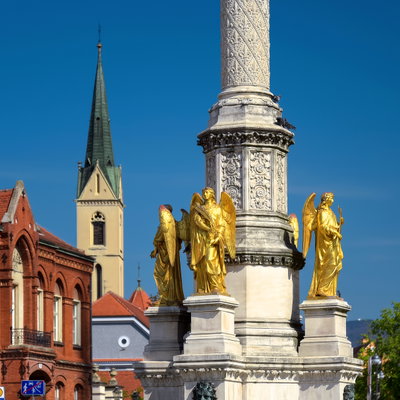
Zagreb Kaptol, Zagreb, 2017
Zagreb Kaptol 2017 A gilded angel atop a Marian column stands before the twin spires of Zagreb Cathedral in this 2017 photograph, taken in Kaptol, the historic ecclesiastical quarter of Zagreb.
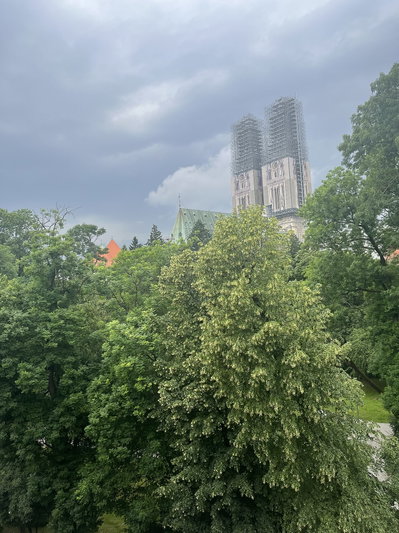
The Zagreb cathedral with the dark sky above it, Zagreb, 2024
The Zagreb cathedral with the dark sky above it 2024 Zagreb Cathedral rises against a darkened sky in this 2024 photograph. Its twin neo-Gothic spires, rebuilt after a devastating 1880 earthquake, remain the tallest structures in Croatia and a defining feature of the Zagreb skyline.
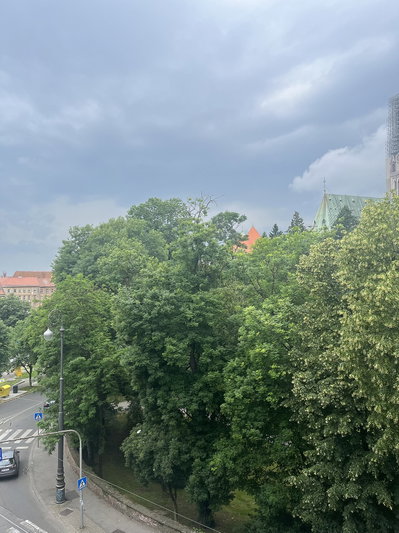
Dark underside of a cumulonimbus over Zagreb, Zagreb, 2024
Dark underside of a cumulonimbus over Zagreb 2024 The underside of a cumulonimbus cloud looms over Zagreb, Croatia, in this 2024 image, illustrating the kind of dramatic weather that can precede a summer storm over the city.
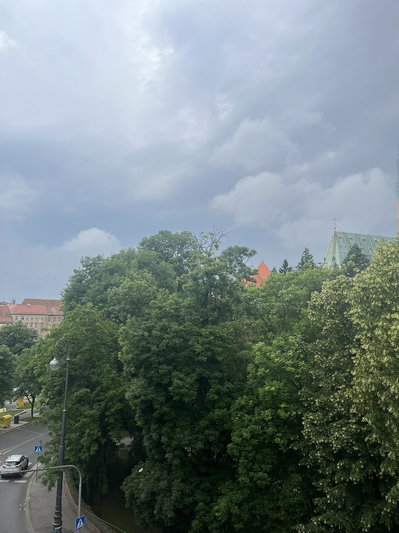
Thunderstorm approaches Zagreb in the afternoon, Zagreb, 2024
Thunderstorm approaches Zagreb in the afternoon 2024 Cumulonimbus approaches Zagreb
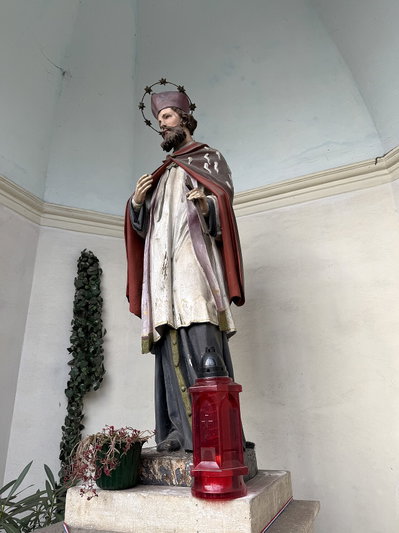
Kapela sv. Ivana Nepomuka u Zagrebu na Ribnjaku 03, Zagreb, 2025
Kapela sv. Ivana Nepomuka u Zagrebu na Ribnjaku 03 2025 St. John of Nepomuk Chapel, Zagreb (Ribnjak)
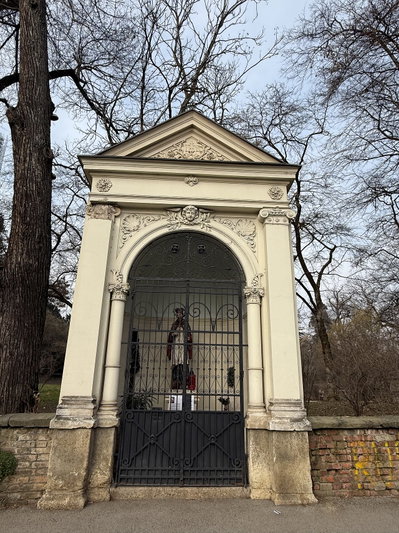
Kapela sv. Ivana Nepomuka u Zagrebu na Ribnjaku 01, Zagreb, 2025
Kapela sv. Ivana Nepomuka u Zagrebu na Ribnjaku 01 2025 St. John of Nepomuk Chapel, Zagreb (Ribnjak)
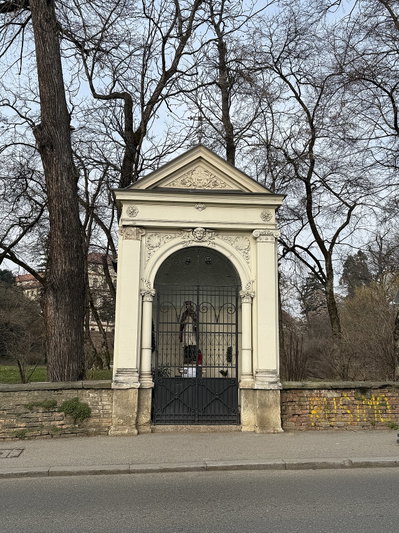
Kapela sv. Ivana Nepomuka u Zagrebu na Ribnjaku 02, Zagreb, 2025
Kapela sv. Ivana Nepomuka u Zagrebu na Ribnjaku 02 2025 St. John of Nepomuk Chapel, Zagreb (Ribnjak)