Home › Arequipa › Arequipa in Ruins

Arequipa in Ruins through time

Arequipa 1868–2018 60 photos of this spot

60 photographs taken at the same spot in Arequipa, spanning 1868–2018 — 19 of them from before 1980. Line them up and watch the place change.

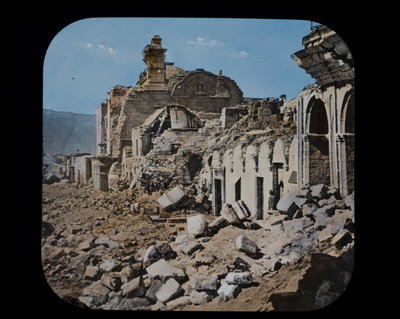
Taken in the aftermath of the severe 1868 earthquake that struck southern Peru, this photograph shows Arequipa in ruins, with damaged buildings scattered across the city.

See this spot on the map
Have an old photo of Arequipa in Ruins? A family album, a postcard, a print from the attic. Pin it to the map and it becomes part of the record.
Add your photo
Arequipa in Ruins, Arequipa, 1868
Arequipa in Ruins 1868 Taken in the aftermath of the severe 1868 earthquake that struck southern Peru, this photograph shows Arequipa in ruins, with damaged buildings scattered across the city.
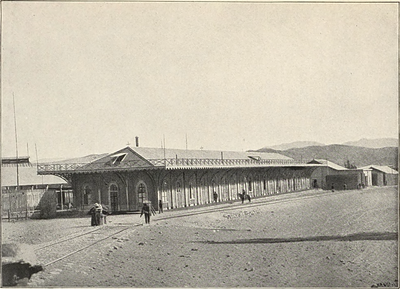
Middendorf - Bahnhof in Arequipa. (S. 240), Arequipa, 1894
Middendorf - Bahnhof in Arequipa. (S. 240) 1894 The railway station at Arequipa, Peru, as it appeared around 1894. This image comes from Ernst W. Middendorf's illustrated account of his travels through Peru, published in the 1890s, which documented the towns and landscapes of the southern Andes.
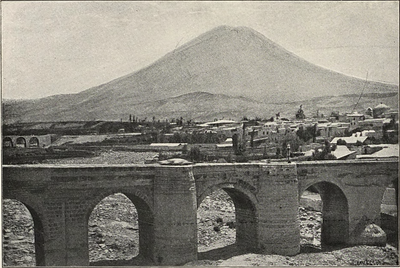
Middendorf - Der Vulkan Misti bei Arequipa. (S. 264), Arequipa, 1894
Middendorf - Der Vulkan Misti bei Arequipa. (S. 264) 1894 The volcano Misti rising above Arequipa, photographed around 1894 for Ernst W. Middendorf's illustrated study of Peru. The snow-capped cone has long dominated the city's skyline and remains one of the most recognizable landmarks in southern Peru.
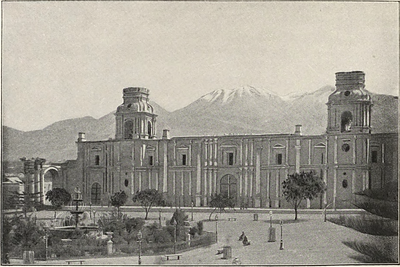
Middendorf - Hauptplatz von Arequipa. Der Bergstock des Chachani. (S. 242), Arequipa, 1894
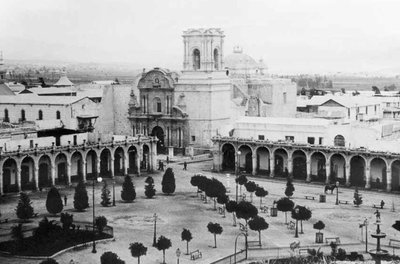
Middendorf - Hauptplatz von Arequipa. Der Bergstock des Chachani. (S. 242) 1894 Arequipa's main square with the Chachani massif visible beyond the rooftops, captured around 1894 for Ernst W. Middendorf's account of his Peruvian travels. The plaza has long served as the civic and commercial center of the city.
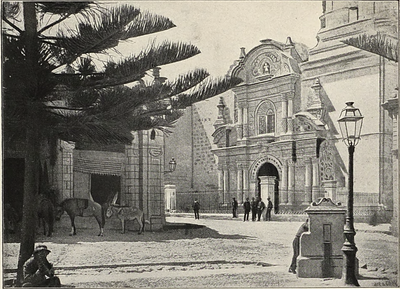
Middendorf - Jesuitenkirche in Arequipa. (S. 248), Arequipa, 1894
Middendorf - Jesuitenkirche in Arequipa. (S. 248) 1894 A Jesuit church in Arequipa, Peru, photographed around 1894 and reproduced in Ernst W. Middendorf's illustrated travel account. The city's colonial-era churches, built largely of white volcanic sillar stone, were frequent subjects for visiting travelers of the period.
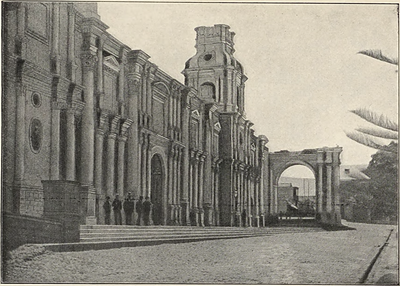
Middendorf - Seitenansicht der Kathedrale. (S. 246), Arequipa, 1894
Middendorf - Seitenansicht der Kathedrale. (S. 246) 1894 The side elevation of Arequipa's cathedral, shown here around 1894 in an illustration from Ernst W. Middendorf's book on Peru. Built of the pale volcanic stone quarried near the city, the cathedral dominates the main square.
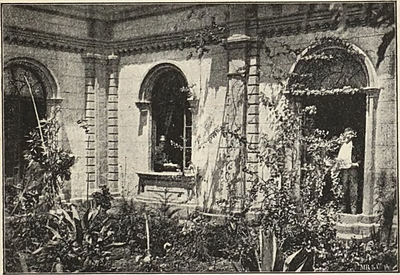
Middendorf - Wohnhaus in Arequipa. (S. 251), Arequipa, 1894
Middendorf - Wohnhaus in Arequipa. (S. 251) 1894 A residential house in Arequipa, Peru, pictured around 1894 as part of Ernst W. Middendorf's illustrated survey of the country. Domestic architecture of this kind, built from local sillar stone, was typical of the city in the late nineteenth century.
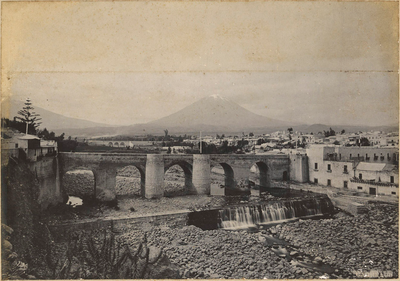
N° 276. Arequipa, Puente piedra, Arequipa, 1900
N° 276. Arequipa, Puente piedra 1900 A stone bridge in Arequipa, Peru, was photographed around 1900 as part of a numbered series, this one marked No. 276, documenting the city known for its buildings of white volcanic stone.
N° 278. Arequipa, Estación del Ferro-carril, Arequipa, 1900
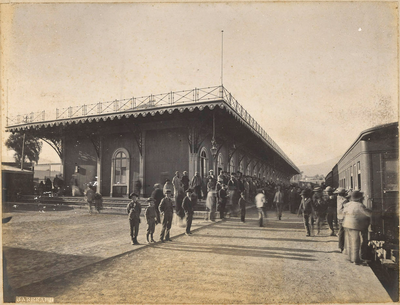
N° 278. Arequipa, Estación del Ferro-carril 1900 The railway station of Arequipa, Peru, appears in this image, numbered 278 in a photographic series from around 1900, when the city was linked by rail to the southern Peruvian coast and highlands.
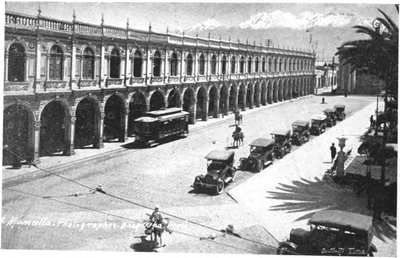
N° 279. Arequipa, Plaza principal, Arequipa, 1900
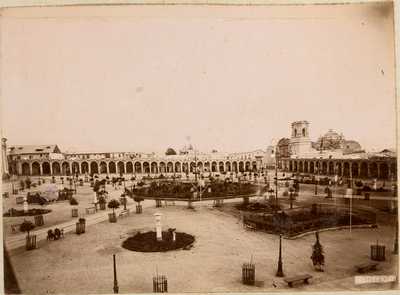
N° 279. Arequipa, Plaza principal 1900 Arequipa's Plaza Principal, the main square of the Peruvian city, is shown in this photograph, numbered 279 in a series from around 1900, a period when Arequipa was known as the 'White City' for its sillar stone architecture.
N° 280. Arequipa. La Catedrál, Arequipa, 1900
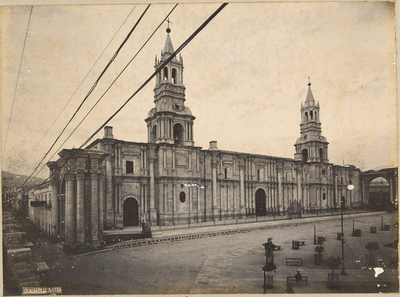
N° 280. Arequipa. La Catedrál 1900 The cathedral of Arequipa, Peru, a landmark on the city's Plaza Principal, is pictured in this image, numbered 280 in a series taken around 1900, built from the white volcanic sillar stone typical of the region.
N° 281. Arequipa, Colegio de niños, Arequipa, 1900
N° 281. Arequipa, Colegio de niños 1900 A boys' school, or Colegio de Niños, in Arequipa, Peru, is documented in this photograph, numbered 281 in a series from around 1900 depicting civic and religious buildings of the city.
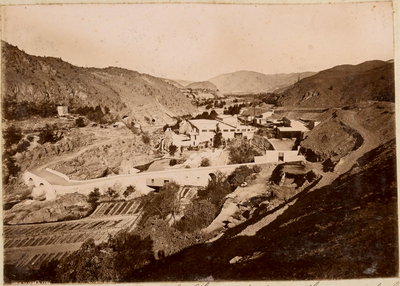
N° 288. Arequipa, vista exteriór de la fábrica de tejidos del Huaico de los Sres M. Forga e hijos, Arequipa, 1900
N° 288. Arequipa, vista exteriór de la fábrica de tejidos del Huaico de los Sres M. Forga e hijos 1900 The exterior of a textile factory in the Huaico area near Arequipa, Peru, operated by M. Forga e Hijos, is shown in this photograph numbered 288 from around 1900, reflecting the growth of industry in the region.
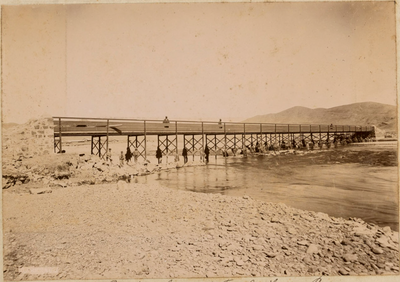
N° 301. Arequipa, Puente de hierro del Ferro-Carril a Puno, Arequipa, 1900
N° 301. Arequipa, Puente de hierro del Ferro-Carril a Puno 1900 An iron railway bridge on the line connecting Arequipa to Puno, Peru, is captured in this photograph, numbered 301, from around 1900, part of the rail route linking the coast to Lake Titicaca.
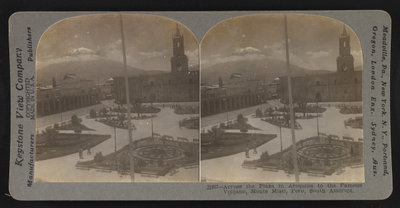
Across the plaza in Arequipa to the famous volcano, Monte Misti, Peru, South America, Arequipa, 1900
Across the plaza in Arequipa to the famous volcano, Monte Misti, Peru, South America 1900 Taken around 1900, this photograph looks across Arequipa's main plaza toward El Misti, the snow-capped stratovolcano that dominates the skyline of this southern Peruvian city, known for its colonial buildings built from pale volcanic stone.
Church of La Compañía in 1900 (Arequipa, Peru), Arequipa, 1900
Church of La Compañía in 1900 (Arequipa, Peru) 1900 The Church of La Compania in Arequipa, photographed around 1900, is a Jesuit church noted for its elaborately carved facade cut from the city's characteristic white volcanic stone, known locally as sillar.
(CCC No. 38, 1928) - Ciudad y Campo, Album de Arequipa, Arequipa, 1928
(CCC No. 38, 1928) - Ciudad y Campo, Album de Arequipa 1928 Plate 1 of the 1928 photo album Ciudad y Campo (City and Countryside), documenting Arequipa, Peru, known as the White City for the volcanic sillar stone used in its colonial buildings.
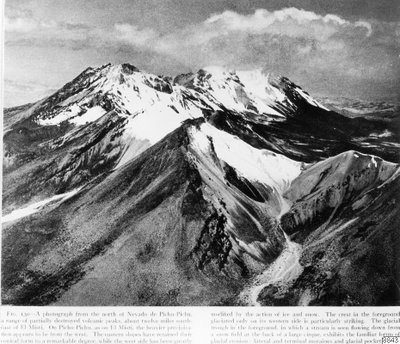
EU: flygfoto, vulkan, bergstopp, fotografi, photograph (1944), Arequipa, 1944
EU: flygfoto, vulkan, bergstopp, fotografi, photograph (1944) 1944 An aerial photograph from 1944 showing the volcanic peaks that rise above Arequipa, Peru, a city in the southern Andes whose skyline has long been dominated by the cone of a nearby volcano.
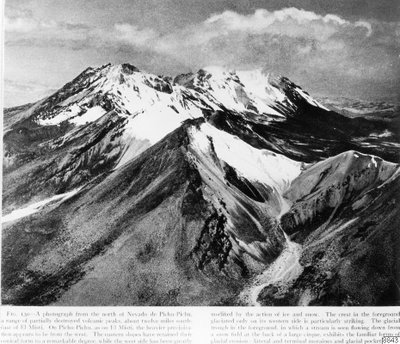
EU: Arequipa volcano aerial view (1944), Arequipa, 1944
EU: Arequipa volcano aerial view (1944) 1944 An aerial photograph from 1944 shows Arequipa, the Peruvian city built in the shadow of the El Misti volcano, whose slopes and crater dominate the surrounding landscape.
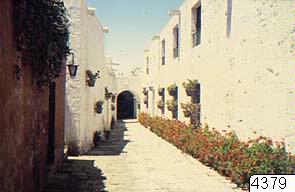
EU: Klostret Santa Catalina, fotografi, photograph (1980), Arequipa, 1980
EU: Klostret Santa Catalina, fotografi, photograph (1980) 1980 The Santa Catalina convent in Arequipa, Peru, photographed in 1980. Founded in the sixteenth century, the sprawling monastery is known for the colorful walls of its interior streets and courtyards, built from the region's volcanic sillar stone.
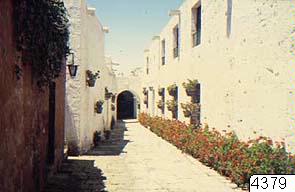
EU: Klostret Santa Catarina, fotografi, photograph (1980) #116011, Arequipa, 1980
EU: Klostret Santa Catarina, fotografi, photograph (1980) #116011 1980 The Monastery of Santa Catalina in Arequipa, Peru, photographed in 1980. Founded in 1579, the walled convent complex covers several city blocks and is built largely from sillar, the white volcanic stone common to Arequipa's colonial architecture.
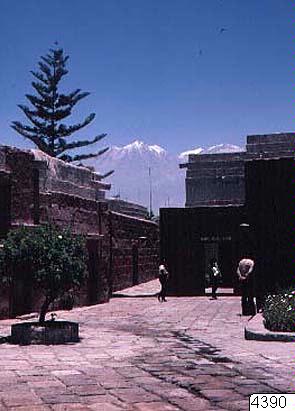
EU: Klostret Santa Catalina, fotografi, photograph (1980) #116022, Arequipa, 1980
EU: Klostret Santa Catalina, fotografi, photograph (1980) #116022 1980 A view inside the Monastery of Santa Catalina in Arequipa, Peru, taken in 1980. The Dominican convent, in continuous religious use for centuries after its 1579 founding, is laid out as a small town of cloisters, streets, and courtyards.
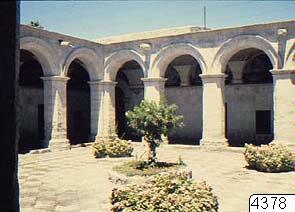
EU: Klostret Santa Catalina, fotografi, photograph (1980) #116010, Arequipa, 1980
EU: Klostret Santa Catalina, fotografi, photograph (1980) #116010 1980 The cloisters of the Monastery of Santa Catalina in Arequipa, Peru, photographed in 1980. Built from the region's characteristic white volcanic sillar stone, the convent dates to 1579 and remained a closed religious community for centuries.
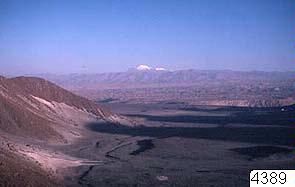
EU: landskap, fotografi, photograph (1980) #116021, Arequipa, 1980
EU: landskap, fotografi, photograph (1980) #116021 1980 A landscape near Arequipa, Peru, photographed in 1980. The city sits at the foot of the volcano El Misti and is known for its colonial architecture built from local white volcanic sillar stone.
EU: Klostret Santa Catarina, fotografi, photograph (1980), Arequipa, 1980
EU: Klostret Santa Catarina, fotografi, photograph (1980) 1980 This 1980 photograph shows the Santa Catalina Monastery in Arequipa, Peru, a walled convent founded in 1579 and known for its colorful colonial-era architecture.
EU: PMa PE 072 Arequipa (1992), Arequipa, 1992
EU: PMa PE 072 Arequipa (1992) 1992 A street scene in Arequipa, Peru, photographed in 1992; the city is built largely from white volcanic sillar stone, earning it the nickname "the White City."
EU: PMa PE 060 Arequipa (1992), Arequipa, 1992
EU: PMa PE 060 Arequipa (1992) 1992 A view of Arequipa, Peru, photographed in 1992. Known as the 'White City' for its buildings constructed from white volcanic sillar stone, Arequipa lies in the shadow of the El Misti volcano in southern Peru.
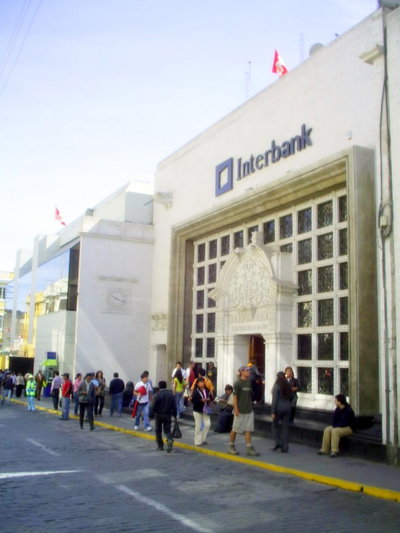
Interbank (Banco Internacional del Perú), Arequipa, 2005
Interbank (Banco Internacional del Perú) 2005 A branch of Interbank, the Banco Internacional del Perú, photographed in Arequipa, Peru, in 2005; the building stands in a city center built largely from the pale volcanic sillar stone that gives Arequipa its nickname, "the White City."
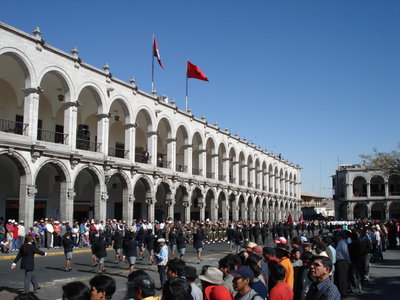
Fiestas Patrias - a week before, Arequipa, 2006
Fiestas Patrias - a week before 2006 Preparations underway in Arequipa, Peru, ahead of Fiestas Patrias, the country's national independence celebrations, photographed in 2006.
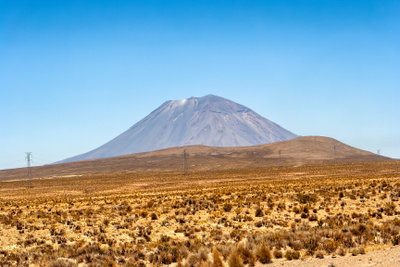
Volcano Misti outside Arequipa, Arequipa, 2006
Volcano Misti outside Arequipa 2006 El Misti, the snow-capped stratovolcano that looms over Arequipa in southern Peru, is pictured in this 2006 photograph. The volcano has long shaped the city's skyline and remains active, though currently dormant.
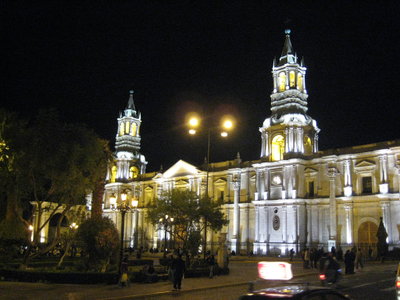
Catedral iluminada, Arequipa, 2008
Catedral iluminada 2008 Arequipa's cathedral illuminated at night, photographed in 2008; the basilica on the city's Plaza de Armas was rebuilt after earthquake damage in the 19th and 20th centuries.
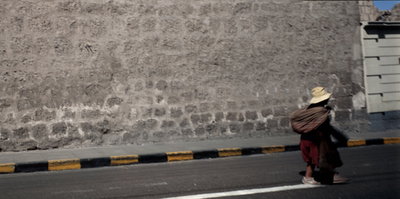
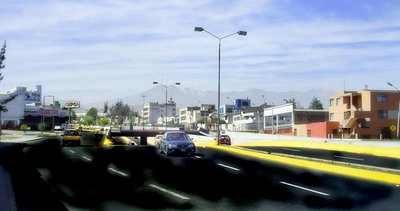
Avenida Venezuela, Arequipa, Arequipa, 2008
Avenida Venezuela, Arequipa 2008 Avenida Venezuela in Arequipa, Peru, photographed in 2008. Arequipa is known as the 'White City' for the pale volcanic sillar stone used widely in its colonial-era buildings.
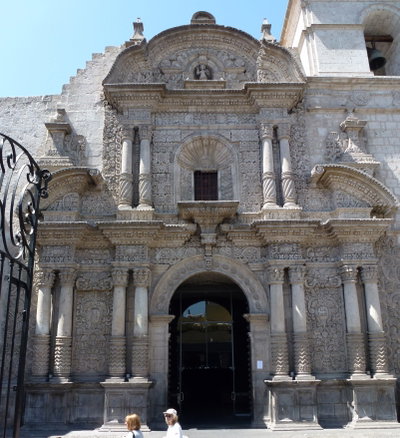
Arequipa.- L'église des Jésuites, Arequipa, 2011
Arequipa.- L'église des Jésuites 2011 The Jesuit church of La Compania in Arequipa, Peru, photographed in 2011. Built from the region's distinctive white volcanic sillar stone, it is noted for its richly carved baroque facade.
Plaza de Armas de Arequipa, en, Arequipa, 2011
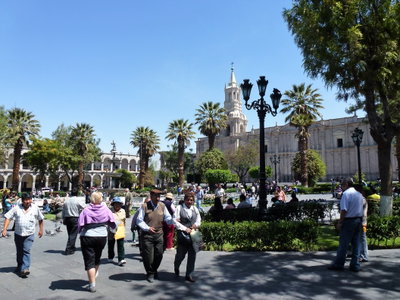
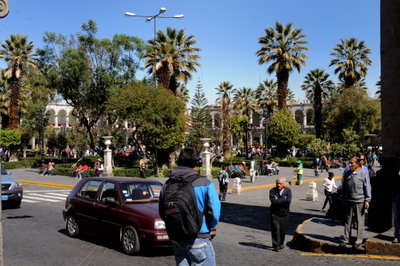
Plaza de Armas de Arequipa, en 2011 The Plaza de Armas of Arequipa, Peru, photographed in 2011. The main square sits at the heart of the city's historic center, itself built largely from white volcanic sillar stone and recognized as a UNESCO World Heritage Site.
ARE - Plaza de Armas in Arequipa, Peru, Arequipa, 2013
ARE - Plaza de Armas in Arequipa, Peru 2013 Arequipa's Plaza de Armas, the colonial-era main square framed by arcaded buildings and the city's cathedral, is pictured in this 2013 photograph, part of a historic center built largely from local volcanic sillar stone.
EU: PMa PE 060 Arequipa (2017), Arequipa, 2017
EU: PMa PE 060 Arequipa (2017) 2017 A street scene in Arequipa, Peru, known as the White City for its buildings of pale volcanic sillar stone. Photographed in 2017.
EU: PMa PE Arequipa (2018), Arequipa, 2018
EU: PMa PE Arequipa (2018) 2018 A street in Arequipa, Peru, in 2018, lined with the pale volcanic sillar stone that gives the city its nickname 'La Ciudad Blanca,' the White City. A woman in a wide-brimmed hat walks along the sidewalk past one of the whitewashed walls.
EU: PMa PE Arequipa (2018), Arequipa, 2018
EU: PMa PE Arequipa (2018) 2018 A 2018 street photograph taken in the city of Arequipa, Peru, known as the 'White City' for the pale volcanic stone used in much of its historic centre.
EU: PMa PE Arequipa (2018), Arequipa, 2018
EU: PMa PE Arequipa (2018) 2018 Another 2018 view of a street in Arequipa, Peru, whose colonial-era historic centre is built largely from white sillar stone quarried from nearby volcanoes.
EU: PMa PE Arequipa (2018), Arequipa, 2018
EU: PMa PE Arequipa (2018) 2018 A 2018 photograph of a scene in Arequipa, Peru, a city in southern Peru overlooked by the El Misti volcano.
EU: PMa PE Arequipa (2018), Arequipa, 2018
EU: PMa PE Arequipa (2018) 2018 Arequipa, Peru, pictured in a 2018 street photograph; the city's historic centre is inscribed as a UNESCO World Heritage site.
EU: PMa PE Arequipa (2018), Arequipa, 2018
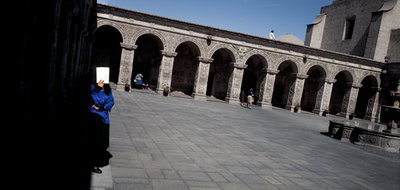
EU: PMa PE Arequipa (2018) 2018 An arcaded stone courtyard in Arequipa, Peru, built from the pale volcanic sillar stone that gives the city its nickname, the White City. A visitor stands beneath the arches of what appears to be one of the city's colonial-era religious complexes.
EU: PMa PE Arequipa (2018), Arequipa, 2018
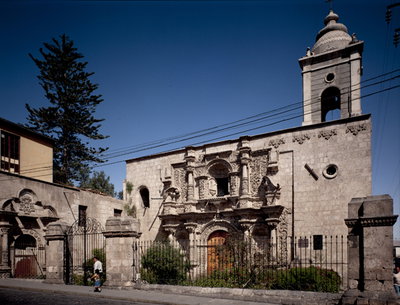
EU: PMa PE Arequipa (2018) 2018 A baroque stone doorway crowned with a cross fronts a sillar-stone church in Arequipa, Peru. Carved from the region's white volcanic rock, such facades are a hallmark of the city's colonial religious architecture.
EU: PMa PE Arequipa (2018), Arequipa, 2018
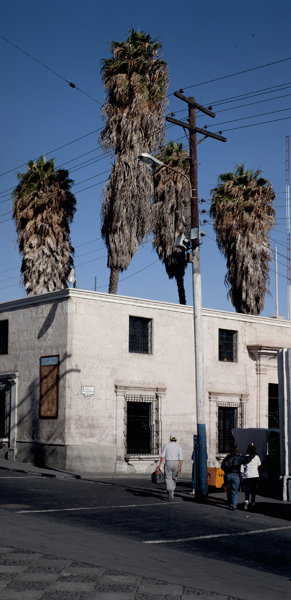
EU: PMa PE Arequipa (2018) 2018 The corner of a white sillar-stone building in Arequipa, Peru, with a barred window and a palm tree rising against the sky. Sillar, quarried from nearby volcanic deposits, is the building material most associated with the city's historic center.
EU: PMa PE Arequipa (2018), Arequipa, 2018
EU: PMa PE Arequipa (2018) 2018 A large stone church with twin towers rises above a street in Arequipa, Peru, where pedestrians pass along the sidewalk. Built of the local white sillar stone, it is one of several colonial-era churches that define the historic center.
EU: PMa PE Arequipa (2018), Arequipa, 2018
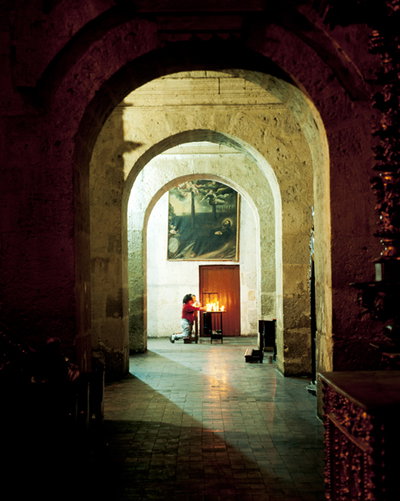
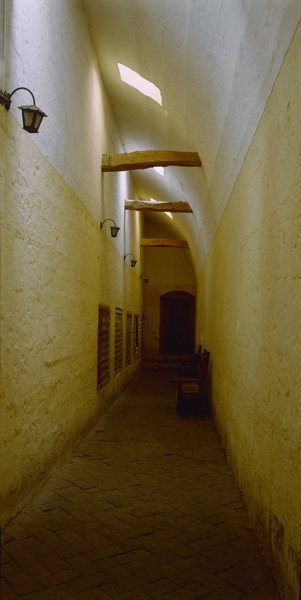
EU: PMa PE Arequipa (2018) 2018 A narrow, dimly lit passage inside a colonial building in Arequipa, Peru, opens onto a small window and a glimpse of a painted courtyard beyond. Vivid interior color schemes are common in the city's historic religious architecture.
EU: PMa PE Arequipa (2018), Arequipa, 2018
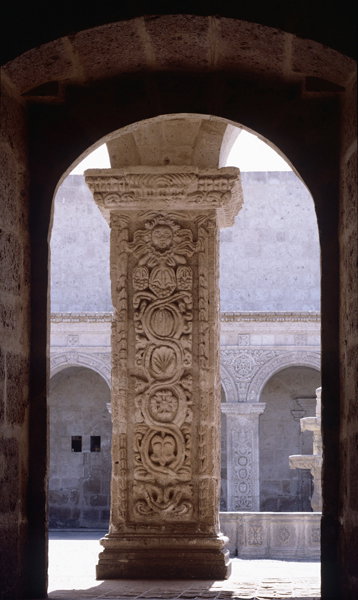
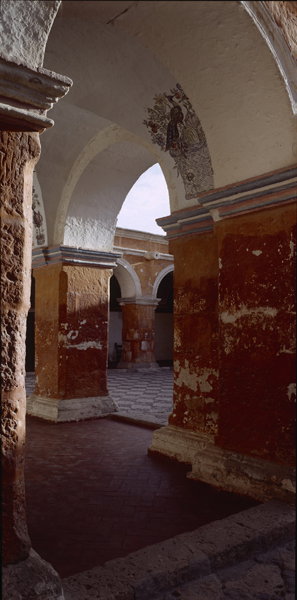
EU: PMa PE Arequipa (2018) 2018 A carved stone column supports an archway in a colonial cloister in Arequipa, Peru. Cloistered courtyards like this, built from the region's white sillar stone, are characteristic of the city's convents and monasteries.
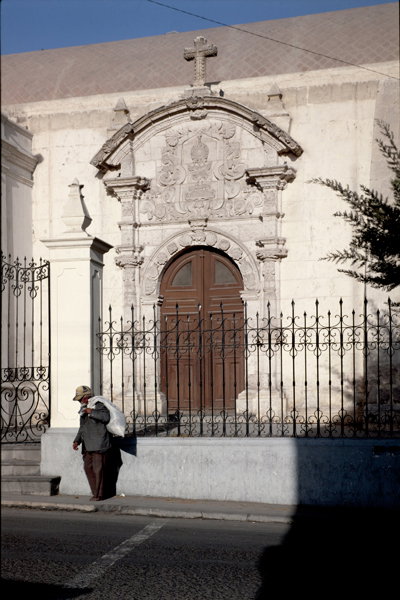
EU: PMa PE Arequipa (2018), Arequipa, 2018
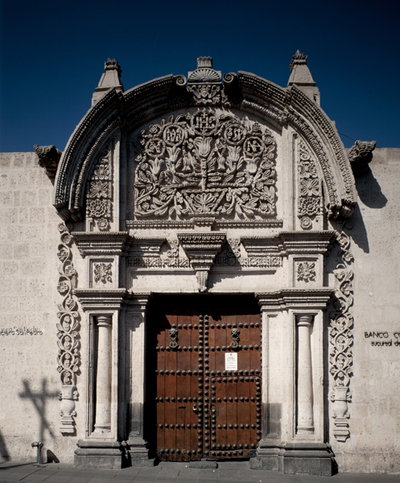
EU: PMa PE Arequipa (2018) 2018 A heavily carved stone doorway, framed with mestizo baroque ornamentation, marks the entrance to a colonial building in Arequipa, Peru. The style, blending Spanish baroque forms with Andean motifs, is a hallmark of the city's historic architecture.
EU: PMa PE Arequipa (2018), Arequipa, 2018
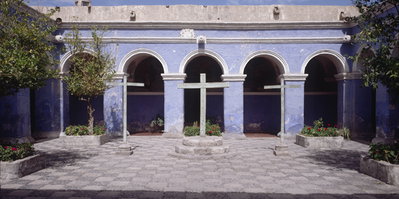
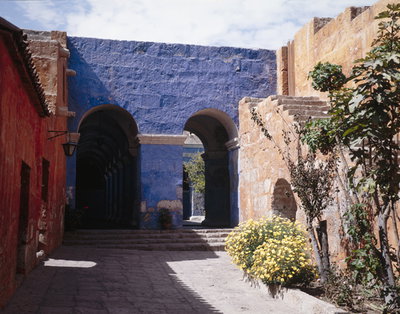
EU: PMa PE Arequipa (2018) 2018 An arcaded courtyard painted in deep blue lines a colonial building in Arequipa, Peru, with potted plants softening the stone walkway. Bold wall colors distinguish many of the convents and historic residences in the city's center.
EU: PMa PE Arequipa (2018), Arequipa, 2018
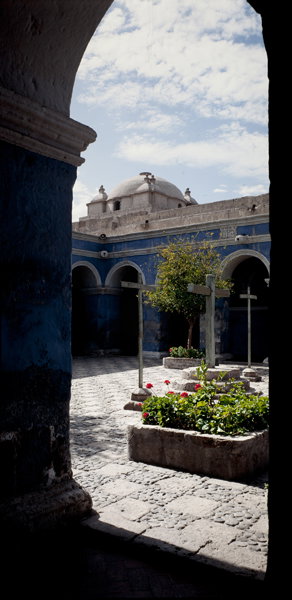
EU: PMa PE Arequipa (2018) 2018 A blue stone archway frames a small garden courtyard with a cross in a colonial complex in Arequipa, Peru. Enclosed cloisters of this kind were built for the religious communities once housed within the city's historic convents.
EU: PMa PE Arequipa (2018), Arequipa, 2018
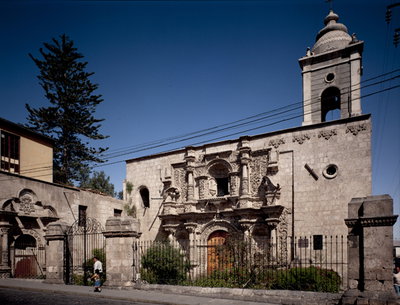
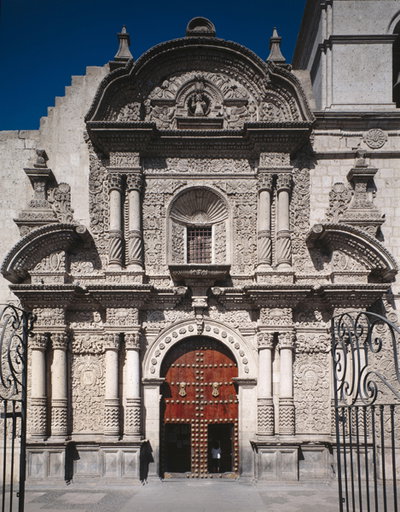
EU: PMa PE Arequipa (2018) 2018 A sillar-stone church facade in Arequipa, Peru, is carved with elaborate baroque relief around a red wooden door. The white volcanic stone used throughout the building is quarried from the flanks of the nearby Chachani and Misti volcanoes.
EU: PMa PE Arequipa (2018), Arequipa, 2018
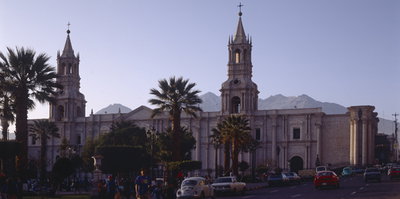
EU: PMa PE Arequipa (2018) 2018 Arequipa Cathedral's twin towers overlook the Plaza de Armas in Arequipa, Peru, seen here from a distance across the square. The cathedral, built from white sillar stone, is the dominant landmark of the city's historic center.
EU: PMa PE Arequipa (2018), Arequipa, 2018
EU: PMa PE Arequipa (2018) 2018 A blue-painted stone archway leads into a passage within a colonial building in Arequipa, Peru. Such vivid color schemes, applied over the local sillar stone, are characteristic of the city's historic convents.
EU: PMa PE Arequipa (2018), Arequipa, 2018
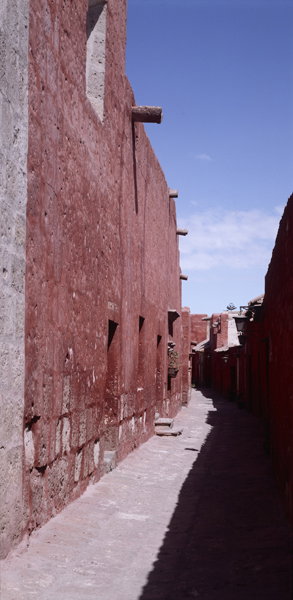
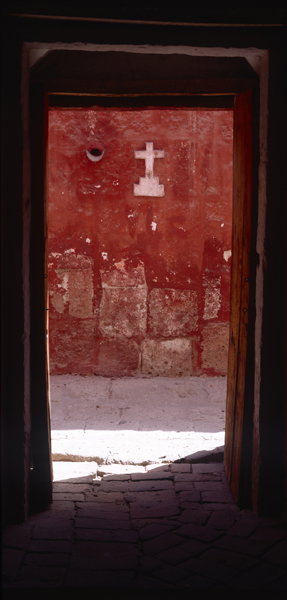
EU: PMa PE Arequipa (2018) 2018 A narrow lane runs alongside a deep red-painted wall in a colonial complex in Arequipa, Peru. Mazes of colored passages like this one, found in the city's historic quarters, were originally built to house cloistered religious communities.
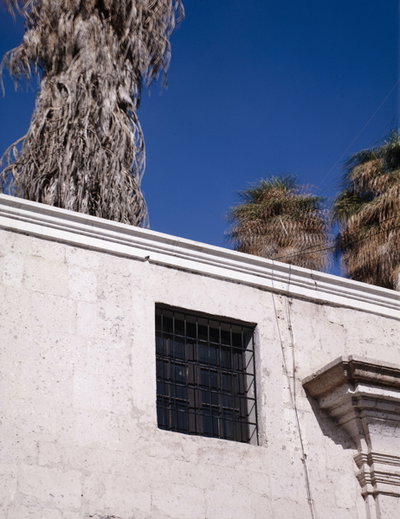
EU: PMa PE Arequipa (2018), Arequipa, 2018
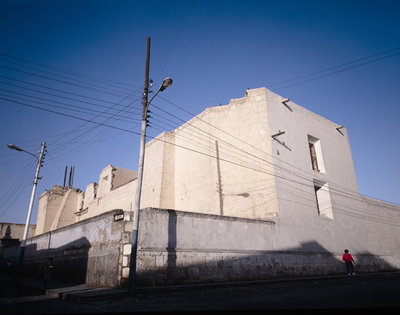
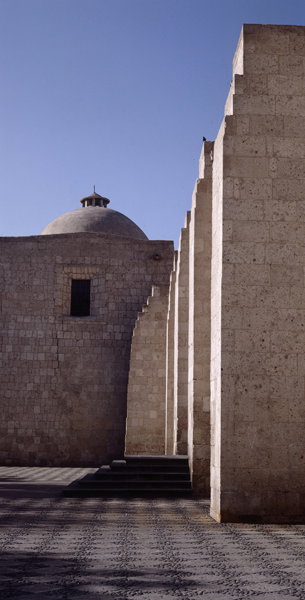
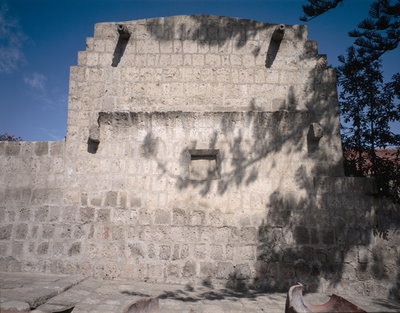
EU: PMa PE Arequipa (2018) 2018 A weathered stone wall, its upper courses partly ruined, stands under a clear sky in Arequipa, Peru. Constructed from the region's volcanic sillar, such walls have withstood centuries of the earthquakes common to this part of Peru.
EU: PMa PE Arequipa (2018), Arequipa, 2018
EU: PMa PE Arequipa (2018) 2018 One of a pair of 2018 photographs documenting Arequipa, Peru's colonial-era heart. Much of the historic center is built from sillar, a pale volcanic stone quarried nearby, which gives the city its nickname La Ciudad Blanca, the White City.
EU: PMa PE Arequipa (2018), Arequipa, 2018
EU: PMa PE Arequipa (2018) 2018 A companion view of Arequipa taken in 2018. The southern Peruvian city sits in the shadow of the El Misti volcano and retains a Spanish colonial core built largely of white sillar stone, recognized as a UNESCO World Heritage site.
EU: PMa PE Arequipa (2018), Arequipa, 2018
EU: PMa PE Arequipa (2018) 2018 A 2018 photograph from Arequipa, Peru, part of a heritage survey series. Arequipa is known as the 'White City' for the pale volcanic sillar stone used in much of its colonial architecture, and its historic center became a UNESCO World Heritage Site in 2000.
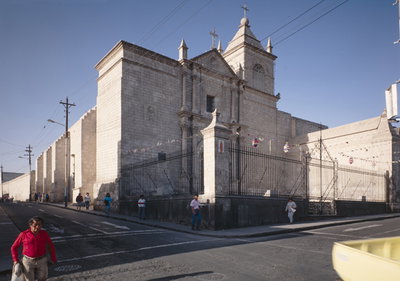
EU: PMa PE Arequipa (2018), Arequipa, 2018
EU: PMa PE Arequipa (2018) 2018 Arequipa, Peru, pictured in 2018 as part of a heritage documentation project. The city sits at the foot of the El Misti volcano and retains a well-preserved Spanish colonial center laid out around its Plaza de Armas.
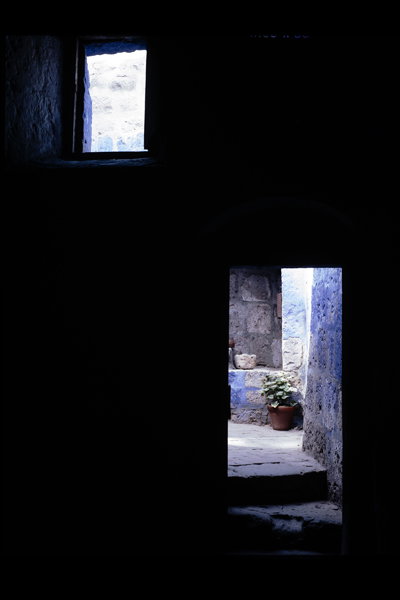
EU: PMa PE Arequipa (2018), Arequipa, 2018
EU: PMa PE Arequipa (2018) 2018 This 2018 image, from a heritage survey of Arequipa, Peru, documents a city whose historic center was declared a UNESCO World Heritage Site in 2000, prized for its 16th- and 17th-century sillar-stone buildings.