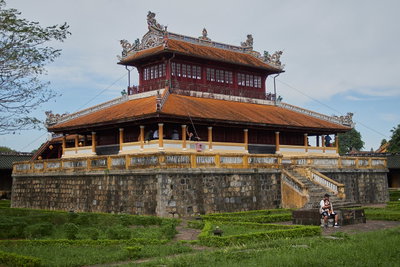
Home › Hue › Điện Trinh Minh

Điện Trinh Minh through time

Hue 1920–2024 26 photos of this spot

26 photographs taken at the same spot in Hue, spanning 1920–2024 — 11 of them from before 1980. Line them up and watch the place change.

The Kien Trung Palace within Hue's Imperial City, once a residence of the Nguyen emperors of Vietnam, photographed around 1920 during the dynasty's final decades of nominal rule.

See this spot on the map
Have an old photo of Điện Trinh Minh? A family album, a postcard, a print from the attic. Pin it to the map and it becomes part of the record.
Add your photo
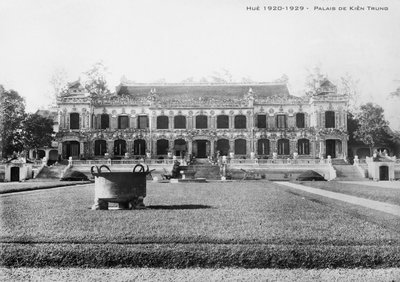
Palais de Kiên Trung (PV0008233), Hue, 1920
Palais de Kiên Trung (PV0008233) 1920 The Kien Trung Palace within Hue's Imperial City, once a residence of the Nguyen emperors of Vietnam, photographed around 1920 during the dynasty's final decades of nominal rule.
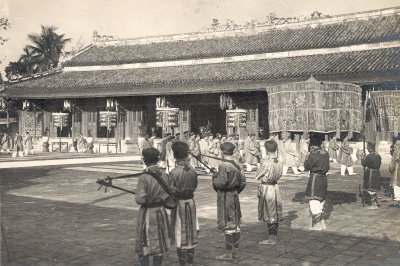
Enthronement of Emperor Bảo Đại 001, Hue, 1926
Enthronement of Emperor Bảo Đại 001 1926 The enthronement ceremony of Emperor Bảo Đại in Hue, Vietnam, in 1926. Bảo Đại succeeded his father, Emperor Khải Định, as ruler of the Nguyễn dynasty, the last imperial dynasty of Vietnam.
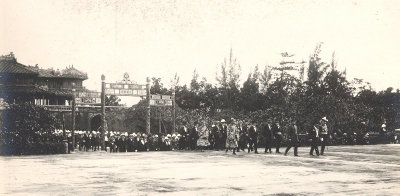
Enthronement of Emperor Bảo Đại 002, Hue, 1926
Enthronement of Emperor Bảo Đại 002 1926 An image from the 1926 enthronement ceremony of Emperor Bảo Đại, held in Hue, the imperial capital of Vietnam under the Nguyễn dynasty, the country's last ruling imperial house.
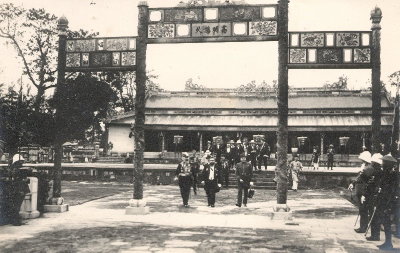
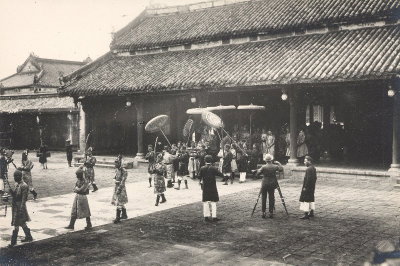
Enthronement of Emperor Bảo Đại 003, Hue, 1926
Enthronement of Emperor Bảo Đại 003 1926 Part of the 1926 enthronement proceedings for Emperor Bảo Đại in Hue, Vietnam's imperial capital and seat of the ruling Nguyễn dynasty, the country's final imperial house.
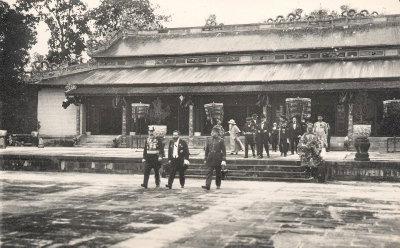
Enthronement of Emperor Bảo Đại 004, Hue, 1926
Enthronement of Emperor Bảo Đại 004 1926 Taken during the 1926 enthronement ceremony of Emperor Bảo Đại in Hue, this photograph shows the Governor General and the Resident Superior departing the proceedings.
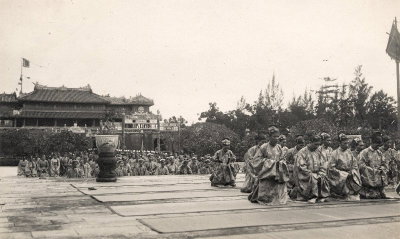
Enthronement of Emperor Bảo Đại 006, Hue, 1926
Enthronement of Emperor Bảo Đại 006 1926 Mandarins prostrate themselves before the throne during the 1926 enthronement of Emperor Bảo Đại in the imperial city of Hue.
Enthronement of Emperor Bảo Đại 009, Hue, 1926
Enthronement of Emperor Bảo Đại 009 1926 The newly enthroned Emperor Bảo Đại and his procession pictured in Hue during the 1926 ceremony marking his accession to the throne.
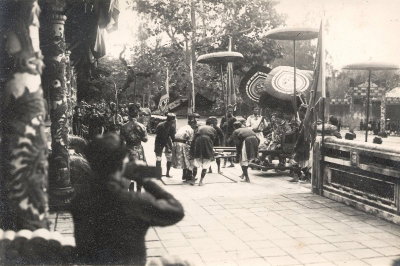
Enthronement of Emperor Bảo Đại 011, Hue, 1926
Enthronement of Emperor Bảo Đại 011 1926 Another view of Emperor Bảo Đại's procession during his 1926 enthronement in Hue, the imperial capital of Nguyễn-dynasty Vietnam.
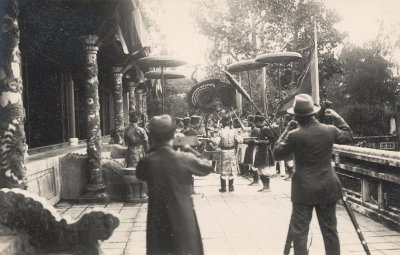
Enthronement of Emperor Bảo Đại 012, Hue, 1926
Enthronement of Emperor Bảo Đại 012 1926 A further photograph of the imperial procession accompanying Emperor Bảo Đại through Hue during his 1926 enthronement ceremony.
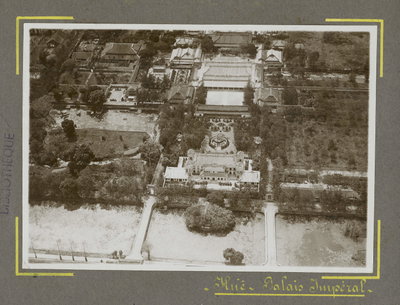
Hué - Palais Impérial, Hue, 1930
Hué - Palais Impérial 1930 The Imperial Palace in Hue, Vietnam, photographed in 1930. The walled citadel served as the seat of the Nguyen dynasty emperors from the early nineteenth century until 1945.
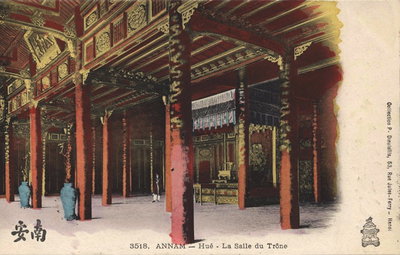
ANNAM - Hué - La Salle du Trône, Hue, 1945
ANNAM - Hué - La Salle du Trône 1945 The Throne Room, or Salle du Trône, inside the Imperial City of Hue, Vietnam, photographed in 1945. The hall served as the ceremonial seat of the Nguyễn dynasty emperors.
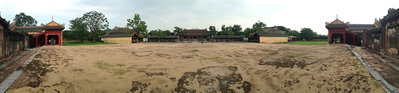
La cour des cérémonies (Cité impériale, Hué), Hue, 2010
La cour des cérémonies (Cité impériale, Hué) 2010 The ceremonial courtyard within the Imperial City of Hue, Vietnam, photographed in 2010. Built in the early nineteenth century as the seat of the Nguyen dynasty, the walled citadel is now a UNESCO World Heritage Site.
Le Palais de lHarmonie Suprême (Cité impériale, Hué), Hue, 2010
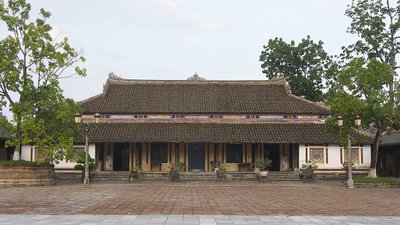
Le Palais de lHarmonie Suprême (Cité impériale, Hué) 2010 The Thai Hoa Palace, or Palace of Supreme Harmony, within Hue's Imperial City, Vietnam, photographed in 2010. The Nguyen emperors once used this hall for their most important court ceremonies.
Le pont aux Eaux dorées (Cité impériale, Hué), Hue, 2010
Le pont aux Eaux dorées (Cité impériale, Hué) 2010 The Golden Water Bridge inside the Imperial City of Hue, Vietnam, photographed in 2010. Reserved for the emperor's use, the small ceremonial bridge crosses a pond leading toward the palace's central halls.
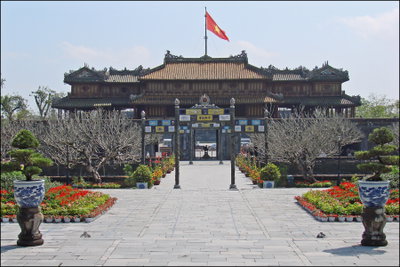
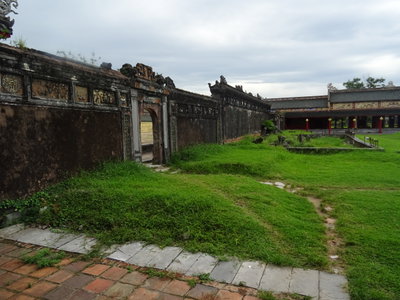
Porte intérieure (Cité impériale, Hué), Hue, 2010
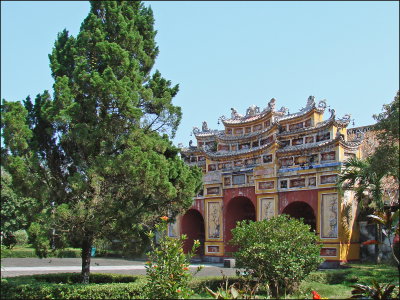
Porte intérieure (Cité impériale, Hué) 2010 An inner gate of the Imperial City in Hue, Vietnam, photographed in 2010. The citadel was built in the early nineteenth century as the seat of the Nguyen dynasty, Vietnam's last ruling imperial house.
Imperial City, Huế, Hue, 2013
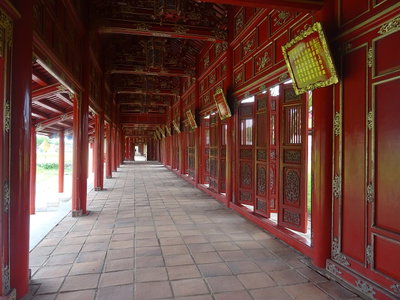
Imperial City, Huế 2013 The Imperial City in Hue, photographed in 2013. Built from 1805 as the walled seat of the Nguyen Dynasty emperors, the citadel and its palaces are today recognized as a UNESCO World Heritage Site.
Imperial City, Huế, Hue, 2013
Imperial City, Huế 2013 The Imperial City of Huế, seat of Vietnam's Nguyen Dynasty from 1802 to 1945, is pictured here. The walled complex on the Perfume River is recognized as a UNESCO World Heritage Site.
Looking toward the Great Palace Gate in the Imperial City of Huế, Hue, 2017
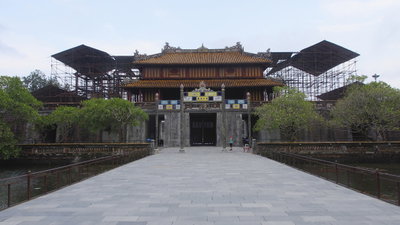
Looking toward the Great Palace Gate in the Imperial City of Huế 2017 Looking toward the Great Palace Gate within the Imperial City of Hue, 2017. This walled complex once housed the Nguyen dynasty's royal residences and administrative buildings.
Purple Forbidden City 2, Hue, 2018
Purple Forbidden City 2 2018 The Purple Forbidden City, the innermost enclosure of Hue's Imperial City reserved for the emperor and his household, much of which was destroyed during twentieth-century conflict and has since been partly restored.
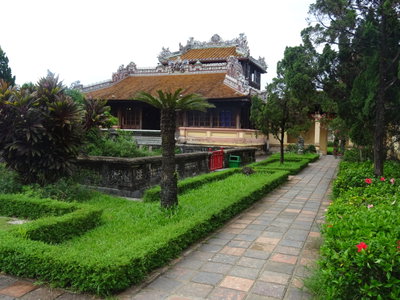
Royal Reading Pavilion 1, Hue, 2018
Royal Reading Pavilion 1 2018 The Royal Reading Pavilion within Hue's Imperial City, a library building constructed for the Nguyen court and restored after damage sustained in past conflicts.
Purple Forbidden City 3, Hue, 2018
Purple Forbidden City 3 2018 A view within the Purple Forbidden City, the imperial inner sanctum at the heart of the Hue Citadel complex, once accessible only to the emperor, his family, and his attendants.
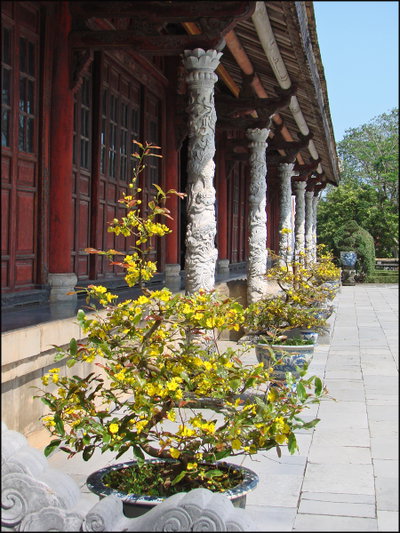
Điện Trinh Minh, Hue, 2018
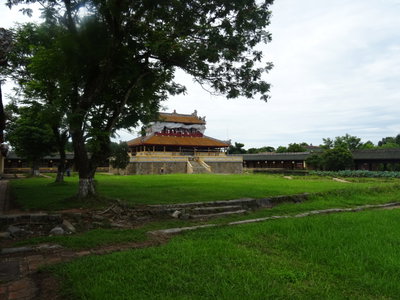
Điện Trinh Minh 2018 A structure within the grounds of the Hue Citadel, part of the walled imperial complex built by Vietnam's Nguyen dynasty in the early nineteenth century.
Minh Thận Temple 1, Hue, 2018
Minh Thận Temple 1 2018 The Nguyen-dynasty imperial capital of Hue, Vietnam, contains numerous temples and mausoleums built for the ruling family in the nineteenth century. Minh Thanh Temple is one of several religious structures scattered through the old capital's grounds, photographed here in 2018.
Lầu Nhật Thành in 2020, Hue, 2020
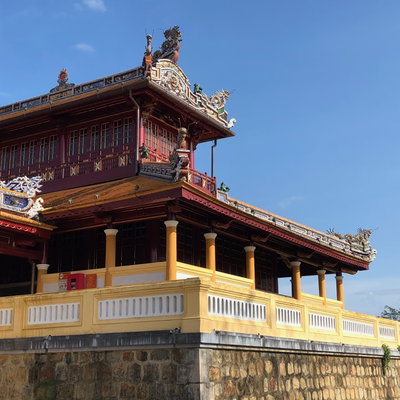
Lầu Nhật Thành in 2020 2020 This building stands within Hue's historic core, the former seat of Vietnam's Nguyen Dynasty emperors, whose Imperial City and surrounding structures were built through the nineteenth century.
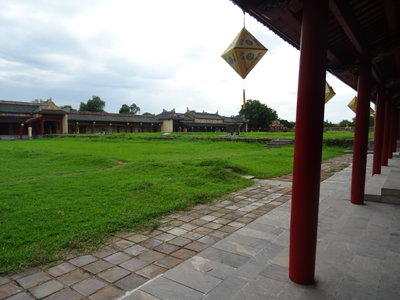
Hue Imperial City, Hue, 2024
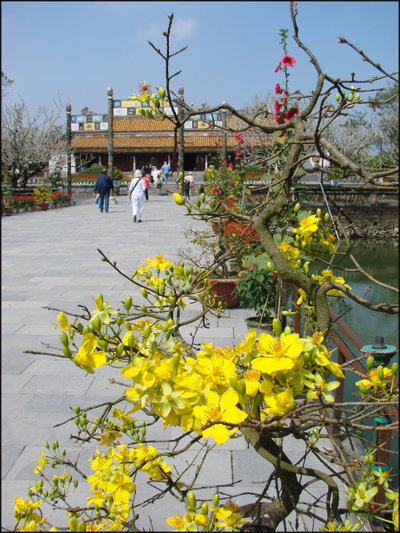
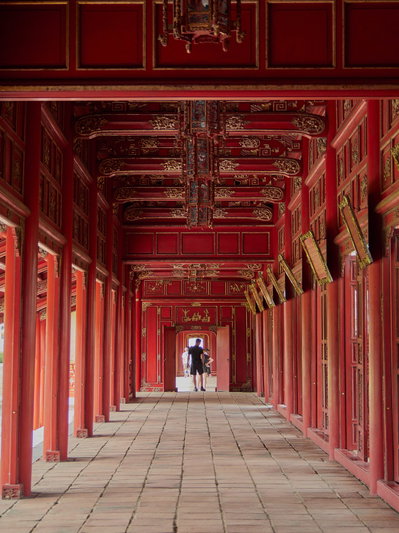
Hue Imperial City 2024 The Imperial City of Hue, Vietnam, seat of the country's Nguyen Dynasty from the early nineteenth century until 1945, and now preserved as a UNESCO World Heritage Site on the banks of the Perfume River. Photographed in 2024.
Hue Imperial City, Hue, 2024
Hue Imperial City 2024 Another view inside Hue's Imperial City, Vietnam, the walled palace complex once home to the country's Nguyen emperors and modeled in part on the Forbidden City in Beijing. Taken in 2024.