Home › Hue › Ngo Mon Gate

Ngo Mon Gate through time

Hue 2006–2024 16 photos of this spot

16 recent photographs taken at the same spot in Hue, spanning 2006–2024. Have an older picture of it? Add it and start this spot's timeline.

The Forbidden Purple City within Hue's Imperial City, photographed in 2006. Once the private residence of the Nguyen Dynasty emperors, most of its structures were destroyed during fighting in the Vietnam War, leaving largely ruins and foundations today.

See this spot on the map
Have an old photo of Ngo Mon Gate? A family album, a postcard, a print from the attic. Pin it to the map and it becomes part of the record.
Add your photo
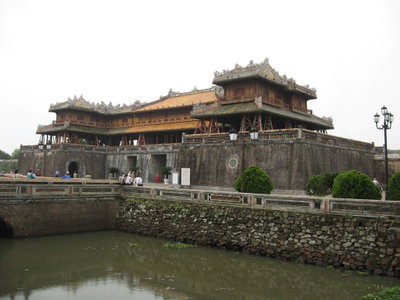
Forbidden Purple City, Hue, Hue, 2006
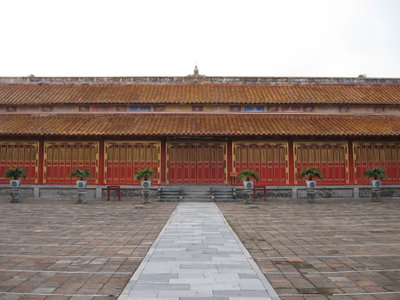
Forbidden Purple City, Hue 2006 The Forbidden Purple City within Hue's Imperial City, photographed in 2006. Once the private residence of the Nguyen Dynasty emperors, most of its structures were destroyed during fighting in the Vietnam War, leaving largely ruins and foundations today.
Forbidden Purple City, Hue, Hue, 2006
Forbidden Purple City, Hue 2006 The Forbidden Purple City within the Hue Citadel, Vietnam, photographed in 2006. Once the private residence of the Nguyen dynasty emperors, most of its structures were destroyed during the 1968 Battle of Hue, leaving much of the site in ruins.
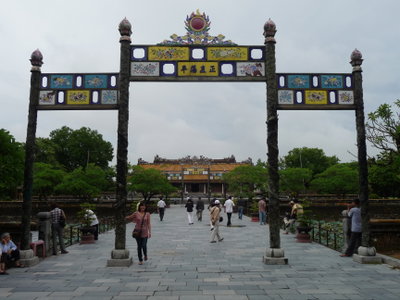
Ngọ Môn nhìn từ điện Thái Hòa, Hue, 2010
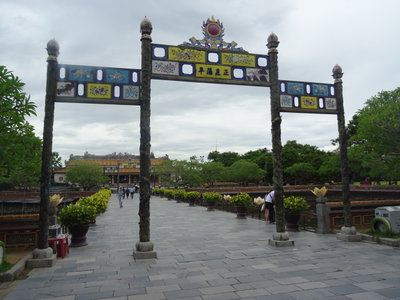
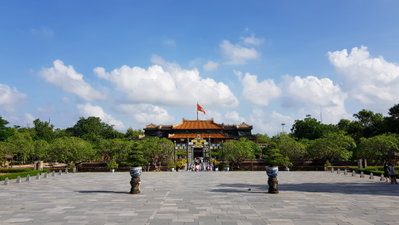
Ngọ Môn nhìn từ điện Thái Hòa 2010 This 2010 photograph, taken from the Thái Hòa Palace, looks toward the Ngọ Môn, the ceremonial Meridian Gate of Huế's Imperial City, built under the Nguyen dynasty in the early 19th century as the seat of Vietnam's imperial court.
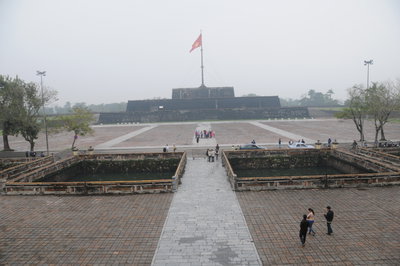
Cột cờ đại nội nhìn từ Ngọ Môn, Hue, 2010
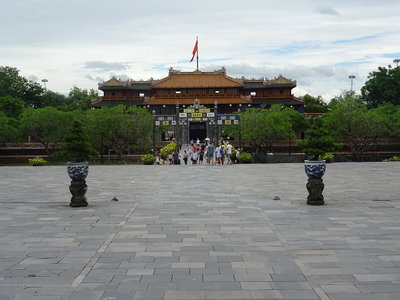
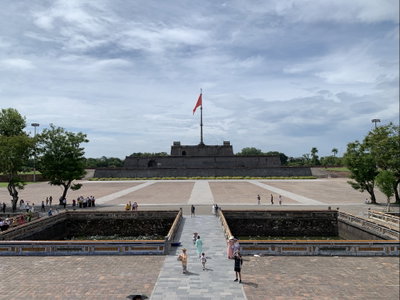
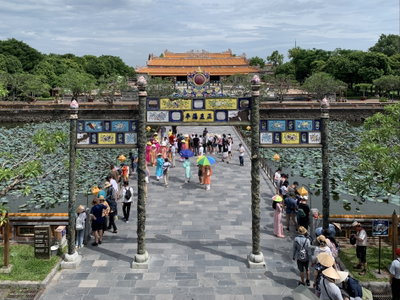
Cột cờ đại nội nhìn từ Ngọ Môn 2010 The flag tower of Huế's Imperial Citadel, seen from the Ngọ Môn gate, appears in this 2010 photograph of the fortified complex built for Vietnam's Nguyen emperors, whose dynasty ruled the country until 1945.
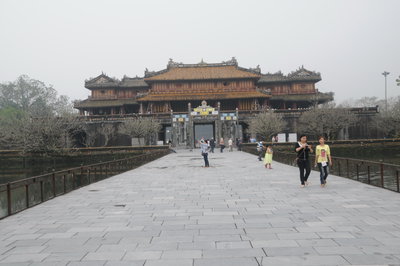
Ngo Mon Gate in 2011, Hue, 2011
Ngo Mon Gate in 2011 2011 A view of Hue, Vietnam, the former imperial capital of the Nguyen dynasty on the banks of the Perfume River, is captured in this 2011 photograph.
Ngo Mon Gate, Hue, 2012
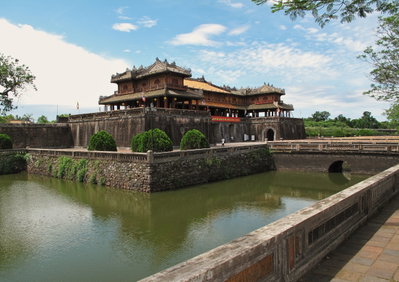
Ngo Mon Gate 2012 Ngo Mon Gate, the main southern entrance to the Imperial City in Hue, former seat of Vietnam's Nguyen dynasty emperors from 1802 to 1945. Photographed in 2012.
Ngo Mon Gate in 2014, Hue, 2014
Ngo Mon Gate in 2014 2014 A view of Huế, Vietnam, photographed in 2014. The city served as the imperial capital of the Nguyễn dynasty from 1802 until 1945 and sits astride the Perfume River in the country's central region.
Hall of Supreme Harmony Huế 1, Hue, 2018
Hall of Supreme Harmony Huế 1 2018 The Hall of Supreme Harmony within Hue's Imperial City, the throne hall where Nguyen emperors held court ceremonies and received foreign envoys. Built in 1805, it remains one of the best-preserved buildings in the complex.
Meridian Gate (Huế), Hue, 2018
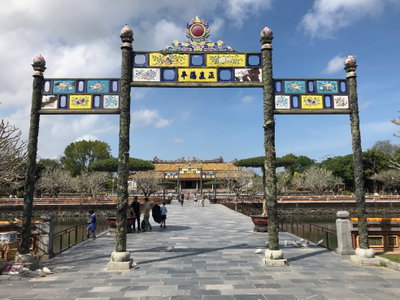
Meridian Gate (Huế) 2018 The Meridian Gate, the main southern entrance to the Imperial City within the Hue Citadel. Its central passage was once reserved for the emperor, while officials and soldiers used the side gates.
Hue Imperial City Culture Pham Travel, Hue, 2019
Hue Imperial City Culture Pham Travel 2019 The Imperial City of Hue, seat of the Nguyen Dynasty from 1802 until 1945, is pictured here in 2019. Enclosed by thick stone walls and a moat, the complex remains one of Vietnam's most significant UNESCO World Heritage Sites.
Vietnam, Hue, 2020
Vietnam 2020 A scene from Hue, Vietnam's former imperial capital on the banks of the Perfume River, photographed in 2020. The city served as the seat of the Nguyen Dynasty for over a century before its capital status ended in 1945.
Huế (2024) - Meridian Gate - Ngọ Môn (Hoàng thành Huế), Hue, 2024
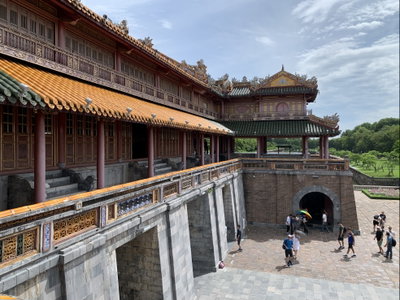
Huế (2024) - Meridian Gate - Ngọ Môn (Hoàng thành Huế) 2024 The Meridian Gate (Ngo Mon), the main southern entrance to Hue's Imperial City, was built in 1833 under Emperor Minh Mang and served as the ceremonial gateway used by the Nguyen emperors.
Huế (2024) - flag tower Kỳ Đài, Hue, 2024
Huế (2024) - flag tower Kỳ Đài 2024 The Flag Tower (Ky Dai) rises before the Meridian Gate in Hue, first erected in 1807 as a military watchtower for the Nguyen Dynasty's Imperial City and rebuilt several times since due to storm and war damage.
Huế (2024) - Meridian Gate - Ngọ Môn (Hoàng thành Huế), Hue, 2024
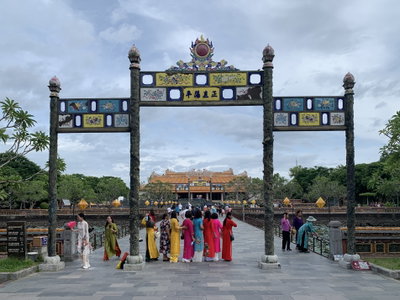
Huế (2024) - Meridian Gate - Ngọ Môn (Hoàng thành Huế) 2024 The Meridian Gate, or Ngọ Môn, is the main southern entrance to the Imperial City within Hue's Citadel, built in the 19th century under the Nguyen dynasty as the ceremonial gateway for the emperor.
Huế (2024) - Meridian Gate - Ngọ Môn (Hoàng thành Huế), Hue, 2024
Huế (2024) - Meridian Gate - Ngọ Môn (Hoàng thành Huế) 2024 Another view of the Meridian Gate, Ngọ Môn, the ceremonial entrance built under the Nguyen dynasty to the Imperial City in Hue, reserved historically for the emperor's own use.
Huế (2024) - Meridian Gate - Ngọ Môn (Hoàng thành Huế), Hue, 2024
Huế (2024) - Meridian Gate - Ngọ Môn (Hoàng thành Huế) 2024 The Meridian Gate at Hue's Imperial City, Ngọ Môn, seen from a different angle within the walls of the former Nguyen dynasty citadel that once housed Vietnam's royal court.