Home › Tbilisi › Tiflis NL-HaNA

Tiflis NL-HaNA through time

Tbilisi 1850–2020 31 photos of this spot

31 photographs taken at the same spot in Tbilisi, spanning 1850–2020 — 25 of them from before 1980. Line them up and watch the place change.

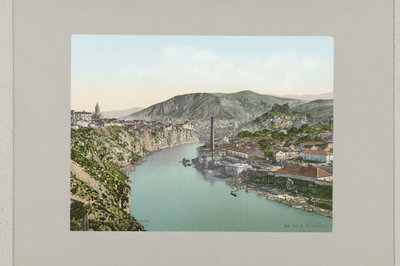
A view of Tbilisi, the Georgian capital on the banks of the Kura River, photographed around 1850 while the city was under Russian imperial administration in the Caucasus. Photographs of Tbilisi from this early date are uncommon, predating the wider spread of photographic studios in the region.

See this spot on the map
Have an old photo of Tiflis NL-HaNA? A family album, a postcard, a print from the attic. Pin it to the map and it becomes part of the record.
Add your photo
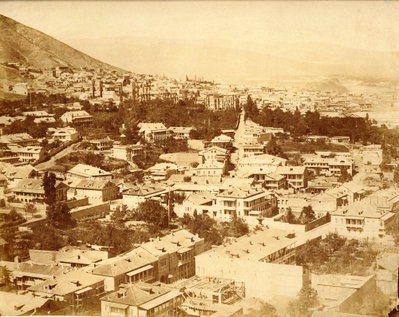
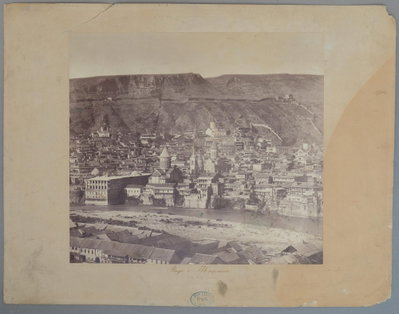
Tbilisi XIXc 01, Tbilisi, 1850
Tbilisi XIXc 01 1850 A view of Tbilisi, the Georgian capital on the banks of the Kura River, photographed around 1850 while the city was under Russian imperial administration in the Caucasus. Photographs of Tbilisi from this early date are uncommon, predating the wider spread of photographic studios in the region.
Alexei Ivanitsky. View of Tbilisi, Tbilisi, 1858
Alexei Ivanitsky. View of Tbilisi 1858 Photographer Alexei Ivanitsky captured this view of Tbilisi in 1858, when the city, then commonly known by its Russian name Tiflis, served as an administrative center of the Caucasus under Russian imperial rule.
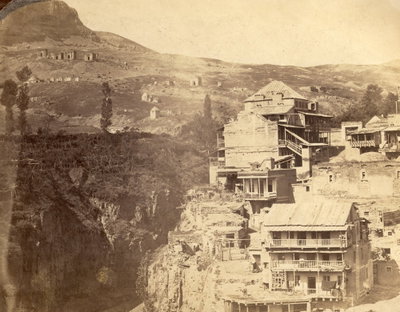
Alexei Ivanitsky. The Muslim cemetery in the hills near the Botanical Garden in Tbilisi, Tbilisi, 1858
Alexei Ivanitsky. The Muslim cemetery in the hills near the Botanical Garden in Tbilisi 1858 Alexei Ivanitsky photographed this Muslim cemetery in the hills near Tbilisi's Botanical Garden in 1858, documenting one of the city's historic burial grounds at a time when Tiflis was the seat of Russian administration in the Caucasus.
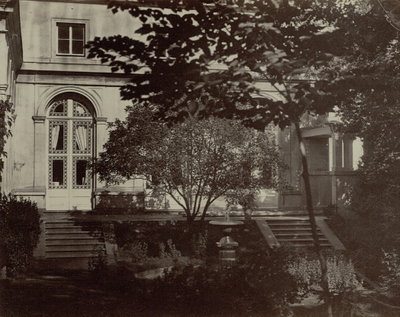
Palace of Caucasian Viceroy, Tiflis 14, Tbilisi, 1865
Palace of Caucasian Viceroy, Tiflis 14 1865 The Palace of the Caucasian Viceroy in Tiflis, photographed in 1865, served as the seat of Russian imperial administration for the Caucasus region, in the city later renamed Tbilisi, the Georgian capital.
Palace of Caucasian Viceroy, Tiflis 20, Tbilisi, 1865
Palace of Caucasian Viceroy, Tiflis 20 1865 Another 1865 view of the Viceroy's Palace in Tiflis, the residence and administrative seat of the Russian governor overseeing the Caucasus during the era of imperial rule from distant Saint Petersburg.
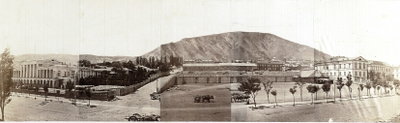
Панорама Тифлиса (1870), Tbilisi, 1870
Панорама Тифлиса (1870) 1870 A panoramic view of Tiflis captured in 1870, showing the city later renamed Tbilisi at a time when it was the administrative capital of the Russian Caucasus, under imperial rule from Saint Petersburg.
Mikhail Bridge, Tiflis, Tbilisi, 1876
Mikhail Bridge, Tiflis 1876 Mikhail Bridge in Tiflis, photographed in 1876, was one of the crossings over the Kura River in a city that then served as an administrative center of the Russian Empire's Caucasus territories, now Georgia.
Tbilisi XIXc 03, Tbilisi, 1881
Tbilisi XIXc 03 1881 A 19th-century photograph of Tbilisi, taken in 1881 when the city served as the administrative center of the Caucasus under the Russian Empire, decades before Georgia's brief period of independence in the early 20th century.
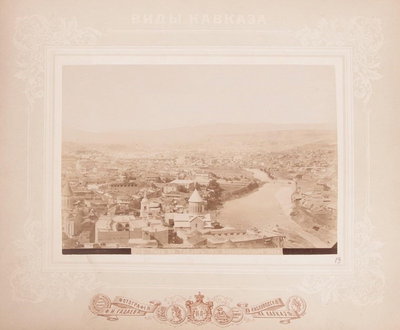
Gadayev Vidy Kavkaza 301a, Tbilisi, 1885
Gadayev Vidy Kavkaza 301a 1885 This 1885 photograph belongs to a numbered series titled 'Vidy Kavkaza' (Views of the Caucasus), documenting scenes around Tbilisi during the period when the city served as the seat of the Russian Empire's Caucasus Viceroyalty.
EU: Vy över staden Tbilisi i Georgien år 1887 (1887), Tbilisi, 1887
EU: Vy över staden Tbilisi i Georgien år 1887 (1887) 1887 A view over the city of Tbilisi, Georgia, as it appeared in 1887.
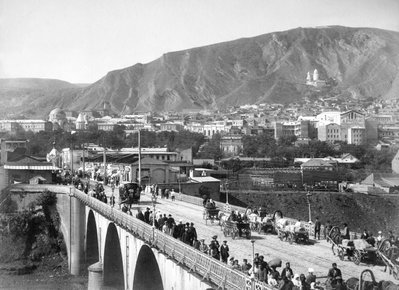
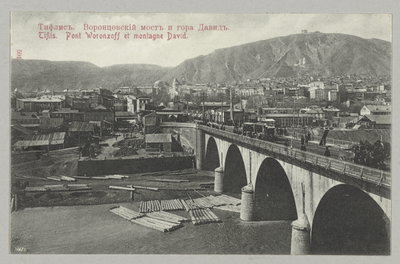
Woronzoffbrug met op de achtergrond de berg David Tiflis. Pont Woronzoff et montagne David. (titel op object), Tbilisi, 1895
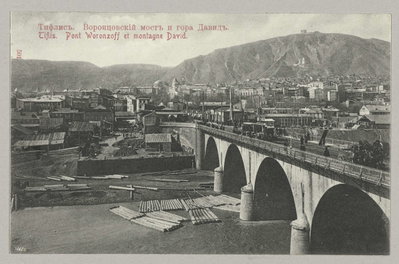
Woronzoffbrug met op de achtergrond de berg David Tiflis. Pont Woronzoff et montagne David. (titel op object) 1895 The Vorontsov Bridge in Tiflis (Tbilisi), with Mount David rising in the background, photographed around 1895 when the city was capital of the Russian Caucasus Viceroyalty.
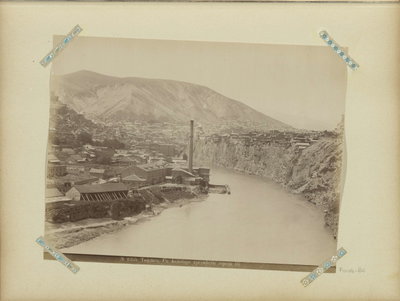
EU: Gezicht op Tiflis en de Koera (1895), Tbilisi, 1895
EU: Gezicht op Tiflis en de Koera (1895) 1895 A view over Tiflis, now Tbilisi, and the Kura River in 1895, when the city was the administrative center of the Russian Empire's Caucasus Viceroyalty.
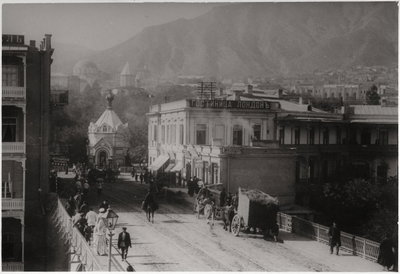
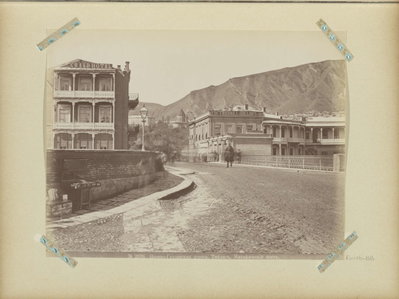
EU: Straatbeeld met Grand Hotel en brug aan de militaire weg in Tiflis (1895), Tbilisi, 1895
EU: Straatbeeld met Grand Hotel en brug aan de militaire weg in Tiflis (1895) 1895 A street scene in Tiflis showing the Grand Hotel and a bridge along the military road, photographed in 1895 during the period of Russian imperial rule in the Caucasus.
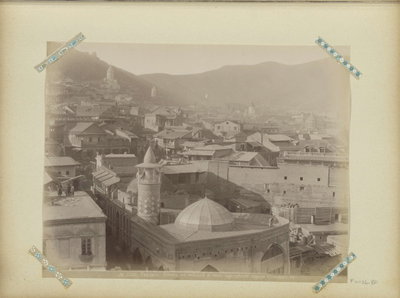
EU: Gezicht op Tiflis met kerken en op de voorgrond een moskee (1895), Tbilisi, 1895
EU: Gezicht op Tiflis met kerken en op de voorgrond een moskee (1895) 1895 This 1895 view of Tiflis takes in several of the city's churches along with a mosque in the foreground, reflecting the religious diversity of the Caucasus under Russian imperial administration.
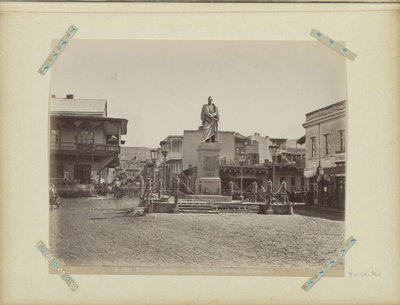
EU: Plein in Tiflis met het standbeeld van Michail Semjonovitsj Vorontsov, gelegen aan de militaire weg van Georgië (1895), Tbilisi, 1895
EU: Plein in Tiflis met het standbeeld van Michail Semjonovitsj Vorontsov, gelegen aan de militaire weg van Georgië (1895) 1895 A square in Tiflis photographed in 1895, showing the statue of Mikhail Vorontsov, the Russian viceroy of the Caucasus, positioned along the city's military road.
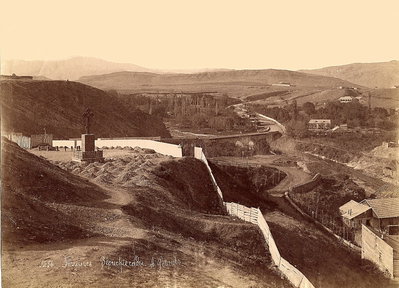
A. Roinashvili. 0056 - Tiflis. Vera gardens, Tbilisi, 1899
A. Roinashvili. 0056 - Tiflis. Vera gardens 1899 The Vera Gardens in Tiflis, photographed around 1899 by Alexander Roinashvili, widely regarded as one of the first Georgian-born photographers to document the city.
Grand Hotel, Tiflis (D. Ermakov), Tbilisi, 1900
Grand Hotel, Tiflis (D. Ermakov) 1900 The Grand Hotel in Tiflis, present-day Tbilisi, was photographed around 1900 by Dmitri Ermakov, one of the most prolific chroniclers of the Caucasus in the late Russian imperial period. Ermakov's studio produced thousands of images documenting the region's cities, peoples, and landscapes.
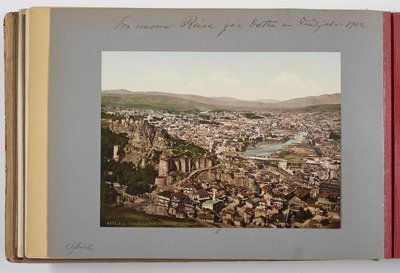
EU: Tbilisi, yleisnäkymä ja linnoituksen rauniot (1902), Tbilisi, 1902
EU: Tbilisi, yleisnäkymä ja linnoituksen rauniot (1902) 1902 A general view of Tbilisi, Georgia, taken in 1902, showing the ruins of an old fortress on the hill overlooking the city center below, with the older quarters of Tbilisi spreading along the river.
EU: Uitzicht op Avlabar (1905), Tbilisi, 1905
EU: Uitzicht op Avlabar (1905) 1905 Avlabari, a historic district of Tbilisi on the eastern bank of the Kura River, is seen in this 1905 photograph, taken during the era when the city served as the administrative center of the Russian Caucasus.
EU: Kabelspoorweg bij de Sint Davidskerk (1905), Tbilisi, 1905
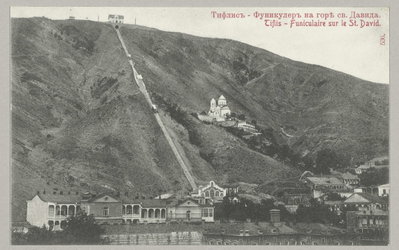
EU: Kabelspoorweg bij de Sint Davidskerk (1905) 1905 A funicular railway ascending toward Mtatsminda, the hill overlooking Tbilisi and site of the Church of St David, is shown in this 1905 photograph, the same year the line first opened.
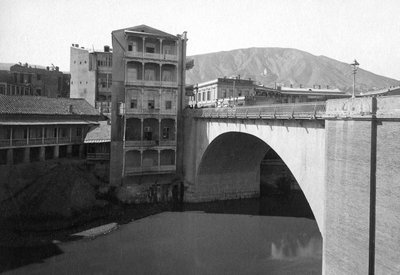
EU: Woronzoffbrug met op de achtergrond de berg David (1905), Tbilisi, 1905
EU: Woronzoffbrug met op de achtergrond de berg David (1905) 1905 The Vorontsov Bridge, named after the Russian viceroy of the Caucasus, spans the Kura River in Tbilisi with Mount David rising behind it in this 1905 photograph.
EU: German soldiers in front of Alexander Nevsky Cathedral, Tbilisi (1914), Tbilisi, 1914
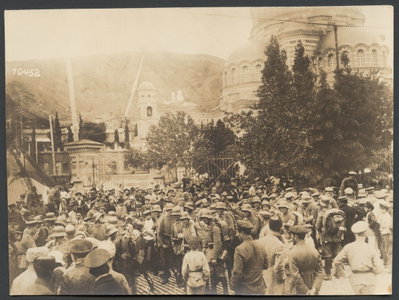
EU: German soldiers in front of Alexander Nevsky Cathedral, Tbilisi (1914) 1914 This photograph, dated 1914, shows German soldiers standing before the Alexander Nevsky Cathedral in Tbilisi, a Russian Orthodox church that once stood in the city center.
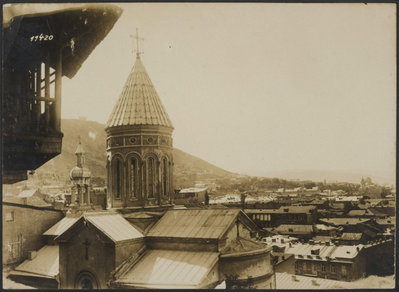
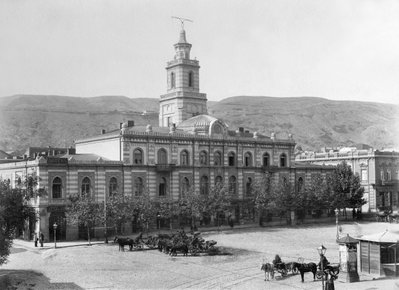
Tiflis NL-HaNA, Tbilisi, 1916
Tiflis NL-HaNA 1916 Photographed in 1916, this scene of Tiflis, now Tbilisi, dates from the final years of Russian imperial rule in the Caucasus, when the city served as the seat of the Viceroyalty during the First World War.
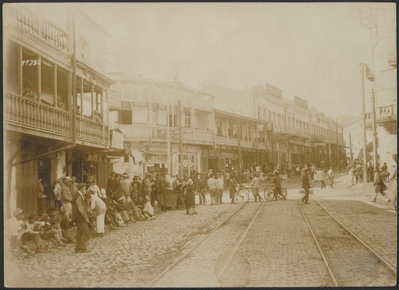
Tiflis NL-HaNA, Tbilisi, 1918
Tiflis NL-HaNA 1918 By the time this photograph of Tiflis was taken in 1918, the city had become the capital of the newly proclaimed Democratic Republic of Georgia, formed after the collapse of the Russian Empire earlier that year.
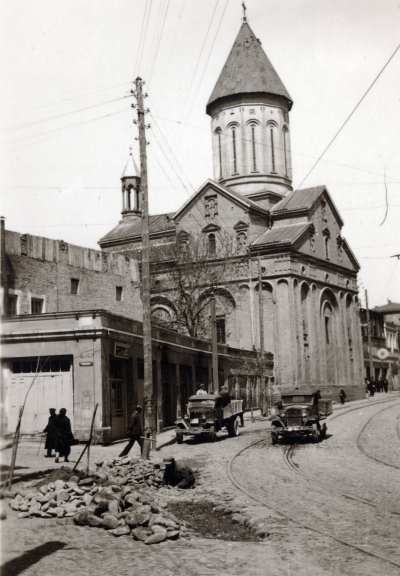
EU: Norashen örmény templom (1935), Tbilisi, 1935
EU: Norashen örmény templom (1935) 1935 The Norashen Armenian Church in Tbilisi, photographed in 1935; the church has long served the city's historic Armenian community in the Old Town.
Placo de la Libereco (Tbiliso), Tbilisi, 2006
Placo de la Libereco (Tbiliso) 2006 Freedom Square, referred to here by its Esperanto name Placo de la Libereco, in central Tbilisi, Georgia, in 2006. One of the city's main public spaces, the square is marked by a tall column topped with a statue of St. George.
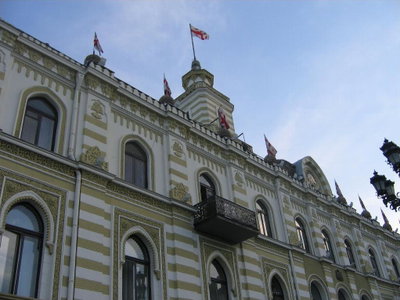
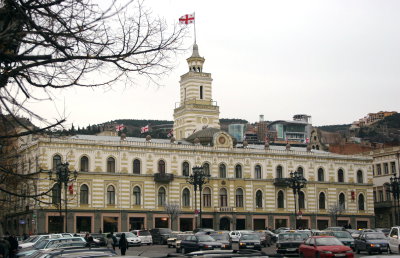
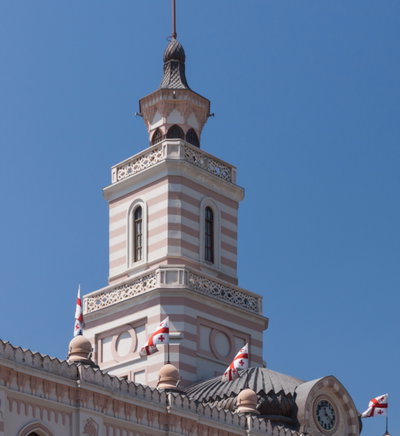
Tbscityhall, Tbilisi, 2007
Tbscityhall 2007 Tbilisi City Hall in Georgia, photographed in 2007. The building, topped by a distinctive clock tower, stands near Freedom Square in the Georgian capital.
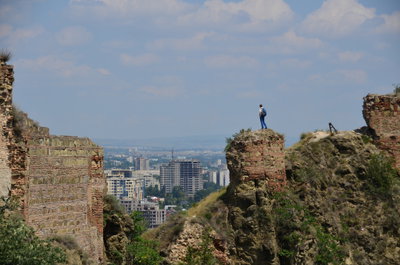
Narikali Tbilisi Castle Overlooking The City, Tbilisi, 2013
Narikali Tbilisi Castle Overlooking The City 2013 The Narikala Fortress overlooks Tbilisi from a ridge above the old town, its walls tracing a history of fortification on the site that stretches back over a thousand years.
Tbilisi, Ratusz, Tbilisi, 2014
Tbilisi, Ratusz 2014 Tbilisi's old town hall building, photographed in 2014. Tbilisi is the capital of Georgia, situated on the banks of the Kura River.
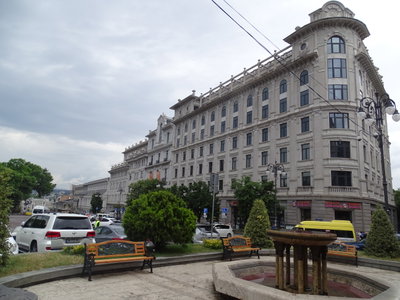
Gebäude am Freiheitsplatz Tiflis, Tbilisi, 2018
Gebäude am Freiheitsplatz Tiflis 2018 This 2018 photograph, titled 'Building on Freedom Square' in German, shows a structure facing Tbilisi's central Freedom Square in Georgia.
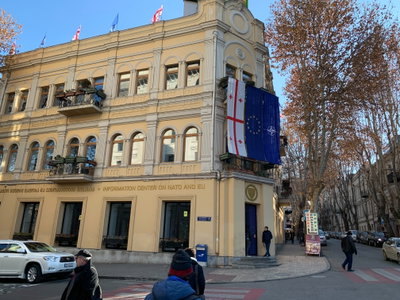
Information Center on NATO and EU, Tbilisi, Tbilisi, 2020
Information Center on NATO and EU, Tbilisi 2020 An information center on NATO and European Union integration in Tbilisi, Georgia, pictured in 2020. Centers like this one have operated across Georgia to inform the public about the country's long-stated aspirations to join both organizations.