Home › Hanoi › A Single Pillar

A Single Pillar through time

Hanoi 2008–2025 12 photos of this spot

12 recent photographs taken at the same spot in Hanoi, spanning 2008–2025. Have an older picture of it? Add it and start this spot's timeline.

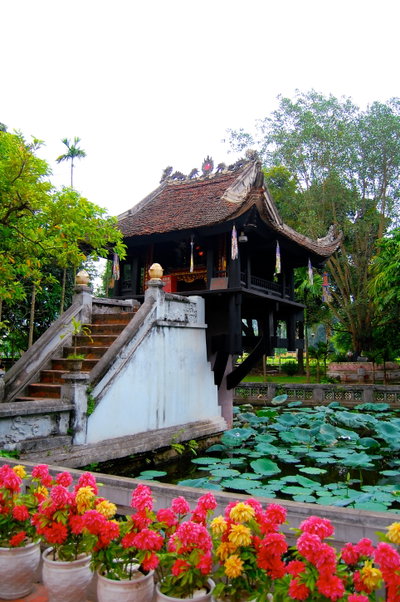
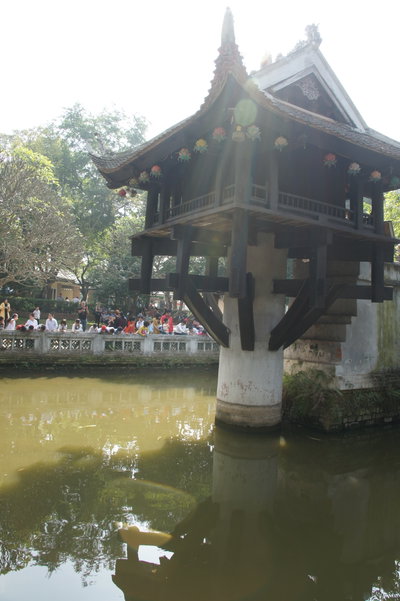
Taken in 2008, this photograph shows the One Pillar Pagoda in Hanoi, Vietnam, a Buddhist temple built on a single stone pillar rising from a lotus pond. It is designed to resemble a lotus blossom emerging from the water.

See this spot on the map
Have an old photo of A Single Pillar? A family album, a postcard, a print from the attic. Pin it to the map and it becomes part of the record.
Add your photo
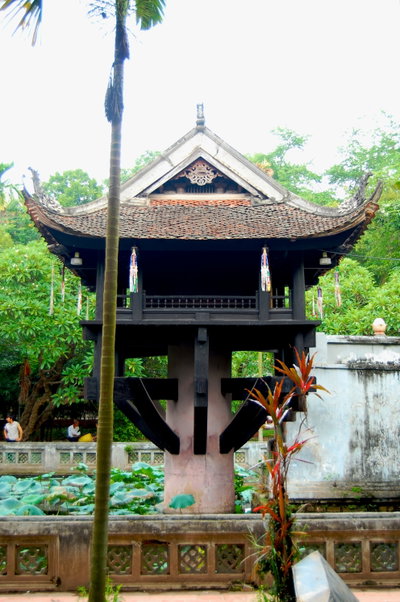
A Single Pillar, Hanoi, 2008
A Single Pillar 2008 Taken in 2008, this photograph shows the One Pillar Pagoda in Hanoi, Vietnam, a Buddhist temple built on a single stone pillar rising from a lotus pond. It is designed to resemble a lotus blossom emerging from the water.
One Pillar Pagoda, Hanoi, 2008
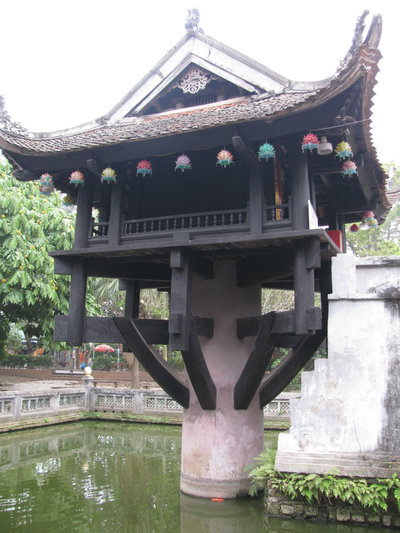
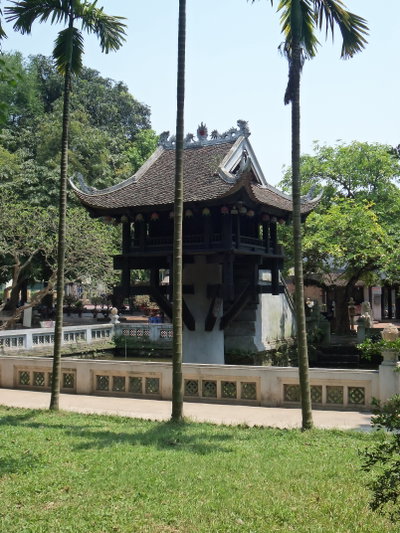
One Pillar Pagoda 2008 This 2008 image shows another view of the One Pillar Pagoda in Hanoi, Vietnam, one of the city's most distinctive historic temples. The wooden structure sits atop its single pillar within a small landscaped garden.
One Pillar Pagoda, Hanoi, Vietnam, Hanoi, 2010
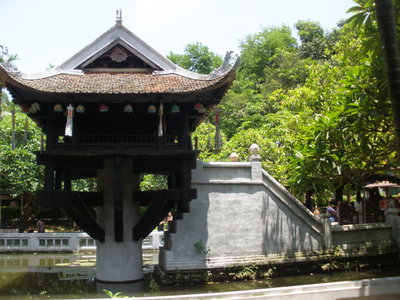
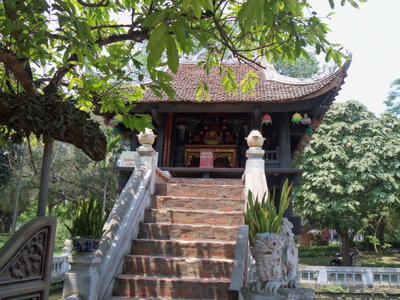
One Pillar Pagoda, Hanoi, Vietnam 2010 The One Pillar Pagoda in Hanoi, Vietnam, photographed in 2010, stands near the Ho Chi Minh Mausoleum. First built in 1049 during the Ly Dynasty, the wooden pagoda rests on a single stone pillar rising from a lotus pond and is among Vietnam's most recognizable religious structures.
Chua mot cot-Hanoi-vietnam, Hanoi, 2011
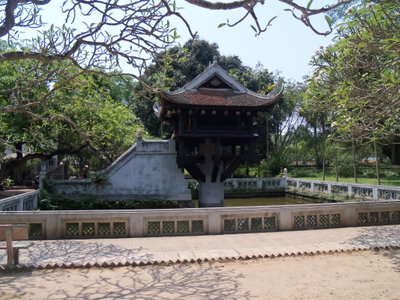
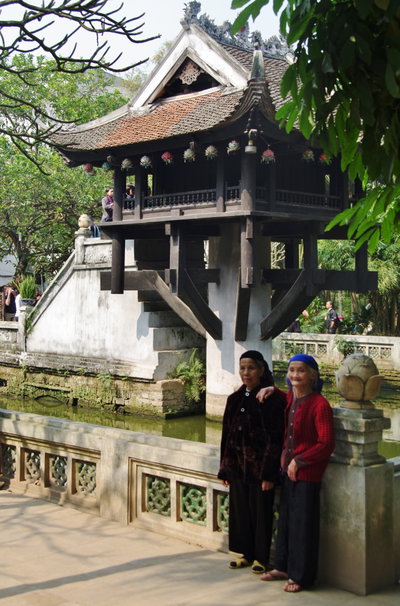
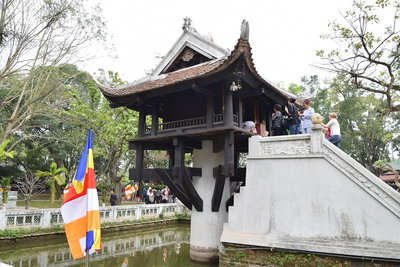
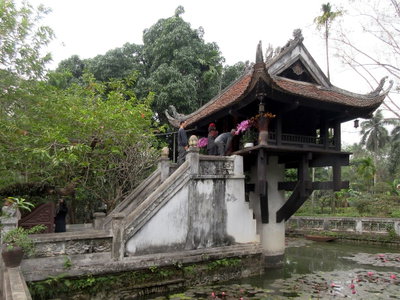
Chua mot cot-Hanoi-vietnam 2011 Hanoi's One Pillar Pagoda, its dark timber shrine perched atop a single stone column rising from a lotus pond, is seen from across the water with visitors climbing the adjoining whitewashed staircase amid surrounding greenery.
One Pillar Pagoda, Hanoi, 2012
One Pillar Pagoda 2012 The One Pillar Pagoda in Hanoi, a small Buddhist temple built to resemble a lotus blossom rising from a single stone column, first constructed in the 11th century under the Lý dynasty. Photographed in 2012.
Hanoi One Pillar Pagoda, Hanoi, 2012
Hanoi One Pillar Pagoda 2012 The One Pillar Pagoda in Hanoi was originally built in 1049 during the Ly dynasty and reconstructed in its current form after being destroyed in 1954. This 2012 photograph shows the pagoda's distinctive single-column structure.
One Pillar Pagoda, Hanoi, 2012
One Pillar Pagoda 2012 Hanoi's One Pillar Pagoda, built to resemble a lotus blossom rising on a single stone column, traces its origins to the 11th-century Ly Dynasty and remains one of the city's most recognizable landmarks. The current structure is a reconstruction after wartime damage in the 1950s.
One Pillar Pagoda, Hanoi, 2012
One Pillar Pagoda 2012 The One Pillar Pagoda in Hanoi is a small Buddhist temple built to resemble a lotus blossom rising from a single stone column set in a lotus pond. First constructed in the eleventh century under the Ly Dynasty, it has been rebuilt more than once since, most recently after being damaged in 1954.
One pilar pagoda (Một Cột Chùa), Hanoi, 2013
One pilar pagoda (Một Cột Chùa) 2013 Hanoi's One Pillar Pagoda, photographed in 2013. Built in the eleventh century, the wooden pagoda is designed to resemble a lotus blossom rising from a single stone pillar out of a small pond.
The One Pillar Pagoda, Hanoi, Vietnam, Hanoi, 2017
The One Pillar Pagoda, Hanoi, Vietnam 2017 The One Pillar Pagoda in Hanoi, seen in 2017. Built on a single stone column rising from a lotus pond, the pagoda is among the most distinctive religious structures in northern Vietnam.
Ho Chi Minh Mausoleum 06, Hanoi, 2018
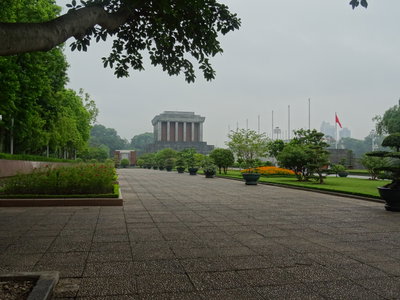
Ho Chi Minh Mausoleum 06 2018 Grounds surrounding the Ho Chi Minh Mausoleum in Hanoi, part of a memorial complex that also includes the leader's former residence, are visible in this 2018 photograph.
One Pillar Pagoda, Hanoi, 2025
One Pillar Pagoda 2025 Hanoi's One Pillar Pagoda is a small Buddhist temple built to rest on a single stone column rising from a lotus pond, first constructed in 1049 under the Ly Dynasty. Rebuilt several times since, it remains one of Vietnam's most recognized religious landmarks.