Home › Hue › Pig Store

Pig Store through time

Hue 2018 110 photos of this spot

110 recent photographs taken at the same spot in Hue, spanning 2018. Have an older picture of it? Add it and start this spot's timeline.

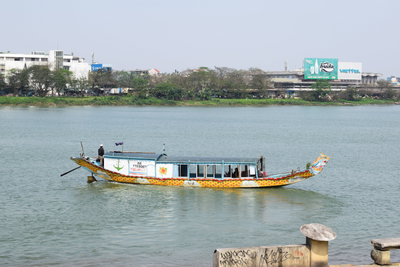
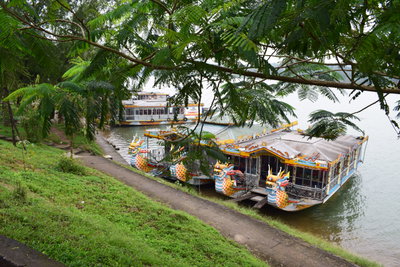
A dragon-headed tourist boat on the Perfume River in Hue, Vietnam, photographed in 2018. Such boats, styled after traditional royal barges, carry visitors past the former imperial capital's riverside sites.

See this spot on the map
Have an old photo of Pig Store? A family album, a postcard, a print from the attic. Pin it to the map and it becomes part of the record.
Add your photo
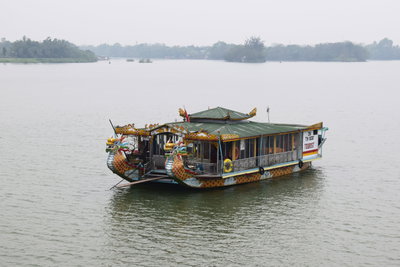
Dragon boat on the Perfume River, Hue, 2018
Dragon boat on the Perfume River 2018 A dragon-headed tourist boat on the Perfume River in Hue, Vietnam, photographed in 2018. Such boats, styled after traditional royal barges, carry visitors past the former imperial capital's riverside sites.
Inside Huế Citadel, Hue, 2018
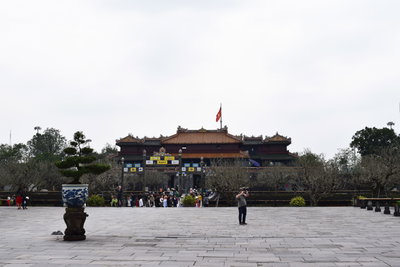
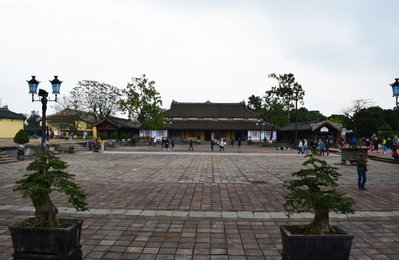
Inside Huế Citadel 2018 A view inside the Hue Citadel in Hue, Vietnam, photographed in 2018. The citadel was the seat of the Nguyen dynasty emperors and forms part of the UNESCO-listed Complex of Hue Monuments.
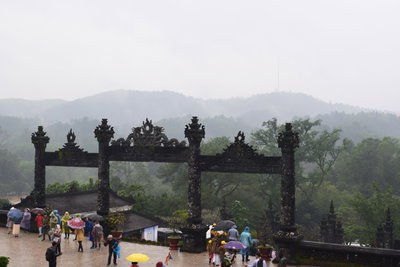
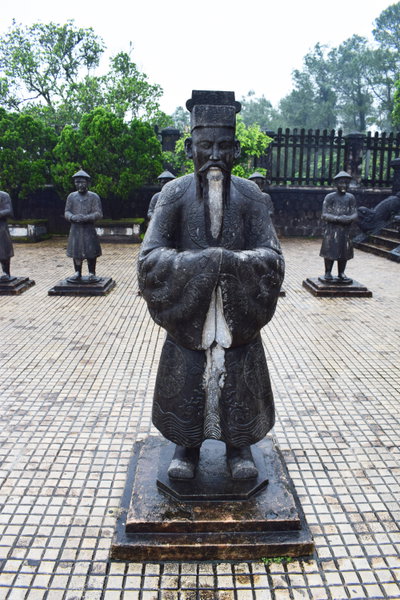
Mandarin statures at Khai Dinh Tomb, Hue, 2018
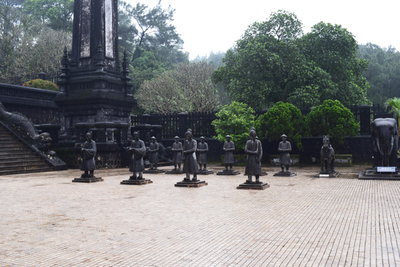
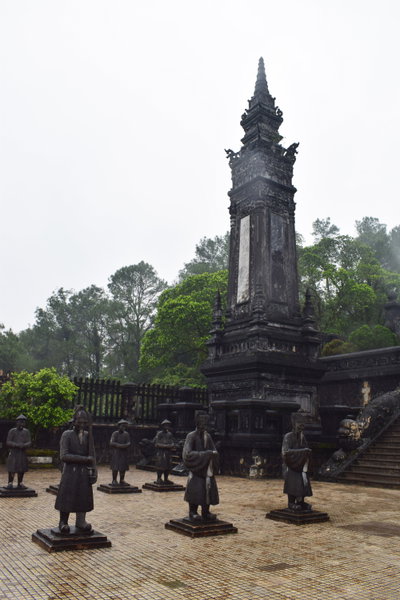
Mandarin statures at Khai Dinh Tomb 2018 Stone statues of mandarins line the honor guard at the tomb of Emperor Khai Dinh near Hue, Vietnam, photographed in 2018. The tomb, completed in the 1930s, blends traditional Vietnamese and European architectural elements.
Minh Mang Tomb, Hue, 2018
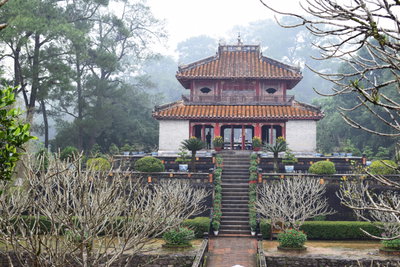
Minh Mang Tomb 2018 The tomb of Emperor Minh Mang near Hue, Vietnam, photographed in 2018. Built in the 1840s for the second emperor of the Nguyen dynasty, the tomb complex is set amid landscaped grounds west of the former imperial capital.
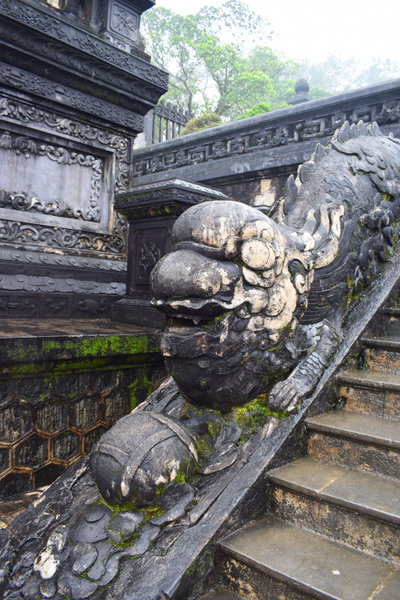
Dragon steps, Hue, 2018
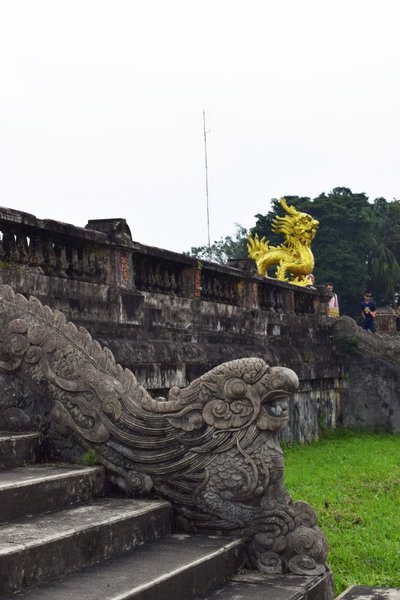
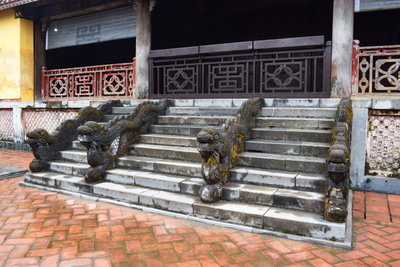
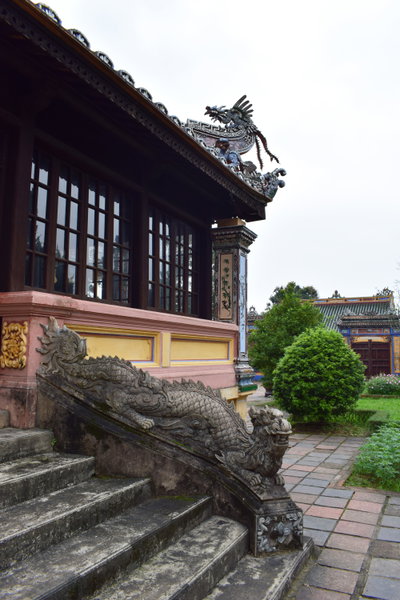
Dragon steps 2018 Stone steps flanked by dragon sculptures near Huế, a decorative motif frequently used at the imperial tombs built for Nguyễn dynasty emperors outside the city.
Khai Dinh Tomb, Hue, 2018
Khai Dinh Tomb 2018 The tomb of Emperor Khải Định near Huế, completed in the 1930s and noted for blending traditional Vietnamese elements with European architectural influences, unlike the tombs of earlier Nguyễn emperors.
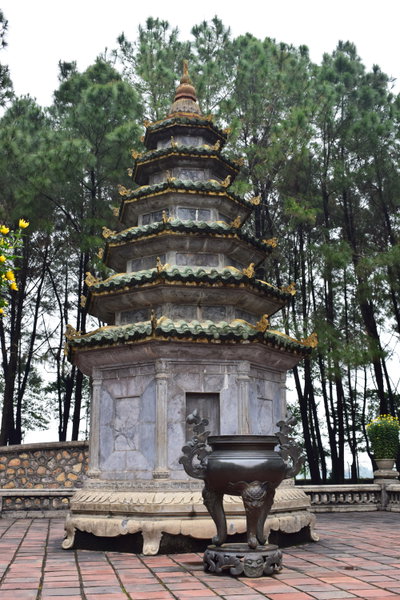
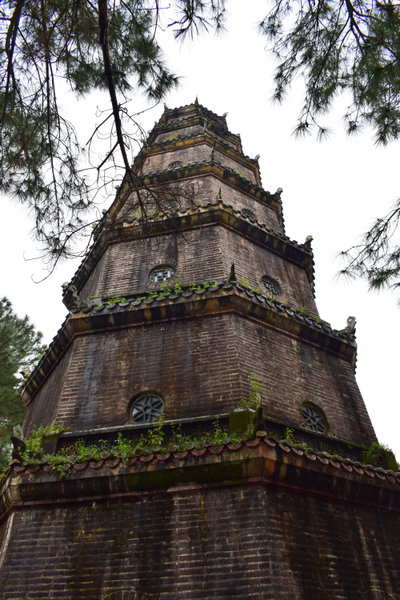
Thien Mu Pagoda, Hue, 2018
Thien Mu Pagoda 2018 Thiên Mụ Pagoda on the banks of the Perfume River in Huế. Its seven-story octagonal tower, built in the 1840s, is one of the most recognized symbols of the city.
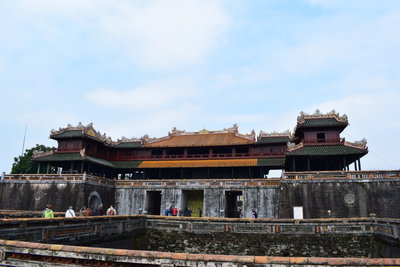
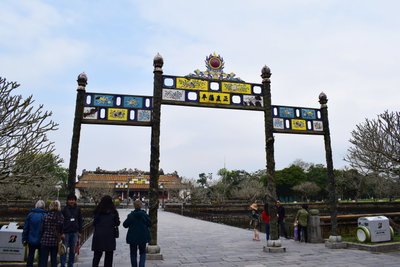
Entrance to the Citadel, Huế, Hue, 2018
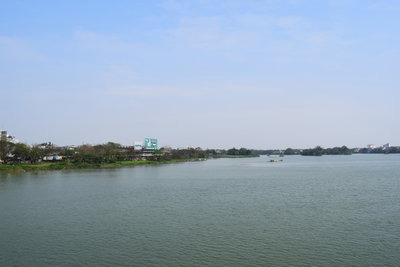
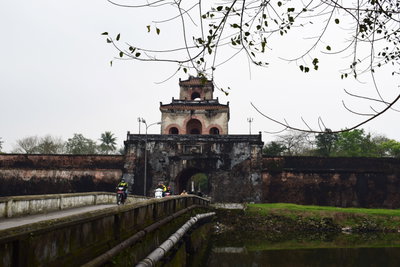
Entrance to the Citadel, Huế 2018 An entrance to the Citadel of Huế, the fortified enclosure that housed the imperial city and the Forbidden Purple City of the Nguyễn dynasty emperors.
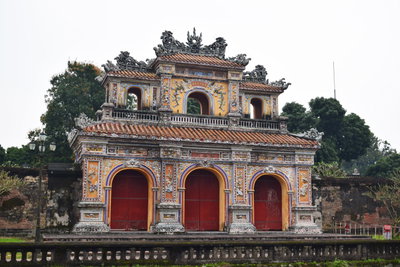
Gate to Huế Citadel, Hue, 2018
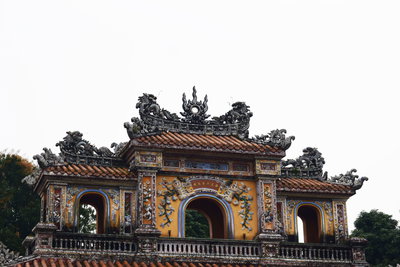
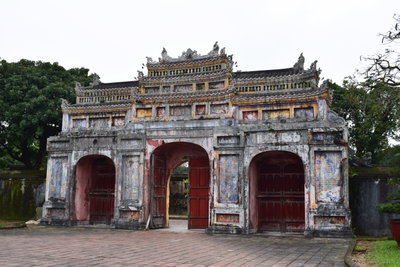
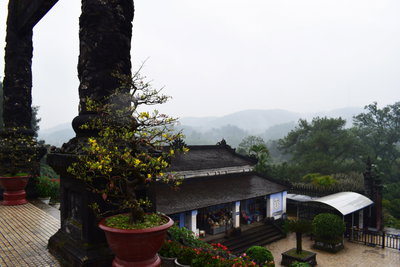
Gate to Huế Citadel 2018 One of the gates leading into Huế's Citadel, the walled complex built in the early 19th century as the seat of the Nguyễn dynasty and now recognized as a UNESCO World Heritage Site.
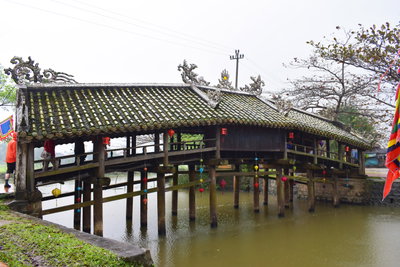
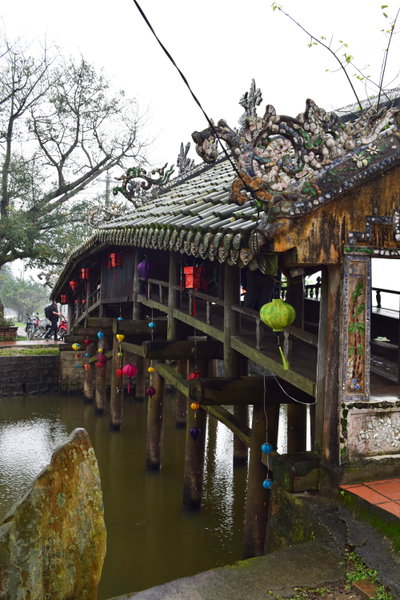
Thanh Toan tile-roofed bridge, Hue, 2018
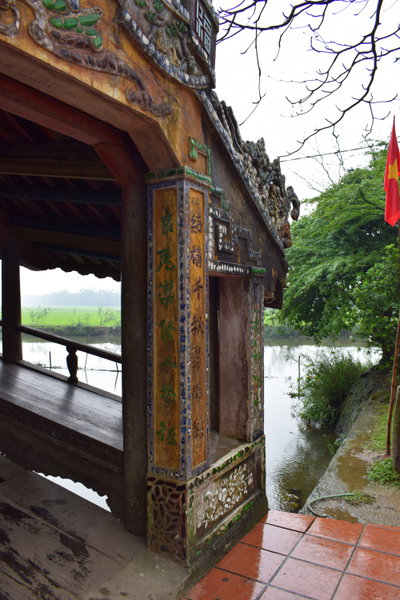
Thanh Toan tile-roofed bridge 2018 The Thanh Toàn covered bridge in a village near Huế. Built in the 18th century in a tiled-roof style, it remains a well-known example of traditional Vietnamese rural architecture.
Cemetery in Huế, Hue, 2018
Cemetery in Huế 2018 A cemetery near Huế, photographed in 2018 in Vietnam's former imperial capital, a city also known for the elaborate royal tombs built along the Perfume River.
Flat Tower - Huế, Hue, 2018
Flat Tower - Huế 2018 A section of the Hue Citadel's fortifications, photographed in 2018. The citadel was built starting in 1805 under Emperor Gia Long as the seat of the Nguyen dynasty and today forms part of the UNESCO-listed Complex of Hue Monuments.
Inside Huế Citadel, Hue, 2018
Inside Huế Citadel 2018 A view from within the Hue Citadel, the walled imperial capital of Vietnam's Nguyen emperors from 1805 until 1945. The complex, enclosed by moats and thick ramparts, is now part of a UNESCO World Heritage Site.
Minh Mang Tomb, Hue, 2018
Minh Mang Tomb 2018 The mausoleum of Emperor Minh Mang, the second ruler of the Nguyen dynasty, on the western bank of the Perfume River south of Hue. Completed in 1843, the tomb is known for its symmetrical layout of courtyards, pavilions, and landscaped ponds.
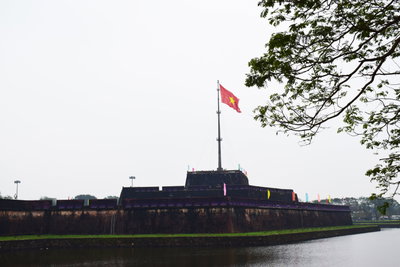
Perimeter of Huế Citadel, Hue, 2018
Perimeter of Huế Citadel 2018 The outer ramparts of the Hue Citadel, whose fortified walls and moat once enclosed the seat of the Nguyen dynasty. Construction began in 1805 under Emperor Gia Long, and the site is now protected as part of the Complex of Hue Monuments.
Second visit to the Citadel, Hue, 2018
Second visit to the Citadel 2018 Another view of the Hue Citadel, the fortified former imperial capital of the Nguyen dynasty in central Vietnam, photographed here in 2018 within its UNESCO-recognized grounds.
Gate to Huế Citadel, Hue, 2018
Gate to Huế Citadel 2018 One of the gates piercing the ramparts of the Hue Citadel, built from 1805 under Emperor Gia Long to enclose the seat of the Nguyen dynasty in central Vietnam.
Khai Dinh Tomb, Hue, 2018
Khai Dinh Tomb 2018 The mausoleum of Emperor Khai Dinh, built between 1920 and 1931 on a hillside near Hue. Unlike earlier Nguyen tombs, it blends traditional Vietnamese design with European architectural elements and elaborate mosaic ornamentation.
Khai Dinh Tomb, Hue, 2018
Khai Dinh Tomb 2018 Another view of Khai Dinh Tomb near Hue, the resting place of the twelfth Nguyen emperor, completed in 1931 after more than a decade of construction and noted for its ornate glass-and-ceramic mosaics.
Minh Mang Tomb, Hue, 2018
Minh Mang Tomb 2018 The tomb complex of Emperor Minh Mang near Hue, laid out along a central axis with courtyards, temples, and a lotus-filled lake, completed in 1843 under his successor Emperor Thieu Tri.
Minh Mang Tomb, Hue, 2018
Minh Mang Tomb 2018 A view within the Minh Mang Tomb grounds south of Hue, the burial site of the Nguyen dynasty's second emperor, whose reign from 1820 to 1841 is remembered for consolidating imperial administration.
Inside Huế Citadel, Hue, 2018
Inside Huế Citadel 2018 Grounds within the walls of the Hue Citadel, the fortified seat built for the Nguyen emperors beginning in 1805 and now preserved as part of a UNESCO World Heritage complex.
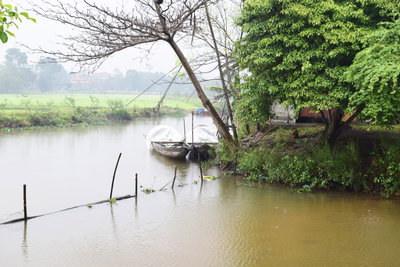
Dragon Boat on the Perfume River, Hue, 2018
Dragon Boat on the Perfume River 2018 A dragon boat on the Perfume River in Hue, a traditional craft still used today to carry visitors past the city's imperial monuments and tombs. The river's name recalls a legend of fragrant blossoms once said to fall into its waters.
Minh Mang Tomb, Hue, 2018
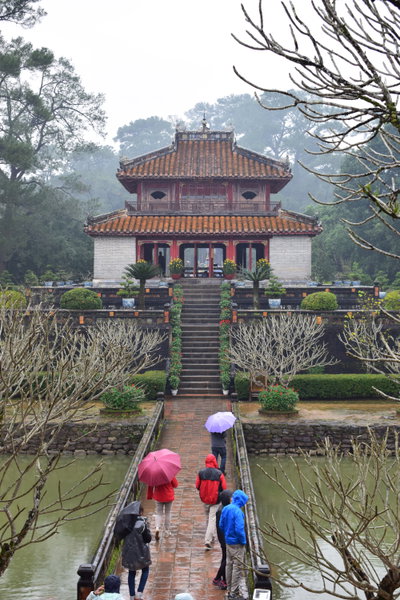
Minh Mang Tomb 2018 Grounds of the Minh Mang Tomb south of Hue, laid out with a formal symmetry meant to reflect Confucian ideals of order, and completed in 1843. The tomb lies amid pine-covered hills along the Perfume River west of the city.
Gardens on the Perfume River bank, Hue, 2018
Gardens on the Perfume River bank 2018 Riverside gardens line the banks of the Perfume River, known locally as Song Huong, in Hue, the former imperial capital of Vietnam, in this 2018 photograph.
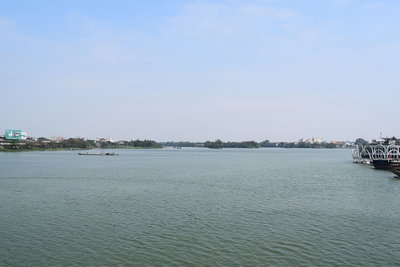
Perfume River, Hue, 2018
Perfume River 2018 The Perfume River winds past Hue, once the seat of Vietnam's imperial court under the Nguyen Dynasty, in Thua Thien Hue province of central Vietnam, as captured in this 2018 photograph.
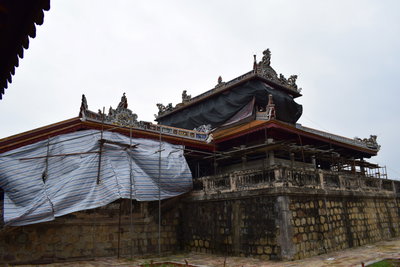
The Royal Library, under renovation, Hue, 2018
The Royal Library, under renovation 2018 The Royal Library within the Huế Citadel, known as Thái Bình Lâu, was built in the early 1920s as a private reading pavilion for Emperor Khải Định; it is shown here undergoing renovation.
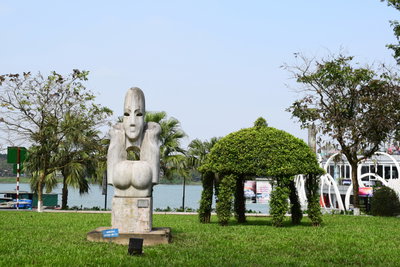
Huế sculpture park, Hue, 2018
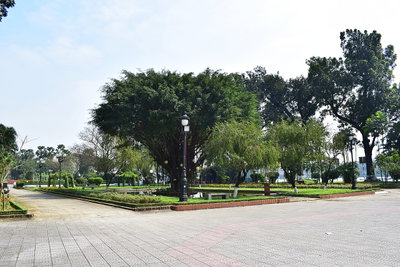
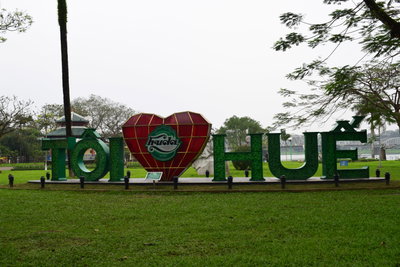
Huế sculpture park 2018 A park in Huế, central Vietnam's former imperial capital on the banks of the Perfume River, a city that served as the seat of the Nguyễn dynasty until 1945.
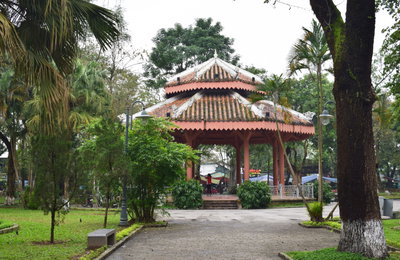
Pagoda in Huế, Hue, 2018
Pagoda in Huế 2018 A pagoda in Huế, a city whose skyline is dotted with Buddhist temples reflecting its history as the religious and political center of the Nguyễn dynasty.
Perimeter of Huế Citadel, Hue, 2018
Perimeter of Huế Citadel 2018 The perimeter walls of the Huế Citadel, begun in 1805 under Emperor Gia Long, once enclosed the palaces and courtyards of the Nguyễn dynasty's imperial court.
Thanh Toan tile-roofed bridge, Hue, 2018
Thanh Toan tile-roofed bridge 2018 Thanh Toàn's covered, tile-roofed bridge has spanned this canal near Huế since the 18th century, a rare surviving example of Vietnam's traditional 'cầu ngói' bridges.
Pagoda - Huế, Hue, 2018
Pagoda - Huế 2018 A pagoda in Huế, central Vietnam, a city long associated with Buddhist temples and the former Nguyễn imperial court.
Thien Mu Pagoda, Hue, 2018
Thien Mu Pagoda 2018 The seven-tiered tower of Thiên Mụ Pagoda overlooks the Perfume River near Huế, a Buddhist site with roots dating to 1601.
Motos wizzing over Truong Tien Bridge, Hue, 2018
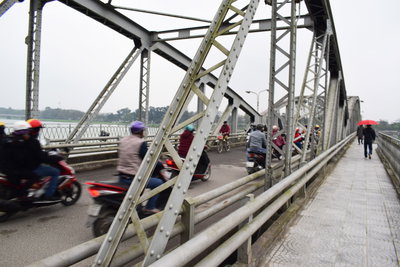
Motos wizzing over Truong Tien Bridge 2018 Motorbikes stream across Trường Tiền Bridge in Huế, the steel span built in the 1890s that carries much of the city's traffic over the Perfume River.
Minh Mang Tomb, Hue, 2018
Minh Mang Tomb 2018 The tomb of Emperor Minh Mạng, completed in the 1840s near Huế, follows the strictly symmetrical layout of courtyards, lakes, and pavilions typical of Nguyễn dynasty mausoleums.
Inside Huế Citadel, Hue, 2018
Inside Huế Citadel 2018 Courtyards and gates within the Huế Citadel, the walled imperial complex built in the early 19th century under Emperor Gia Long.
Second visit to the Citadel, Hue, 2018
Second visit to the Citadel 2018 Walls and gateways of the Huế Citadel, the fortified seat of the Nguyễn dynasty begun in 1805 and now part of a UNESCO World Heritage Site.
Perfume River, Hue, 2018
Perfume River 2018 The Perfume River passes Huế, central Vietnam, a waterway long associated with the city's imperial and religious landmarks.
Khai Dinh Tomb, Hue, 2018
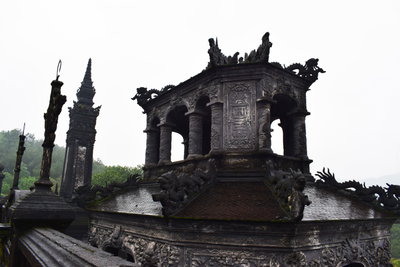
Khai Dinh Tomb 2018 The mausoleum of Emperor Khải Định, built between 1920 and 1931 near Huế, blends traditional Vietnamese forms with European architectural elements and elaborate mosaic ornamentation.
Inside Huế Citadel, Hue, 2018
Inside Huế Citadel 2018 Within the walls of the Huế Citadel, the imperial complex built in the early 1800s under Emperor Gia Long once housed the Nguyễn dynasty's royal court.
Inside Huế Citadel, Hue, 2018
Inside Huế Citadel 2018 Gates and courtyards inside the Huế Citadel, the fortified imperial city begun in 1805 under Emperor Gia Long.
Inside the Purple Forbidden City, Huế, Hue, 2018
Inside the Purple Forbidden City, Huế 2018 Inside the Purple Forbidden City, the innermost enclosure of the Huế Citadel once reserved exclusively for the emperor and his household.
Second visit to the Citadel, Hue, 2018
Second visit to the Citadel 2018 Passageways within the Huế Citadel, the Nguyễn dynasty's fortified seat of power, now preserved as part of a UNESCO World Heritage Site.
Perimeter of Huế Citadel, Hue, 2018
Perimeter of Huế Citadel 2018 The outer walls of the Huế Citadel, built in the early 19th century under Emperor Gia Long to enclose the imperial city.
Dragon boat, Hue, 2018
Dragon boat 2018 A dragon boat moored on the Perfume River in Huế; brightly painted boats like this have long carried visitors past the city's royal tombs and pagodas.
In Huế Citadel, Hue, 2018
In Huế Citadel 2018 Inside the Huế Citadel, the walled imperial complex begun in 1805 under Emperor Gia Long as the seat of the Nguyễn dynasty.
Inside Huế Citadel, Hue, 2018
Inside Huế Citadel 2018 A view inside the Citadel of Hue, the walled complex built by the Nguyen dynasty to enclose the Imperial City and the emperor's residence. Construction began under Emperor Gia Long in the early 1800s and continued under his successors.
Inside Huế Citadel, Hue, 2018
Inside Huế Citadel 2018 Inside the Hue Citadel, part of the fortified imperial complex constructed in the early nineteenth century and now recognized as a UNESCO World Heritage Site.
Inside the Purple Forbidden City, Huế, Hue, 2018
Inside the Purple Forbidden City, Huế 2018 The Purple Forbidden City in Hue, the innermost enclosure of the Citadel reserved for the emperor and his household during the Nguyen dynasty. Much of it was damaged during the wars of the twentieth century, and only a fraction of the original structures still stand.
Khai Dinh Tomb, Hue, 2018
Khai Dinh Tomb 2018 The tomb of Emperor Khai Dinh near Hue, built in the 1920s and known for blending traditional Vietnamese design with European architectural elements.
Motos in Huế, Hue, 2018
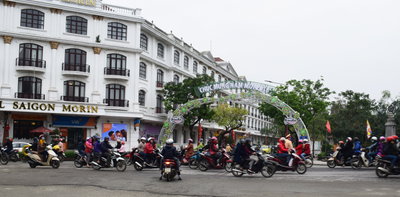
Motos in Huế 2018 Motorbikes on a street in Hue, the central Vietnamese city that grew around the former imperial Citadel of the Nguyen dynasty and today serves as the capital of Thua Thien Hue province.
Little row boats, Hue, 2018
Little row boats 2018 Small row boats on the water near Hue, a city built around the Perfume River in central Vietnam, where such boats have traditionally been used for fishing and river transport.
Thanh Toan tile-roofed bridge, Hue, 2018
Thanh Toan tile-roofed bridge 2018 The Thanh Toan tile-roofed bridge near Hue, a covered wooden bridge dating to the eighteenth century that has long served as both a footpath and a gathering place for the surrounding village.
Inside Huế Citadel, Hue, 2018
Inside Huế Citadel 2018 Another view inside the Hue Citadel, the fortified complex that once housed the imperial court of the Nguyen dynasty and is now preserved as part of a UNESCO World Heritage Site.
Minh Mang Tomb, Hue, 2018
Minh Mang Tomb 2018 The tomb of Emperor Minh Mang near Hue, completed in the 1840s and set among lakes and gardens on the outskirts of the former imperial capital.
Minh Mang Tomb, Hue, 2018
Minh Mang Tomb 2018 Minh Mang Tomb, on the outskirts of Hue, is the mausoleum of Emperor Minh Mang, the second ruler of Vietnam's Nguyen dynasty, who reigned from 1820 to 1841. The complex of pavilions, courtyards, and lakes was built in the following years and remains one of the best-preserved royal tombs near the former imperial capital.
Inside Huế Citadel, Hue, 2018
Inside Huế Citadel 2018 Hue Citadel, built in the early nineteenth century as the seat of Vietnam's Nguyen emperors, enclosed the Imperial City and the inner Purple Forbidden City. This 2018 photograph shows one of the many gates and courtyards within its walls.
Inside Huế Citadel, Hue, 2018
Inside Huế Citadel 2018 Within the walls of Hue Citadel lies the Imperial City, the administrative and ceremonial heart of Vietnam's Nguyen dynasty from 1802 onward. This view was captured in 2018, showing part of the compound's traditional architecture.
Inside Huế Citadel, Hue, 2018
Inside Huế Citadel 2018 Hue served as Vietnam's imperial capital for over a century under the Nguyen dynasty. Photographed in 2018, this scene shows a corner of the fortified Citadel complex that once housed the royal court.
Inside Huế Citadel, Hue, 2018
Inside Huế Citadel 2018 The Nguyen dynasty ruled Vietnam from Hue between 1802 and 1945, leaving behind the walled Citadel and its inner Imperial City. This image, taken in 2018, captures a section of that historic complex.
Inside Huế Citadel, Hue, 2018
Inside Huế Citadel 2018 Traces of Vietnam's last royal dynasty survive within the Hue Citadel, whose Imperial City once served as the residence and administrative center of the Nguyen emperors. The photograph dates from 2018.
Inside the Purple Forbidden City, Huế, Hue, 2018
Inside the Purple Forbidden City, Huế 2018 The Purple Forbidden City sat at the innermost core of Hue's Imperial City, reserved for the emperor and his household during Vietnam's Nguyen dynasty. Much of it was damaged during the twentieth century, and this 2018 photograph shows part of what remains.
Inside the Purple Forbidden City, Huế, Hue, 2018
Inside the Purple Forbidden City, Huế 2018 Only fragments of the Purple Forbidden City's original structures survive within Hue's Imperial City, following extensive damage in the mid-twentieth century. This view was recorded in 2018.
Inside the Purple Forbidden City, Huế, Hue, 2018
Inside the Purple Forbidden City, Huế 2018 Hue's Purple Forbidden City, once the private residence of Vietnam's Nguyen emperors, lies at the center of the larger Imperial City complex. This photograph from 2018 shows a portion of the surviving grounds.
Genius Turtle, Hue, 2018
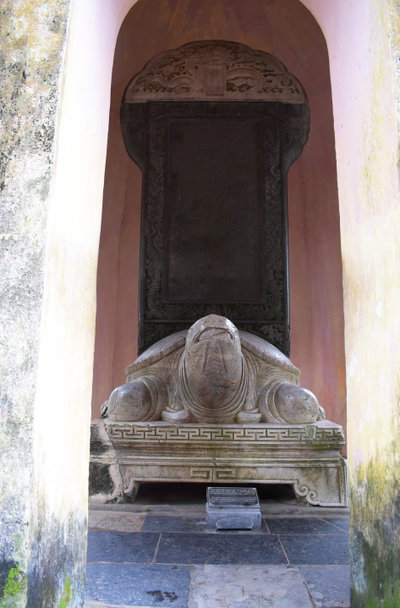
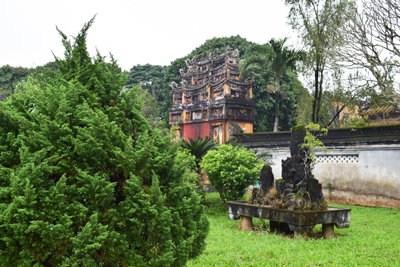
Genius Turtle 2018 Stone stelae carried on the backs of carved turtles are a recurring feature of Nguyen-dynasty royal tombs around Hue, symbolizing longevity. This 2018 photograph shows one such turtle stele within the tomb grounds.
Rice paddy in Vietnam, Hue, 2018
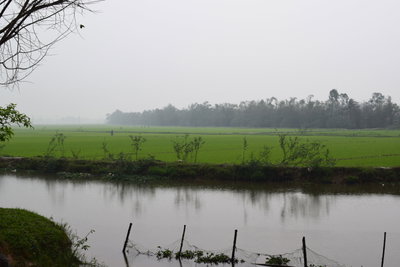
Rice paddy in Vietnam 2018 Rice cultivation has long shaped the landscape around Hue in central Vietnam, with paddies visible near the city and its historic sites. This photograph was taken in 2018.
We've arrived in Huế, Hue, 2018
We've arrived in Huế 2018 Hue, the former imperial capital of Vietnam on the banks of the Perfume River, was a common stop for travelers exploring the country's historic sites in 2018, when this photograph was taken.
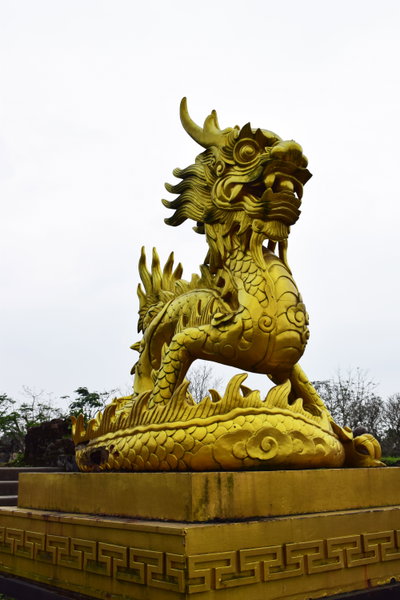
Golden dragon, Hue, 2018
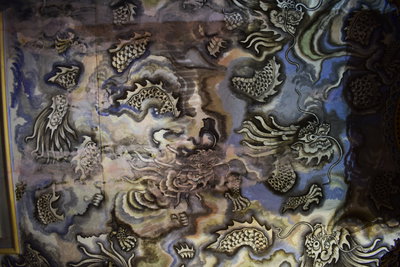
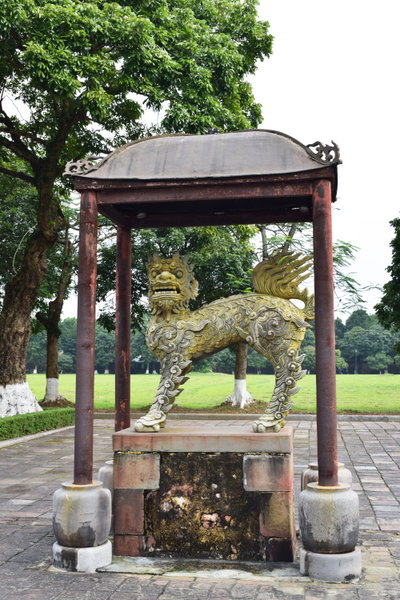
Golden dragon 2018 A golden dragon motif photographed within the Hue Citadel in 2018. Dragon imagery recurs throughout the former imperial capital's architecture as a symbol of royal authority under the Nguyen dynasty.
Inside Huế Citadel, Hue, 2018
Inside Huế Citadel 2018 A view inside the Hue Citadel, Vietnam, photographed in 2018. The walled complex was the seat of the Nguyen dynasty from 1802 until 1945 and is now part of a UNESCO World Heritage Site.
Khai Dinh Tomb, Hue, 2018
Khai Dinh Tomb 2018 The Khai Dinh Tomb near Hue, photographed in 2018. Built for the twelfth Nguyen emperor and completed in 1931, it blends traditional Vietnamese design with European architectural elements.
Khai Dinh Tomb, Hue, 2018
Khai Dinh Tomb 2018 Another 2018 view of the Khai Dinh Tomb near Hue, known for its dark concrete exterior and elaborately decorated interior mosaics that depart from the wooden style of earlier Nguyen dynasty tombs.
Inside the Purple Forbidden City, Huế, Hue, 2018
Inside the Purple Forbidden City, Huế 2018 A view inside the Purple Forbidden City, the inner enclosure of the Hue Imperial City in Vietnam, taken in 2018. Once reserved for the Nguyen emperors and their households, much of the complex was damaged during the Vietnam War and has been partly restored.
Inside the Purple Forbidden City, Huế, Hue, 2018
Inside the Purple Forbidden City, Huế 2018 Another 2018 photograph from within the Purple Forbidden City at Hue, Vietnam. The enclosure formed the private core of the Nguyen dynasty's imperial citadel, part of the UNESCO-listed Complex of Hue Monuments.
Khai Dinh Tomb, Hue, 2018
Khai Dinh Tomb 2018 The tomb of Emperor Khai Dinh near Hue, Vietnam, photographed in 2018. Built for the twelfth Nguyen emperor, who reigned from 1916 to 1925, the mausoleum is noted for combining Vietnamese and European architectural elements.
Second visit to the Citadel, Hue, 2018
Second visit to the Citadel 2018 A view within the Imperial Citadel of Hue, the walled palace complex built in the early 19th century as the seat of the Nguyen emperors. The site, on the north bank of the Perfume River, is now recognized as a UNESCO World Heritage Site.
Minh Mang Tomb, Hue, 2018
Minh Mang Tomb 2018 The mausoleum of Emperor Minh Mang, the second ruler of Vietnam's Nguyen dynasty, set among wooded hills outside Hue. The tomb complex follows a formal, symmetrical layout of courtyards, pavilions, and an artificial lake typical of Nguyen-era royal architecture.
Thanh Toan tile-roofed bridge, Hue, 2018
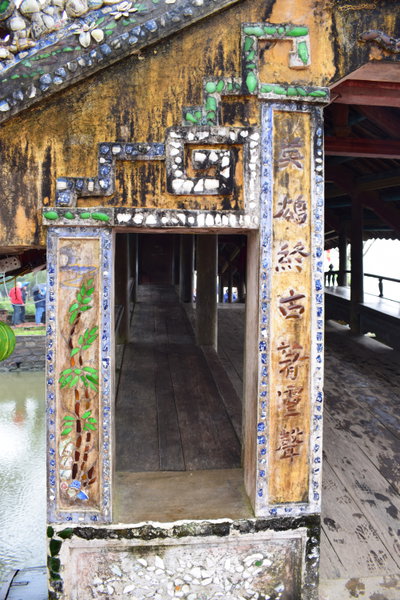
Thanh Toan tile-roofed bridge 2018 The tile-roofed bridge at Thanh Toan village, a short distance from Hue in central Vietnam. Built in a traditional covered-bridge style, it once served travelers as a place to rest and shelter from sun and rain while passing through the surrounding rice-farming countryside.
Khai Dinh Tomb, Hue, 2018
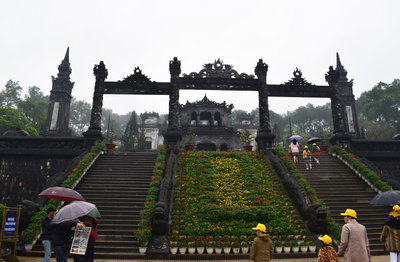
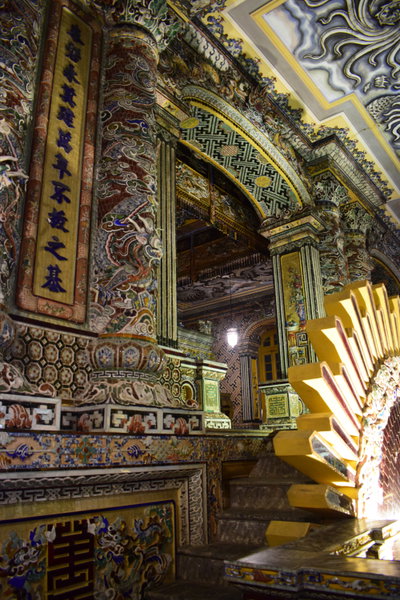
Khai Dinh Tomb 2018 Steps and terraces leading up to the tomb of Emperor Khai Dinh, the twelfth ruler of Vietnam's Nguyen dynasty, on a hillside outside Hue. The mausoleum is noted for its use of concrete and its ornamentation, which blends traditional Vietnamese motifs with European influences.
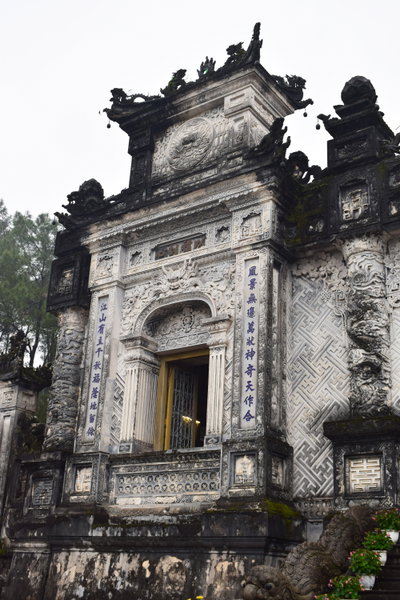
Khai Dinh Tomb, Hue, 2018
Khai Dinh Tomb 2018 Detail from the hillside mausoleum of Emperor Khai Dinh near Hue, decorated with elaborate mosaic and relief work. Completed in the early 20th century, the tomb is considered the most ornate of the Nguyen dynasty's royal mausoleums.
Khai Dinh Tomb, Hue, 2018
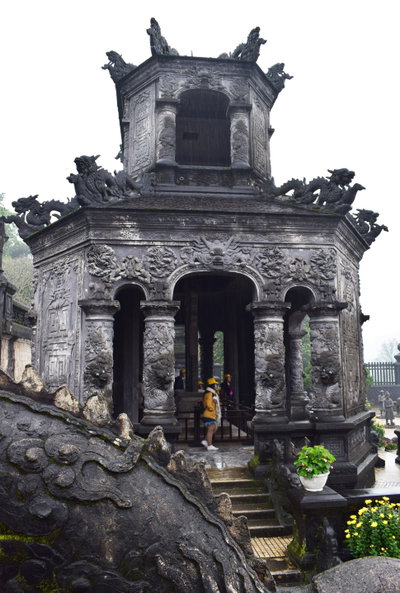
Khai Dinh Tomb 2018 Statuary and stonework along the approach to Khai Dinh's mausoleum outside Hue. The hillside complex, built for the twelfth Nguyen emperor, is known for its dense ornamentation and its departure from the simpler layouts of earlier Nguyen royal tombs.
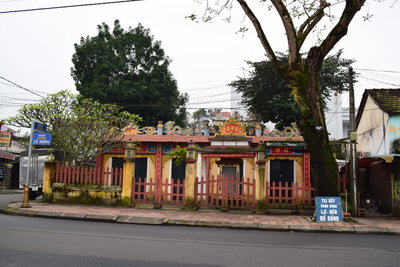
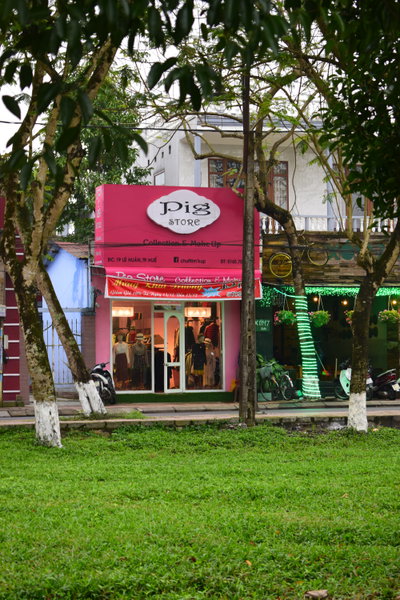
Pig Store, Hue, 2018
Pig Store 2018 A shop known as the Pig Store, photographed in Hue, Vietnam, in 2018. Hue served as the imperial capital of Vietnam under the Nguyen dynasty and today retains many small family-run storefronts near its historic citadel.
Thanh Toan tile-roofed bridge, Hue, 2018
Thanh Toan tile-roofed bridge 2018 The wooden, tile-roofed bridge at Thanh Toan village near Hue, built in a traditional Vietnamese style to shelter travelers resting along the road. The village and its covered bridge lie amid rice paddies a short distance from the old imperial capital.
Pagoda, Hue, 2018
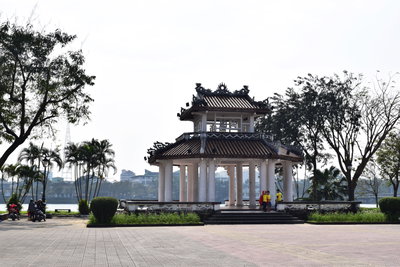
Pagoda 2018 A Buddhist pagoda in Hue, a city long associated with Vietnamese Buddhism as the former seat of the Nguyen imperial court. Central Vietnam's former capital is home to numerous pagodas and temples reflecting its historical role as a religious as well as political center.
Second visit to the Citadel, Hue, 2018
Second visit to the Citadel 2018 The fortified walls and gateways of the Hue Citadel, the imperial enclosure built for the Nguyen court in the early 19th century on the banks of the Perfume River. Within its ramparts once stood the Imperial City and the Forbidden Purple City reserved for the royal family.
Perimeter of Huế Citadel, Hue, 2018
Perimeter of Huế Citadel 2018 The Citadel of Hue was built in the early 19th century as the seat of Vietnam's Nguyen dynasty, enclosing the former imperial city behind moats and thick stone walls. This 2018 photograph shows a section of its perimeter, part of the UNESCO-listed Complex of Hue Monuments.
Minh Mang Tomb, Hue, 2018
Minh Mang Tomb 2018 The tomb of Emperor Minh Mang, the second ruler of Vietnam's Nguyen dynasty, lies near Hue and is noted for its symmetrical arrangement of pavilions, courtyards and lakes, built in the early 1840s. This photograph was taken at the mausoleum complex in 2018.
Inside the Purple Forbidden City, Huế, Hue, 2018
Inside the Purple Forbidden City, Huế 2018 The Purple Forbidden City formed the innermost, most restricted section of Hue's Imperial City, reserved for the Nguyen emperor and his household. Much of it was destroyed during the Vietnam War; this 2018 photograph shows part of the area as it survives today.
Inside Huế Citadel, Hue, 2018
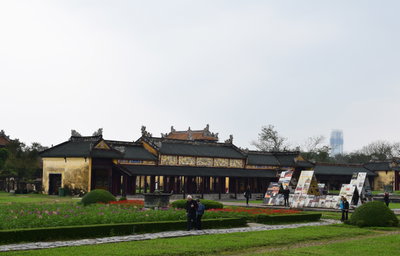
Inside Huế Citadel 2018 Inside the Citadel of Hue, the walled complex built in the early nineteenth century as the seat of Vietnam's Nguyen Dynasty emperors, whose layout was influenced by the design of Beijing's Forbidden City.
Inside Huế Citadel, Hue, 2018
Inside Huế Citadel 2018 Another view inside the Hue Citadel, the fortified imperial city that served as the political center of Vietnam under the Nguyen emperors until the dynasty's end in the mid-twentieth century.
Inside the Purple Forbidden City, Huế, Hue, 2018
Inside the Purple Forbidden City, Huế 2018 The Purple Forbidden City within Hue's Citadel, the innermost enclosure once reserved for the emperor and his household, much of which was damaged during the wars of the twentieth century and has since been partly restored.
Inside the Purple Forbidden City, Huế, Hue, 2018
Inside the Purple Forbidden City, Huế 2018 A further view of the Purple Forbidden City in Hue, the restricted inner section of the Nguyen Dynasty's imperial citadel that suffered heavy damage in the twentieth century and remains under restoration.
Mandarin, Hue, 2018
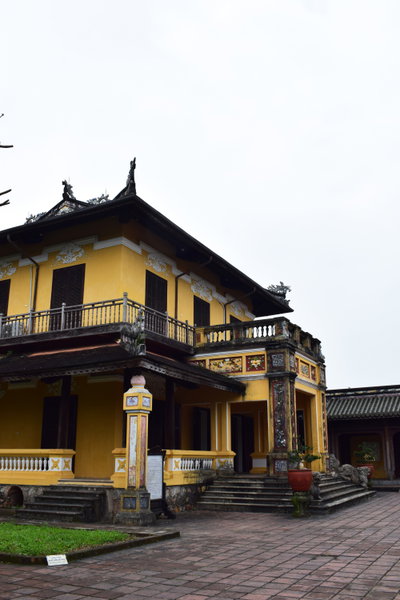
Mandarin 2018 A mandarin's residence within the Hue Citadel complex, part of the imperial city built by Vietnam's Nguyen Dynasty in the early 1800s to house the royal court and its officials.
Second visit to the Citadel, Hue, 2018
Second visit to the Citadel 2018 The Imperial Citadel of Hue is revisited in this 2018 photograph. Built from 1805 under Emperor Gia Long, the fortified complex served as the political capital of Vietnam's Nguyen Dynasty.
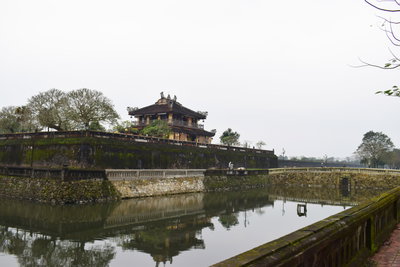
Inside Huế Citadel, Hue, 2018
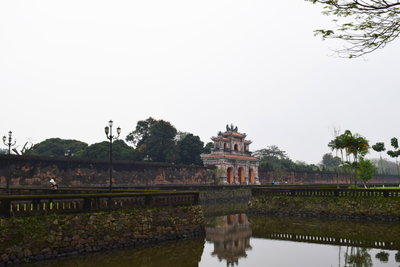
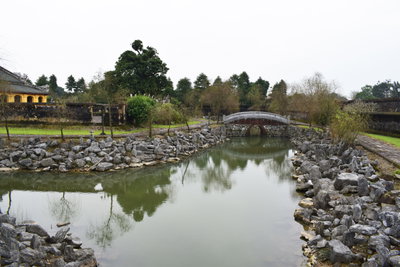
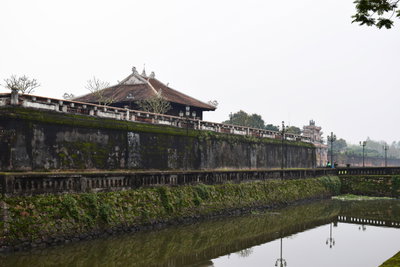
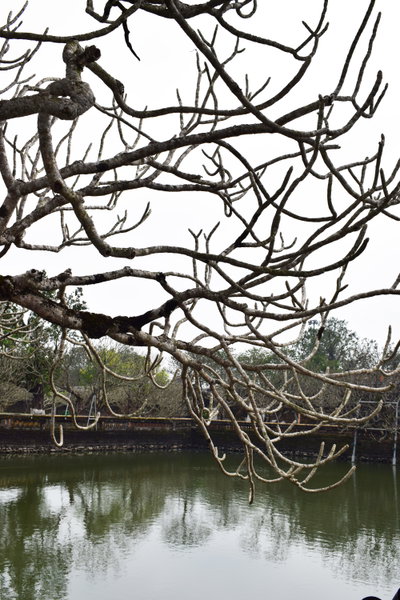
Inside Huế Citadel 2018 Bare winter branches frame a view across one of the moats that lace the grounds of the Hue Citadel, the fortified seat of Vietnam's Nguyen emperors, with a stone balustrade lining the far bank. Photographed in 2018.
Inside Huế Citadel, Hue, 2018
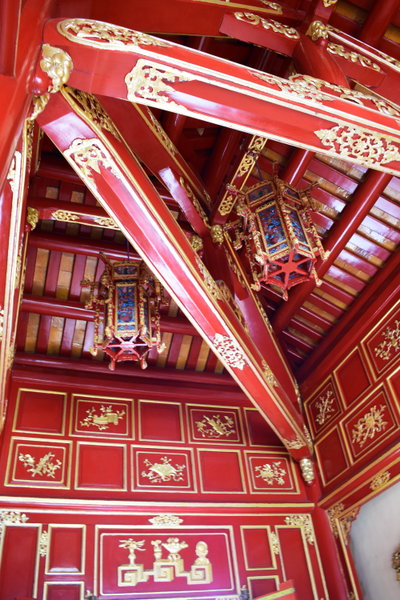
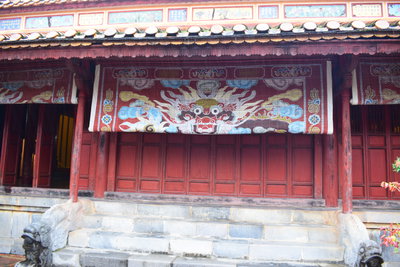
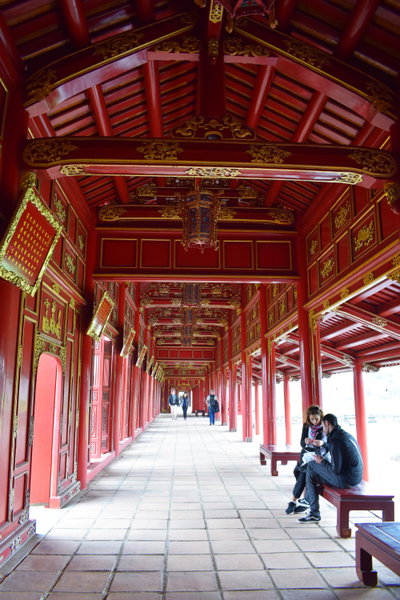
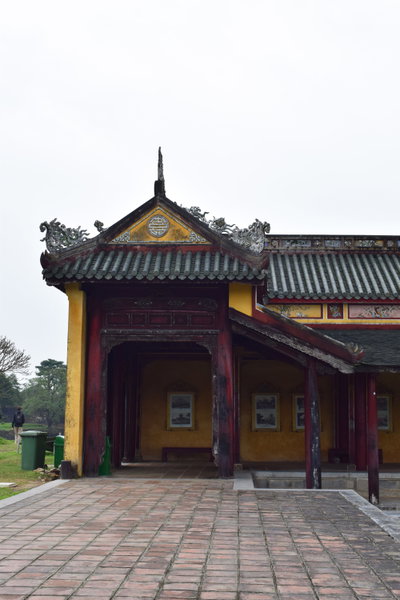
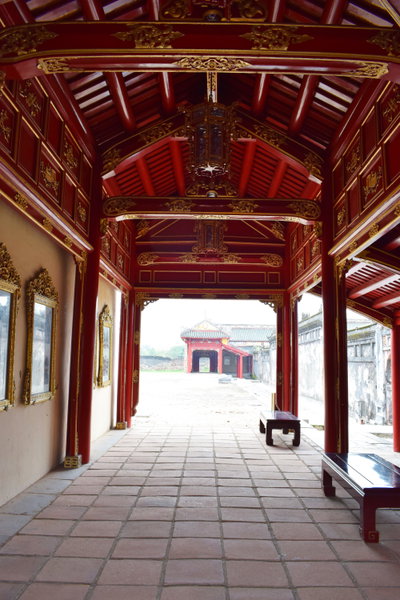
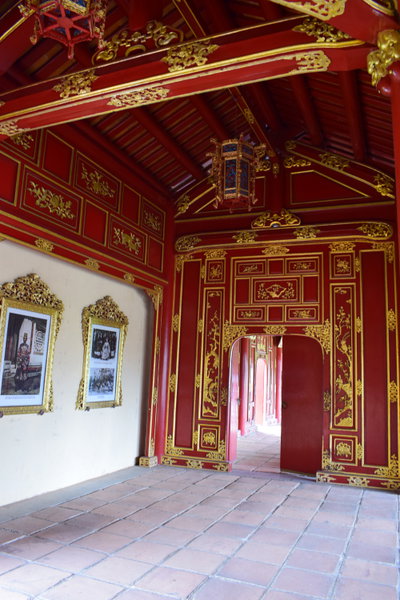
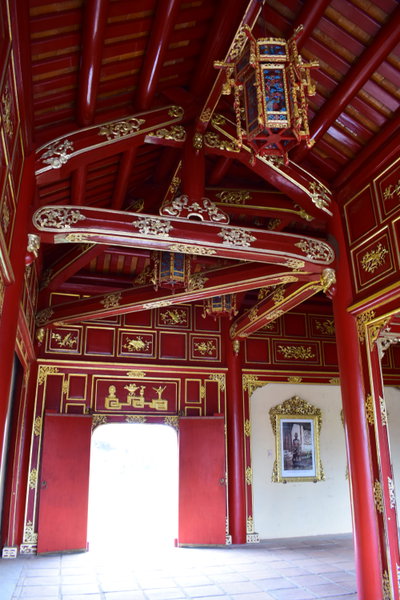
Inside Huế Citadel 2018 A covered corridor of red-lacquered wood, trimmed in gold and lined with benches, leads toward a smaller gatehouse within the Hue Citadel, the fortified imperial city of Vietnam's Nguyen dynasty. Photographed in 2018.
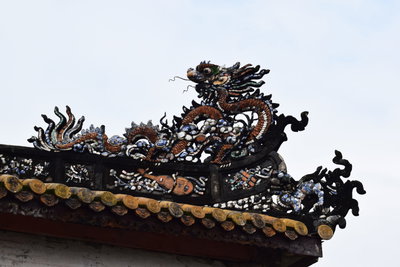
Inside Huế Citadel, Hue, 2018
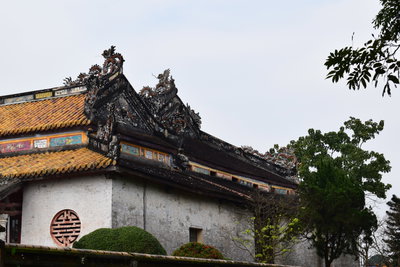
Inside Huế Citadel 2018 Shards of coloured porcelain form a dragon along a roof ridge in the Hue Citadel, a mosaic technique widely used in Nguyen-era architecture to decorate temples, gates and palace roofs. Photographed in 2018.
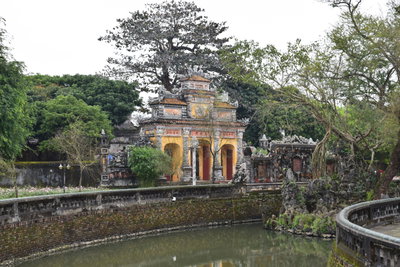
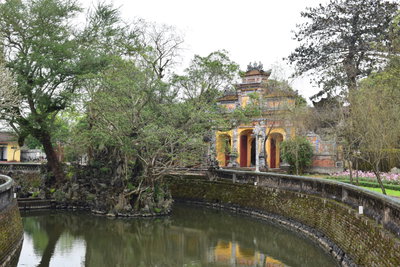
Inside Huế Citadel, Hue, 2018
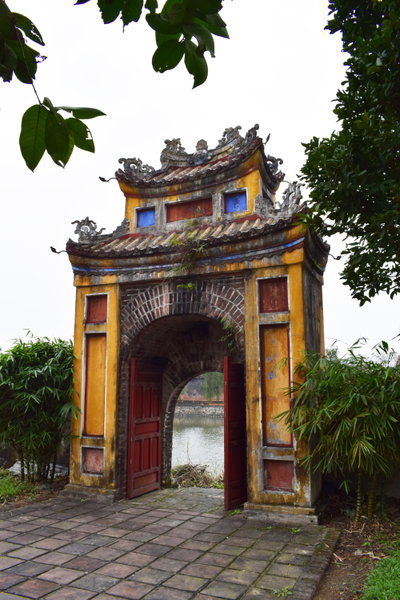
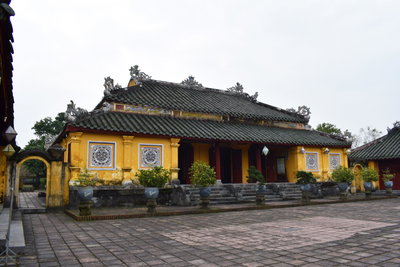
Inside Huế Citadel 2018 Tree roots cling to a rock island in a curved moat before a yellow ceremonial gate with red doors, part of the grounds within the Hue Citadel in central Vietnam. Photographed in 2018.
Inside the Purple Forbidden City, Huế, Hue, 2018
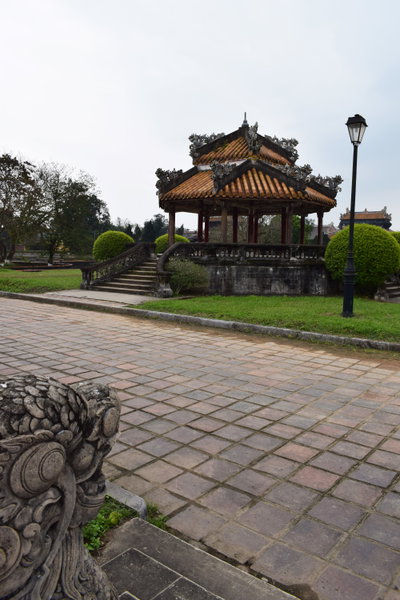
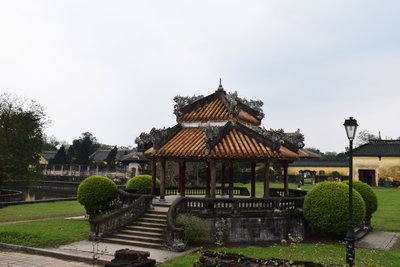
Inside the Purple Forbidden City, Huế 2018 An octagonal pavilion with a tiered, dragon-ornamented roof stands beside a pond within the Hue Citadel, reached by a curved stone staircase flanked by clipped topiary. Photographed in 2018.
Inside the Purple Forbidden City, Huế, Hue, 2018
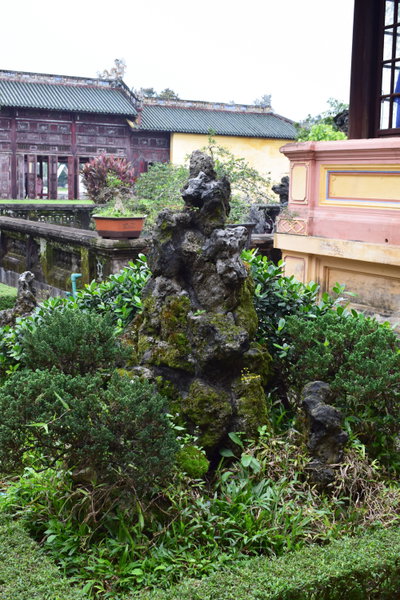
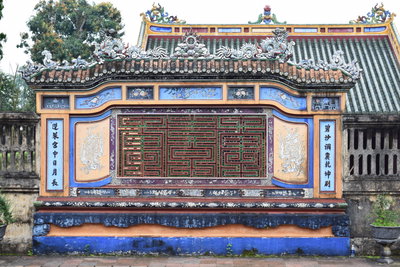
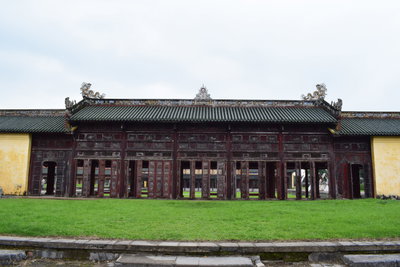
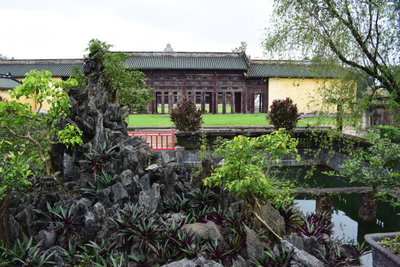
Inside the Purple Forbidden City, Huế 2018 Rockery and a small pond sit in front of a long timber hall with a green tiled roof, one of the surviving structures inside the Hue Citadel compound built for Vietnam's Nguyen emperors. Photographed in 2018.
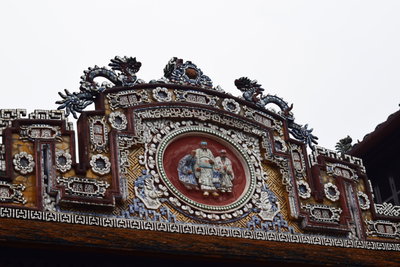
Second visit to the Citadel, Hue, 2018
Second visit to the Citadel 2018 A ceramic mosaic relief of court officials in traditional robes, framed by dragons and glazed tilework, decorates a gable within the Hue Citadel, an example of the mosaic-inlay craftsmanship favoured under the Nguyen dynasty. Photographed in 2018.
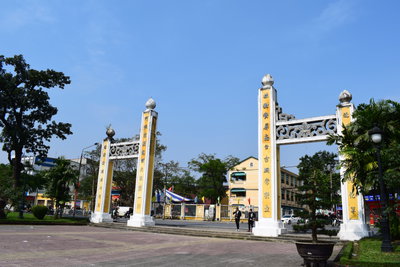
Entrance to the Perfume River Gardens, Hue, 2018
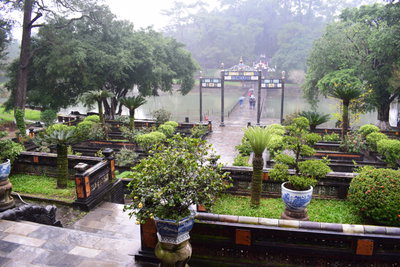
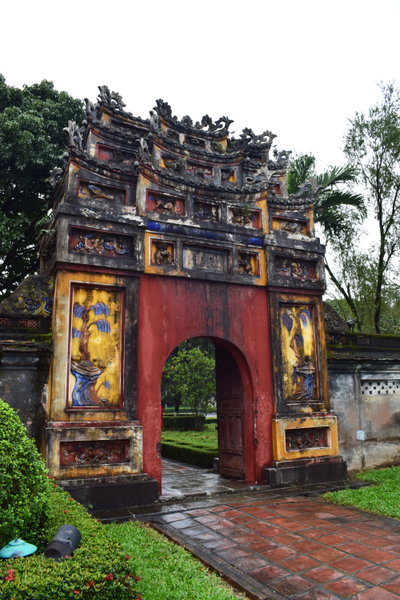
Entrance to the Perfume River Gardens 2018 A carved stone gateway inscribed with Chinese characters stands along a street in Hue, Vietnam, a city built up around the Nguyen dynasty's imperial architecture. Photographed in 2018.
Ornate detailing, Hue, 2018
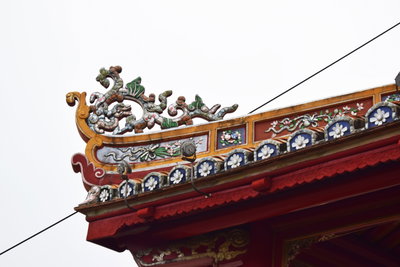
Ornate detailing 2018 Lotus medallions and a stylized dragon in glazed mosaic decorate a roof edge inside the Hue Citadel in Vietnam, examples of the floral and mythological motifs common in Nguyen-era ornamentation. Photographed in 2018.
Second visit to the Citadel, Hue, 2018
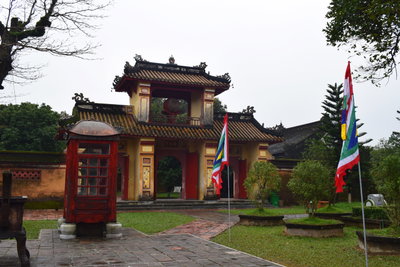
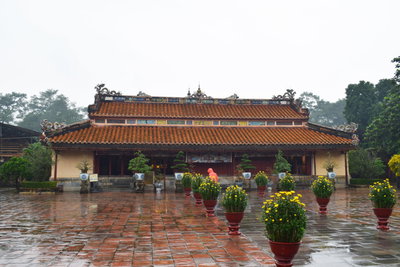
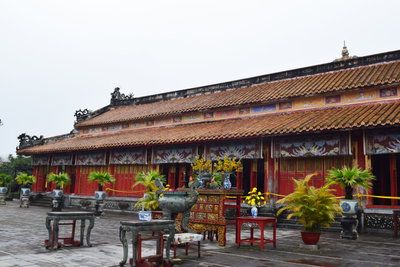
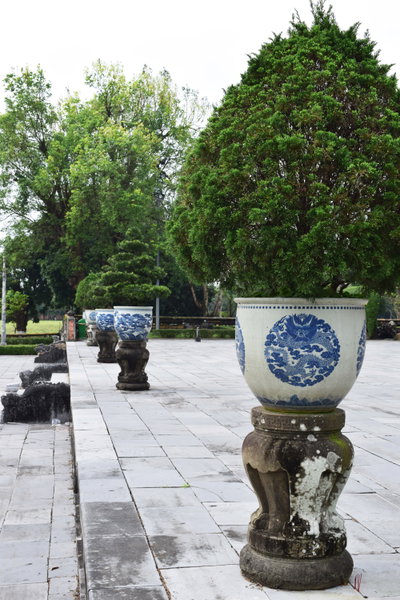
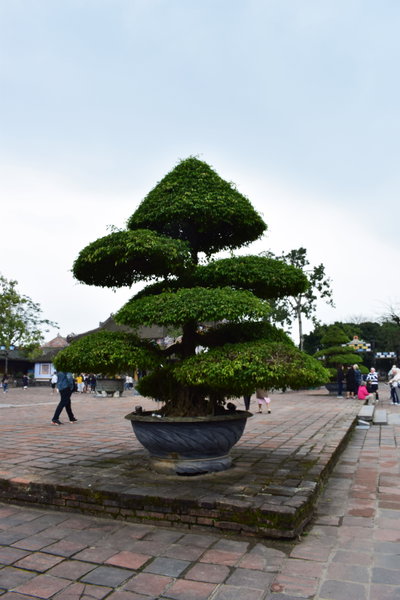
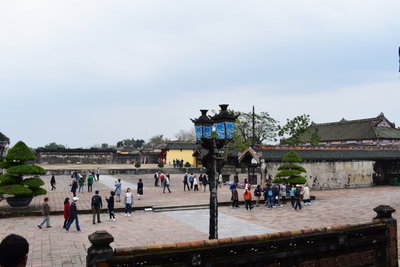
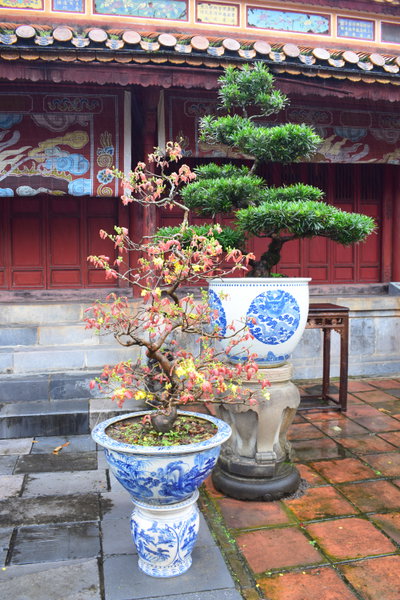
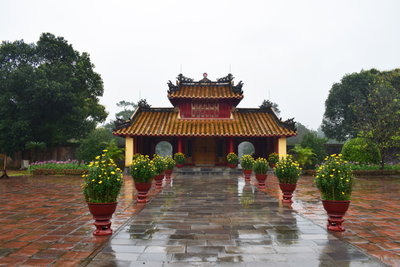
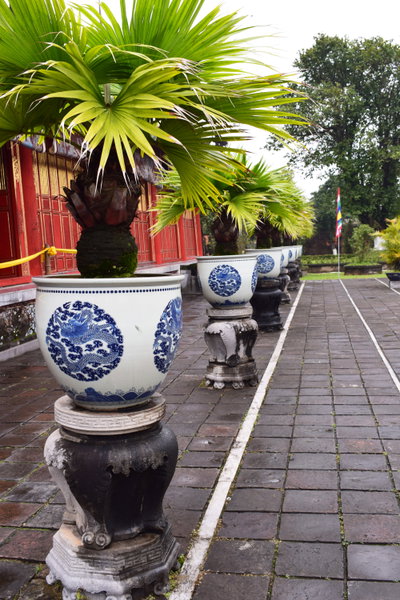
Second visit to the Citadel 2018 Blue-and-white porcelain planters holding fan palms line a stone walkway inside the Hue Citadel, leading past a red lacquered pavilion toward a flagpole within the historic complex. Photographed in 2018.
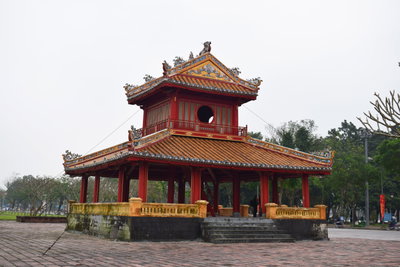
Inside the Purple Forbidden City, Huế, Hue, 2018
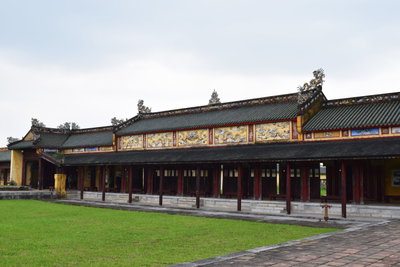
Inside the Purple Forbidden City, Huế 2018 Dragon finials cap the green-tiled roof of a long red timber hall inside the Hue Citadel, one of the ceremonial structures built within the walled imperial city for Vietnam's Nguyen dynasty. Photographed in 2018.
Inside the Purple Forbidden City, Huế, Hue, 2018
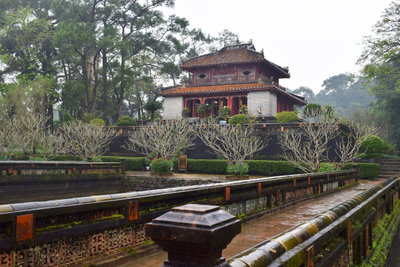
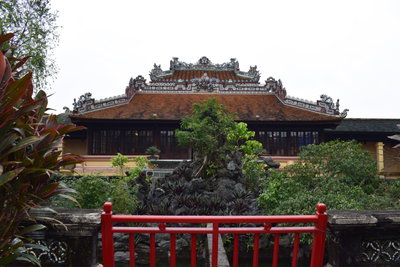
Inside the Purple Forbidden City, Huế 2018 A pond edged with rockery and crossed by a red-painted railing sits before a temple-roofed hall inside the Hue Citadel grounds, its ridge decorated with dragon figures in the Nguyen imperial style. Photographed in 2018.
Inside the Purple Forbidden City, Huế, Hue, 2018
Inside the Purple Forbidden City, Huế 2018 The Purple Forbidden City formed the innermost, most restricted enclosure of Hue's Imperial City, reserved for the Nguyen emperor and his household. Modeled loosely on Beijing's Forbidden City, much of it was destroyed during the Vietnam War.
Inside the Purple Forbidden City, Huế, Hue, 2018
Inside the Purple Forbidden City, Huế 2018 A view inside the Purple Forbidden City in Hue, much of which was damaged during the Vietnam War and has since been the subject of ongoing restoration.
Inside the Purple Forbidden City, Huế, Hue, 2018
Inside the Purple Forbidden City, Huế 2018 Another interior view of the Purple Forbidden City, the innermost precinct of the Nguyen dynasty's Imperial City in Hue, once reserved exclusively for the emperor, his family, and their attendants.
Inside the Purple Forbidden City, Huế, Hue, 2018
Inside the Purple Forbidden City, Huế 2018 This image shows a further section within the Purple Forbidden City of Hue's Imperial City complex, the walled inner sanctum built for the private use of Vietnam's Nguyen emperors.
Hillside by Khai Dinh Tomb, Hue, 2018
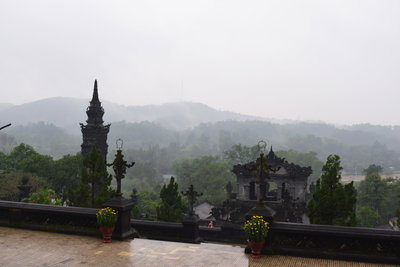
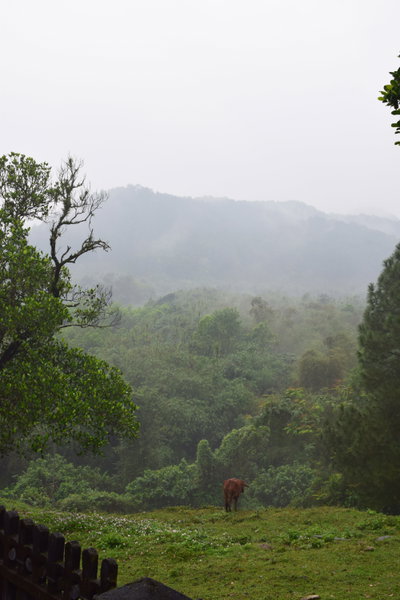
Hillside by Khai Dinh Tomb 2018 The Tomb of Khai Dinh, built in the early 20th century for the Nguyen dynasty emperor of that name, sits on a hillside outside Hue, Vietnam, blending traditional Vietnamese and European architectural styles. This 2018 photograph shows the surrounding hillside.