
京都市役所 分庁舎 through time
Kyoto 1870–2024 178 photos of this spot
178 photographs taken at the same spot in Kyoto, spanning 1870–2024 — 138 of them from before 1980. Line them up and watch the place change.
Gion Street in Kyoto is pictured in this 1870 photograph, a thoroughfare in the historic entertainment district long associated with teahouses and geisha culture in Japan's former imperial capital.
See this spot on the map
Have an old photo of 京都市役所 分庁舎?
A family album, a postcard, a print from the attic. Pin it to the map and it becomes part of the record.
Add your photo
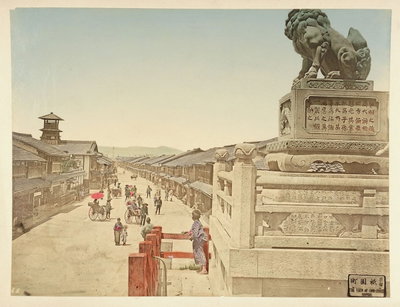
EU: A view of Gion Street in Kyoto (1870)
1870
Gion Street in Kyoto is pictured in this 1870 photograph, a thoroughfare in the historic entertainment district long associated with teahouses and geisha culture in Japan's former imperial capital.
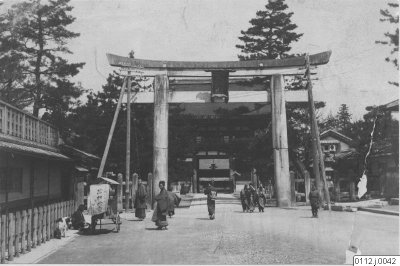
EU: tempel, portal, fotografi, photograph (1870)
1870
This 1870 photograph shows a temple gate in Kyoto, the city that served as Japan's imperial capital for over a thousand years before the seat of government moved to Tokyo in 1868.
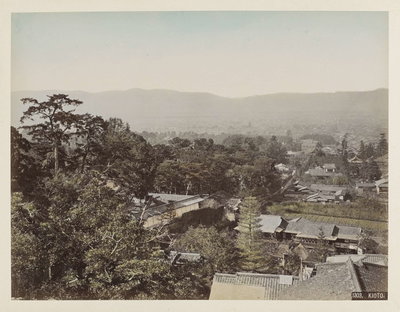
EU: Gezicht op Kyoto (1870)
1870
Rooftops and hillsides of Kyoto stretch across this 1870 view of the former Japanese imperial capital, taken not long after the city's transition following the Meiji Restoration, when the emperor's court relocated to Tokyo and Kyoto's role in national life was changing.
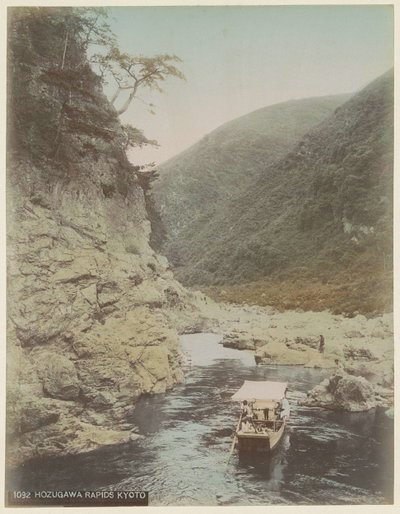
EU: Boot in de stroomversnellingen van de Hozurivier op Kyoto (1870)
1870
A small boat navigates the rapids of the Hozu River near Kyoto in this 1870 photograph, documenting a stretch of river long used to ferry timber and travelers between the hills above the city and Kyoto itself, a route that became a popular scenic excursion.
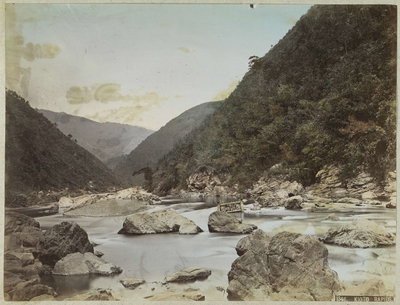
EU: Stroomversnellingen bij Kyoto (1870)
1870
Whitewater churns over rocks in a stretch of the Hozu River rapids near Kyoto in this 1870 image. The gorge cut by the river northwest of the city was already known to travelers and boatmen who used it as a route into Kyoto.
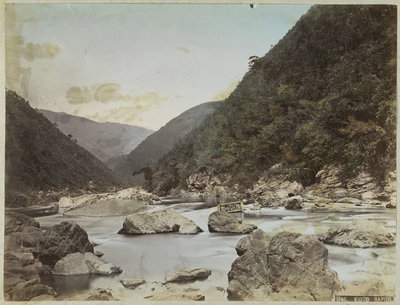
EU: Kioto rapids (1870)
1870
This 1870 photograph shows another view of the Hozu River rapids outside Kyoto, a stretch of water long navigated by boatmen bringing timber and passengers downstream toward the city, and later a well-known sightseeing route for visitors.
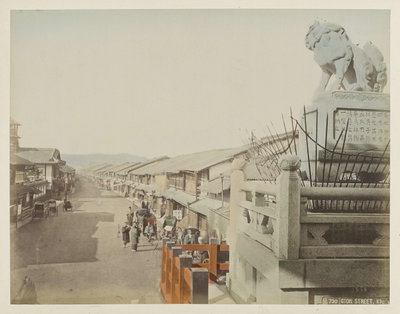
EU: Gezicht op de Gionstraat in Kyoto (1870)
1870
Gion street in Kyoto is shown in 1870, in the district long associated with teahouses and traditional entertainment near the city's Higashiyama temples. Gion developed around the approach to Yasaka Shrine and remained a center of Kyoto's traditional culture into the Meiji era.
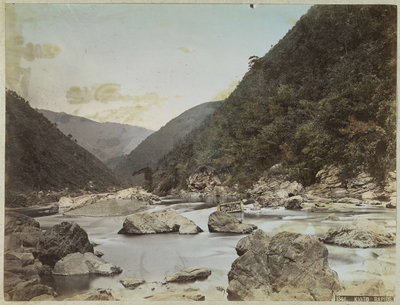
EU: Stroomversnellingen bij Kyoto (1880)
1880
Rapids on a river near Kyoto, Japan, photographed in 1880. Scenic river gorges like this one were popular subjects for early travel photographers documenting the former imperial capital in the years following the Meiji Restoration.
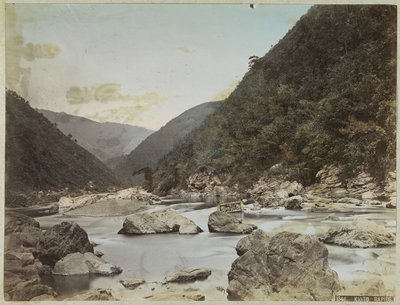
EU: Kioto Rapids (1880)
1880
River rapids near Kyoto, Japan, are captured in this 1880 photograph, a type of scene favored by nineteenth-century photographers working in the region as Japan opened further to foreign travelers.
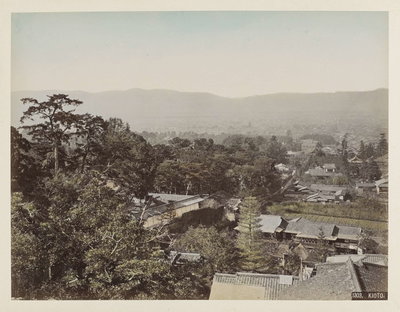
EU: Gezicht op Kyoto (1885)
1885
A general view over Kyoto, Japan, taken in 1885, as the former imperial capital continued adjusting to the loss of its political status after the 1868 Meiji Restoration moved the seat of government to Tokyo.
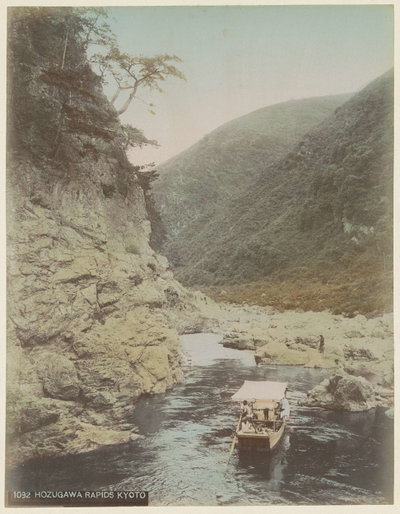
EU: Boot in de stroomversnellingen van de Hozurivier op Kyoto (1885)
1885
A boat navigates the rapids of the Hozu River near Kyoto in this 1885 photograph, a stretch of water that carried timber and passengers downstream and is still run by tourist boats today.
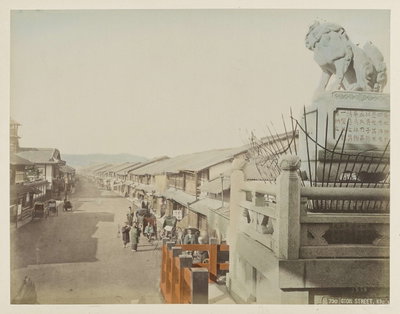
EU: Gion Street, Kioto (1885)
1885
Gion, the historic Kyoto district long associated with traditional teahouses and geisha culture, is seen along one of its streets in this 1885 photograph, taken as the district retained much of its Edo-period character.
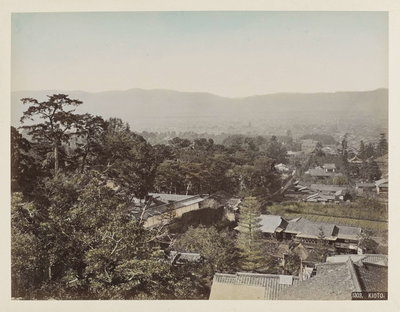
Gion in 1885
1885
A street scene in Kyoto, Japan, photographed in 1885, during a decade when the former imperial capital drew growing numbers of foreign visitors and photographers.
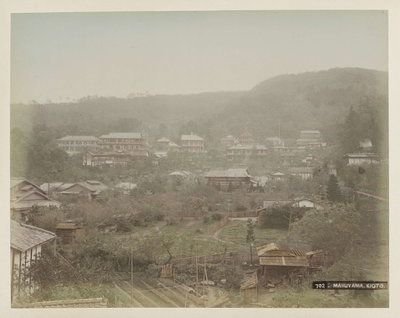
EU: Maruyama, Kioto (1885)
1885
Maruyama, an area of Kyoto known for its cherry trees and later developed into one of the city's first public parks, is shown in this 1885 photograph, a year before its formal designation as parkland.
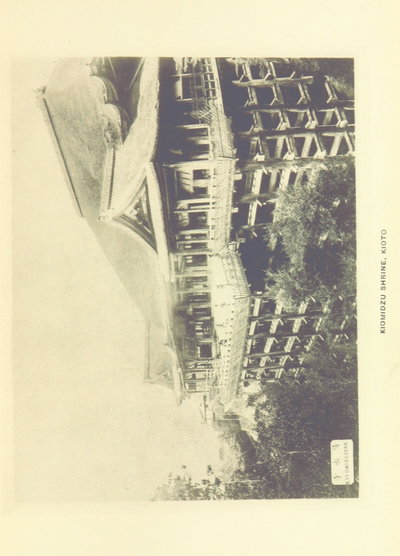
EU: Kyoto from "Sketches of life in Japan ... With illustrations". (1887)
1887
This 1887 image of Kyoto originates from the illustrated volume 'Sketches of Life in Japan,' part of a wave of Western-published books that introduced Japanese scenes and customs to overseas readers in the late nineteenth century.
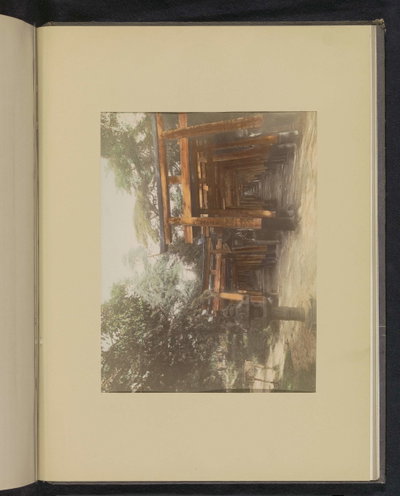
EU: Torii-galerij voor de tempel Fushimi Inari-taisha te Kyoto (1887)
1887
The torii gate gallery leading to the Fushimi Inari Taisha shrine in Kyoto is pictured in 1887; the shrine, dedicated to Inari, the Shinto deity of rice and prosperity, was already a major pilgrimage site by this period.
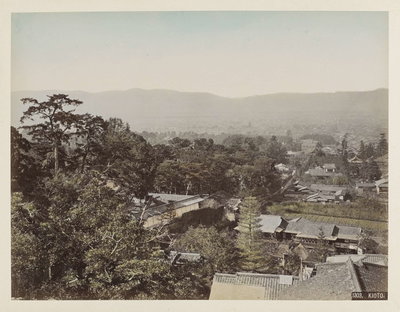
EU: Gezicht op Kyoto (1888)
1888
Another view over Kyoto, Japan, photographed in 1888, during a decade when the former imperial capital was increasingly documented by both Japanese and foreign photographers.
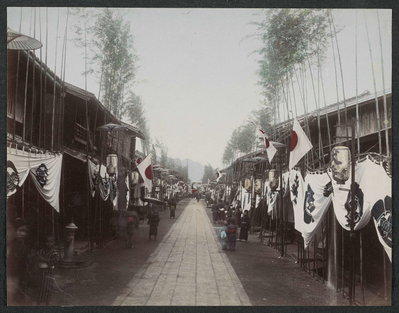
EU: Straatversiering in Kyoto (1890)
1890
Street decorations line a thoroughfare in Kyoto in this 1890 photograph, offering a glimpse of everyday urban life in the former imperial capital during the early Meiji era, as the city adapted to Japan's rapid modernization.
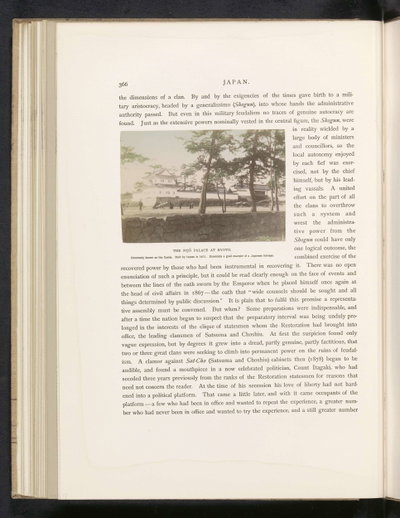
EU: The Nijō palace at Kyoto (1890)
1890
Nijo Castle, built as the Kyoto residence of the Tokugawa shoguns, is pictured in this 1890 photograph. The castle's fortified walls and moat once housed the shogunate's representatives during their visits to the imperial capital.
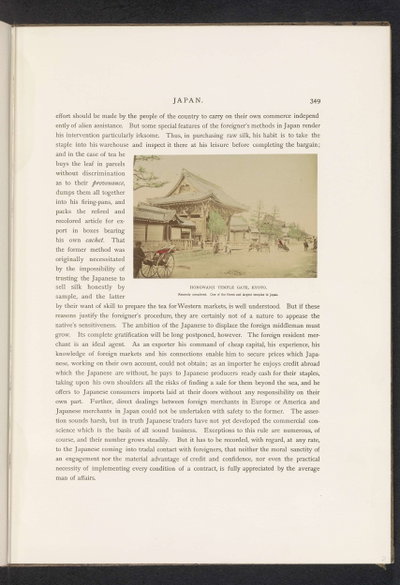
EU: Hongwanji temple gate, Kyoto (1890)
1890
The gate of Hongwanji temple in Kyoto, one of the city's major Buddhist temple complexes, appears in this 1890 photograph. Hongwanji has long served as headquarters for branches of Jodo Shinshu Buddhism.
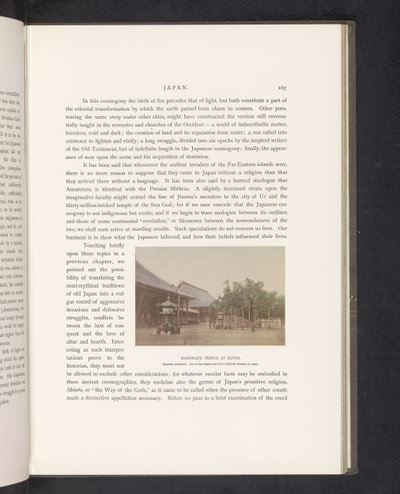
EU: Honganji temple at Kyoto (1890)
1890
Honganji temple in Kyoto, headquarters of one of Japan's largest Buddhist sects, is shown in this 1890 image, taken as the temple complex remained a major center of pilgrimage and religious life in the city.
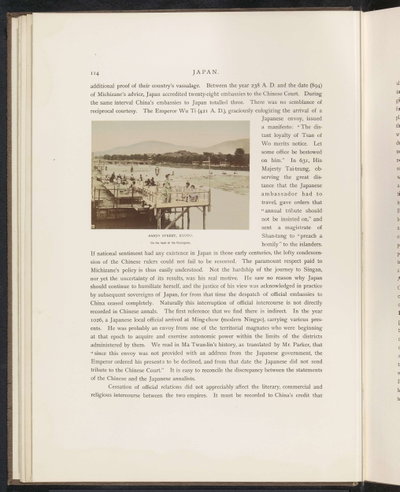
EU: Sanjo street, Kyoto (1890)
1890
Sanjo Street, a major thoroughfare in central Kyoto, is shown busy with activity in this 1890 photograph. The street historically marked the western terminus of the Tokaido road connecting Kyoto to Edo.
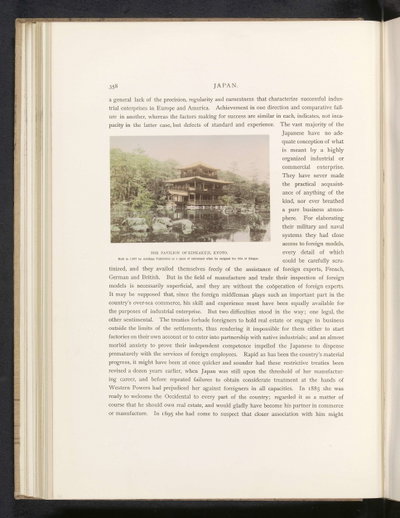
EU: The pavilion of Kinkakuji, Kyoto (1890)
1890
The pavilion of Kinkakuji, the gold-leafed Zen temple in Kyoto, is pictured in this 1890 photograph, decades before the current structure was rebuilt following a fire in the twentieth century.
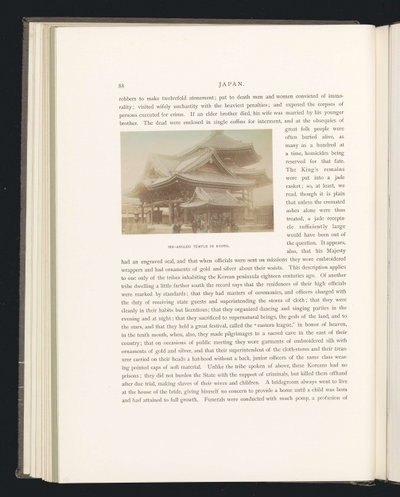
EU: Six-angled temple in Kyoto (1890)
1890
A temple hall with a distinctive six-sided form is pictured in Kyoto in this 1890 photograph, an architectural style found among several of the city's older Buddhist temple buildings.
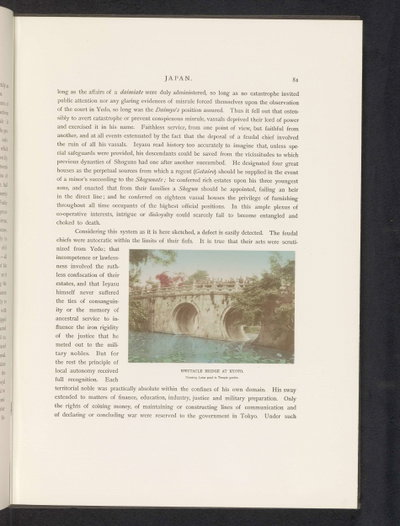
EU: Spectacle bridge at Kyoto (1890)
1890
A stone bridge known as the Spectacle Bridge, its arches resembling eyeglasses, spans a waterway in Kyoto in this 1890 photograph, an example of the stone bridge designs introduced to Japan in earlier centuries.
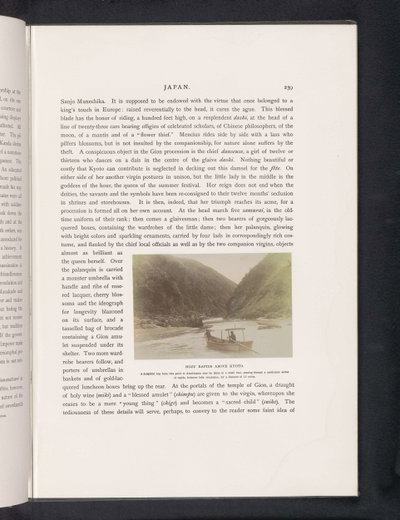
EU: Hozu rapids above Kyoto (1890)
1890
Rapids on the Hozu River above Kyoto churn through a narrow gorge in this 1890 photograph, part of a stretch of water long used by boatmen and, by this period, increasingly visited for its scenery.
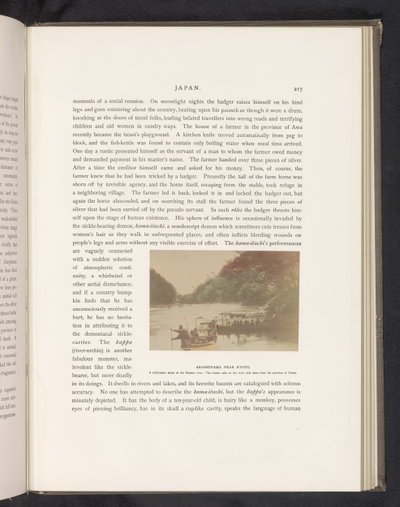
EU: Arashiyama near Kyoto (1890)
1890
Arashiyama, the scenic district west of Kyoto known for its river and mountain views, is shown in this 1890 photograph, a location that had already been a popular destination for visitors for centuries.
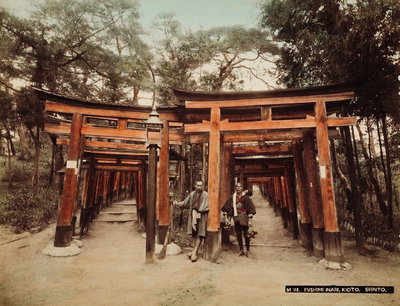
EU: M 21. Fushimi Inari, Kioto. Shinto. (1890)
1890
Fushimi Inari, the Shinto shrine south of Kyoto famed for its rows of vermilion torii gates, is documented in this 1890 photograph. The shrine is dedicated to Inari, the deity associated with rice and prosperity.
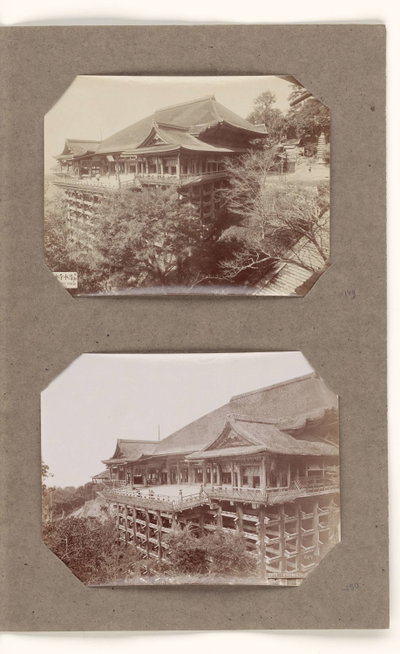
EU: Kiyomizu Tempel, Kyoto, Japan (1890)
1890
Kiyomizu-dera, the Buddhist temple perched on a hillside in eastern Kyoto, is shown in this 1890 photograph. Its wooden stage, built without nails, overlooks the city from the slopes below Otowa Mountain.
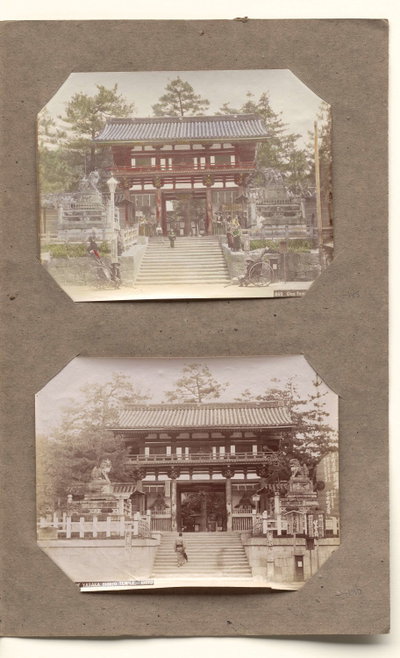
EU: Poort van de Gion Tempel, Kyoto, Japan (1890)
1890
A gate of a temple in Kyoto's Gion district is pictured in this 1890 photograph, in the area long known for its teahouses and traditional entertainment near the approach to Yasaka Shrine.
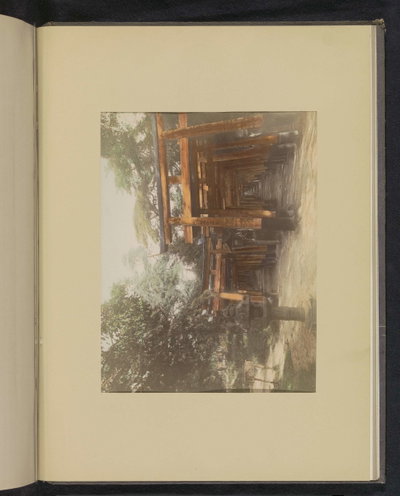
EU: Torii-galerij voor de tempel Fushimi Inari-taisha te Kyoto (1890)
1890
A gallery of torii gates leading to Fushimi Inari Taisha near Kyoto is captured in this 1890 photograph, showing the shrine's famed approach lined with vermilion gates donated by worshippers over the centuries.
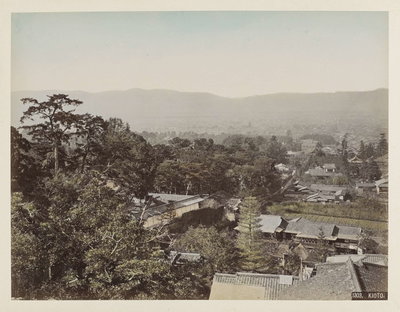
EU: Gezicht op Kyoto (1890)
1890
Kyoto's rooftops spread across this 1890 view of the city, two decades into the Meiji era, by which time the former imperial capital had adapted to its changed role following the court's move to Tokyo.
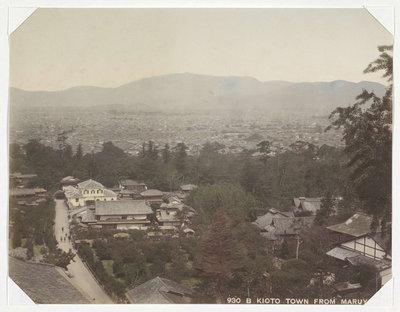
EU: Gezicht op Kyoto vanaf Maruyama (1890)
1890
Kyoto is seen from Maruyama, a hillside park east of the city center, in this 1890 photograph. The park sits near Yasaka Shrine and has long offered visitors a vantage point over the surrounding city.
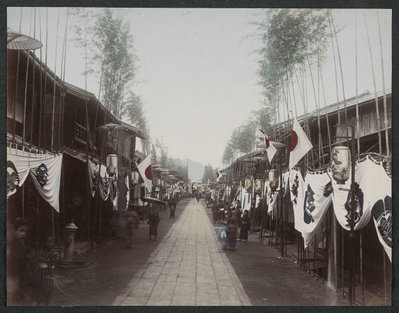
EU: Straatversiering in Kyoto (1892)
1892
Street decorations adorn a thoroughfare in Kyoto, Japan, in this 1892 photograph, taken in the former imperial capital during the early Meiji era.
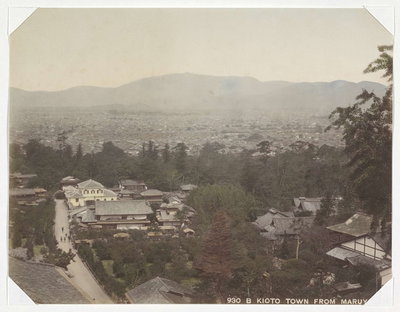
EU: Kioto Town from Maruyama (1892)
1892
Kyoto's townscape seen from Maruyama in 1892, a hillside area near Yasaka Shrine long associated with the city's cherry blossoms and teahouses.
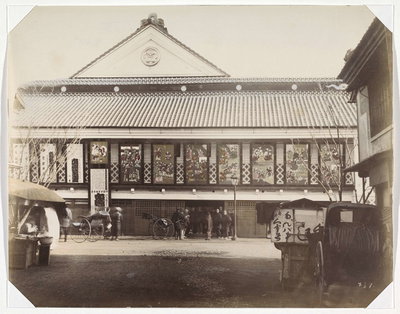
EU: Ingang van een theater in Kyoto (1892)
1892
The entrance to a theatre in Kyoto, Japan, photographed in 1892, a period when the former imperial capital retained many of its traditional entertainment quarters.
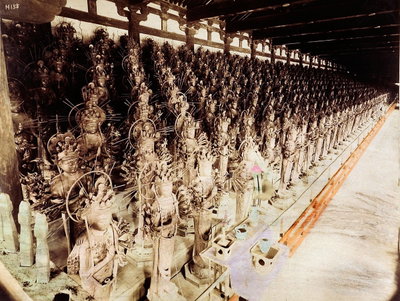
EU: Buddha Statuen, Sanjusangendo Tempel, Kyoto (1893)
1893
The Sanjusangendo temple in Kyoto houses more than a thousand life-sized statues of the Buddhist deity Kannon, arranged in tiered rows along its long wooden hall. This 1893 photograph records a portion of that statuary, a devotional collection assembled over centuries and among the temple's best-known features.
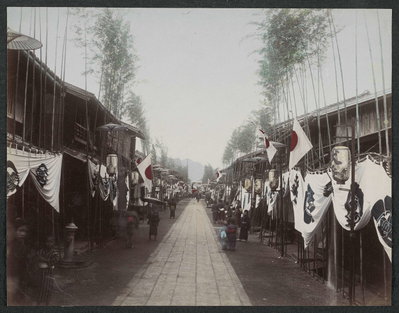
EU: Straatversiering in Kyoto (1893)
1893
Street decorations photographed in Kyoto in 1893, likely put up for a festival or seasonal celebration. Such displays of banners, lanterns, and cloth were a common sight in the city's older commercial streets during the late nineteenth century.
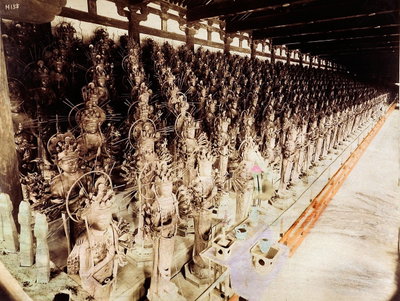
EU: Buddha statues, Sanjusangendo temple, Kyoto (1893)
1893
Rows of gilded Kannon statues fill the Sanjusangendo temple hall in this 1893 view from Kyoto. The temple's name, meaning 'hall with thirty-three bays,' refers to the building's structure, which was built to house its vast collection of Buddhist images.
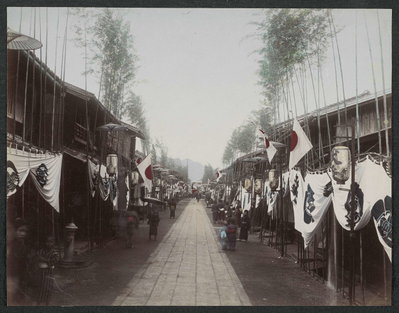
EU: Straatversiering in Kyoto (1894)
1894
A Kyoto street hung with decorations, photographed in 1894. Banners and ornaments of this kind typically marked a local festival, giving visiting photographers of the period a colorful subject to record.
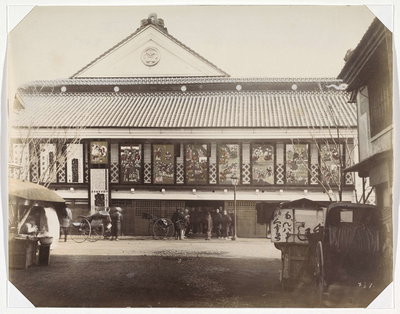
EU: Ingang van een theater in Kyoto (1894)
1894
The entrance to a theater in Kyoto, photographed in 1894. Kabuki and other traditional theaters were prominent features of the city's entertainment districts in the late nineteenth century, often marked by elaborate signboards and facades.
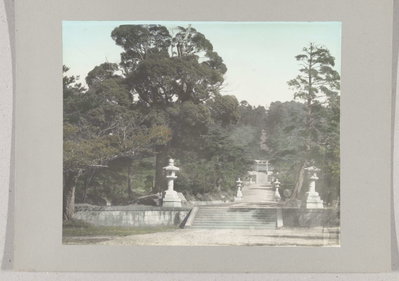
EU: Trap tussen bomen, Kyoto (1895)
1895
A stairway set among trees in Kyoto, photographed in 1895. Such paths were common approaches to the city's temples and shrines, many of which are set into wooded hillsides on its eastern and northern edges.
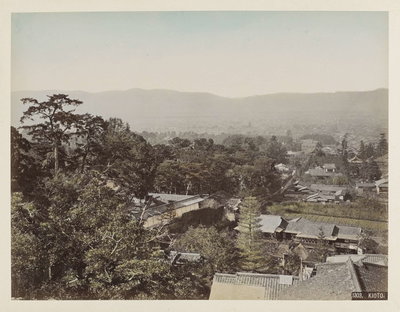
EU: Gezicht op Kyoto (1895)
1895
A view over Kyoto, photographed in 1895. At the time the city retained much of its traditional low-rise character, with temple roofs and wooden houses visible across the townscape.
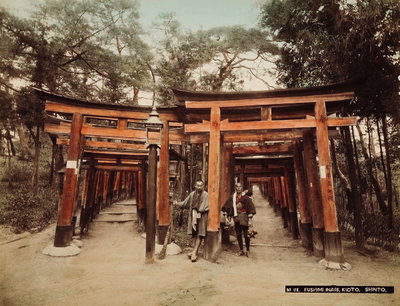
EU: M 21. Fushimi Inari, Kioto. Shinto. (1895)
1895
The Fushimi Inari shrine near Kyoto, photographed in 1895. Dedicated to the Shinto deity Inari, the shrine is known for its long paths of vermilion torii gates leading up the sacred mountain behind it.
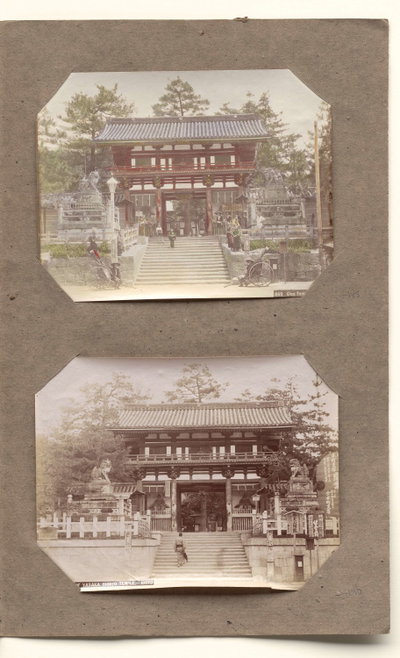
EU: Gion Temple Gate, Kioto (1895)
1895
The gate of the Gion shrine in Kyoto, photographed in 1895. Known today as Yasaka Shrine, it stands at the edge of the Gion district and has long been closely associated with the city's geisha and entertainment quarter.
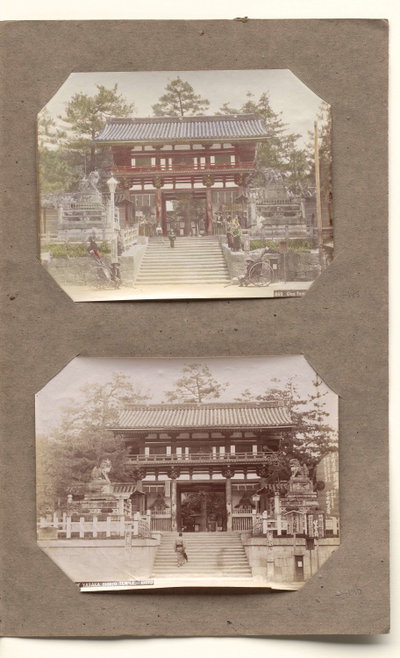
EU: Poort van de Gion Tempel, Kyoto, Japan (1895)
1895
The gate of the Gion shrine, now known as Yasaka Shrine, photographed in Kyoto in 1895. The shrine sits at the eastern end of Shijo-dori, one of the city's main streets, and marks the entrance to the Gion entertainment district.
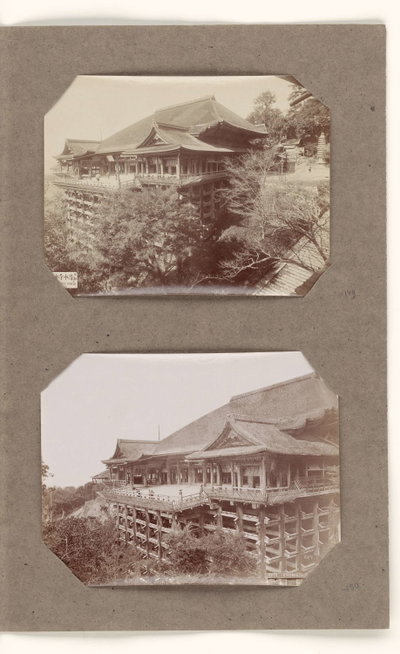
EU: Kiyomizu Tempel, Kyoto, Japan (1896)
1896
The Kiyomizu-dera temple in Kyoto, photographed in 1896. Founded in the eighth century and rebuilt in its present form in the seventeenth, the temple is known for its wooden stage that projects from the hillside on tall pillars.
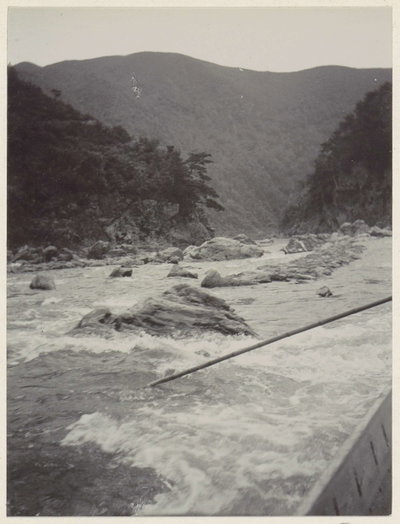
EU: Gezicht op een stroomversnelling in Japan, mogelijk in de Hozurivier op Kyoto (1900)
1900
Rapids churn on a river in Japan in this 1900 photograph, believed to show the Hozugawa near Kyoto, a stretch of water long popular for its scenic gorge and boat traffic.
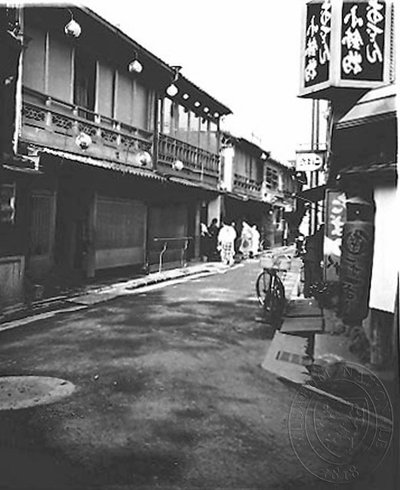
EU: Kjótská ulice (1901)
1901
A street in Kyoto, Japan, photographed in 1901. Kyoto had served as Japan's imperial capital for over a thousand years until 1868, when the seat of government moved to Tokyo at the start of the Meiji era.
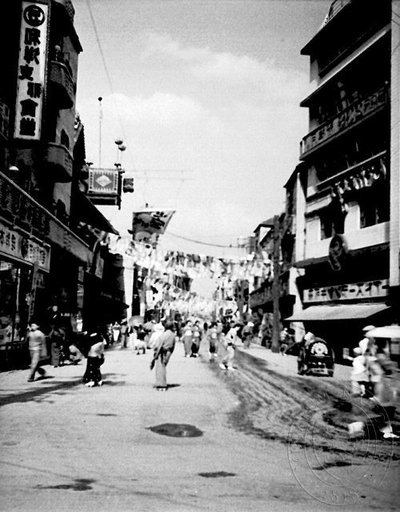
EU: Street in Kyoto (1901)
1901
Another street scene from Kyoto, Japan, captured in 1901, a few decades after the city lost its status as Japan's imperial capital following the Meiji Restoration of 1868, when Emperor Meiji relocated the imperial court to Tokyo.
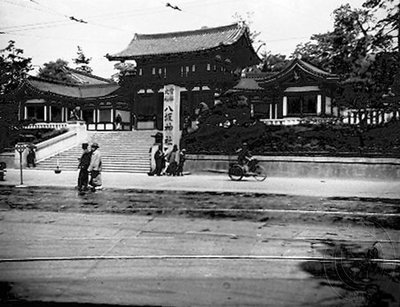
EU: Ulice s chrámem (1901)
1901
A street leading toward a temple in Kyoto, Japan, photographed in 1901. The former imperial capital is home to thousands of Buddhist temples and Shinto shrines built up over more than a millennium.
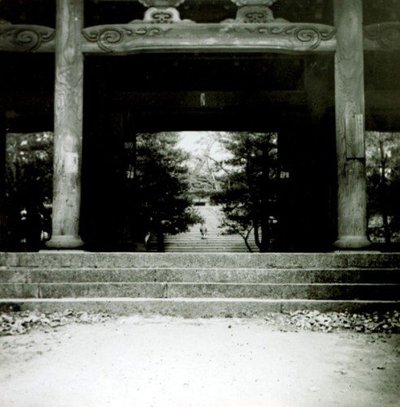
EU: Brána chrámu Kurodani v Kjótu (1901)
1901
The gate of Kurodani Temple in Kyoto, Japan, photographed in 1901. Kurodani, formally known as Konkai-Komyoji, is one of the many Buddhist temple complexes in the hills on the city's eastern edge.
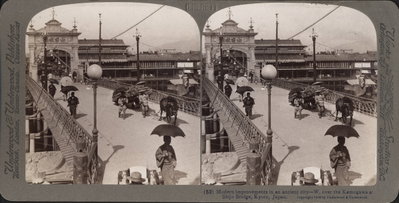
EU: Stereobild av bron Shijo Bridge, Kimogawa, Kyoto. (1904)
1904
Shijo Bridge crosses the Kamo River in Kyoto in this 1904 stereo photograph, one of the city's central crossings linking its historic eastern and western districts.
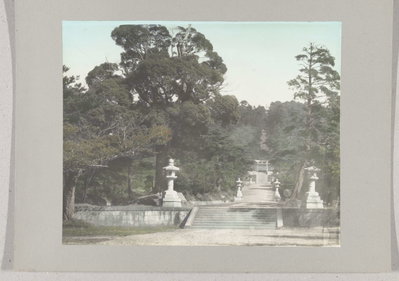
EU: Trap tussen bomen, Kyoto (1905)
1905
A stone stairway framed by trees in Kyoto, photographed in 1905 during the late Meiji era, when the former imperial capital remained a center of traditional Japanese culture and religious sites.
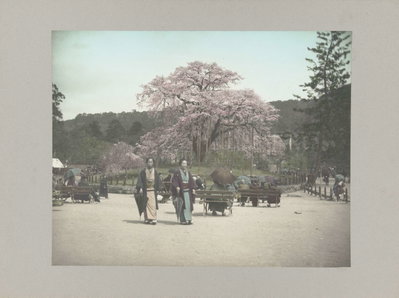
EU: Park met kersenbomen en Japanners, Kyoto (1905)
1905
A Kyoto park during cherry blossom season in 1905, with visitors gathered beneath the flowering trees. Hanami, the tradition of viewing blossoming cherry trees, has been practiced in Japan for centuries.
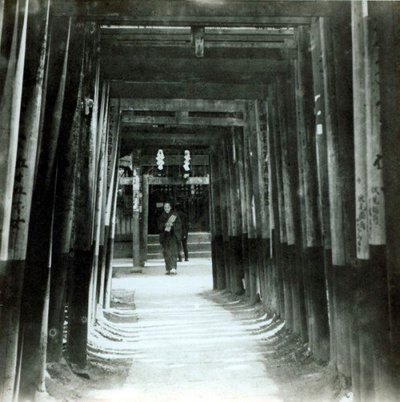
EU: Fušimi u Kjóta - alej bran torii (1906)
1906
An avenue of torii gates in the Fushimi district of Kyoto, Japan, photographed in 1906, part of the approach to Fushimi Inari Shrine, known for its long rows of vermilion gates.
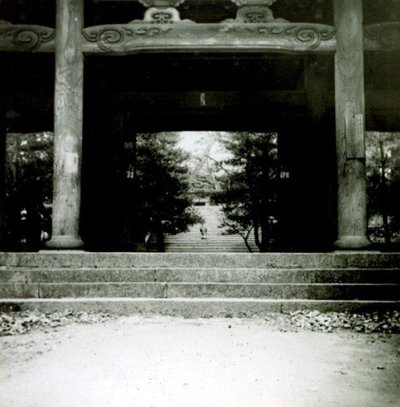
EU: Brána chrámu Kurodani v Kjótu (1906)
1906
The gate of Kurodani Temple in Kyoto, Japan, captured in this 1906 photograph.
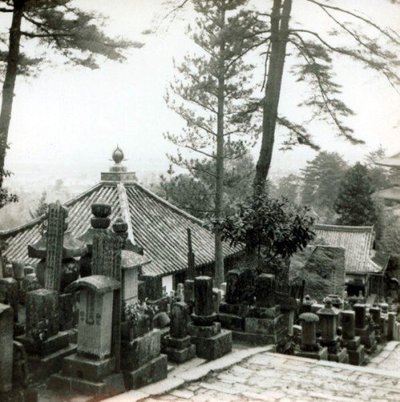
EU: Hřbitov v Kurodani, Kjóto (1906)
1906
The cemetery grounds at Kurodani, a temple district in Kyoto, Japan, photographed in 1906.
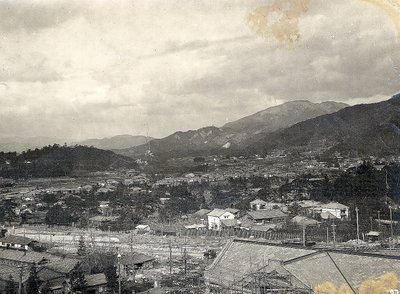
Gion in 1913
1913
A general view of Kyoto photographed in 1913. For more than a thousand years the imperial capital of Japan, the city remained a major destination for travelers by the early twentieth century, prized for its temples, gardens, and traditional streets.
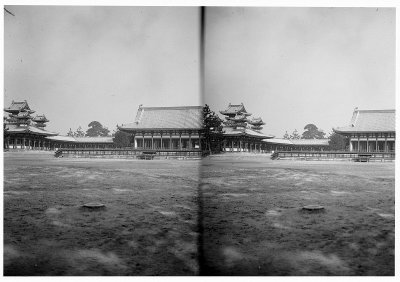
EU: Kyoto, Japan. Taikyokuden-Tempel (1913)
1913
A temple hall identified in the original German caption as the Taikyokuden, photographed in Kyoto in 1913. It was one of many religious sites in the former imperial capital that drew photographers and travelers in the early twentieth century.
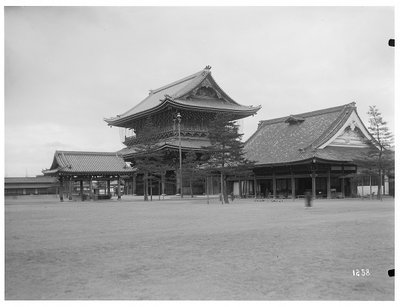
EU: Kyoto, Japan. Higashi Hongan-ji (1913)
1913
Higashi Hongan-ji, one of Kyoto's largest Buddhist temple complexes, photographed in 1913. Its massive wooden halls, rebuilt in the late nineteenth century after a series of fires, made it a frequent stop for early twentieth-century travelers to the former imperial capital.
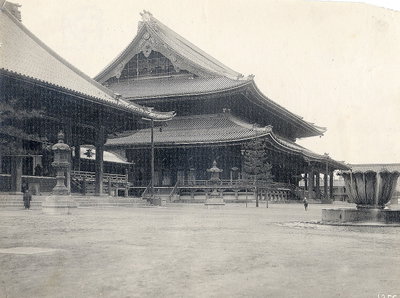
EU: Higashi-Hongan-Tempel in Kyoto - gate view (1913)
1913
A gate at Higashi Hongan-ji in Kyoto, captured in 1913. The temple, head of one branch of Jodo Shinshu Buddhism, welcomed foreign visitors through gates like this one on their way to its vast rebuilt main halls.
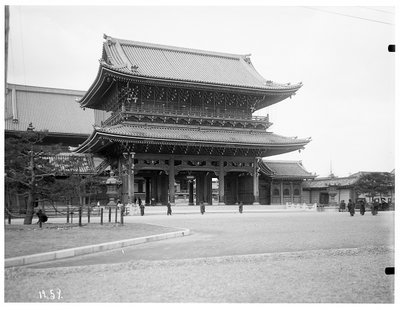
EU: Higashi-Hongan-Tempel in Kyoto (1913)
1913
The temple grounds of Higashi Hongan-ji in Kyoto, seen in 1913. Rebuilt largely in wood after fires had destroyed earlier structures, the complex remained one of the city's most visited Buddhist sites in the early twentieth century.
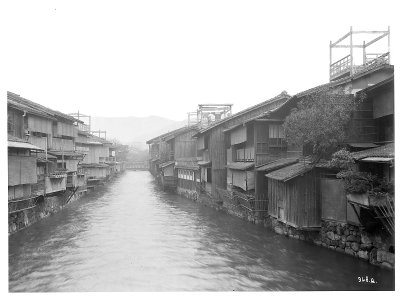
EU: Kyoto. Teehäuser an einem Kanal (1913)
1913
Tea houses line a canal in this 1913 photograph from Kyoto. Waterside tea houses of this kind were common gathering places in the city, part of everyday life along its network of canals and rivers that threaded through its traditional districts.
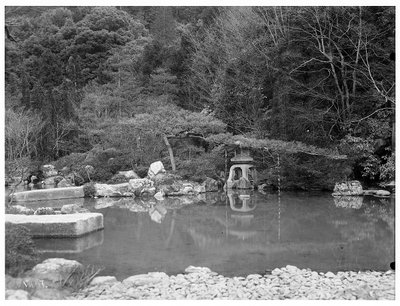
EU: Kyoto. Garden with pond and stone lantern (1913)
1913
A Japanese garden in Kyoto featuring a still pond and a traditional stone lantern, photographed in 1913. Such gardens, combining water, stone, and carefully placed plantings, were a hallmark of the city's temple and villa grounds.
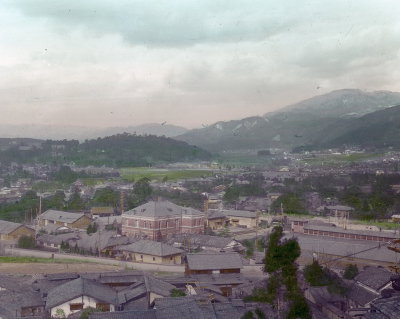
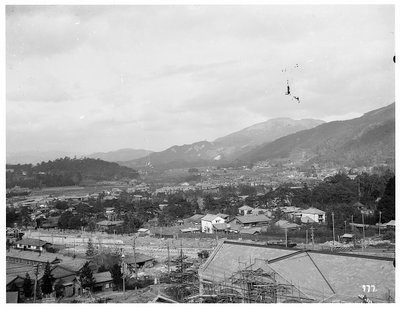
EU: Kyoto. Stadtteilansicht von einem erhöhten Standpunkt (1913)
1913
This German-captioned photograph shows a Kyoto neighborhood viewed from an elevated vantage point in 1913. Such views captured the tiled rooftops and layout of the city's traditional districts, densely packed beneath the hills that surround the former capital.
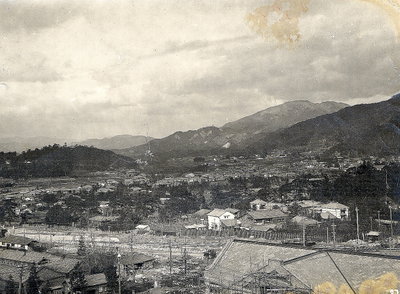
Gion in 1913
1913
Catalogued as df_pos-2006-b_0000050, this 1913 photograph offers a view of Kyoto, the former imperial capital whose temples and traditional streetscapes drew growing numbers of foreign visitors in the early twentieth century.
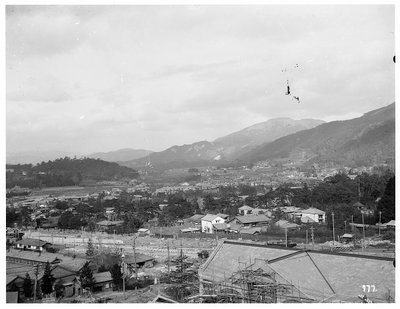
Gion in 1913
1913
Archived under df_lb_0000441, this 1913 image shows a scene in Kyoto. The city's centuries as Japan's imperial seat left it with a dense concentration of temples, gardens, and traditional architecture.
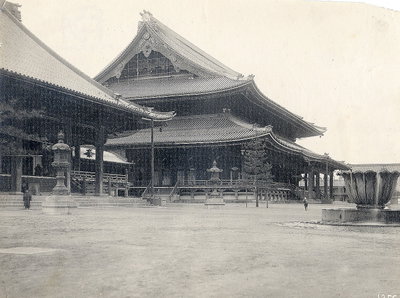
EU: Higashi-Hongan-Tempel in Kyoto (1913)
1913
Another 1913 view of Higashi Hongan-ji, the Kyoto temple whose reconstructed halls drew both pilgrims and foreign tourists in the early twentieth century. This image is catalogued under the archival reference b0000053.
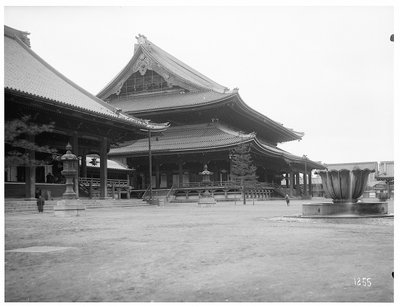
EU: Higashi-Hongan-Tempel in Kyoto (1913)
1913
This photograph, archived as lb0000457, shows Higashi Hongan-ji in Kyoto in 1913. The temple's scale and timber craftsmanship made it a landmark stop for visitors touring the former imperial capital, drawing travelers from across Japan and abroad.
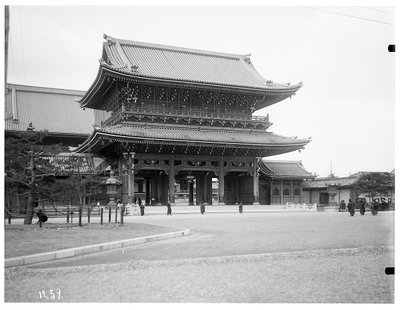
EU: Higashi-Hongan-Tempel in Kyoto (1913)
1913
Catalogued as lb0000458, this 1913 photograph depicts Higashi Hongan-ji in Kyoto. The temple's rebuilt main halls, among the largest wooden structures in Japan, stood as a centerpiece of the city's religious architecture.
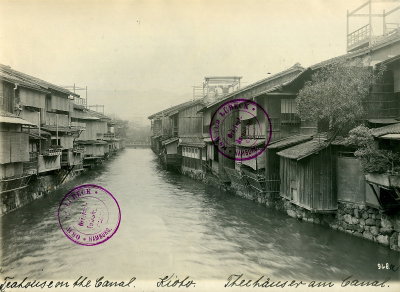
EU: Kyoto. Tea houses on a canal (1913)
1913
Traditional tea houses stand along a Kyoto canal in this 1913 image. Canals threading through the city supported small businesses like these, which served both residents and visiting travelers passing through on tours of the former capital.
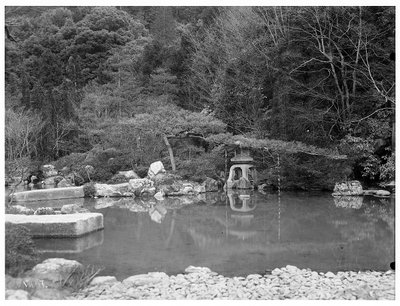
EU: Kyoto. Garden with pond and stone lantern (1913)
1913
Catalogued as lb0000461, this 1913 photograph shows a Kyoto garden centered on a pond with a stone lantern at its edge. Gardens of this style were designed to be viewed from a fixed vantage point, framing the water and stonework together.
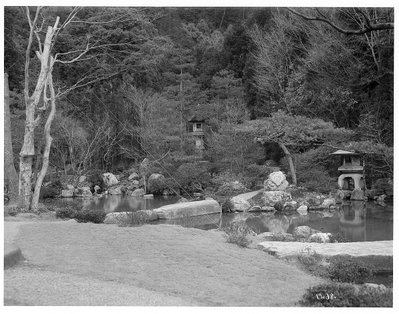
EU: Kyoto. Garden with pond and stone lantern (1913)
1913
Archived under lb0000449, this 1913 image depicts a pond and stone lantern in a Kyoto garden. The pairing of still water with carved stone was a recurring feature of Japanese garden design in the city's temples and residences.
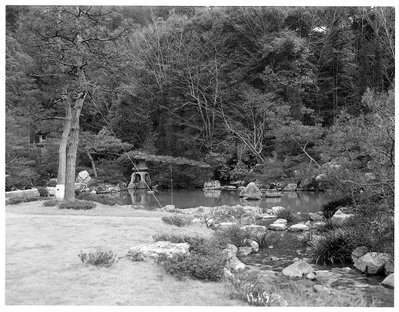
EU: Kyoto. Gartenanlage mit Teich und Steinlaternen (1913)
1913
This German-captioned photograph from 1913 shows a Kyoto garden with a pond and several stone lanterns. Landscaped gardens like this one were designed to complement the temples and residences of the former imperial capital.
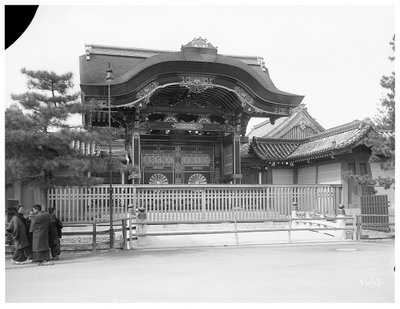
EU: Kyoto, Japan. Niholdo Gate of Higashi Hongan-ji (1913)
1913
A gate identified in the original caption as the Niholdo Gate of Higashi Hongan-ji, photographed in Kyoto in 1913. Such gateways marked the ceremonial entrances to the temple's expansive grounds in the center of the former imperial capital.
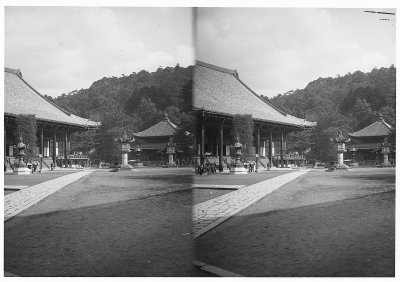
EU: Kyoto, Maruyama Park. Chion-in (17th c.) with Holy Lanterns (1913)
1913
Chion-in, whose present halls date to the seventeenth century, photographed in 1913 near Maruyama Park with its stone lanterns in view. As head temple of the Jodo sect, Chion-in was among the most important Buddhist sites in Kyoto's Higashiyama district.
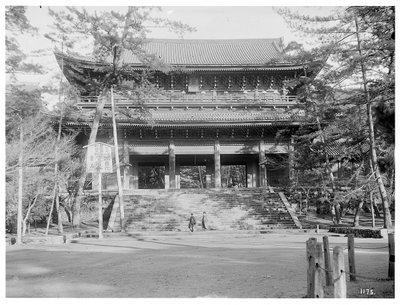
EU: Chion-in (1913)
1913
Chion-in in Kyoto, photographed in 1913. The temple, headquarters of the Jodo sect of Buddhism, stands in the Higashiyama district beside Maruyama Park, the city's oldest public park and long a popular gathering place for residents and visitors alike.
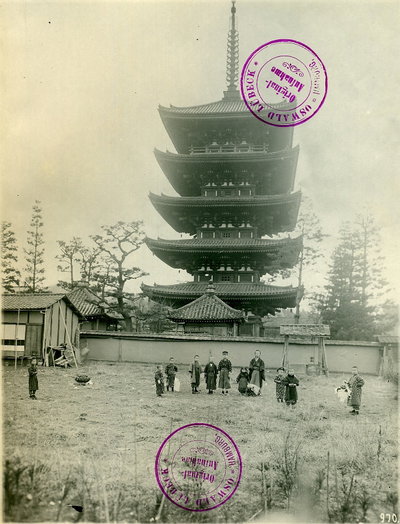
EU: Yasaka Pagoda (1913)
1913
The Yasaka Pagoda, photographed in 1913. Rising above Kyoto's Higashiyama district, the five-story pagoda is one of the city's most recognizable landmarks and a fixture of the historic streets surrounding it.
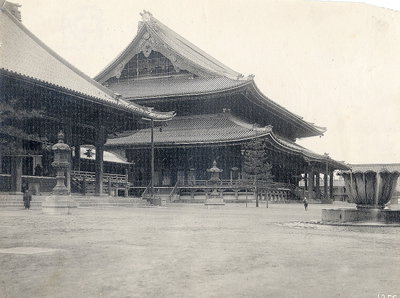
EU: Higashi-Hongan-Tempel in Kyoto A (1913)
1913
Labeled simply 'A' in the archive, this 1913 photograph captures Higashi Hongan-ji in Kyoto. The temple's grand scale reflected its status as head temple of one of Japan's largest Buddhist denominations.
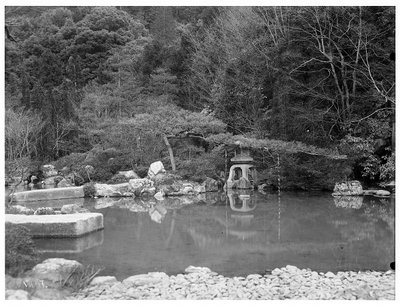
EU: Kyoto. Garden with pond and stone lantern A (1913)
1913
Marked 'A' in the archive, this 1913 photograph shows a Kyoto garden with a pond and a stone lantern positioned along its edge, part of a set of images documenting the city's landscaped temple grounds.
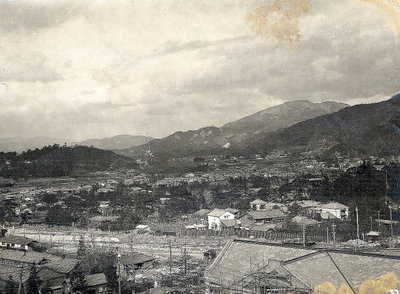
EU: Kyoto - city view from hillside with railway (1913)
1913
A view of Kyoto from a hillside in 1913, with a railway line visible below. Rail service had connected Kyoto to Japan's other major cities since the Meiji era, bringing increasing numbers of visitors to the former capital.
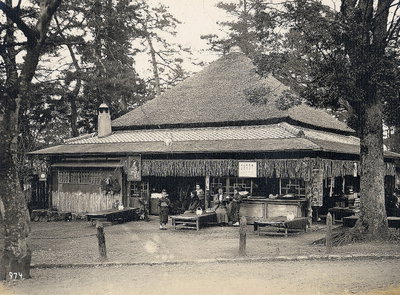
EU: Kyoto. Teehaus. Eingangsseite mit Einheimischen und Touristin (1913)
1913
The entrance of a Kyoto tea house, with local residents and a foreign tourist pictured together in 1913. Tea houses were among the stops that brought visiting travelers into everyday contact with the city's residents.
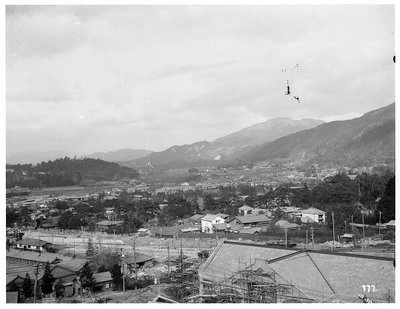
EU: Kyoto - city view from a hillside (1913)
1913
Kyoto spreads out below in this 1913 photograph taken from a hillside vantage point. The surrounding hills that ring the city offered visitors panoramic views of its temples and rooftops in the years before rapid modern development.
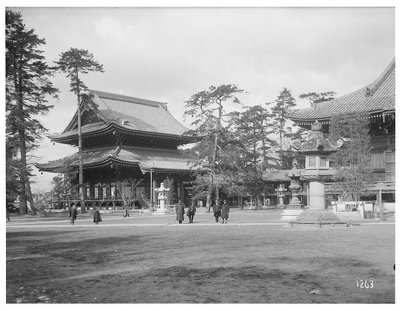
EU: Kyoto, Maruyama Park. Tourists of the Hapag in Chion-in (17th c) with Holy Lanterns (1913)
1913
Passengers from a Hamburg America Line (Hapag) cruise pose at Chion-in in Kyoto in 1913, near the temple's stone lanterns and adjoining Maruyama Park. Chion-in's main halls date to the seventeenth century and served as head temple of the Jodo Buddhist sect.
![EU: Higashi-Hongan-Tempel in Kyoto (1913) [df_lb_0000457], Kyoto, 1913](https://cdn.placewas.com/placewas/e9f3654296b445b18bae01f5be22a167.jpg?width=400)
EU: Higashi-Hongan-Tempel in Kyoto (1913) [df_lb_0000457]
1913
Archived under df_lb_0000457, this photograph from 1913 shows Higashi Hongan-ji in Kyoto. Visitors of the era, including foreign tourists, often included the temple on tours of the former imperial capital.
![EU: Higashi-Hongan-Tempel in Kyoto (1913) [pos-2006-b_0000053], Kyoto, 1913](https://cdn.placewas.com/placewas/4755f84f75574fd1871b4db1dfd66ed8.jpg?width=400)
EU: Higashi-Hongan-Tempel in Kyoto (1913) [pos-2006-b_0000053]
1913
With the archival label pos-2006-b_0000053, this 1913 photograph depicts Higashi Hongan-ji, the large Jodo Shinshu temple complex in central Kyoto rebuilt after earlier fires had destroyed its earlier wooden halls.
![EU: Higashi-Hongan-Tempel in Kyoto (1913) [lb_0000457], Kyoto, 1913](https://cdn.placewas.com/placewas/bad444a307c441d590c511128bcd7fac.jpg?width=400)
EU: Higashi-Hongan-Tempel in Kyoto (1913) [lb_0000457]
1913
This 1913 photograph, labeled lb_0000457, shows Higashi Hongan-ji in Kyoto. Its rebuilt wooden halls made it one of the most architecturally significant temples visited by travelers to the former imperial capital.
![EU: Higashi-Hongan-Tempel in Kyoto (1913) [lb_0000458], Kyoto, 1913](https://cdn.placewas.com/placewas/68c98fbe884146fd952a3b2445c71f57.jpg?width=400)
EU: Higashi-Hongan-Tempel in Kyoto (1913) [lb_0000458]
1913
Labeled lb_0000458, this 1913 image records Higashi Hongan-ji in Kyoto, a major Buddhist temple whose reconstruction after fire made it a notable feat of late nineteenth-century wooden architecture in Japan.
![EU: Kyoto Garden with pond and stone lantern (1913) [lb_0000461], Kyoto, 1913](https://cdn.placewas.com/placewas/cf71eba0fafa45ec924b196ec14735a9.jpg?width=400)
EU: Kyoto Garden with pond and stone lantern (1913) [lb_0000461]
1913
This 1913 photograph, labeled lb_0000461, depicts a Kyoto garden with a pond and stone lantern, elements arranged in the deliberate, contemplative style typical of Japanese landscape design of the period.
![EU: Kyoto Garden with pond and stone lantern (1913) [lb_0000449], Kyoto, 1913](https://cdn.placewas.com/placewas/50eb815354214a6880f3e089a14f20a9.jpg?width=400)
EU: Kyoto Garden with pond and stone lantern (1913) [lb_0000449]
1913
Labeled lb_0000449, this 1913 image records a pond and stone lantern in a Kyoto garden, photographed as part of a series documenting the landscaped grounds of the city's temples and villas during the early twentieth century.
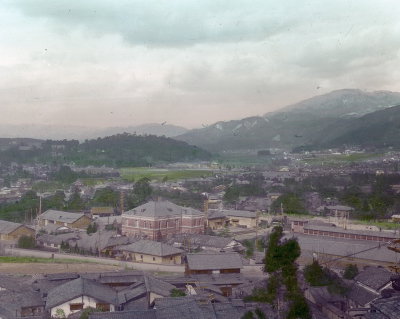
EU: Kyoto district view from elevated point (1913)
1913
An elevated view over a Kyoto district, photographed in 1913. From such vantage points, visitors could take in the dense pattern of the city's traditional wooden buildings and temple grounds spread across the valley floor.
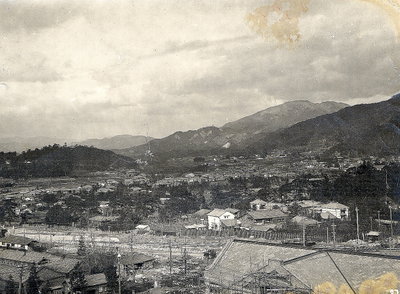
Gion in 1913
1913
The first of two 1913 photographs of Kyoto, the city that served as Japan's imperial capital for over a thousand years before the seat of government moved to Tokyo in 1868, leaving behind a wealth of temples and historic streets.
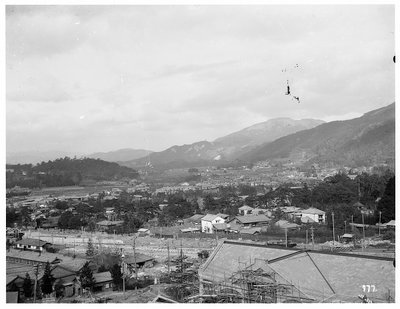
Gion in 1913
1913
The second of two 1913 photographs of Kyoto, showing the city that remained a center of traditional culture and religion in Japan even after losing its status as imperial capital to Tokyo in the year 1868.
![EU: Higashi-Hongan-Tempel in Kyoto (1913 [1]), Kyoto, 1913](https://cdn.placewas.com/placewas/a89acd7f07fa4208b2d71844d63b7d44.jpg?width=400)
EU: Higashi-Hongan-Tempel in Kyoto (1913 [1])
1913
The first in a pair of 1913 photographs of Higashi Hongan-ji in Kyoto. The temple's scale and prominence in the city made it a frequently photographed site for visitors touring the former Japanese imperial capital during the early twentieth century.
![EU: Higashi-Hongan-Tempel in Kyoto (1913 [3]), Kyoto, 1913](https://cdn.placewas.com/placewas/0d91d14ed27e401b896f4f43c99848bb.jpg?width=400)
EU: Higashi-Hongan-Tempel in Kyoto (1913 [3])
1913
Higashi Hongan-ji in Kyoto, photographed in 1913. The temple, headquarters of the Otani branch of Jodo Shinshu Buddhism, had been largely rebuilt in the late 19th century after a series of fires.
![EU: Kyoto. Garden with pond and stone lantern (1913 [1]), Kyoto, 1913](https://cdn.placewas.com/placewas/75fd095a6c4f4f56b2201ae4cdb07a91.jpg?width=400)
EU: Kyoto. Garden with pond and stone lantern (1913 [1])
1913
A garden pond with a stone lantern in Kyoto, photographed in 1913, typical of the landscaped temple and villa gardens for which the former imperial capital was renowned.
![EU: Kyoto. Garden with pond and stone lantern (1913 [2]), Kyoto, 1913](https://cdn.placewas.com/placewas/0b3d3aaa674247dabd4b1e7f137d2d4e.jpg?width=400)
EU: Kyoto. Garden with pond and stone lantern (1913 [2])
1913
Another 1913 view of a Kyoto garden, showing a stone lantern beside a still pond in the traditional landscaping style associated with the city's temples and estates.
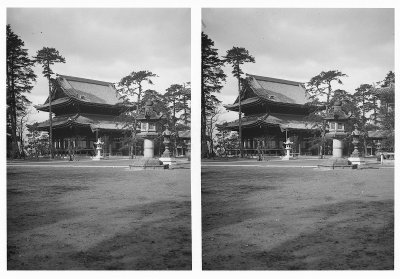
EU: Chion-in-Tempel (1913)
1913
Chion-in temple in Kyoto, photographed in 1913. Founded in the 13th century as headquarters of the Jodo-shu sect of Buddhism, the complex is known for its massive main gate, one of the largest wooden gates in Japan.
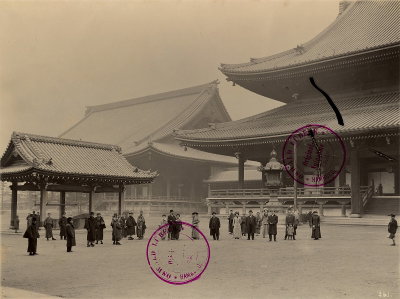
EU: Nishi Hongan-ji (1913)
1913
Nishi Hongan-ji in Kyoto, photographed in 1913. The temple serves as the head institution of the Hongan-ji branch of Jodo Shinshu Buddhism, with main halls dating from the late 16th and 17th centuries.
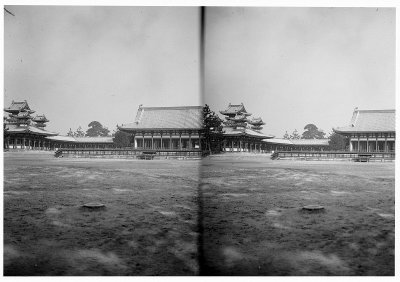
EU: Kyoto, Japan. Taikyokuden temple (1913)
1913
The Daigokuden hall in Kyoto, photographed in 1913. Built in 1895 within Okazaki Park to mark the 1,100th anniversary of the city's founding, it was later incorporated into Heian Shrine.
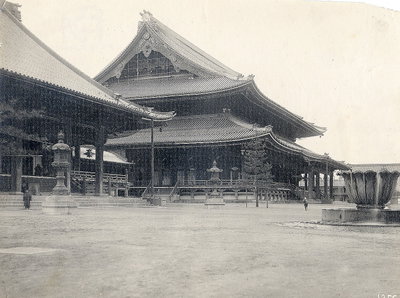
EU: Higashi Hongan Temple in Kyoto (1913)
1913
Higashi Hongan-ji in Kyoto, seen here in 1913 from a different vantage than other photographs of the temple taken the same year. The complex ranks among the largest wooden religious buildings in Japan.
![EU: Higashi-Hongan-Tempel in Kyoto (1913) [2], Kyoto, 1913](https://cdn.placewas.com/placewas/06d49137351845459aad8b60aa9b9e5d.jpg?width=400)
EU: Higashi-Hongan-Tempel in Kyoto (1913) [2]
1913
One of several 1913 photographs of Higashi Hongan-ji in Kyoto, showing another part of the temple's halls, which had been rebuilt after fires damaged the complex in the 19th century.
![EU: Higashi-Hongan-Tempel in Kyoto (1913) [3], Kyoto, 1913](https://cdn.placewas.com/placewas/ef099696293047ba8106c3e86a45468a.jpg?width=400)
EU: Higashi-Hongan-Tempel in Kyoto (1913) [3]
1913
Yet another 1913 view of Higashi Hongan-ji in Kyoto, from a set of images documenting the head temple of the Otani branch of Jodo Shinshu Buddhism that year.
![EU: Kyoto. Garden with pond and stone lantern (1913) [2], Kyoto, 1913](https://cdn.placewas.com/placewas/51c7e680fe80482fa7261d631b30f92c.jpg?width=400)
EU: Kyoto. Garden with pond and stone lantern (1913) [2]
1913
A third photograph from 1913 of a Kyoto garden pond and stone lantern, forming part of a set of images of the city's traditional landscaped temple and villa grounds.
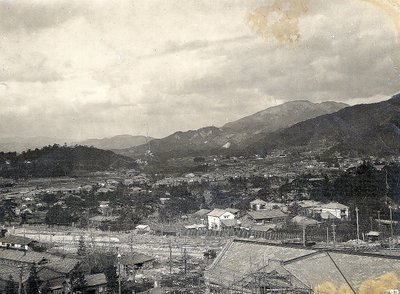
EU: Kyoto - elevated town view (1913)
1913
An elevated view over Kyoto, photographed in 1913 from a hillside vantage point overlooking the city's dense rooftops and temple grounds, illustrating the low-rise character of the city before later development.
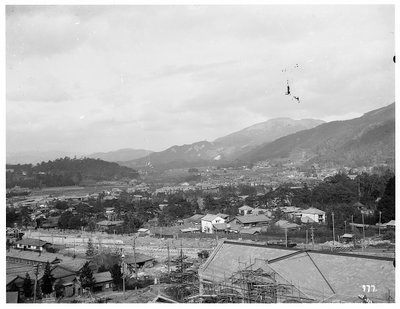
EU: Kyoto - elevated town view II (1913)
1913
A second elevated view of Kyoto from 1913, taken from a different angle over a city that at the time remained largely built of low wooden structures punctuated by temple roofs.
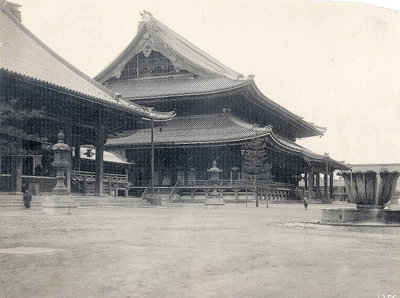
EU: Higashi-Hongan-Tempel in Kyoto I (1913)
1913
Higashi Hongan-ji in Kyoto, one of three photographs taken of the temple in 1913, showing part of the extensive halls that make it one of the largest wooden religious complexes in Japan.
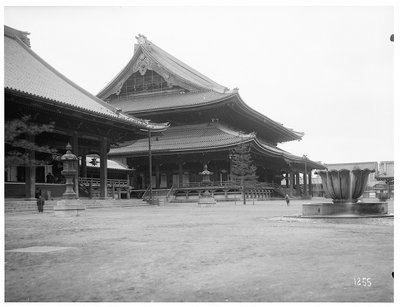
EU: Higashi-Hongan-Tempel in Kyoto II (1913)
1913
Another of the temple's halls at Higashi Hongan-ji in Kyoto, photographed in 1913 alongside related views of the complex, headquarters of the Otani branch of Jodo Shinshu Buddhism.
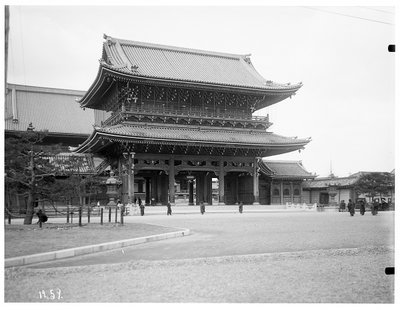
EU: Higashi-Hongan-Tempel in Kyoto III (1913)
1913
A further 1913 photograph of Higashi Hongan-ji in Kyoto, rounding out a small set of images taken that year of the temple's rebuilt halls and grounds.
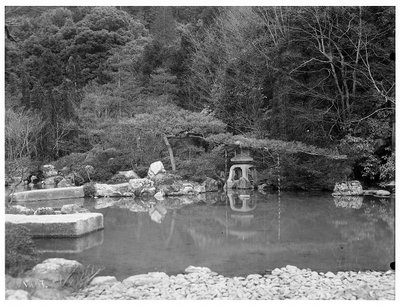
EU: Kyoto. Garden with pond and stone lantern I (1913)
1913
A Kyoto garden pond with a stone lantern, photographed in 1913 as part of a pair of images taken from slightly different positions, showing the landscaped style typical of the city's temple gardens.
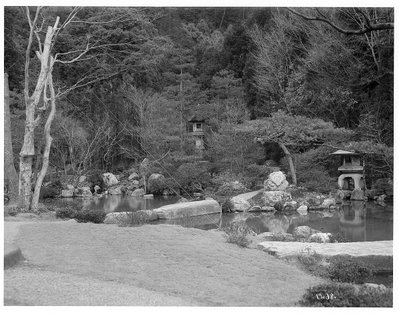
EU: Kyoto. Garden with pond and stone lantern II (1913)
1913
The companion photograph to a 1913 image of the same Kyoto garden pond and stone lantern, taken from a slightly different angle to record more of the surrounding grounds.
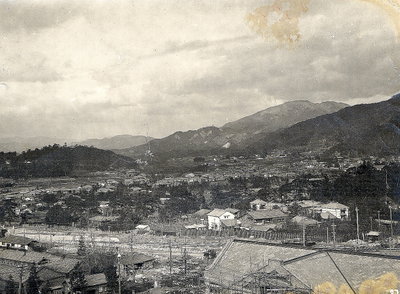
EU: Kyoto, city view from a hillside (1913)
1913
A panoramic view over Kyoto, Japan, photographed in 1913 from a hillside overlooking the city's rooftops and surrounding hills. Kyoto served as Japan's imperial capital for over a thousand years before Tokyo, and by the early twentieth century remained a center of traditional temples and craftsmanship.
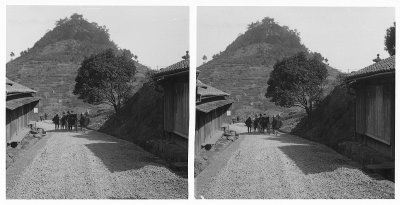
EU: Bergstraße bei Kyoto (1913)
1913
This 1913 photograph shows a mountain road on the outskirts of Kyoto, Japan, winding through the hilly terrain surrounding the former imperial capital. Such roads connected the city to the temples and shrines scattered across its wooded hillsides.
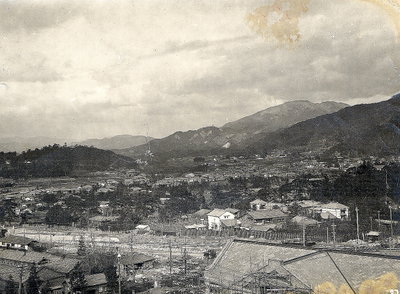
EU: Kyoto. Stadtansicht, Blick von einer Hanglage (1913)
1913
Another 1913 view of Kyoto captured from a sloped vantage point, looking out across the rooftops of the city below. Nestled among hills on all sides, Kyoto's built-up center has long been framed by wooded slopes like the one seen here.
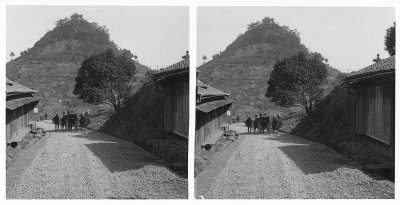
EU: Bergstraße bei Kyoto
1913
A companion image to other 1913 photographs of a mountain road near Kyoto, Japan, showing the route as it climbed through the hills ringing the old capital. Unpaved roads of this kind were typical of rural Kyoto Prefecture in the early twentieth century.
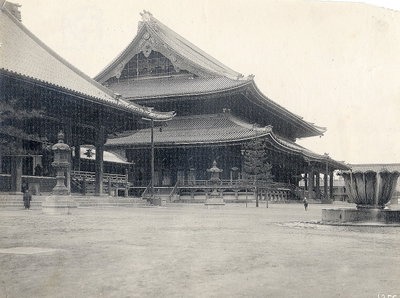
EU: Higashi-Hongan-Tempel in Kyoto - view 1 (1913)
1913
Higashi Hongan-ji, one of Kyoto's largest Buddhist temple complexes, photographed in 1913. Founded in the early seventeenth century as the head temple of the Higashi Hongan-ji branch of Jodo Shinshu Buddhism, it remained a major pilgrimage site well into the twentieth century.
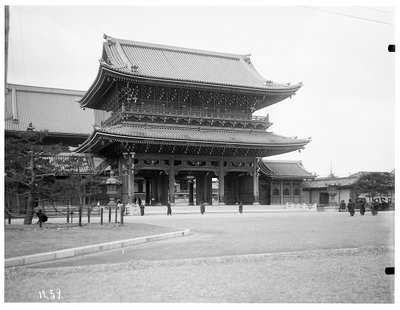
EU: Higashi-Hongan-Tempel in Kyoto - view 3 (1913)
1913
A further 1913 view of the Higashi Hongan-ji temple grounds in Kyoto, Japan, taken from a different vantage point than its companion photographs. The temple's expansive halls and gates made it a frequent subject for visitors documenting the city.
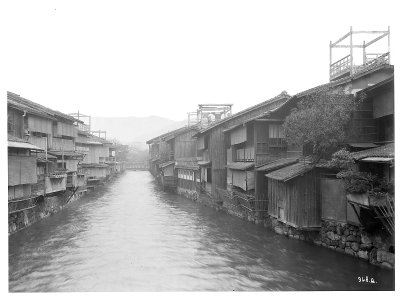
EU: Kyoto. Teehauser an einem Kanal (1913)
1913
Wooden tea houses line a canal in Kyoto in this 1913 photograph. Traditional teahouses of this kind, often built along the city's waterways, were a familiar feature of Kyoto's streetscape in the early twentieth century.
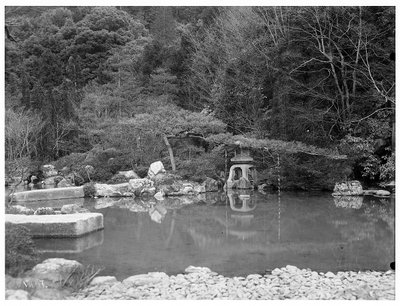
EU: Kyoto. Garden with pond and stone lantern - view 1 (1913)
1913
A Japanese garden in Kyoto photographed in 1913, featuring a still pond and a stone lantern typical of the city's temple and residential gardens. Landscaped gardens of this style had long been a hallmark of Kyoto's aesthetic tradition.
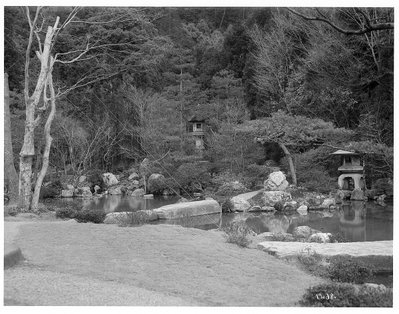
EU: Kyoto. Garden with pond and stone lantern - view 2 (1913)
1913
A second 1913 view of the same Kyoto garden, showing its pond and stone lantern from another angle. Gardens combining water, stone, and carefully placed plantings were central to the design of Kyoto's temples and private grounds.
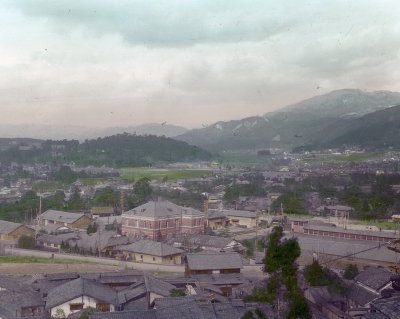
EU: Kyoto. Stadtteilansicht von einem erhohten Standpunkt (1913)
1913
Rooftops of a Kyoto neighborhood spread out below the camera in this 1913 photograph, taken from an elevated vantage point. The image captures the dense, low-rise wooden architecture typical of the city before later twentieth-century rebuilding.
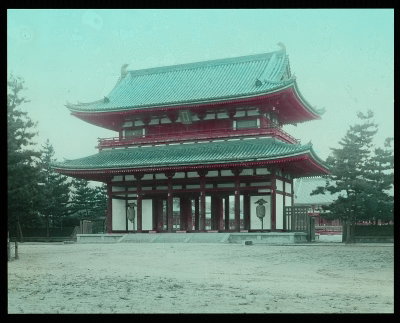
EU: Tempel (1913)
1913
An unidentified Buddhist temple in Kyoto, Japan, photographed in 1913. The city was home to hundreds of temples by the early twentieth century, ranging from small neighborhood shrines to major head temples of Japan's Buddhist schools.
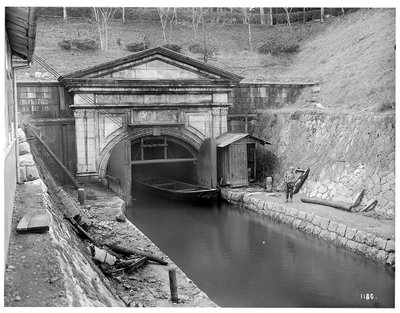
EU: Lake Biwa Canal (1913)
1913
The Lake Biwa Canal in Kyoto, photographed in 1913. Completed in 1890, the canal channeled water from Lake Biwa through tunnels and open waterways into the city, supplying drinking water, irrigation, and hydroelectric power to Kyoto.
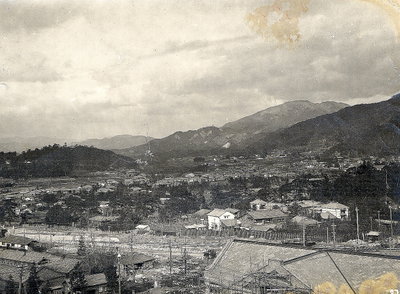
EU: Kyoto street scene (1913)
1913
A street scene in Kyoto captured in 1913, showing everyday activity along one of the city's thoroughfares. Photographs like this one documented daily life in the old capital during a period of rapid modernization across Japan.
EU: Kyoto view (1913)
1913
A general view of Kyoto taken in 1913, showing part of the cityscape as it appeared in the final years of the Meiji era. Kyoto retained much of its traditional character even as other Japanese cities modernized rapidly.
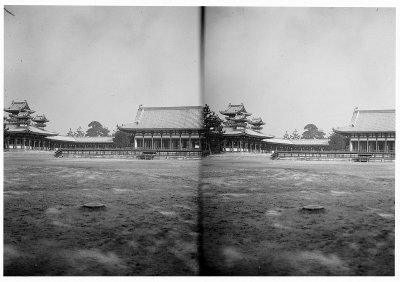
EU: Kyoto, Japan. Taikyokuden Tempel (1913)
1913
The Taikyokuden hall in Kyoto, photographed in 1913. The building was among the notable religious and ceremonial structures that visitors to Kyoto sought out for their historical and architectural interest in the early twentieth century.
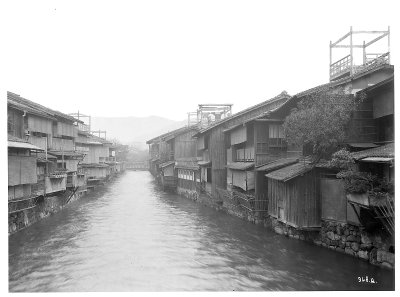
EU: Kyoto Teehäuser an einem Kanal (1913)
1913
Another 1913 photograph of Kyoto's canal-side tea houses, taken from a slightly different position than a companion image in the same series. Waterside teahouses such as these served as social and refreshment stops in the old capital.
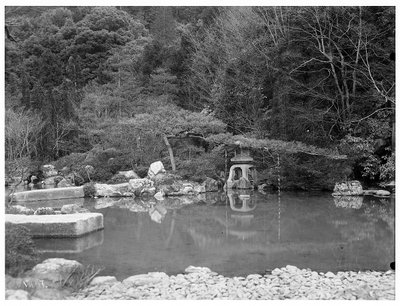
EU: Kyoto Garden with pond and stone lantern (1913)
1913
This 1913 photograph revisits the same Kyoto garden seen in companion images, again showing its pond and stone lantern. Ornamental gardens of this kind were designed to be viewed from multiple angles, which may explain the series of related photographs.
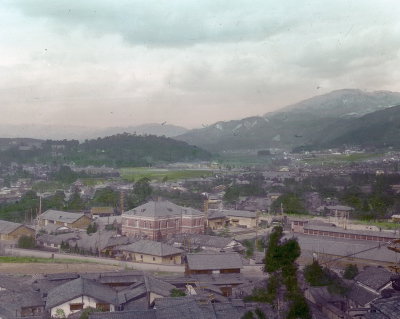
EU: Kyoto Stadtteilansicht von einem erhöhten Standpunkt (1913)
1913
A further 1913 view over a Kyoto district from an elevated position, closely related to a companion photograph in the same series. Together the images document the low wooden rooftops that characterized much of the city at the time.
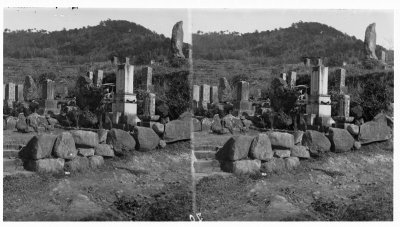
EU: Friedhof (1913)
1913
A cemetery in Kyoto, Japan, photographed in 1913. Traditional Japanese cemeteries of this era typically featured rows of stone grave markers, often situated on hillsides or temple grounds on the outskirts of the city.
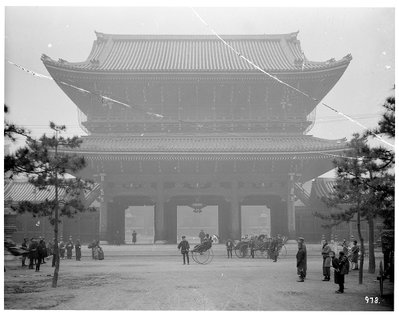
EU: Higashi Hongan-ji (1913)
1913
Higashi Hongan-ji temple in Kyoto appears again in this 1913 photograph, part of a series documenting the complex from different vantage points. The temple remains one of the largest wooden religious structures in Japan.
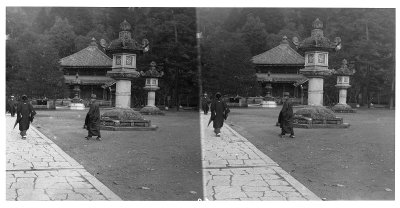
EU: Heilige Laternen des Chion-in-Tempels (1913)
1913
Stone lanterns at Chion-in temple in Kyoto, photographed in 1913. Chion-in serves as the head temple of the Jodo-shu sect of Buddhism and is known for its massive entrance gate and the rows of lanterns lining its approach.
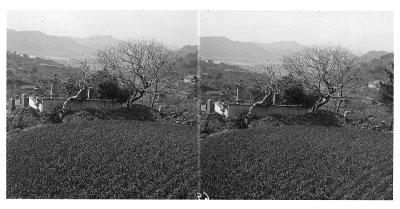
EU: Bei Kyoto (Japan). Berglandschaft mit Häusern und Friedhof eines Dorfes (1914)
1914
Hillside village near Kyoto, Japan, with houses set among a cemetery on the slope, a rural scene from the countryside surrounding the former imperial capital, photographed during a period when Kyoto still retained much of its traditional character.
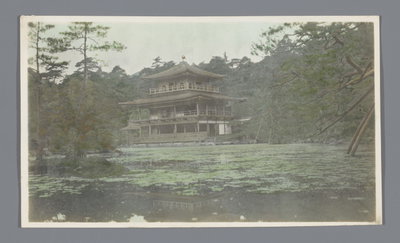
EU: Het Gouden Paviiljoen in Kyoto, Japan (1917)
1917
The Golden Pavilion, or Kinkaku-ji, stands beside its reflecting pond in Kyoto, Japan, a Zen Buddhist temple originally built as a retirement villa in the late fourteenth century before being converted into a temple.
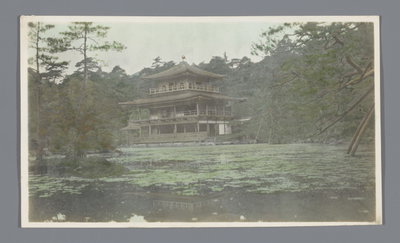
EU: Het Gouden Paviljoen in Kyoto, Japan (1917)
1917
The Golden Pavilion in Kyoto, Japan, seen in another early twentieth-century view of the gilded Zen temple set beside its garden pond, one of the most photographed sites in the former imperial capital.
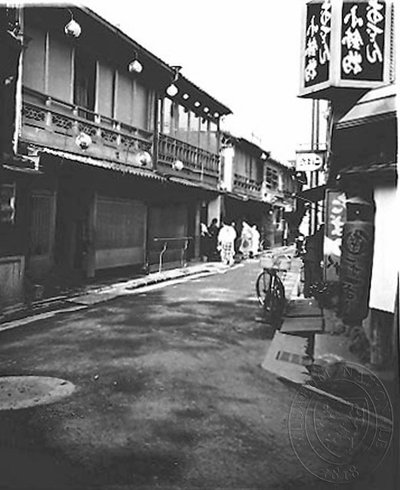
EU: Kjótská ulice (1935)
1935
A street in Kyoto, Japan, photographed in 1935. Kyoto served as Japan's imperial capital for over a thousand years before Tokyo, and by the 1930s it remained known for its traditional wooden townhouses and narrow lanes.
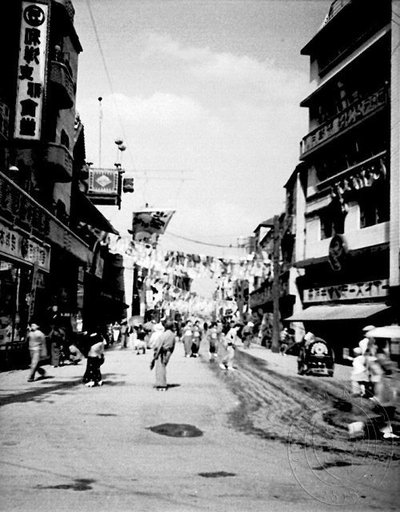
EU: Street in Kyoto (1935)
1935
Pedestrians and traditional wooden buildings line a street in Kyoto in this 1935 photograph. As the former imperial capital of Japan, Kyoto retained much of its historic townscape even as the country modernized in the early twentieth century.
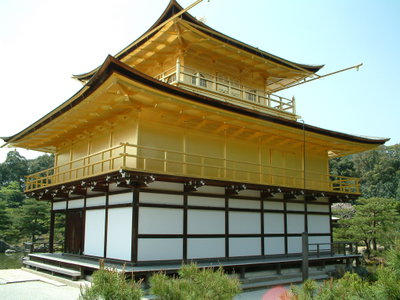
Kinkakuji Golden Pavilion In Kyoto
2004
Kinkaku-ji, the Golden Pavilion, is pictured on its pond in Kyoto, Japan, in 2004. The temple's top two stories are covered in gold leaf, and the current structure was rebuilt in 1955 after the original burned in 1950.
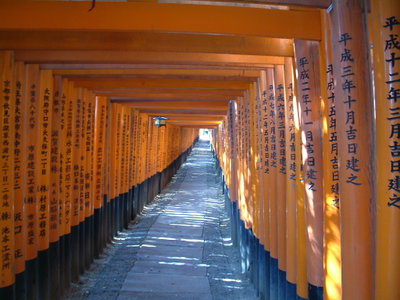
Torii
2004
A torii gate stands on the grounds of Kinkaku-ji in Kyoto, Japan, in this 2004 photograph. Torii gates such as this one mark the entrance to Shinto sacred spaces and are found at shrines throughout Japan, often painted in vermilion.
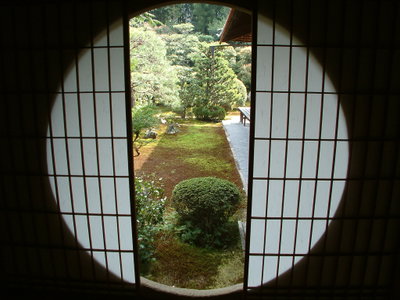
A Buddhist Temple
2004
A Buddhist temple building on the grounds of Kinkaku-ji in Kyoto, Japan, is pictured in 2004. The complex, formally known as Rokuon-ji, was originally built as a retirement villa for shogun Ashikaga Yoshimitsu in the late 14th century.
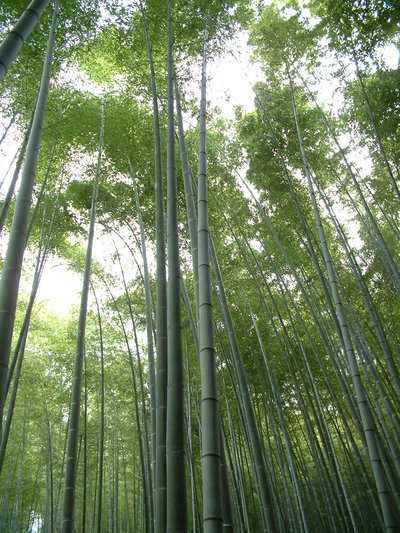
Kyoto
2004
A street-level view of Kyoto from 2004. Once Japan's imperial capital for more than a thousand years, the city is known today for the temples, shrines, and traditional wooden townhouses that survive throughout its historic districts.
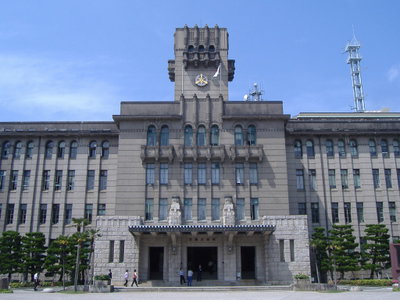
Kyoto City Government
2007
Kyoto City Hall, seat of the municipal government of Kyoto, Japan. The building serves as the administrative center for a city long regarded as the cultural and former imperial capital of Japan, a status it held for over a thousand years before the capital moved to Tokyo.
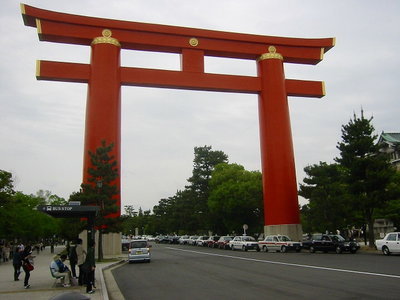
Giant Torii, Heian Jngū Shrine, Kyoto - May
2009
The large vermillion torii gate marking the approach to Heian Jingu Shrine in Kyoto, Japan, photographed on May 5, 2009. The shrine was built in 1895 to commemorate the 1,100th anniversary of the city's founding as the imperial capital.
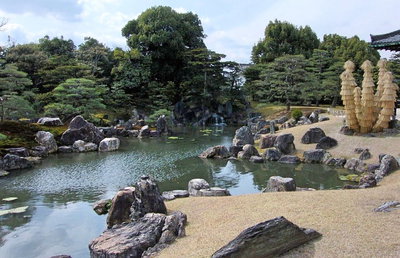
Kyoto, les Jardins du Pavillon d' Or
2009
The landscaped gardens surrounding Kinkaku-ji, the Golden Pavilion, in Kyoto, Japan, seen in 2009. The Zen temple's gilded upper floors and reflecting pond have made it one of the city's most visited sites since it was rebuilt in 1955 after a fire.
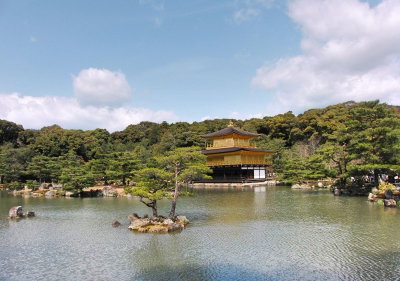
Water reflections of the Golden Pavilion
2009
Kinkaku-ji, the Golden Pavilion, reflected in its surrounding pond in Kyoto, Japan, photographed in March 2009. The temple's top two floors are covered in gold leaf, part of a restoration completed in 1955 after the original structure burned down five years earlier.
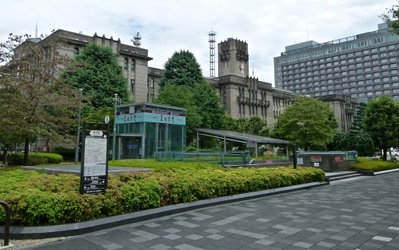
City Hall, Kyoto, Kyoto Prefecture, Japan
2012
Kyoto City Hall, seat of the municipal government of Kyoto, Japan, stands near the Kawaramachi-Oike intersection in the city center. The building has served as an administrative landmark in the heart of the former imperial capital.
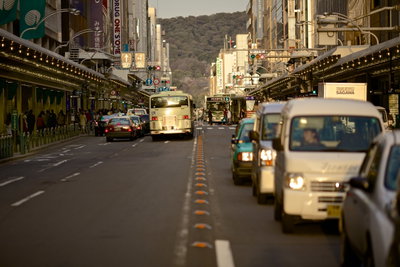
交通@京都2013
2013
Traffic moves through the streets of Kyoto in this 2013 view of the former imperial capital of Japan.
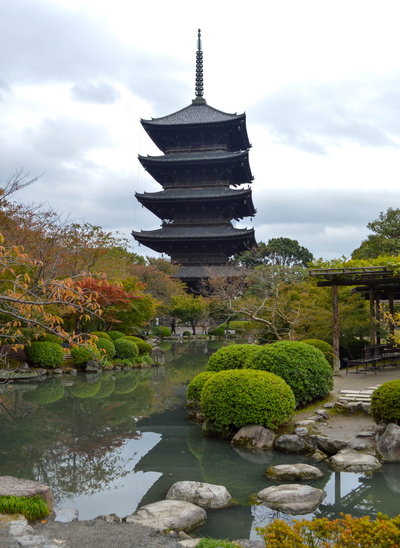
Toji Pagoda
2015
The five-story pagoda of Toji Temple in Kyoto, Japan, photographed in 2015. Standing roughly 55 meters tall, it is the tallest wooden pagoda in Japan and part of a UNESCO World Heritage Site.
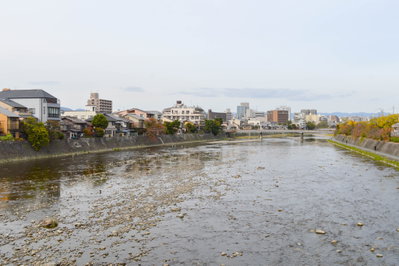
Kamo River
2015
The Kamo River runs through the center of Kyoto, Japan, and has long been a gathering place for residents along its banks. This photograph from 2015 shows a stretch of the river.
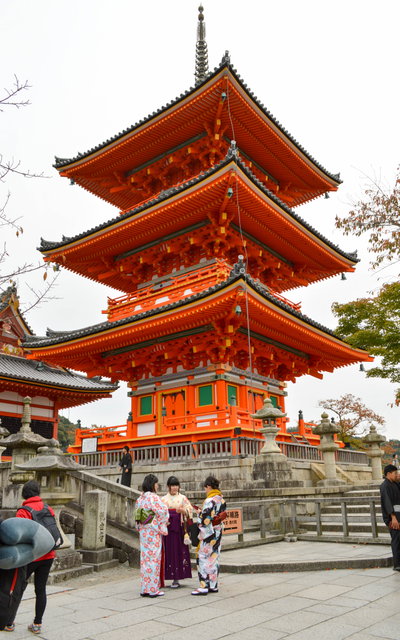
Kiyomizu Pagoda
2015
Kiyomizu-dera is a Buddhist temple in Kyoto founded in the 8th century and named for the Otowa waterfall on its grounds. This 2015 photograph shows a pagoda within the temple complex.
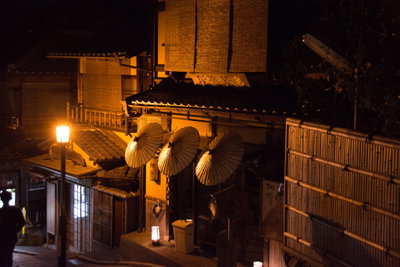
Kyoto
2015
Kyoto served as Japan's imperial capital for more than a thousand years and remains known for its temples, shrines, and traditional wooden townhouses. This 2015 photograph captures a street scene in the city.
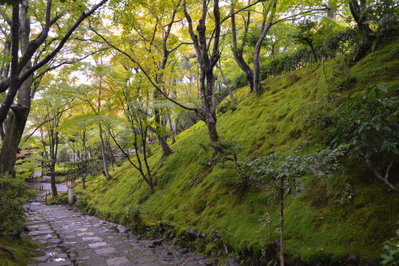
The Moss In The Moss Garden
2015
Kyoto is known for its temple gardens, including the moss garden at Saiho-ji, a UNESCO World Heritage site. This 2015 photograph shows moss growing within a Kyoto garden.
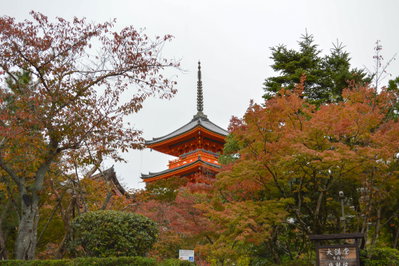
Changing Colors
2015
This 2015 photograph, titled Changing Colors, captures foliage in Kyoto, Japan, a city whose gardens and hillsides draw visitors for their seasonal colors.
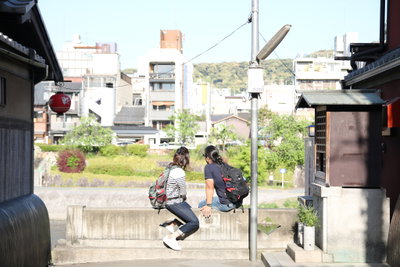
Couple In Kyoto
2015
A couple is pictured together in Kyoto, Japan, in this photograph taken in 2015. Kyoto served as Japan's imperial capital for over a thousand years and remains known for its temples, gardens, and traditional streetscapes.
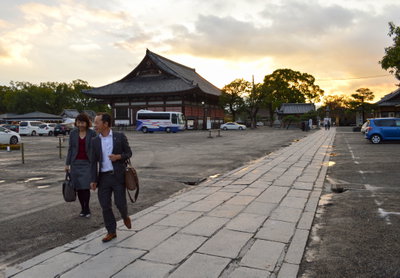
Couple On The Way Out
2015
This 2015 photograph, titled Couple on the Way Out, shows two people leaving a garden setting in Kyoto, Japan, a city noted for its landscaped temple and shrine gardens.
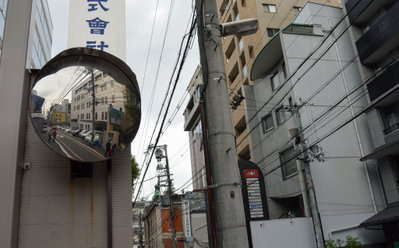
Mirror
2015
Titled simply Mirror, this 2015 photograph shows a mirror within a garden scene in Kyoto, Japan, a city long known for the design and upkeep of its traditional gardens.
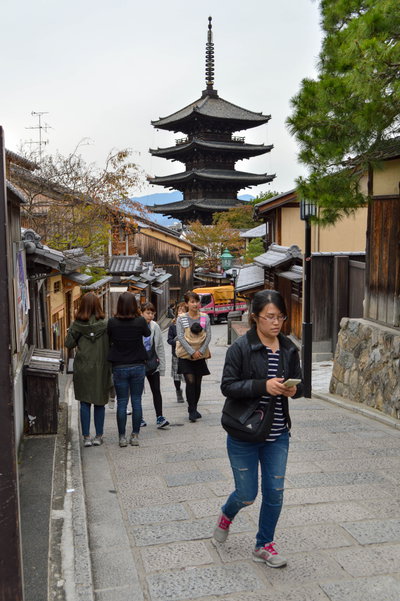
Texting While Walking
2015
A pedestrian looks at a mobile phone while walking in this 2015 street photograph from Kyoto, Japan, a city whose old quarters mix traditional architecture with everyday modern life.
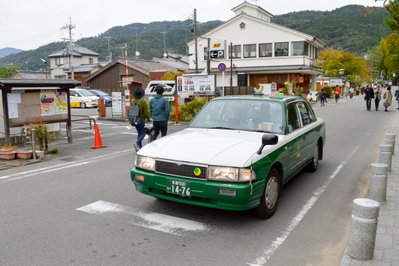
The Cab Of The Crescent Moon
2015
Titled The Cab of the Crescent Moon, this 2015 photograph shows a taxi at night in Kyoto, Japan, a city whose historic streets are often traveled after dark by residents and visitors alike.
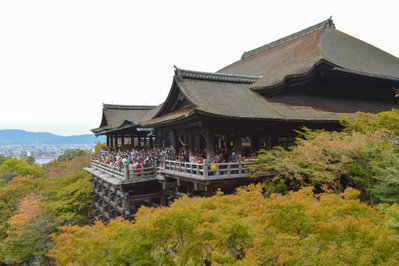
Throngs Of People
2015
Crowds fill a street in this 2015 photograph, titled Throngs of People, taken in Kyoto, Japan, a city whose historic districts and temples draw large numbers of visitors throughout the year.
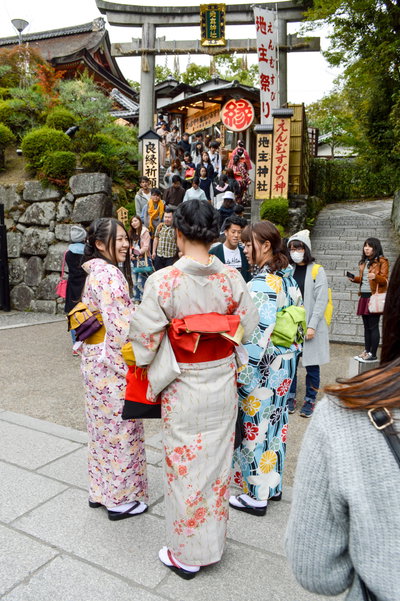
Girls In Their Sunday Best
2015
Titled Girls in Their Sunday Best, this 2015 photograph shows formally dressed girls in Kyoto, Japan, a city where traditional dress is still worn for festivals and special occasions.
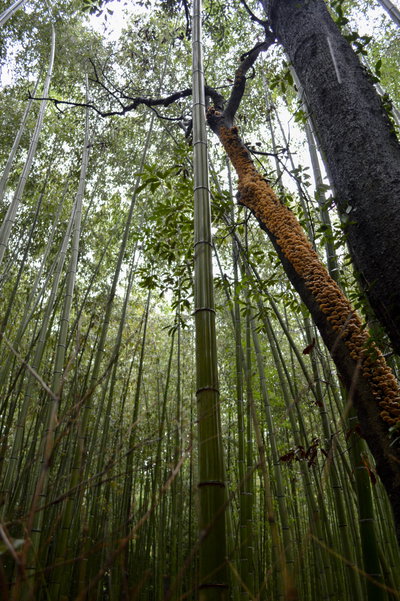
Mushrooms
2015
Mushrooms growing in a garden in Kyoto, Japan, are the subject of this photograph taken in 2015. Kyoto's temple gardens are tended year-round and include a wide variety of plant and fungal life.
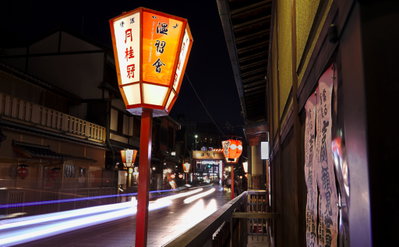
Gion
2016
A street in Gion, Kyoto's historic geisha district, known for its wooden machiya townhouses and teahouses along Hanamikoji Street. Gion developed from the 17th century onward to serve travelers visiting the nearby Yasaka Shrine.
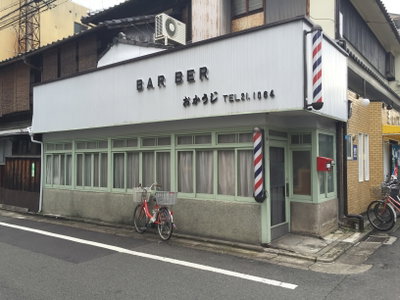
Bar Ber in Downtown
2016
A barber shop sign photographed in downtown Kyoto, Japan, in 2016, amid the modern commercial streets that coexist with the city's historic temple districts.
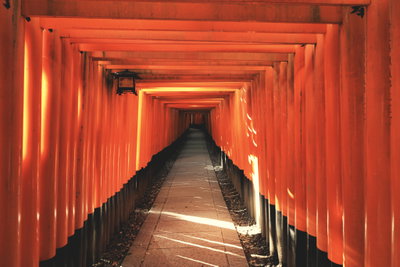
Fushimi Inari Shrine Kyoto
2016
Fushimi Inari Taisha in Kyoto, Japan, photographed in 2016. The Shinto shrine, dedicated to the rice deity Inari, is renowned for the thousands of vermilion torii gates that form tunnels up the wooded slopes of Mount Inari.
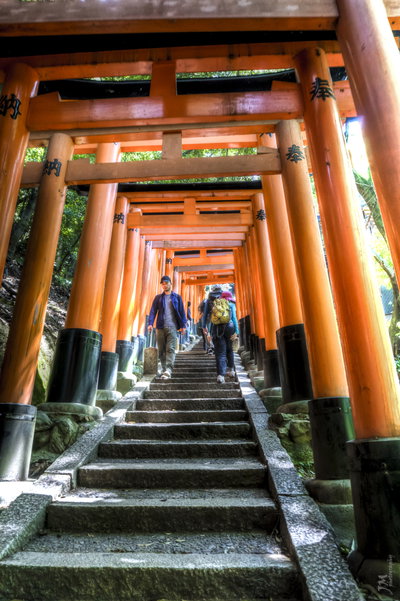
Fushimi Inari
2017
Fushimi Inari Taisha in Kyoto, photographed in 2017. Founded in the early 8th century, the shrine is famous for the thousands of vermilion torii gates that line the paths up its sacred mountain.
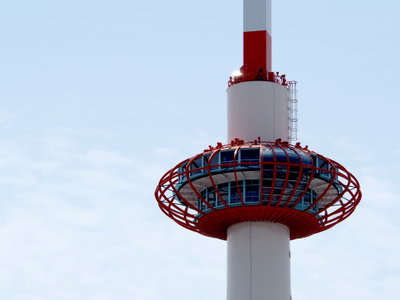
Kyoto Tower
2017
Kyoto Tower, photographed in 2017. Completed in 1964 near Kyoto Station, it is one of the city's few tall modern landmarks amid its historic skyline of temples.
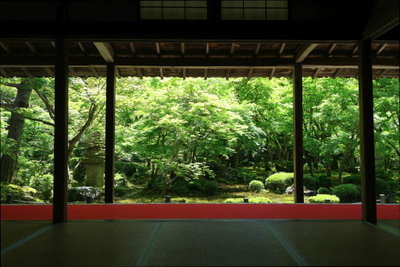
Enkoji In Kyoto Japan One Summer S Day
2017
Enko-ji, a Buddhist temple in Kyoto, photographed on a summer day in 2017; the temple's grounds include a wooded hillside garden in the city's eastern Higashiyama area.
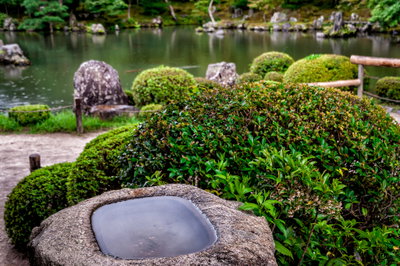
Japanese Garden Kyoto
2017
A Japanese garden in Kyoto, photographed in 2017. Landscaped gardens combining rock, water, and carefully pruned plantings are a hallmark of the city's many temple grounds.
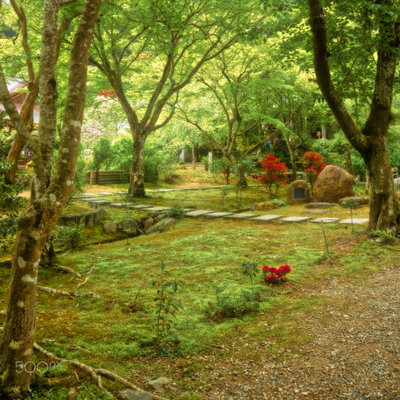
Shrine Garden
2017
A shrine garden in Kyoto, photographed in 2017, reflecting the traditional Japanese landscaping found throughout the city's numerous Shinto and Buddhist sites.
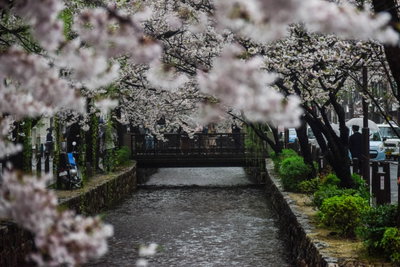
Kyoto, Japan (Unsplash kEgfUDQP-Os)
2017
A 2017 photograph taken in Kyoto, the former imperial capital of Japan known for its temples, shrines, and traditional wooden architecture that survived largely intact into the modern era.
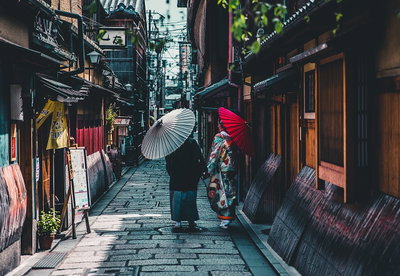
Kyoto, Japan (Unsplash MsMISAIe8Qw)
2017
Another 2017 view of Kyoto, a city that served as Japan's capital for over a thousand years before the seat of government moved to Tokyo in 1868, leaving it with an unusually dense concentration of historic sites.
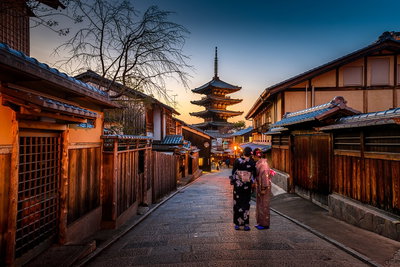
Kyoto, Japan (Unsplash UIN-pFfJ7c)
2017
A further 2017 photograph from Kyoto, whose historic districts remain largely unspoiled by the wartime destruction that affected many other Japanese cities in the 1940s.
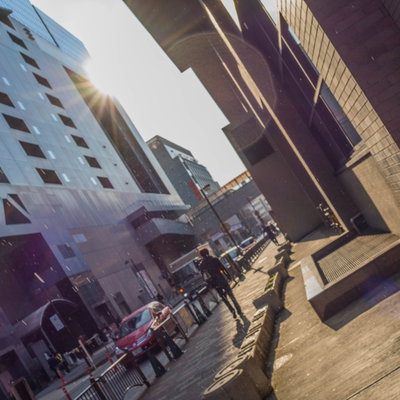
Sun Shower
2017
A rain shower over Kyoto, photographed in 2017. Sudden downpours are common in the city during the summer months, often followed by clear skies.
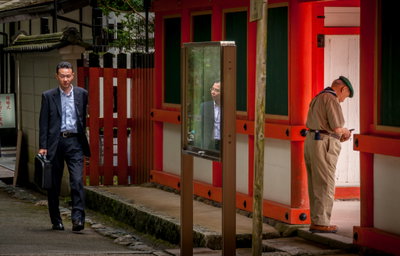
Three Men Kyoto Japan
2018
Three men photographed on a street in Kyoto in 2018, a candid glimpse of daily life in Japan's former imperial capital, which served as the seat of the emperor for over a thousand years before the capital moved to Tokyo.
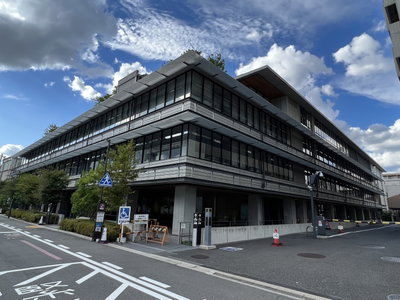
京都市役所 分庁舎
2023
An annex building of Kyoto City Hall, photographed in 2023. Kyoto served as Japan's imperial capital for over a thousand years before the seat of government moved to Tokyo in 1868.
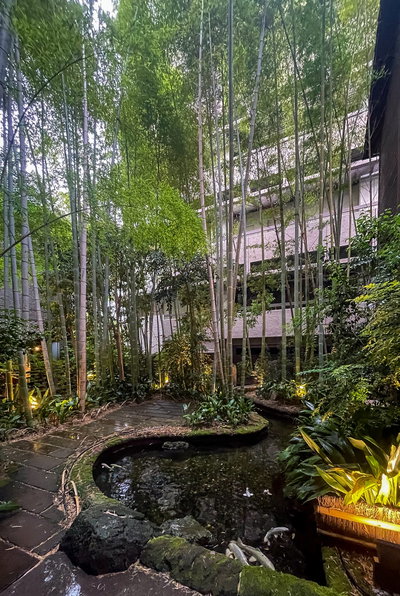
Gion in 2024
2024
A scene photographed in Kyoto, Japan, in 2024. Kyoto served as Japan's imperial capital for over a thousand years and retains one of the country's densest concentrations of historic temples and shrines.
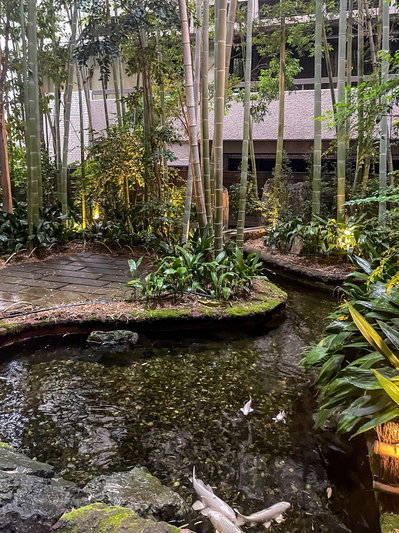
Gion in 2024
2024
A further view from Kyoto, Japan, photographed in 2024, showing the everyday streetscape of a city renowned for its temples, shrines and traditional architecture.